EU Negotiators in Hungary Seek €17 Billion
Crucial talks in Budapest could reshape EU-Hungary relations
Model Diplomat2 min readEurope
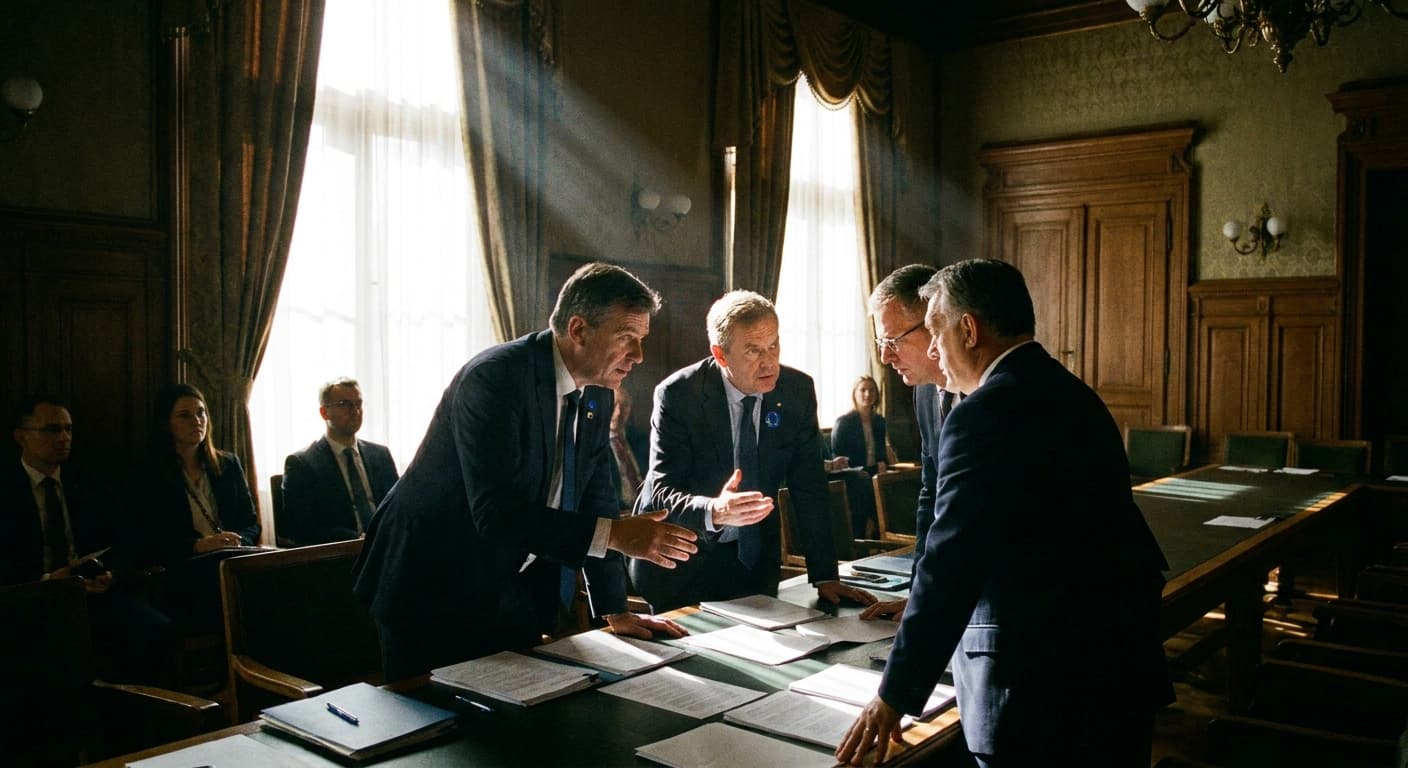
EU Officials in Hungary Push to Unlock €17 Billion Held Since Orbán Era
EU negotiators are in Budapest aiming to release €17 billion in frozen aid and greenlight a major loan to Ukraine amid shifting Hungarian politics.
EU officials have arrived in Budapest for crucial talks with Péter Magyar, a rising figure associated with Hungary’s new government, to negotiate the release of roughly €17 billion ($20 billion) in EU funds that have been withheld since Viktor Orbán’s long tenure as prime minister. The discussions also cover a significant loan package for Ukraine—an urgent priority given the ongoing conflict in Eastern Europe. This meeting marks a pivotal moment in EU-Hungary relations after years of standoff over rule-of-law and governance issues.
Why This Matters: The Stakes Beyond Money
The €17 billion in funds were frozen starting under Orbán as Brussels repeatedly expressed concern over democratic backsliding, corruption, and rule-of-law violations in Hungary. Orbán’s government aggressively resisted EU demands for reforms, effectively holding the bloc hostage. This financial stranglehold was one of the EU’s most potent tools to incentivize change in a founding member’s governance practices.
But Orbán’s recent exit signals a possible recalibration. Péter Magyar and the new administration appear willing to engage more constructively with the EU, potentially unlocking Hungary’s large tranche of multiannual financial framework funds. This thaw could strengthen EU cohesion at a time it badly needs unity—amid war in Ukraine and increasing geopolitical competition.
The talks on the loan package for Ukraine are also critical. Hungary, a frontline state on the EU’s eastern edge, has complicated Ukraine aid efforts in the past. Cooperation here could accelerate Kyiv’s access to crucial financing for reconstruction and defense, bolstering European security beyond financial implications.
What to Watch Next
- Hungary’s political trajectory: Will Magyar’s team deliver on adherence to EU rule-of-law norms, or will Brussels be forced into a delicate compromise? Hungary’s handling of governance reforms will determine the ease and speed at which the funds are disbursed.
- EU unity signals: Whether this breakthrough encourages other wary member states to settle outstanding funding disputes with Brussels will shape EU finances and policy coherence moving forward.
- Ukraine aid dynamics: Successful coordination between Hungary and the EU on Ukraine could enhance direct EU support. Watch for announcements post-Budapest talks that set conditions for loan release.
This meeting is about more than money; it’s testing whether the EU’s financial leverage remains effective against illiberal trends inside its borders, and how resilient the bloc’s internal solidarity is under the strains of external conflict.
Read more on Hungary and
Global Politics.
EU officials in Hungary to discuss unlocking billions of euros held
Discover more

Global Politics
Hungary's Political Shift
Peter Magyar's swift move to form a government ends Orban's 16-year rule, reshaping Hungary's political landscape and recasting its ties with the wider EU.

Global Politics
Peter Magyar's Bold Media Overhaul in Hungary
Peter Magyar's Tisza party victory drives a sweeping overhaul of Hungary's state media, challenging Orban's legacy and pushing democratic renewal and EU ties.

Economics
Fed's Amex AML order puts correspondent banking on notice
Federal Reserve's Amex AML order requires board-level controls and a 90-day plan; OCC fined the bank $350 million over enterprise-wide deficiencies.

Conflict & Security
Guatemala: El Niño 2026–27 becomes regional security test
UNICEF: 25.8M children face El Niño risks in Latin America; Guatemala maps 188 municipalities for drought and food insecurity amid regional security test.