DRC Tax Raid Threatens US $9B Congo Minerals
DRC seals Glencore's Kamoto offices to gain leverage before US $9B minerals deal closes.
Model Diplomat8 min readAfrica
Kinshasa's Tax Raid Is a Bid to Cash In Before America's $9 Billion Congo Minerals Deal Closes
Congolese tax authorities sealed Glencore's Kamoto offices in July 2026, turning a transfer-pricing dispute into leverage over Washington's flagship African critical-minerals acquisition — a 40% stake in the country's most strategic copper-cobalt assets, valued near $9 billion.
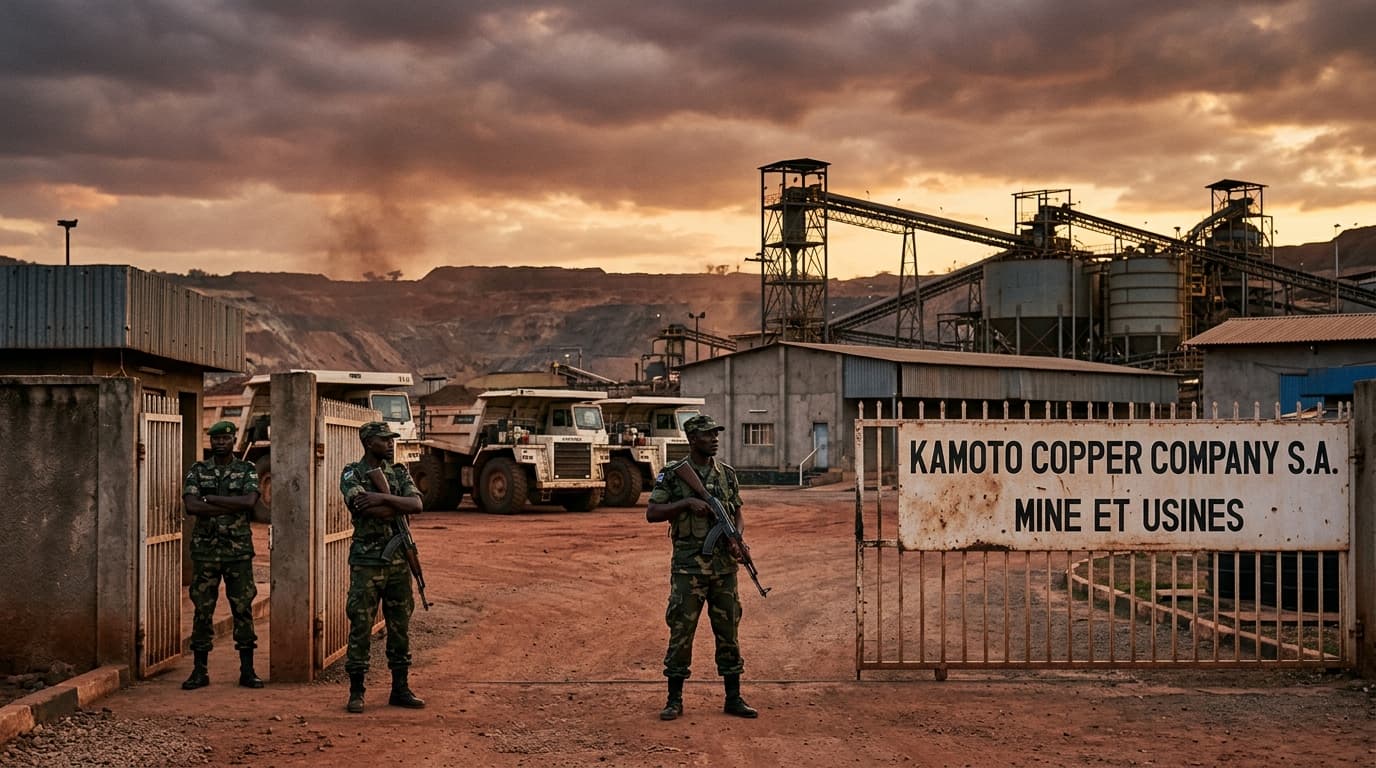
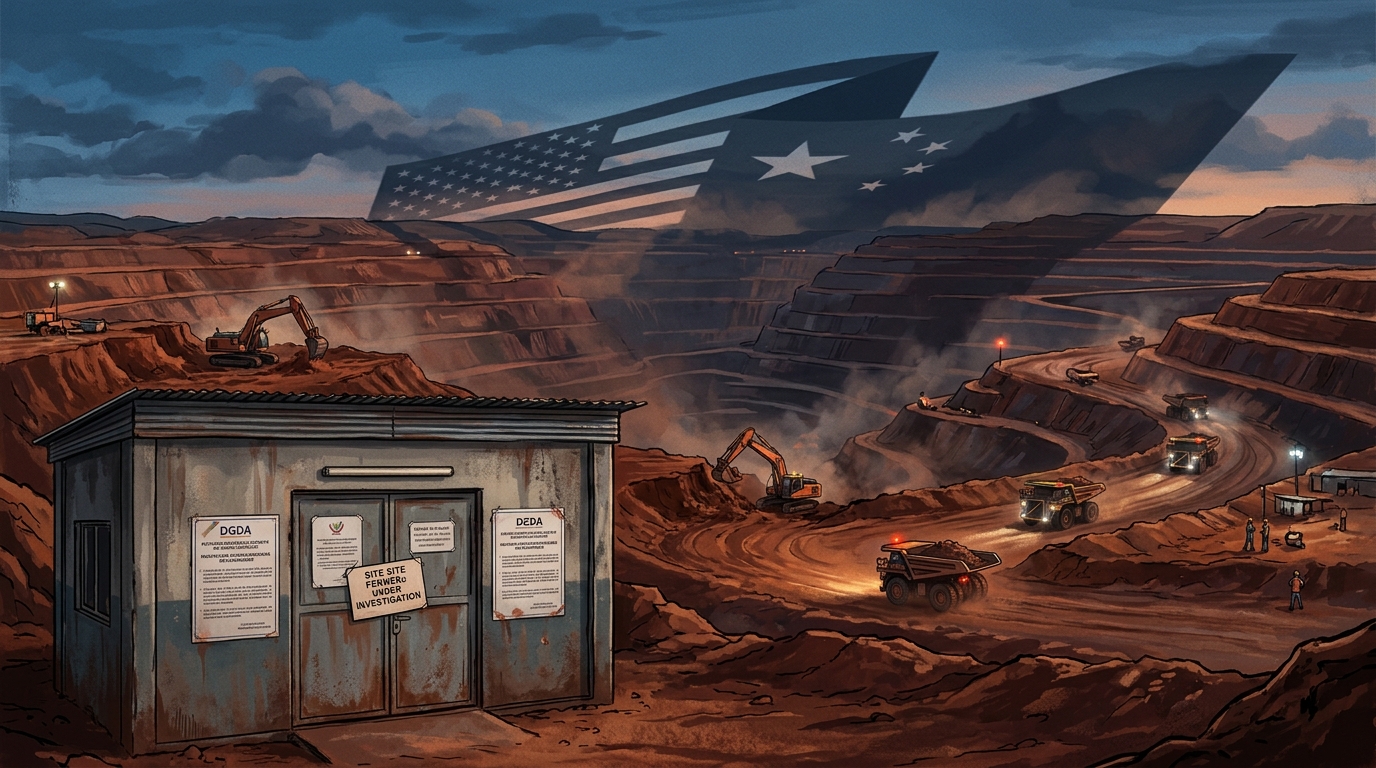
The Democratic Republic of Congo's tax authority sealed administrative offices at Kamoto Copper Company on July 14, 2026, the Glencore-operated complex in Kolwezi that produces copper and cobalt essential to electric-vehicle batteries and defence technologies, after negotiations over an alleged multi-billion-dollar tax liability collapsed, according to Business Insider Africa. The enforcement action is not a routine audit. It is Kinshasa's leverage play to extract maximum fiscal concessions from Glencore before a US-backed consortium closes its $9 billion acquisition of a 40% stake in the very same mines. The dispute puts the flagship transaction of Washington's Africa minerals strategy directly in the crosshairs of a Congolese government determined to capture a larger share of the wealth flowing from its soil.
The Deal and the Dispute
Led by Orion Resource Partners and including the US International Development Finance Corporation (DFC), the Orion Critical Mineral Consortium signed a non-binding memorandum of understanding to acquire 40% of Glencore's interests in Kamoto Copper Company (KCC) and Mutanda Mining, two of the DRC's largest copper-cobalt operations, at a combined enterprise value of roughly $9 billion, according to Glencore's company announcement. Orion would gain the right to appoint non-executive directors and direct the sale of its share of production to nominated buyers, "in accordance with the U.S.-DRC Strategic Partnership Agreement," thereby securing critical minerals for the United States and its partners.
The transaction is the single largest initiative to build non-Chinese critical-mineral supply chains from the DRC, where Chinese firms own 15 of the 19 primary copper-cobalt mines and account for roughly two-thirds of copper production and half of cobalt output, according to the UK government's overseas business risk assessment. Glencore is the only major Western producer still operating in the country.
The DRC's Direction Générale des Impôts alleges Glencore used transfer-pricing arrangements to reduce taxable income from its Congolese operations and owes billions of dollars in unpaid taxes, though the exact figure has not been publicly confirmed, Business Insider Africa reported. Glencore says mining and processing at KCC continue uninterrupted and that it remains engaged in discussions with the government.
Why Kinshasa Is Moving Now
The timing is not accidental. The Orion deal remains subject to due diligence, legally binding documentation, and regulatory approvals — a window in which any unresolved tax liability becomes a deal-breaking risk. Investors committing billions to mining acquisitions typically demand clarity on fiscal exposures before closing. A sealed office and public allegations of transfer-pricing abuse are precisely the kind of uncertainty that raises the cost of capital or pushes a deal into limbo.
The IMF, in a June 2024 country report, found that the DRC's tax administration "lack[s a] formal mechanism to detect frauds, errors, or omissions in taxpayer declaration," that audit capabilities are weak, and that "mining companies with highly skilled tax experts" can exploit this gap, according to the IMF Country Report No. 24/227. The same report noted that the top 10 multinational copper exporters represent roughly 63% of total DRC exports, with origins in China, Canada, Switzerland, and Kazakhstan — making the sector both the fiscal prize and the enforcement challenge.
President Félix Tshisekedi has instructed ministries to "prioritise dialogue with investors and avoid unpredictable enforcement actions that could undermine confidence," while ordering the removal of security personnel unlawfully stationed at mining sites, Business Insider Africa reported. The dual signal, sealing the offices while calming the investors, suggests a calibrated squeeze: enough pressure to force a settlement, not enough to kill the American deal Kinshasa needs.
Glencore's Congolese Litigation Trail
The tax dispute is the latest in a long line of legal and regulatory confrontations between Glencore and the DRC. In April 2026, the company agreed to pay $60 million to settle a separate dispute involving alleged insurance fraud, Business Insider Africa reported. In December 2022, Glencore paid $180 million to DRC authorities to cover "all present and future claims arising from any alleged acts of corruption" between 2007 and 2018, according to
Al Jazeera.
That settlement followed Glencore's May 2022 guilty plea in the US to conspiring to violate the Foreign Corrupt Practices Act, admitting it paid more than $100 million in bribes across seven countries, including at least $27.5 million in the DRC, according to the US Department of Justice plea agreement. The company paid a combined $1.5 billion in fines and penalties to US, UK, and Brazilian authorities.
Separately, a US federal judge ordered Glencore to pay roughly $39.8 million in restitution to the founders of Crusader Health, a medical services provider that collapsed after Glencore paid a $500,000 bribe to a Congolese judge to dismiss a contract lawsuit, according to the Southern District of New York restitution order. Transparency International, RAID, and a DRC legal aid centre have since petitioned the Justice Department to extend compensation to the Congolese employees who lost their jobs,
Transparency International reported.
This history matters for the Orion deal. Glencore's admitted bribery of Congolese officials between 2007 and 2018, the very period in which it acquired and expanded its KCC and Mutanda stakes, gives Kinshasa both legal grounds and political cover to revisit the terms under which those assets were secured. The transfer-pricing allegations are structurally adjacent: both turn on whether Glencore's Congolese profits were artificially suppressed.
The Cobalt Quota Complication
Layered on top of the tax dispute is a separate policy shift that has already reshaped Glencore's DRC operations. In late 2025, the DRC introduced a cobalt export quota system valid through at least the end of 2027, requiring producers to store excess cobalt in-country, according to Glencore's Q1 2026 production report. Glencore's DRC assets are now prioritising copper production because existing cobalt inventories are sufficient to meet near-term quota levels, the company said. In 2025, KCC and Mutanda produced a combined 247,800 tonnes of copper and 33,500 tonnes of cobalt.
The quota system, which followed a four-month cobalt export ban in early 2025, is designed to give the DRC leverage over cobalt prices, which have been depressed by Chinese firms flooding the market, a 51.8% year-on-year increase in DRC cobalt exports driven by state-backed producers willing to absorb losses for long-term dominance, according to CSIS analysis. The export controls directly complicate Orion's value proposition: a 40% stake is worth less if a meaningful share of the cobalt cannot be freely exported.
Washington's Bigger Bet
The Kamoto dispute is a stress test for the entire US minerals push in the DRC. The Trump administration's transactional Africa strategy — "get Rwanda off our back, and we will give you minerals," as senior Congolese officials described their pitch to American interlocutors, according to Foreign Affairs — has produced a cascade of deals: Gécamines and Mercuria's DFC-backed joint venture to market cobalt and copper; Virtus Minerals' takeover of Chemaf; and the Orion-Glencore stake. Washington signed a strategic partnership in 2025 giving US-aligned firms first-bid rights on critical mineral projects, and the DRC committed to ship minerals via the US-backed Lobito Corridor railway to Angola's Atlantic coast, according to
NPR.
But the strategy rests on a fragile premise: that private Western capital will accept the DRC's risk profile (fiscal unpredictability, legal opacity, active conflict in the east) if Washington provides enough political cover. The CSIS analysis frames the problem bluntly: the DRC's "complex risk landscape — a myriad of legal, fiscal, legal, and regulatory risks — continues to deter private capital," and US government tools like equity participation, political risk insurance, and geological mapping are needed to bridge the gap, according to CSIS. The Kamoto seal arrives precisely as Orion is conducting due diligence, a moment when fiscal risk is most expensive.
The US Congress is simultaneously pressing to sever Chinese cobalt from American supply chains. The COBALT Supply Chain Act, introduced in the 119th Congress, would bar goods containing cobalt refined in China from entering the US market under a presumption of forced and child labour in the DRC, citing that 15 to 30% of Congolese cobalt comes from artisanal and small-scale mining with an estimated 40,000 children among 255,000 miners, according to the bill text on Congress.gov. If enacted, the law would sharpen demand for traceable, non-Chinese cobalt of exactly the kind Orion aims to supply — but only if the DRC can keep its own house in order.
Congolese civil society is already sceptical. Analysts and local voices quoted by Al Jazeera warn the deal risks "continuing structurally unbalanced partnerships in which the DRC remains a mere supplier of strategic raw materials." The M23-aligned Alliance Fleuve Congo has called the US partnership "deeply flawed and unconstitutional," denouncing the "opacity surrounding the negotiations." The
World Bank has separately noted that Glencore's Mutanda mine was added to a list of contracts subject to further scrutiny in 2022, with three of its four permits expiring — a process the government could use to renegotiate terms.
What to Watch
- The Orion MOU's binding-documentation deadline. A non-binding MOU has no firm expiry, but due diligence typically runs six to nine months. The longer the tax dispute drags, the higher the risk Orion walks away or renegotiates price downward. Watch for any public statement from Orion or the DFC on deal timing.
- The cobalt quota allocation for 2026. Glencore expects cobalt exports to "normalise over the year, in line with its remaining 2026 quotas," per its Q1 2026 report. If quotas tighten or the system extends beyond 2027, Orion's offtake economics weaken further.
- The DRC–Rwanda peace implementation timeline. A "security co-ordination mechanism" was due within 30 days of the June 27 deal, and a comprehensive DRC–M23 agreement is targeted for August 18, according to
BBC. If fighting continues in mineral-rich eastern provinces, investor risk premiums on all DRC assets rise — tax dispute or no.
- The COBALT Supply Chain Act's committee progress. If the bill moves to the House floor, it would materially increase demand for Orion's traceable cobalt — but also raise compliance costs for Glencore's artisanal-adjacent supply.
Diplomat View
Kinshasa's tax raid on Kamoto is a negotiating tactic dressed as enforcement. The DRC's leverage is real but self-limiting: push too hard, and the $9 billion American deal that is the entire point of Tshisekedi's minerals-for-security strategy collapses, leaving Congo more dependent on Chinese buyers, not less. The most likely outcome is a settlement — Glencore pays a sum larger than the April $60 million insurance-fraud figure but smaller than the billions the DGI has floated — reached quietly before Orion's due diligence window closes, with the offices unsealed and production uninterrupted. The forecast turns negative if three conditions hold simultaneously: Orion publicly signals delay, the cobalt quota tightens into 2027, and eastern DRC fighting resumes near mining corridors. In that scenario, the DRC's minerals-for-security bet begins to look like the China-backed infrastructure-for-minerals deals Tshisekedi once criticised — opaque, unbalanced, and signed under duress.
The bottom line: The Kamoto tax dispute is not about taxes. It is about who sets the price of admission to the Congolese copper belt, and Washington is about to find out that Kinshasa intends to set it higher than any American consortium has budgeted for.
Discover more
US Politics
House Ethics Committee Pushes Sexual Miscond.
The House Ethics Committee has shifted responsibility for sexual harassment settlement records to the Office of Congressional Workplace Rights, complicating disclosure efforts.

US Politics
SNAP Food Assistance Faces Legal Challenges
In 2026, SNAP faces stricter eligibility rules and mounting legal challenges, threatening food assistance for the millions of Americans who rely on the program.
India
Rajnath Singh's Durga Squad for 2026 Polls
Rajnath Singh's Durga Squad promised women's safety in Bengal but has since disappeared from the agenda, revealing BJP's true priorities.

Conflict & Security
Drone Warfare Killing Aid Workers at Unprec
Over 1,000 humanitarian workers killed in three years as cheap armed drones collapse legal protections. Gaza, Sudan, Ukraine, and DRC see deliberate targeting of aid convoys and hospitals with zero prosecutions.