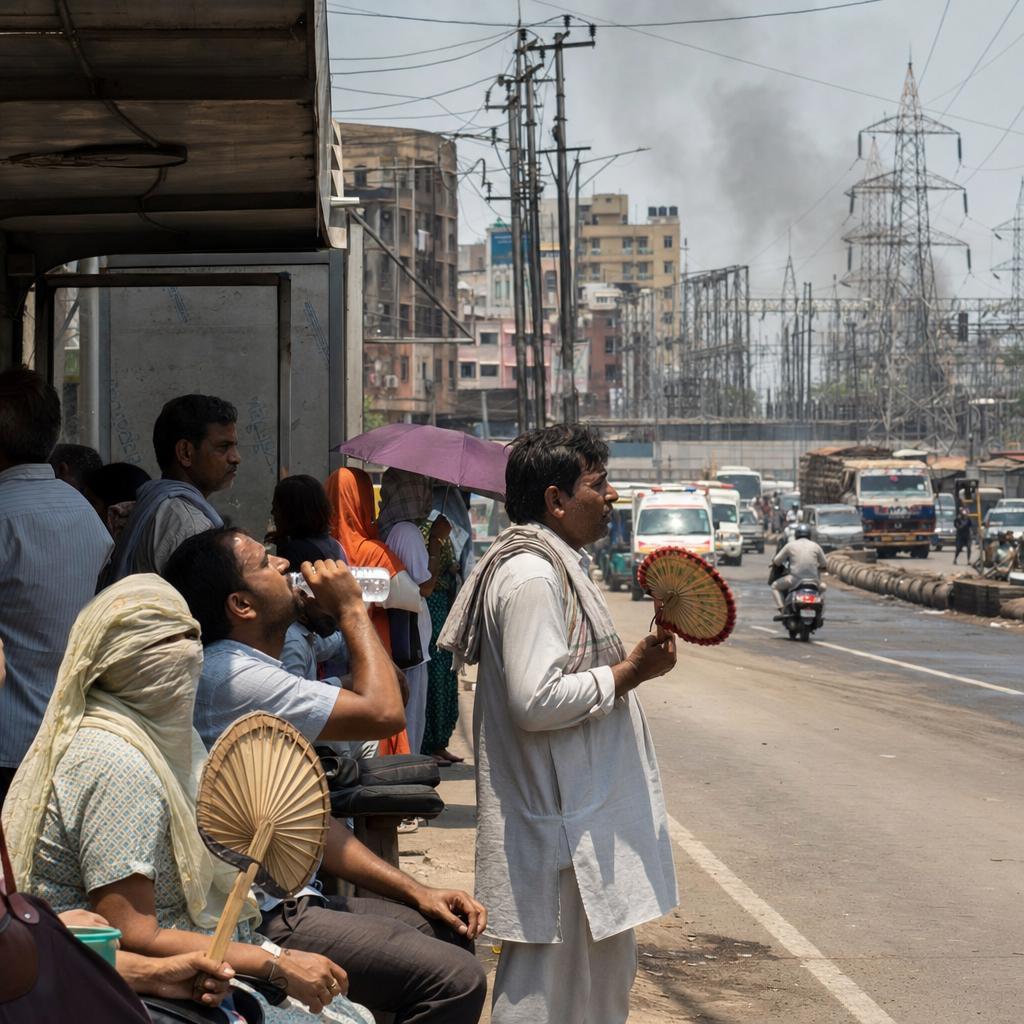
Delhi Heatwave Strains India’s Grid Before Rain Break
IMD says north and central India face another brutal heat spell, but relief may begin May 29 as Delhi’s 46°C forecast collides with record power demand and health risk.
Large parts of north and central India are still being squeezed by heatwave to severe heatwave conditions, with Delhi expected to hit 44°C-46°C and warm nights offering little relief, according to the India Meteorological Department (IMD) as reported by  The Indian Express. The weather office says Punjab, Haryana, Chandigarh and Delhi face heatwave conditions on May 27-28, with severe heat in parts of Punjab, Haryana and Uttar Pradesh, before a gradual respite from May 29 as western disturbances and moisture bring cloud cover, thunderstorms and rain.
The immediate power dynamic is weather, not policy
This is not a single-city story. The IMD’s warning covers a broad belt: severe heat persisted in pockets of Vidarbha and Chhattisgarh, while East Uttar Pradesh, East Madhya Pradesh, Rajasthan, Haryana, Uttarakhand, Bihar, Odisha, Telangana and Coastal Andhra Pradesh were also under heat stress, The Indian Express reported. Delhi is in the front line because it combines dense population, heavy electricity use and exposure-heavy work patterns, so each degree of warming has a larger political and operational effect than the number suggests.
The temperature ceiling matters less than the overnight floor. The IMD’s forecast for Delhi includes minimums of 27°C-29°C and, in some places, warm nights that reduce recovery time for the body, The Indian Express said. That is where heat becomes a systems problem: sleeping, labor productivity and public health all degrade at once. For the broader national picture, see  India.
Why this matters now
India is already absorbing the cost of the heat in its grid. The power ministry said peak demand reached 270.82 gigawatts on May 22 as cooling use surged, and warned households to use electricity carefully, according to  CNA. That is the key constraint: heat does not just produce discomfort, it forces the state to prove it can keep electricity flowing when demand spikes.
The health burden is moving in parallel. At least 16 people have died of heatstroke in Telangana so far this summer, officials said in a report carried by  BSS/AFP. The Independent noted that nighttime temperatures are rising across India, humidity is compounding the danger, and the country’s heatwaves are becoming longer and more intense, with millions lacking access to reliable cooling (
 The Independent). This is why the current spell hits lower-income households first: they have the least insulation from power cuts, outdoor work and warm nights.
What to watch next
The next decision point is the May 29 shift. If the IMD’s forecast holds, showers and thunderstorms should cut Delhi’s maximum temperature to roughly 35°C-37°C by Thursday, The Indian Express said. That will test two things immediately: whether the rain arrives on time, and whether utilities, hospitals and city administrations can hold through one more day of extreme heat without outages or a surge in heat-related illness.
If the rain slips, the pressure extends across the whole north Indian belt. If it arrives on schedule, the story shifts from emergency response to damage assessment: power load, water stress, school schedules and the first count of how much this heatwave has already cost.