Conflict Deaths Surge in West Africa
AES states face rising violence and humanitarian crises
Model Diplomat5 min readWest Africa
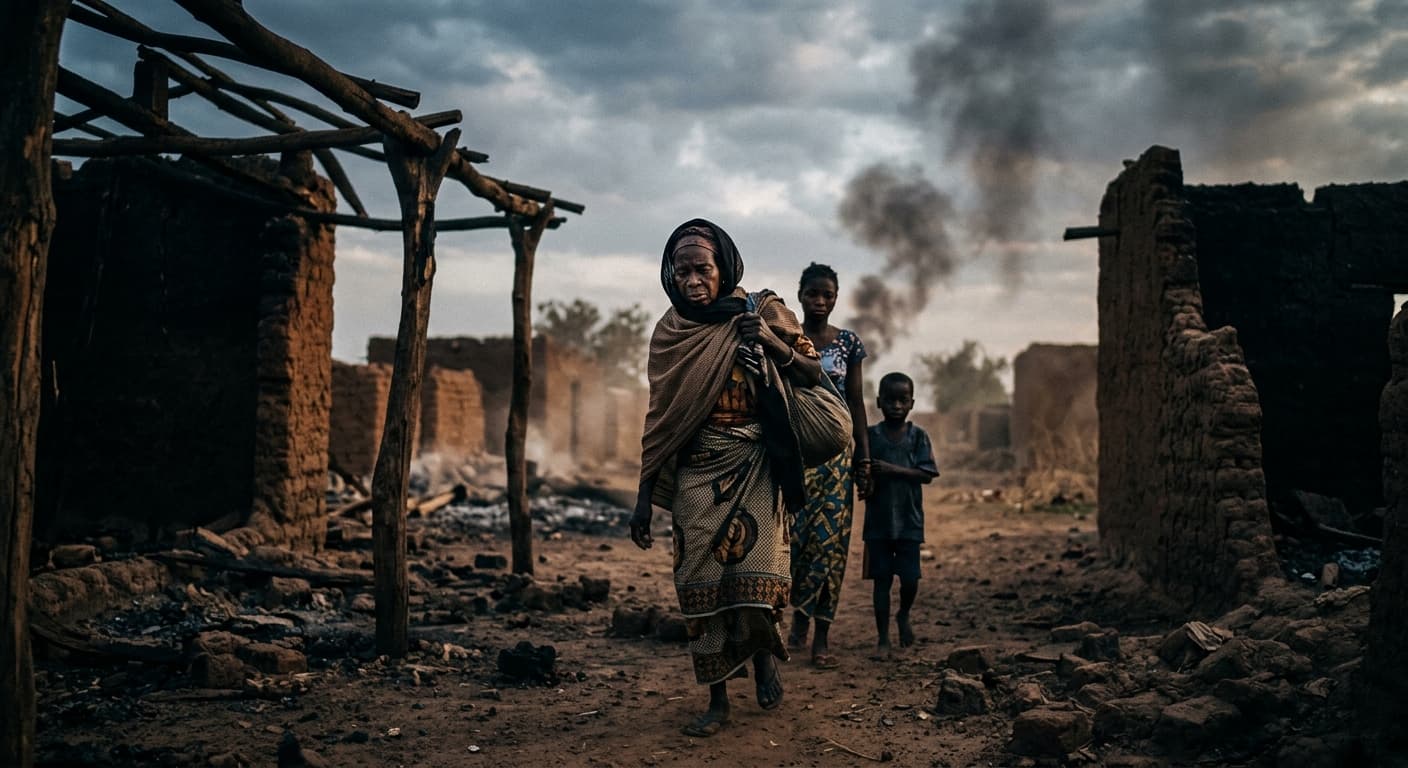
In the first half of 2025 alone, the three AES states recorded 6,643 conflict deaths, with Burkina Faso accounting for 3,539 fatalities — 27.3% of West Africa's total — according to the CDD West Africa Sahel Tracker drawing on ACLED data. JNIM, the al-Qaeda affiliate that is the region's dominant insurgent group, claimed over 280 attacks in Burkina Faso in H1 2025 alone — double the same period in 2024, per
BBC Monitoring. The group now operates in 11 of Burkina Faso's 13 regions and across essentially all of Mali. On January 29, 2026, Islamic State–Sahel Province struck Niamey's Diori Hamani International Airport with drones — its first drone strike, and a symbolic breach of the capital's security perimeter,
SAIIA reported.
The state response has produced its own body count. Between January 2024 and March 2025, the Malian army and its Russian partners were responsible for 1,486 civilian casualties, per the Global Initiative Against Transnational Organised Crime, cited by the BBC. In April 2026,
Human Rights Watch documented that Burkinabè forces and allied militias had killed more than 1,800 civilians since Traoré took power, including a March 2025 massacre of at least 130 Fulani civilians near Solenzo. On April 20, 2026, three rights groups filed a case against Mali at the African Union's Court on Human and Peoples' Rights — the first African case attempting to hold a state liable for hiring military contractors —
Al Jazeera reported.
Displacement is at generational highs. The UN High Commissioner for Refugees told reporters on October 10, 2025, that about four million people are now displaced across the three countries and their neighbours — two-thirds more than five years ago — with women and children making up 80% of the total, per Al Jazeera's report on the UNHCR briefing. Nearly 15,000 schools and more than 900 health facilities had shut by mid-2025. The European Commission's 2025 humanitarian implementation plan for West and Central Africa classifies Burkina Faso and Mali as "very high risk," with Burkina Faso's IDP figure reaching 3,121,557 by August 2024, a 48.5% year-on-year jump, per
ECHO.
Who benefits
The AES is not producing security. It is producing a redistribution of who profits from insecurity.
The first winner is the officer class in Bamako, Ouagadougou and Niamey. Transitional timetables have quietly disappeared; Mali dissolved all political parties in 2025, per UNICEF's 2026 Mali appeal. More than 100 NGOs and civil-society organisations have been shut down in Burkina Faso, and critical journalists have been conscripted to the front,
Al Jazeera reported from the December 2025 summit. The sovereignty frame reclassifies criticism as sedition.
The second winner is Moscow. Roughly 2,000 Russian fighters — the former Wagner contingent, now rebranded Africa Corps — are deployed in Mali, per ACLED analyst Heni Nsaibia. Rosatom is in advanced talks to build West Africa's first nuclear plant in Niger and to acquire yellowcake stockpiles at Arlit, the BBC reported. But even Russia is now hedging: in December 2025 Moscow urged the AES and ECOWAS to resume dialogue, and Mali's UN envoy signalled openness to "any partners," per the
French Institute for International and Strategic Affairs (IRIS). The "radical rupture" is already softening into "partnership diversification."
The third winner is China. CNPC's $5 billion Niger–Benin oil pipeline made oil the country's largest export earner at 29% in 2024, per SWP. Chinese firms hold the operating stakes in Mali's new lithium production. Neither Beijing nor Moscow is a lender of concessional last resort — and this is where the arithmetic breaks. Mali's finance minister, off-camera at the December summit, told Al Jazeera bluntly: "The IMF won't release loans until Mali has ironed out its relations with France."
The clearest losers are civilians. In April 2026 the World Food Programme suspended assistance to 2 million people in the Sahel for lack of funds; UNHCR had received just 32% of its $409.7 million regional appeal by October 2025. More than 212,000 refugees and asylum seekers in AES countries remain unregistered.
What the peer-reviewed evidence shows
A February 2026 paper in African Development Review by Sebego, Ouedraogo and Folawewo modelled the ECOWAS exit using a Factor-Augmented VAR on 1980–2022 data. The finding is counterintuitive: trade-diversion effects from AES withdrawal chiefly benefit Côte d'Ivoire, Ghana and Nigeria — not the seceding states. Burkina Faso and Mali face marginal declines in tax revenue tied to intra-community imports. The three AES countries also remain inside the West African Economic and Monetary Union (WAEMU) and still use the CFA franc, meaning the rupture with the ECOWAS commercial architecture is deeper than the rupture with the monetary architecture the sovereignty rhetoric most loudly denounces.
The confederal parliament is being assembled in Ouagadougou; a common currency remains "under discussion." Traoré's July 6 speech framed the third year around "collective defence, economic integration, industrialisation, energy and food sovereignty." Every one of those verticals depends on external capital the AES has systematically alienated.
What to watch
- September 16, 2026 — third anniversary of the Liptako-Gourma Charter. Watch for a formal timetable on the common currency and any expansion signal toward Chad, Guinea or Togo.
- AU Court ruling on Mali (2026–27) — the first African case testing state liability for foreign mercenary use. A finding against Bamako would legally complicate AES–Russia security architecture.
- BCID-AES first bond issuance — the operational test of "sovereign" financing. The bank's viability depends on whether it can raise on regional markets at rates its members can service; watch WAEMU spreads.
- IMF fifth review of Burkina Faso (mid-2026) — the RSF disbursement schedule will show how far climate/reform conditionality can co-exist with junta politics.
Diplomat View
The AES is neither the pan-African renaissance its supporters describe nor the failing state confederation its critics predict. It is a regime-preservation cartel with a competent brand — and that is a different, more durable thing. Two years in, the evidence is that the alliance secures the juntas better than it secures the population: institutional outputs (bank, force, passport, TV) are being delivered on schedule while security and humanitarian indicators deteriorate on trend. Our call: the AES will still exist in 2028, but it will look more like WAEMU-with-uniforms than a revolutionary bloc — quietly reopening channels to Washington, Brussels and the IMF while keeping the anti-French rhetoric on the front page. The forecast would revise if any of three things happen: a successful counter-coup in one member state; a formal AES exit from the CFA franc (which would force a genuine break with WAEMU); or a JNIM-held territorial capital in one of the three countries. Absent those, the sovereignty vs. reality gap widens, and someone else keeps paying for it — mostly the four million people who have already left home. See our broader coverage of international conflict dynamics.
Discover more
International Relations
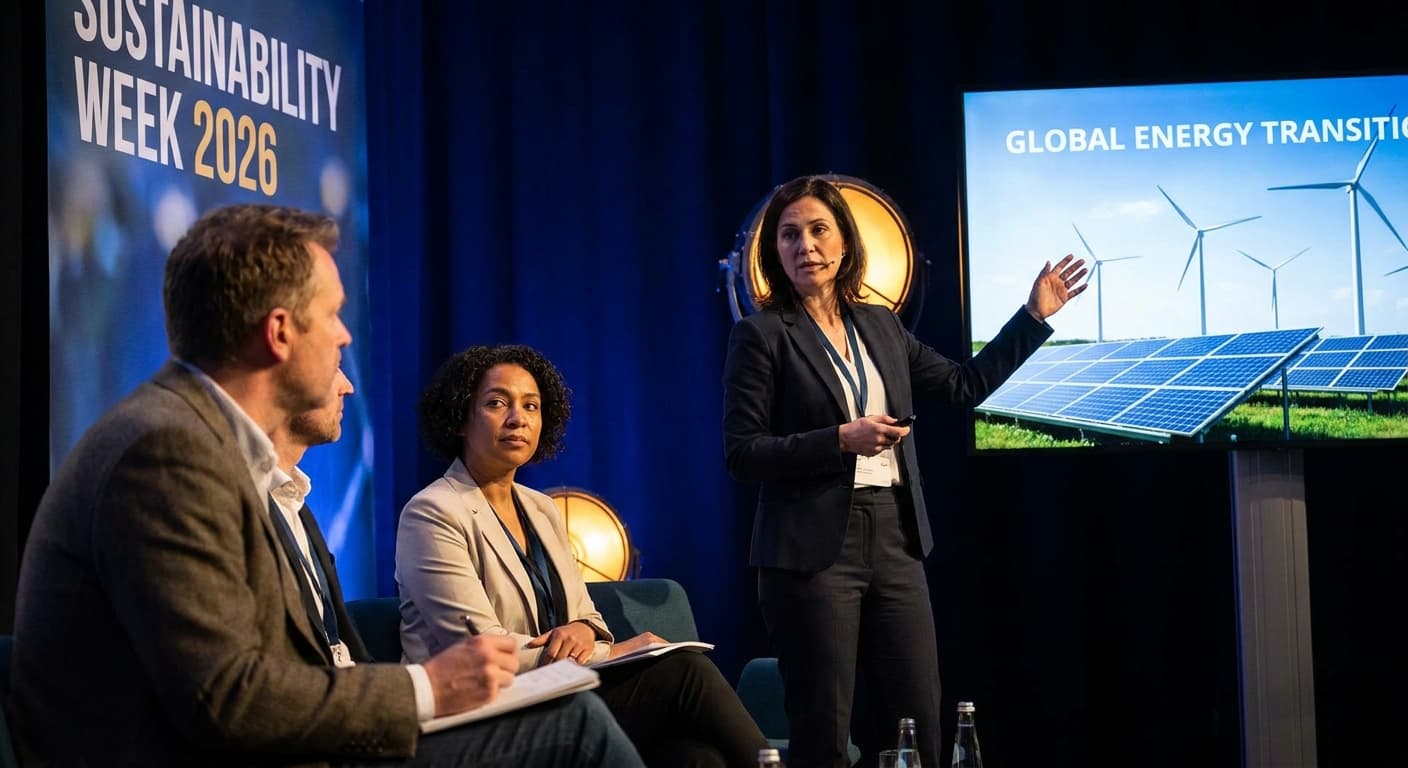
Economist Impact Sustainability Week 2026
Economist Impact Sustainability Week 2026 spotlights the energy transition, AI in clean technology, and supply chain resilience as themes for global leaders.

India
Delhi CM Rekha Gupta Blasts Opposition's Delm
Delhi CM Rekha Gupta's remarks on women's quota defeat reveal BJP's strategy for the 2029 Lok Sabha elections, focusing on delimitation.
India
Rajnath Singh's Durga Squad for 2026 Polls
Rajnath Singh's Durga Squad promised women's safety in Bengal but has since disappeared from the agenda, revealing BJP's true priorities.

Conflict & Security
Drone Warfare Killing Aid Workers at Unprec
Over 1,000 humanitarian workers killed in three years as cheap armed drones collapse legal protections. Gaza, Sudan, Ukraine, and DRC see deliberate targeting of aid convoys and hospitals with zero prosecutions.