Djibouti's Port Crisis After Guelleh's Win
Guelleh's victory masks economic vulnerabilities in Djibouti.
Model Diplomat3 min readafrica
Guelleh's 97.8% Win Can't Mask Djibouti's Looming Port Reckoning
In Djibouti and Comoros, leaders who secured lopsided electoral victories now face economic pressures their personal-rule systems were never built to absorb.
Ismail Omar Guelleh won a sixth term as Djibouti's president on April 10 with 97.8% of the vote, a margin nearly identical to his 2021 performance Ethiopian News Agency. His sole challenger, Mohamed Farah Samatar, took 2.2%. The election was never in doubt. What matters now is whether the economic architecture that sustained Guelleh's 27-year rule can survive the regional realignment gathering pace around it.
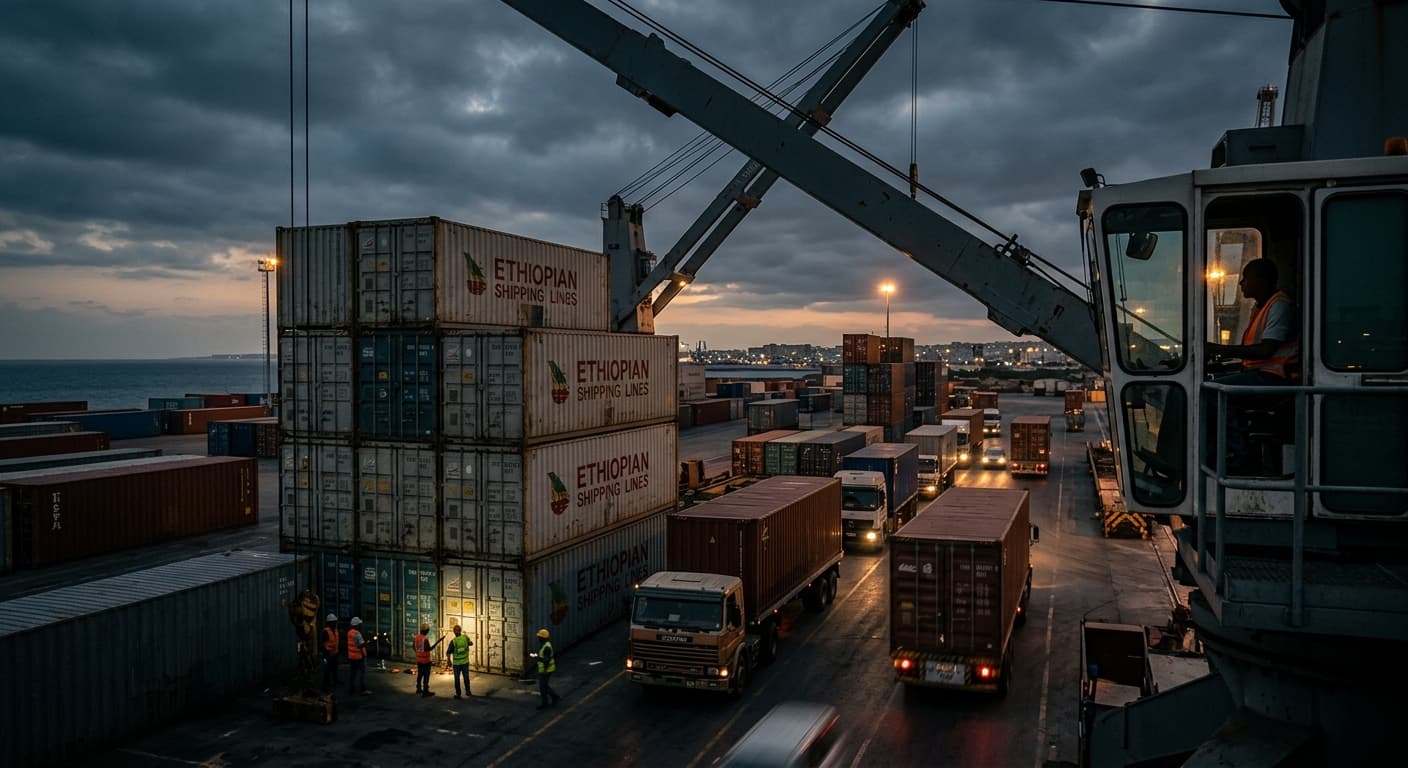
Djibouti's economy rests on a single, increasingly fragile pillar: Ethiopian port traffic. More than 90% of Ethiopia's international trade flows through Djibouti, and port revenues from that traffic account for roughly 70% of Djibouti's GDP Africa Center for Strategic Studies. That dependence has financed the state while leaving it exposed to $3.4 billion in external debt — 66% of GDP — with 45% owed to China, making Djibouti the world's most leveraged borrower of Chinese lending.
Now Ethiopia is actively pursuing alternatives. Foreign Minister Gedion Timothewos told Chatham House in June that maritime access is a "structural necessity," framing it in terms of development and connectivity rather than confrontation Ethiopian News Agency. Meanwhile, Egypt and Eritrea are moving decisively. On June 10, their foreign ministers signed a cooperation agreement covering maritime transport, port connectivity, and port development at Assab, Massawa, and Marsa Fatima
Shabait. Egypt's foreign minister, Dr. Badr Abdellaty, described Eritrea as "a pillar of security and stability in the Horn of Africa" — language that places both countries squarely in the anti-Ethiopia camp
Shabait.
The regional architecture is hardening into two blocs: Somalia-Eritrea-Egypt on one side, and Ethiopia-aligned forces — including Somaliland, where Addis Ababa secured a memorandum of understanding for sea access — on the other. Djibouti is caught between them. On April 8, two days before the election, the chairman of Djibouti's Ports and Free Zones Authority publicly reassured Addis Ababa that Ethiopian cargo would receive priority handling, including a specific promise on fertilizer shipments ahead of the rainy season Ethiopian News Agency. The statement read less like trade diplomacy than a retention plea.
The succession question compounds the vulnerability. Guelleh is 78, his health the subject of persistent speculation. His stepson, Naguib Abdullah Kamil, is positioned as heir apparent, but no formal designation has been made AllAfrica. The ruling coalition fractures along clan lines — the Mamasan (Guelleh's Issa sub-clan) against Afar elites, whose buy-in Kamil, an Afar affiliate, would require. The opposition has boycotted elections since 2016, and 73% of youth are unemployed despite Djibouti having the highest per-capita income in East Africa
Africa Center for Strategic Studies.
Comoros: The quieter strain
In Comoros, President Azali Assoumani consolidated power through the 2024 presidential election (63% of the vote, amid opposition claims of ballot-stuffing that left one dead and 25 injured in protests) Cameroon Tribune and the 2025 legislative elections, which handed his CRC party dominant control
Africa Confidential. The opposition is marginalized. But the economy — with a GNI per capita of $1,690 and structural vulnerability to climate shocks — remains dependent on diaspora remittances and development finance
Afritopic.
Assoumani's "Plan Comores Émergent" targets 5% annual growth and leverages the country's strategic position in the Mozambique Channel. Hosting the Cap Business 2026 forum and preparing for the 2027 Indian Ocean Island Games are meant to signal arrival. Yet the political settlement is brittle: the rotating-presidency constitutional compromise among the three islands has been effectively dismantled, and the repression of post-election protests in 2024 removed any meaningful opposition channel.
The common thread
Both regimes exemplify what happens when personal rule meets external economic pressure with no institutional cushion. Djibouti's port monopoly — the regime's fiscal backbone — is threatened not by domestic challengers but by Ethiopia's strategic impatience and the Egypt-Eritrea counter-axis. Comoros has no single asset of comparable leverage, making its exposure slower-burning but no less real.
What to watch: The next Ethiopia-Eritrea-Egypt-Somalia ministerial, expected before September. If port-diversification commitments emerge from that meeting, Djibouti's leverage evaporates. And in Djibouti, the real election is not the one that just happened — it's the succession fight that hasn't yet begun.
Discover more

US Politics
US Launches $166B Tariff Refund Portal
The US is launching a $166 billion tariff refund portal to aid importers hit by Trump-era tariffs, with major implications for trade and supply costs.

US Politics
House Ethics Committee Pushes Sexual Miscond.
The House Ethics Committee has shifted responsibility for sexual harassment settlement records to the Office of Congressional Workplace Rights, complicating disclosure efforts.
US Politics
Congress Targets AI Chatbot Access for Terror
The House passed the Generative AI Terrorism Risk Assessment Act, focusing on AI's role in terrorism and potential surveillance implications.

Economics
Fed's Amex AML order puts correspondent banking on notice
Federal Reserve's Amex AML order requires board-level controls and a 90-day plan; OCC fined the bank $350 million over enterprise-wide deficiencies.