Colombia's Urban Security Plan Revives Conviv
De la Espriella's decree raises concerns over paramilitarism.
Model Diplomat8 min readLatin America
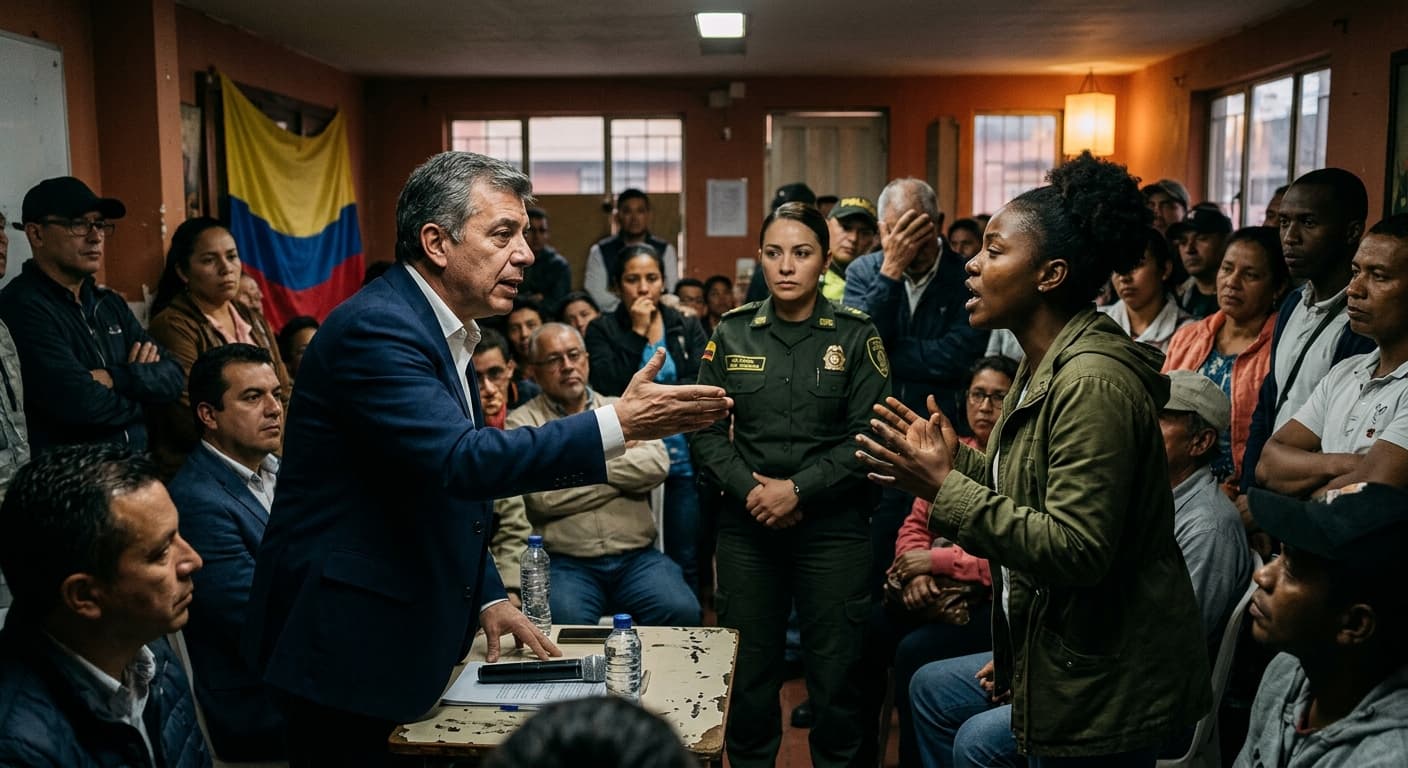
De la Espriella's urban security blocs revive Colombia's Convivir ghost
Colombia's president-elect will sign a decree on August 7, 2026 creating "Bloques de Defensa" in five cities. Critics say the design echoes the 1990s paramilitary shell.
Abelardo de la Espriella, sworn in as Colombia's next president after a 250,000-vote win on June 21, 2026, has told the country that his first executive act on August 7 will be a decree creating a "Bloque de Defensa para la Seguridad Urbana" in Bogotá, Medellín, Cali, Barranquilla and Bucaramanga. The proposal, announced on X on July 5, is not just another mano-dura headline. It resurrects an institutional design — armed civilian coordination structures grafted onto the security forces — whose last iteration, the Convivir cooperatives of the 1990s, was found by Colombia's own Constitutional Court to have crossed into paramilitarism. The thesis of this story: De la Espriella's Bloque is less a policing plan than a governance test, and the fastest way to break it is not in Congress but in the Palacio de Justicia.
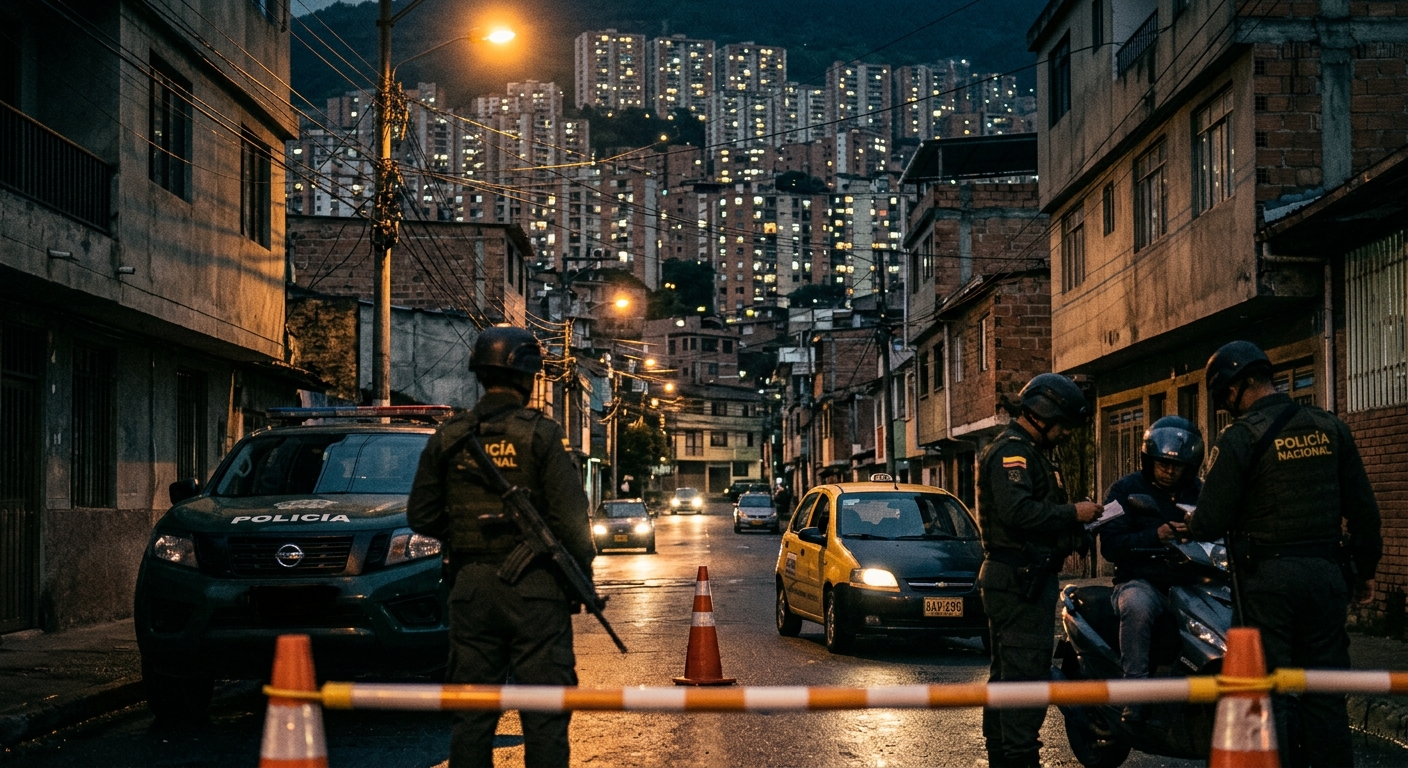
What the decree actually proposes
The president-elect has been deliberately vague. In his July 5 post — a reply to reporting by El Tiempo about a threatening pamphlet that shuttered the Atlántico town of Soledad — De la Espriella wrote that he would convene the mayors of Colombia's five largest cities "to create the largest urban security operation in Colombia," according to reporting by EL PAÍS América Colombia. He offered no organic law, no chain of command, no budget line, no rules of engagement. What he did do, the same day, was name retired general Jorge Eduardo Mora as defense minister — a signal that veterans and reservists, the campaign's most organised base, will be central to whatever the Bloque becomes.
The name matters. In Colombian security vocabulary, "bloque" is not neutral. The Bloque de Búsqueda hunted Pablo Escobar in the late 1980s under Ministry of Defense command. The Bloque Cacique Nutibara was a paramilitary formation of the Autodefensas Unidas de Colombia (AUC), whose members were later prosecuted by the Medellín High Court, as documented in a 2017 study in Latin American Perspectives. Using that word in a decree, without specifying whether the units are police, civilian or mixed, is why the opposition read it as a signal rather than an oversight.
The Convivir parallel — and why it is not rhetorical
The reference the left has seized on is precise. In February 1994, the Gaviria government issued Decree 356, allowing "special vigilance and private security services" in high-risk zones. By December of that year, Defense Minister Fernando Botero rebranded the framework as the Convivir — armed civilian cooperatives operating as military auxiliaries against the guerrilla. In Antioquia, then-governor Álvaro Uribe Vélez pushed them hardest. By 1997, the Constitutional Court restricted their access to military-grade weaponry; by the time they were formally wound down, many members had migrated into the AUC's regional blocs, according to the same Latin American Perspectives research.
That is the memory Pacto Histórico congresswoman María Fernanda Carrascal invoked when she called the Bloque "the same recipe as the Convivir, the legalisation of paramilitarism," in remarks cited by Infobae Colombia. Senator Alejandro Ocampo asked simply: "Will we have paramilitarism 2.0?" These are not fringe voices. Cepeda's father, communist leader Manuel Cepeda Vargas, was killed in 1994 by paramilitaries acting "in collusion with State agents," per
BBC Mundo — a fact the outgoing president Gustavo Petro repeated when he called the Bloque an "anachronism" on July 6.
The urban paradox De la Espriella just walked into
The political geography of the decree is awkward. The five cities the Bloque would cover are the same cities where De la Espriella lost. According to preliminary maps compiled by BBC Mundo, Iván Cepeda won four of the five largest cities in the run-off — Bogotá, Cali, Barranquilla and Cartagena — some by more than 20 points; only Medellín swung right. That leaves the president-elect proposing to insert a national security apparatus into municipalities run, in most cases, by mayors elected on platforms hostile to his.
Some mayors have nonetheless welcomed the coordination, as Noticias RCN reported — an unsurprising response given that extortion in Barranquilla's department of Atlántico rose 570% between 2019 and 2023, per the SIEDCO database summarised in the UK Home Office's
March 2026 country policy note on Colombia. The demand for something, anything, is real. But Petro's counter-claim — that homicides fell in every major city during his term except Barranquilla — is closer to the data than the campaign's narrative admits. Medellín's homicide rate fell from 26.2 per 100,000 in 2018 to 14.9 in 2022, according to city data compiled by the
Fundación Ideas para la Paz; the urban story that elected De la Espriella is a story about extortion and perception, not homicide.
The legal ceiling nobody in Barranquilla mentioned
Here is where the analysis diverges from the wire coverage. Any decree signed on August 7 will run into a wall of constitutional jurisprudence built precisely to prevent a Convivir remake. Ruling C-572 of 1997, issued by the Constitutional Court under justice Jorge Arango Mejía, upheld the general framework of private security but stripped Convivir of access to weapons of restricted use and imposed strict limits on any civilian participation in public-order tasks. Subsequent case law — including the reasoning cited by the Fundación Ideas para la Paz in its 2019 analysis of gun-carry directives — establishes that there is no constitutional right to bear arms in Colombia and that special permits are precarious, revocable acts of the executive.
That doctrine has teeth. Retired admiral and analyst Alejandro Mantilla, quoted by El País, warned that "to avoid a scenario like the Convivir or the search blocs of the 1980s, it is essential to delimit the functions and detail the institutional responsibilities." Translated: a decree that leaves the Bloque's composition open — retirees, reservists, private security firms, informants, "citizen collaborators" — will not survive the first tutela filed by a human-rights NGO. The Court that ruled on Decree 0639 in 2025, incidentally, was the same one De la Espriella himself petitioned when he was still a private lawyer, per his profile at CIDOB. He knows the ceiling. The question is whether he intends to test it or dance under it.
Who benefits, who loses
The immediate winner is not a Colombian. It is the political brand of seguridad total that Nayib Bukele has exported across the region. De la Espriella has openly modelled himself on Bukele and Donald Trump — the latter endorsed him on Truth Social within hours of the June 21 result, according to Al Jazeera. A Colombian variant of the Bukele model, even if legally watered down, extends that brand into the region's third-largest economy and validates the copy-paste playbook now visible in Ecuador and Argentina.
The immediate loser is the Jurisdicción Especial para la Paz (JEP), the transitional-justice body created under the 2016 FARC accord. De la Espriella campaigned to dismantle it, per BBC Mundo. A Bloque that formalises a role for retired officers — some of whom have JEP cases open for false-positives-era killings — creates an institutional lobby against the very court investigating them. That is a second-order effect the opposition has yet to name.
The quieter loser is the "convivencia" model of civilian policing that Medellín built over two decades. In a randomised experiment run with the city, economists Christopher Blattman, Gustavo Duncan, Benjamin Lessing and Santiago Tobón found that unarmed municipal liaisons could raise state legitimacy in neighbourhoods where the state was already present but backfired where it was weak, per their NBER working paper 29692. The Bloque, in privileging armed coordination over civilian saturation, points Colombia in the opposite direction of the evidence its own cities generated.
What the opposition can actually do
Colombia's Congress remains, per BBC Mundo, fragmented; the Pacto Histórico is the largest single bloc but well short of a majority. That means the opposition's leverage is judicial, not legislative. Three vectors are worth watching:
- A tutela or public-action suit before the Constitutional Court within days of the August 7 decree, invoking C-572/97 and the Court's paramilitary jurisprudence.
- Objections from the Procuraduría and the Defensoría del Pueblo, both of which retain oversight powers over any executive act with human-rights implications.
- Municipal non-cooperation from Bogotá, Cali, Barranquilla and Cartagena — where mayors won on platforms distinct from De la Espriella's — which could hollow the Bloque before it functions, since Colombian mayors formally chair local security councils.
Diplomat View
The Bloque de Defensa para la Seguridad Urbana will not be, in the first instance, what its opponents fear or what its supporters hope. On August 7, De la Espriella will almost certainly sign a decree thinner than his rhetoric — a coordination table chaired by the president, with mayors, police commanders and, likely, retired military "advisers." That decree will be challenged in the Constitutional Court within weeks, and the Court's precedent from 1997 gives it every tool to strike down any provision that arms civilians or blurs the line between the National Police and irregular auxiliaries.
The forecast: the Bloque survives on paper, is neutered in practice by mid-2027, and its real legacy is political — it will normalise the vocabulary of "blocs" and "defence" in urban policing, priming Colombians for a harder proposal in year three. The falsifier: if the decree explicitly authorises armed civilian participation, or if the government invokes conmoción interior to bypass the Court, the forecast flips from "constrained mano dura" to genuine institutional rupture. Watch the text, not the tweet.
Forward look
- August 7, 2026 — Inauguration and signing of the Bloque decree; the wording will determine everything.
- August–September 2026 — Expected constitutional actions before the Corte Constitucional; Procuraduría opinion.
- October 2026 — First local security councils under the new framework; test of whether Bogotá and Cali mayors participate or refuse.
The Bottom Line
De la Espriella's Bloque de Defensa is not a policing reform; it is a stress test of Colombia's post-1991 constitutional order, and its most binding constraint is not Congress or the street but Ruling C-572 of 1997. If the decree survives judicial review, it will be because it was drafted narrowly enough to avoid Convivir's mistakes — in which case it will disappoint the base that elected him. If it is drafted broadly enough to satisfy that base, the Court will gut it. Either way, the ghost of paramilitarism wins the argument before the policy does.
Discover more

India
Yamini Aiyar on Modi's Federalism Shift
Yamini Aiyar critiques Modi's shift from equity-based to performance-based federalism, highlighting implications for India's political landscape.
India
Rajnath Singh's Durga Squad for 2026 Polls
Rajnath Singh's Durga Squad promised women's safety in Bengal but has since disappeared from the agenda, revealing BJP's true priorities.
US Politics
Virginia's Redistricting Referendum
Virginia's redistricting referendum is drawing a flood of dark money, shaping future elections and the fight for congressional control amid party stakes.

Conflict & Security
Drone Warfare Killing Aid Workers at Unprec
Over 1,000 humanitarian workers killed in three years as cheap armed drones collapse legal protections. Gaza, Sudan, Ukraine, and DRC see deliberate targeting of aid convoys and hospitals with zero prosecutions.