Colombia's Peace Accord: A Decade In
Ten years in, Colombia's peace deal faces new challenges.
Model Diplomat8 min readLatin America
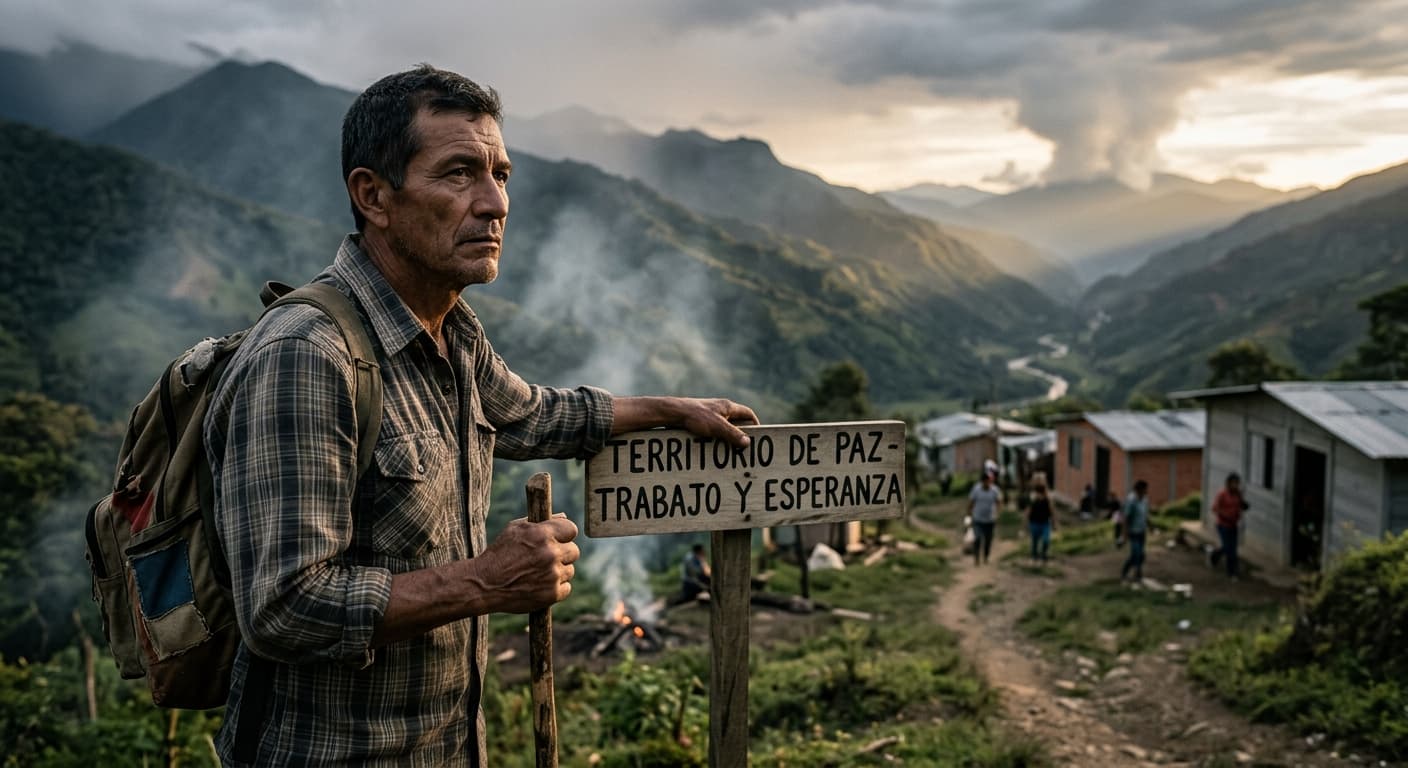
Colombia's Peace Accord at 10: Half-Built, Half-Undone
Ten years into a 15-year peace accord, Colombia has fully implemented only a third of its commitments — and just voted in a president who wants to bury the rest.
Colombia's 2016 peace agreement is the rarest thing in modern conflict resolution: a signed, monitored, judicially entrenched deal that survived the guerrilla army that signed it, three hostile administrations, and a doubling of the country's armed-actor population. It is also, by the ninth anniversary, a policy the Colombian electorate has just voted to abandon. On June 21, 2026, Trump-endorsed right-wing lawyer Abelardo de la Espriella narrowly won the presidential runoff against left-wing senator Iván Cepeda, according to Al Jazeera, on a platform that explicitly promises to end President Gustavo Petro's "Total Peace" strategy and end negotiations with armed groups. The peace accord's foundations are real, its implementation is behind schedule, and its next four years will be governed by a president who campaigned against it — the question now is which pieces survive contact with a hostile executive and a decertifying Washington.
That is the tension worth naming clearly. The 2016 accord has genuinely lowered the ceiling of Colombia's war — the FARC-EP dissolved as an army, more than 11,000 signatories remain in reintegration, and the Constitutional Court has locked implementation in as a binding state obligation running to 2030. But the floor has risen: FARC dissidents, the ELN and the Gulf Clan have doubled the country's armed-actor population since Petro took office, and Colombia in early 2026 recorded its most violent start to a year since the accord was signed.
What the accord actually delivered
The clearest measure of the accord's shape comes from the Kroc Institute at the University of Notre Dame, written into the text itself as the official monitor. As of May 2024, 33 percent of the accord's 578 stipulations had been fully implemented, 20 percent were at intermediate level, and 37 percent remained at minimum implementation, according to the Atlantic Council's analysis of Kroc data. The Council on Foreign Relations, citing the same monitor,
warns that "almost half of the agreement's commitments risk failing to meet the fifteen-year implementation time frame".
Behind the scorecard sits a real transformation. More than 11,000 former FARC-EP combatants remain active in the government's reintegration pathway, Special Representative Miroslav Jenča told the UN Security Council in January 2026, nine years after they laid down arms. Reintegration on that scale — collective productive projects in coffee, fish farming, tourism, textiles — has no clear precedent in Latin America. The 2003–2006 paramilitary demobilisation collapsed back into what became the Gulf Clan; the FARC pathway, for all its cracks, has not.
The transitional-justice architecture has also held. The Special Jurisdiction for Peace continues to issue restorative sentences; the Truth Commission finished its work; and a new international verification mechanism for those sentences was agreed this year, the UK told the Security Council on April 21, 2026. The Commission for Follow-up, Promotion and Verification of the Final Peace Agreement (CSIVI) has been reactivated. In April, the UN
witnessed the delivery of 2,100 land titles in Boyacá, a small but concrete pass at the rural-reform chapter that everyone from Jenča to CFR calls the accord's decisive test.
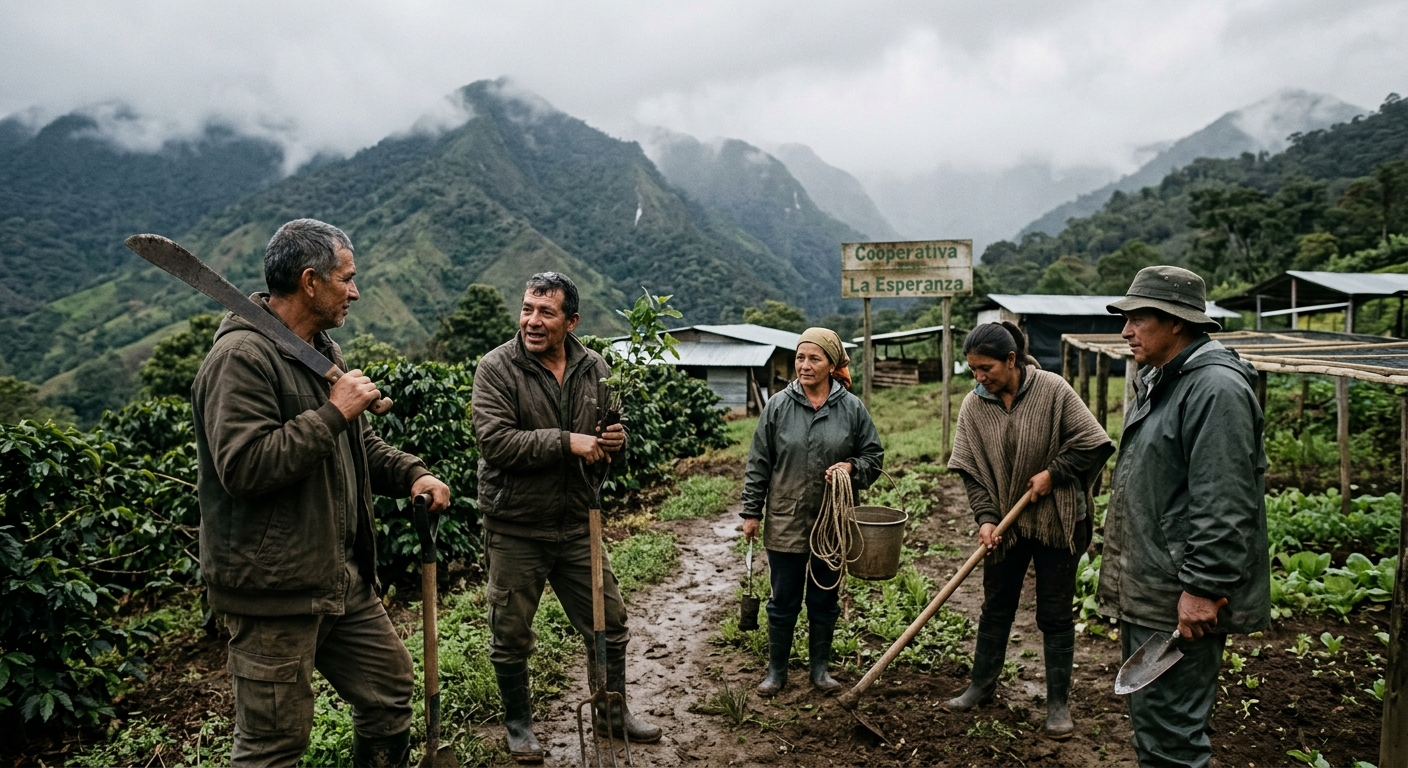
Where it is failing — and why
The gaps are structural, not rhetorical. Rural reform, the most expensive commitment and the one meant to address the accord's stated root cause of conflict, has moved slowly enough that Jenča publicly urged the Petro administration to "expedite the implementation of the Agreement as much as possible during the remaining months of its term," according to UN press coverage of his January briefing. Colombia had spent only 15 percent of the accord's required funds by 2021, despite being 29 percent through the timeline,
CFR notes, citing an estimated $41–42 billion cost across 15 years against roughly $8.3 billion invested to date.
The security guarantees chapter is worse. Since disarmament, 487 peace signatories have been murdered — 45 of them in 2025 alone, on top of hundreds of social leaders and human-rights defenders killed in the same territories the accord was meant to reach. The International Crisis Group
reports nearly 400 leaders and former combatants killed in the department of Cauca alone. Investigations resulted in only 54 convictions across 48 signatory homicides between 2016 and 2023, according to figures the US State Department provided to CFR. That gap — a killing a week, one prosecution in every fortnight of killings — is what Russia's UN envoy seized on to argue that FARC-EP former combatants "remain dire" and are "considering rearmament," a warning delivered inside the Security Council itself.
The gendered and ethnic chapters lag hardest. As of the Kroc Institute's November 2024 report, only 13 percent of gender commitments were complete, with 17 percent not yet begun, NUPI's March 2026 study documents. The ethnic chapter, meant to bind Afro-Colombian and Indigenous communities into implementation, tracks similarly,
the UN human-rights expert reported to the Human Rights Council. These are precisely the constituencies whose territories armed groups have moved into fastest.
"Total Peace" and the arithmetic of failure
Petro's flagship policy — negotiating in parallel with the ELN, EMC/FARC dissidents, the Gulf Clan and urban criminal networks — is the layer of the peace architecture that voters just rejected. The numbers explain why. Active fighters across Colombia's armed groups roughly doubled from 13,000 in 2022 to 27,000 by the end of 2025, according to the Colombian think tank Fundación Ideas Para la Paz cited by Al Jazeera. From January to April 2026, Indepaz recorded 48 massacres and 229 fatalities — the most violent opening months since 2016,
the Atlantic Council reports.
The mechanics matter. Ceasefires were reached early with the ELN, the EMC and the Gulf Clan; several broke down within months. Petro suspended talks with the ELN on January 17, 2025, after its offensive in Catatumbo, Al Jazeera reported, with more than 80 killed in three days. In April 2024, the Iván Mordisco faction of the EMC walked out of talks and returned to war,
NPR reported, staging attacks that killed dozens on the eve of the presidential vote. The Gulf Clan, in Doha talks under Qatari mediation since September 2025, signed a "commitment to peace" on December 5, 2025 — then briefly suspended negotiations in February 2026 after Petro pledged to Trump that he would target the group's leader,
Al Jazeera reported before talks resumed.
Crisis Group's judgement is that the diagnosis behind "Total Peace" — that a militarised state alone cannot pacify a fragmented conflict — is correct, but that the sequencing was wrong. Ceasefires without prior political frameworks handed groups time to reorganise, recruit and consolidate rents from cocaine, illegal mining and extortion. Cauca, Nariño, Chocó and Catatumbo are now more, not less, contested than in 2022.
The regional and second-order stakes
For neighbouring capitals, the outcome of Colombia's peace matters concretely. Colombia and Venezuela signed a border-security cooperation agreement in April 2026 to coordinate against groups active on both sides — a rare point of live cooperation between Bogotá and Caracas that a de la Espriella government aligned with Washington will find difficult to sustain. Ecuador is in a trade dispute with Colombia over border security. Panama absorbs the migration and cocaine flows that traverse the Darién Gap, where the Gulf Clan has expanded 62 percent since 2022,
Crisis Group documents. Brazil and Peru share the illegal-mining corridors that finance FARC dissidents.
Washington is now a variable, not a constant. The US decertified Colombia on counternarcotics in September 2025 — the first such move in nearly three decades. The FY2027 National Security appropriations bill conditions 30 percent of State Department INL assistance on certification of coca-reduction results, effectively pricing counternarcotics performance into future peace spending. The United States provided roughly $1.5 billion to accord implementation between 2017 and 2023,
CFR notes; those flows have already been cut under the Trump administration's foreign-assistance retrenchment.
The historical parallel worth taking seriously is Colombia's own 2003 paramilitary demobilisation. Incomplete reintegration and weak security guarantees allowed non-demobilised fighters to reconstitute as the Gulf Clan, today the country's largest armed group. If de la Espriella cancels dialogues, cuts reintegration budgets and slow-walks land reform, the risk is a repeat at scale — with 11,000 former FARC-EP fighters and their families as the population at risk.
What the Constitutional Court, and the calendar, still mandate
De la Espriella will inherit two hard constraints. First, the accord is not policy but constitutional obligation: the Constitutional Court has mandated that three successive administrations, running through 2030, implement it. Outright abandonment is not legally available; slow-walking is. Second, Cepeda's Historic Pact holds more seats than any other party in both chambers of Congress,
Al Jazeera notes, meaning any legislative rollback will be contested.
The UN Verification Mission goes into its next phase with reduced capacity. UNSC Resolution 2798 of October 2025 narrowed its mandate to rural reform, reintegration and security of ex-combatants, cut 200 personnel and reduced its budget by 17 percent, Jenča told the Council in January. Verification of Special Jurisdiction for Peace sentences and the ethnic chapter fell out of its remit. Foreign Minister Mauricio Jaramillo Jassir reaffirmed that "peace in Colombia can only be consolidated through the full implementation of the 2016 peace agreement" — a line the incoming government has not endorsed.
What to watch
- August 7, 2026 — De la Espriella's inauguration. Watch for early executive decrees on the Peace Accord Implementation Unit (UIAP), the PNIS crop-substitution programme and the status of ongoing dialogues with the Gulf Clan and ELN.
- Doha track, Q3 2026 — Whether the Gulf Clan/EGC roadmap survives the transition; the group's disarmament is the single largest potential deliverable on the "Total Peace" ledger.
- October 2026 — Next scheduled renewal of the UN Verification Mission mandate; a de la Espriella government could seek further narrowing or non-renewal.
- S/2026 reporting cycle — The Secretary-General's next 90-day report to the Security Council following
S/2026/229 will be the first written under the new administration.
The Bottom Line
Colombia's 2016 peace accord has done what its critics said it could not — dissolve a 50-year insurgency, reintegrate 11,000 fighters, and lock peace into the constitution — but it has not done what it promised: transform the rural periphery or protect the people who signed it. With Kroc's numbers showing only a third of commitments fully in place and a president-elect campaigning to end the wider peace policy, the accord's next four years will be a test of whether constitutional entrenchment can outlast electoral rejection. If it can, Colombia becomes the reference case for how post-conflict societies survive hostile governments. If it cannot, 487 dead ex-combatants will not be the final number.
Discover more
US Politics
Virginia's Redistricting Referendum
Virginia's redistricting referendum is drawing a flood of dark money, shaping future elections and the fight for congressional control amid party stakes.

US Politics
Virginia GOP Rallies Rural Voters Against Red
Virginia Republicans are mobilizing rural voters against a Democratic-led redistricting referendum, a fight seen as pivotal to control in the 2026 midterms.
India
Rajnath Singh's Durga Squad for 2026 Polls
Rajnath Singh's Durga Squad promised women's safety in Bengal but has since disappeared from the agenda, revealing BJP's true priorities.

Economics
Fed's Amex AML order puts correspondent banking on notice
Federal Reserve's Amex AML order requires board-level controls and a 90-day plan; OCC fined the bank $350 million over enterprise-wide deficiencies.