Colombia's Election: A Shift to Reversal
De la Espriella's victory signals a new direction for Colombia.
Model Diplomat4 min readLatin America
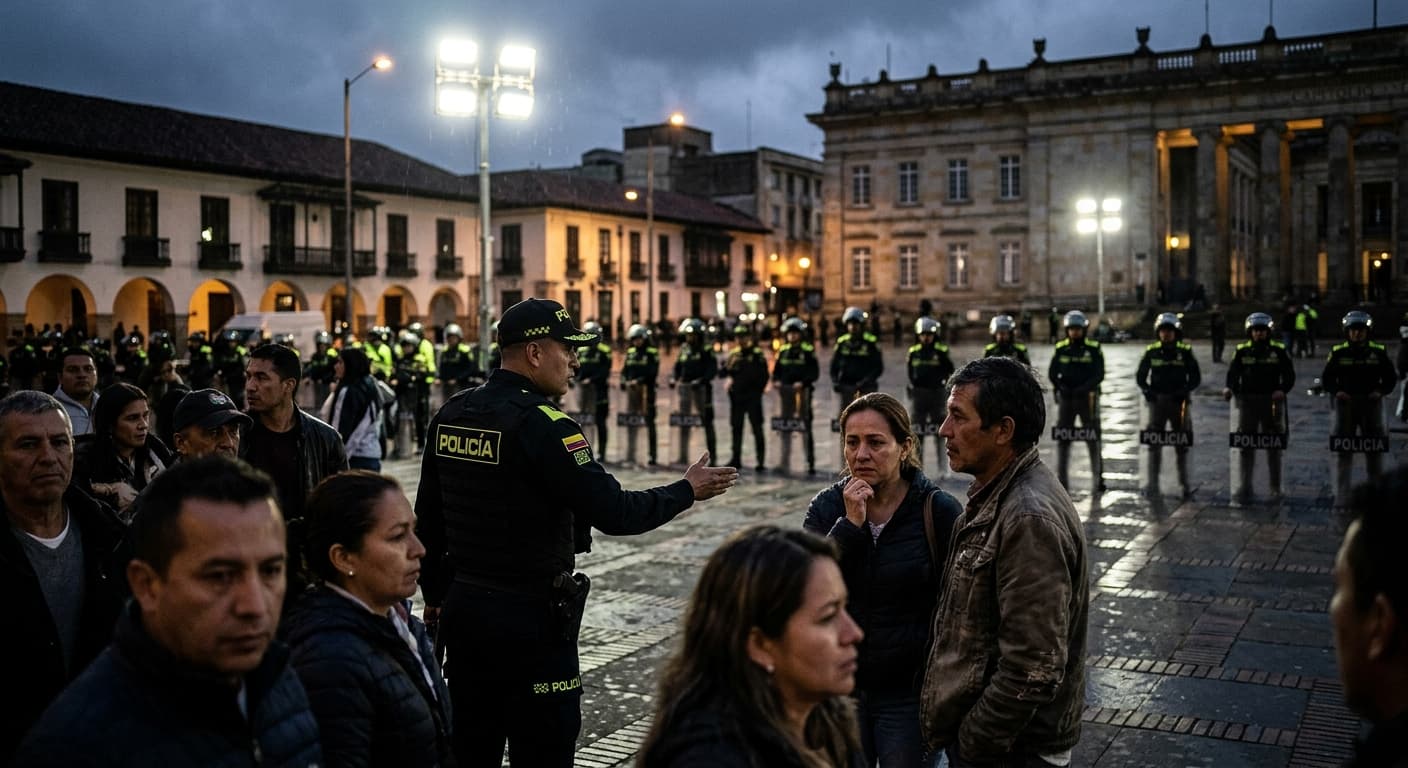
The Royal United Services Institute framed the choice with unusual clarity: Miguel de la Espriella won Colombia's June 2026 presidential runoff, ending Gustavo Petro's Paz Total experiment and beginning what the Royal United Services Institute called a choice between "adaptation or reversal." In its pre-election commentary, RUSI argued that abandoning the analytical framework — that Colombia's conflict is driven by structural socioeconomic conditions six decades of military pressure could not resolve — would be the more consequential outcome than any specific policy change. De la Espriella's victory chooses reversal.
The legal clock is the practical constraint. International Crisis Group notes in its Colombia's Polls Mark a Forking Path briefing that the statutory framework authorising state dialogue with armed groups expires in November 2026 unless Congress renews it. With Pacto Histórico holding the largest congressional bench but no majority, and De la Espriella committed to letting the framework die, the peace legislation is likely to lapse by November 2026.
The regional angle: an Andean security bloc, on Washington's terms
This is the second-order effect the wire is missing. De la Espriella's platform is not merely a Colombian pivot — it operationalises a bloc.
President Trump publicly endorsed De la Espriella after the first round, pledging "the total support and strength of the United States." Ecuadorian President Daniel Noboa announced a preemptive agreement with De la Espriella on June 1 to drop tariffs and coordinate on "narcoterrorism," prompting Colombia's foreign ministry to accuse him of "deliberate interference," per BBC Mundo. De la Espriella committed to restoring diplomatic relations with Israel, severed by Petro in 2024, after a June 24 call with Israeli Foreign Minister Gideon Saar,
Al Jazeera reported.
The regional geometry: an Ecuador–Colombia–US security triangle, with Noboa already conducting joint anti-cartel operations with US forces and Trump having seized Venezuelan President Nicolás Maduro in January. The BBC's runoff dispatch framed the vote as a decisive shift in "which countries the Latin American nation aligns itself with." That framing undersells the shift: this is the first time since 1998 that Colombia, Ecuador, and the United States have simultaneously held governments committed to a joint military posture against armed groups.
The Council on Foreign Relations warned in a Spanish-language brief that a Colombian government facing US pressure to "demonstrate a harder security posture" could slow implementation of the 2016 peace accords — even though Colombia's Constitutional Court ordered three administrations (2018–2030) to carry them out. That court order is now the last institutional guardrail against wholesale reversal.
The violence that shadowed the vote
The election was not "free and peaceful" in any absolute sense — it was free and peaceful given what preceded it. The Misión de Observación Electoral had recorded 415 cases of political violence by early February 2026. It flagged 185 of Colombia's 1,122 municipalities as at risk of electoral violence. The Defence Ministry deployed 408,000 troops and police for election day, per the BBC.
The campaign's dead include pre-candidate Miguel Uribe Turbay, shot at a June 2025 rally and killed in August; De la Espriella campaign staffers Rogers Devia and Éder Cardona, killed by motorcycle gunmen in Meta on May 15; and 21 people killed in the Cauca highway bombing on April 26. A soldier was wounded by a drone attack on election-day morning in Cesar. President Petro publicly wondered whether the explosives came from Ecuador — a rhetorical grenade that Bogotá's own foreign ministry declined to defuse.
Amnesty International's country report documents OCHA's tally of 2,794 violent incidents in Colombia in 2025, affecting more than 1.6 million people. The Consultoría para los Derechos Humanos (CODHES) recorded 139 mass-displacement events involving 90,282 people. The ICRC warned in May 2025 that humanitarian indicators would be the worst in a decade.
That is the baseline against which the "commitment to a free electoral process" must be read. The commitment was formal, sincere, and — remarkably — kept. But it was kept in a country where armed groups control roughly a third of municipal territory, where a pre-candidate was assassinated mid-campaign, and where the sitting president spent the count claiming fraud.
What to watch
- Cabinet, July–August 2026. De la Espriella must name a defence minister and interior minister before the August 7 inauguration. Watch for figures from the pre-Uribe technocratic right (José Manuel Restrepo signals that instinct) versus movement loyalists. The tell: whether he retains the current Fuerza Pública leadership or purges it.
- Paz Total framework, November 2026. Unless Congress extends the enabling law, state negotiators lose legal cover to talk to the Ejército de Liberación Nacional, Segunda Marquetalia, EMC or Clan del Golfo. Crisis Group flagged the near-certainty of a violence spike if the framework collapses without a replacement.
- The Constitutional Court on the 2016 accord. The court ordered three administrations to implement the peace deal through 2030. Any executive move to slow implementation invites judicial review — and would be the first test of institutional resistance to the new government's security doctrine.
- US–Colombia security memorandum. De la Espriella has pledged closer alignment with Washington on drug interdiction, including the "bombing" of cartel targets. Watch for a formal defence agreement in the first 100 days.
- Cepeda in the Senate. Pacto Histórico is the largest bloc. Cepeda's transition from candidate to opposition leader determines whether the left is a coherent counterweight or splinters between Petro loyalists and pragmatists.
The Bottom Line
Colombia's institutions kept the commitment to a peaceful vote — not through the Procuraduría's rhetoric but through Iván Cepeda's decision to concede over a sitting president still crying fraud. The Colombia that vote produced will spend the next four years dismantling Paz Total, aligning its security doctrine with Washington, Quito and Tel Aviv, and testing whether the 2016 accord's constitutional protections can survive a president who calls it a "sham." The commitment held. The peace it inaugurated will be armed, aligned, and — if the Fundación Ideas para la Paz diagnosis is correct — unequal to the violence it inherits.
Discover more
India
Congress Accuses Modi of Stalling Women's Law
Congress accuses Modi of stalling women's reservation law by linking it to delimitation, revealing a deeper electoral strategy.

US Politics
SNAP Food Assistance Faces Legal Challenges
In 2026, SNAP faces stricter eligibility rules and mounting legal challenges, threatening food assistance for the millions of Americans who rely on the program.
India
Rajnath Singh's Durga Squad for 2026 Polls
Rajnath Singh's Durga Squad promised women's safety in Bengal but has since disappeared from the agenda, revealing BJP's true priorities.

Conflict & Security
Drone Warfare Killing Aid Workers at Unprec
Over 1,000 humanitarian workers killed in three years as cheap armed drones collapse legal protections. Gaza, Sudan, Ukraine, and DRC see deliberate targeting of aid convoys and hospitals with zero prosecutions.