DRC's Referendum Bill Signals Tshisekedi's T
Fast-tracked law raises concerns over term limits.
Model Diplomat3 min readafrica
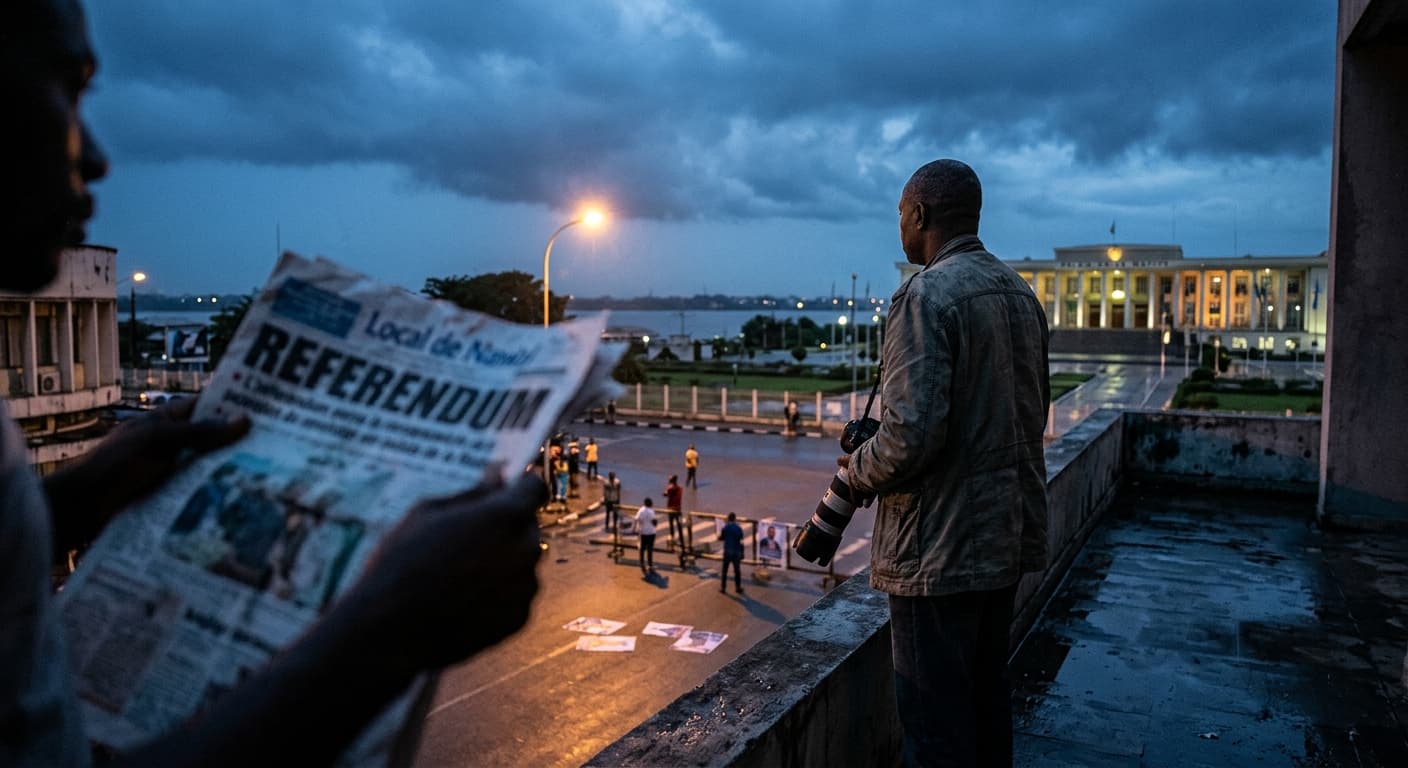
DRC's Two-Chamber Sprint on Referendum Bill Signals Tshisekedi's Endgame on Term Limits
The National Assembly and Senate have fast-tracked a referendum law that creates a "major dysfunction" loophole through locked constitutional term limits — as an unusually unified opposition, street protests, and a bloody June 12 rally escalate the standoff.
The ruling majority in the Democratic Republic of Congo has moved with striking speed: the National Assembly passed the referendum bill on June 9 without opposition members present, and the Senate followed on June 15, adopting it with 89 of 109 senators — though it introduced an amendment stripping municipal counselors from the constituent assembly, forcing a harmonization procedure between chambers.
DW reports the lower-house vote occurred while opposition lawmakers have been boycotting parliament for weeks.
Benin Web TV confirms the Senate tally and the amendment requiring reconciliation — a procedural delay, not a blockade.
The legislative machinery is not in doubt. Tshisekedi's Union Sacrée de la Nation controls 477 of 500 National Assembly seats and 104 of 108 Senate seats, per Brookings data from the 2023 elections. What the majority wants, the majority gets. The question is what it wants.
The bill's architecture is the story. The 2006 constitution locks presidential term limits — neither the number nor length of terms can be revised. The new law carves an exception: if a "major dysfunction" paralyzes state institutions, those locked provisions become amendable via referendum. Opposition leader Moïse Katumbi, runner-up in the 2023 presidential election now living in exile, calls it "a subterfuge designed to enable Félix Tshisekedi to carry out a constitutional coup," DW reports.
Tshisekedi has not been subtle about his intentions. In early May he declared: "I have not asked for a third term, but if the people want me to have a third term, I will accept." He linked the timing of 2028 elections to ending the M23 rebellion in the east, saying voting "could not be organized" without the two occupied Kivu regions. BBC reported his press conference remarks framing any extension as a popular mandate, not a personal demand.
The opposition has responded with rare unity. At the end of May, Katumbi, Martin Fayulu, Matata Ponyo, Jean-Marc Kabund, and civil society groups launched the "Article 64 Coalition for the Defense of Constitutional Order" (C64). On June 3, a nationwide "ville morte" (ghost town) strike was widely observed in Kinshasa and other cities. DW
Then came June 12. A C64-organized rally outside parliament in Kinshasa turned violent when pro-government activists clashed with protesters; police fired tear gas, and Fayulu was injured, captured on video with blood around his eyes. Al Jazeera reported the scene via AFP and Reuters.
The international dimension sharpens the stakes. Katumbi has appealed directly to US President Donald Trump, warning that if Tshisekedi does not respect the constitution, "how can anyone expect him to respect the partnership agreement with the US on minerals?" Tshisekedi has linked constitutional reform to external pressures, saying in May that "the Americans have demanded certain reforms from us" that "could not be carried out without revising the Constitution." DW
Legal challenges are already teed up. Godefroy Mwanabwato, a lawyer at the Tshopo Bar Association, told DW the Constitutional Court could "remove from this bill all provisions that go beyond the powers granted to the legislature." Bob Kabamba, a drafter of the current constitution, warned that replacing the constitution would mean "the President is no longer President and Parliament is no longer Parliament."
What to watch next
Three decision points. First, the Senate-National Assembly harmonization — the upper chamber's amendment on the constituent assembly composition must be reconciled; if the chambers deadlock, the constitution gives the National Assembly the final word. Second, the Constitutional Court — whether it accepts jurisdiction over the "major dysfunction" clause and strikes it before the law is promulgated. Third, the street — C64 has promised further demonstrations including sit-ins outside parliament. The June 12 violence suggests the government will not tolerate them peacefully.
The 2028 election deadline is 19 months away. The speed of this legislative push — both chambers in under two weeks — tells you Tshisekedi is not waiting to see how the eastern conflict resolves. He is building the legal architecture now, while he holds overwhelming parliamentary majorities and before the opposition can regroup.
Discover more
US Politics
SNAP Food Assistance Faces Legal Challenges
In 2026, SNAP faces stricter eligibility rules and mounting legal challenges, threatening food assistance for the millions of Americans who rely on the program.
India
Rajnath Singh's Durga Squad for 2026 Polls
Rajnath Singh's Durga Squad promised women's safety in Bengal but has since disappeared from the agenda, revealing BJP's true priorities.
Global Politics
Xi Jinping Calls China-Russia Ties 'Precious'
Xi Jinping's description of China-Russia ties as 'precious' reflects a strategic imbalance, with Beijing dictating terms in the partnership.

Economics
Fed's Amex AML order puts correspondent banking on notice
Federal Reserve's Amex AML order requires board-level controls and a 90-day plan; OCC fined the bank $350 million over enterprise-wide deficiencies.