Cockroach Janta Party Exposes India’s Opposition Gap
India’s viral parody party is less a joke than a stress test: youth anger is moving faster than the opposition’s ideas.
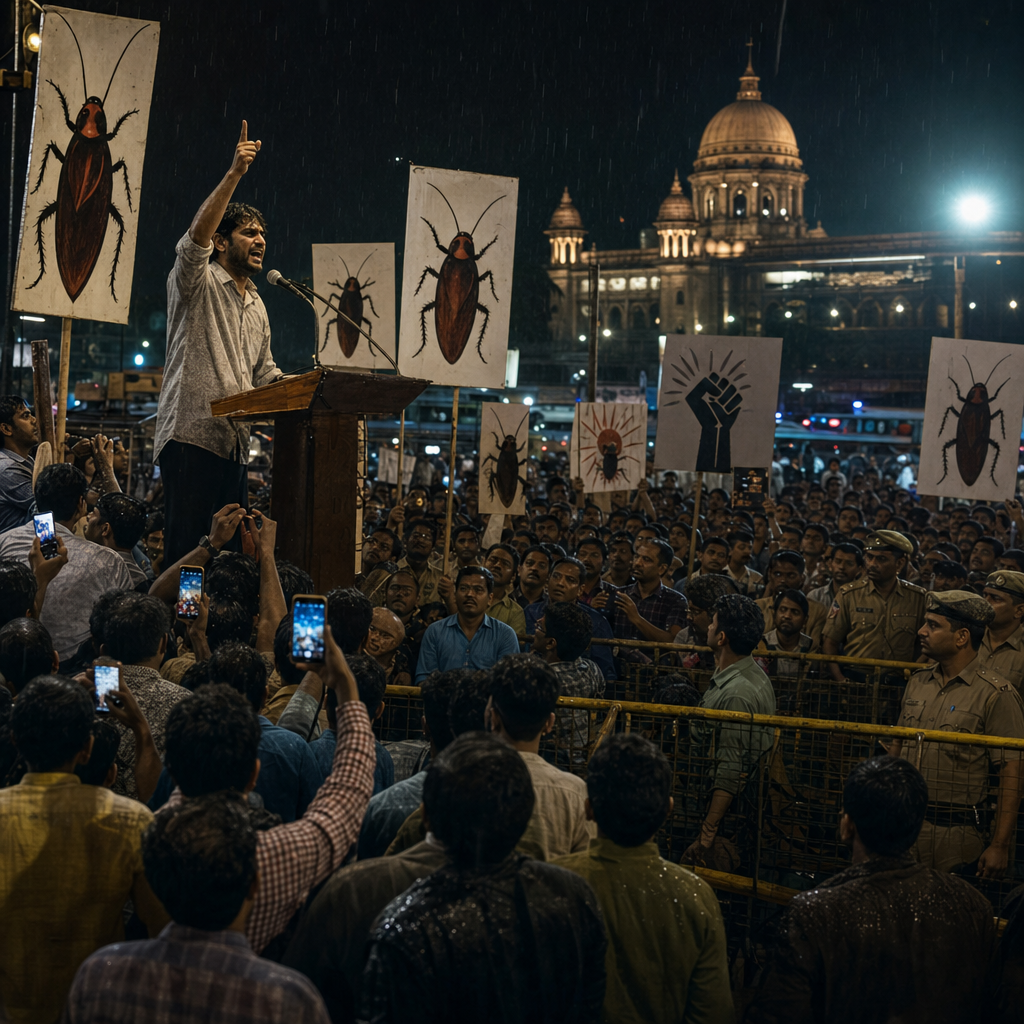
A satirical outfit calling itself the Cockroach Janta Party has become a political problem for everyone in  India, but the opposition is the one most exposed. NDTV’s opinion piece argues that the movement’s real significance is not that it mocks the BJP, but that it reveals how quickly disillusioned young voters can organize outside traditional parties. The spark was a reported Supreme Court remark by Chief Justice Surya Kant comparing some unemployed youngsters to “cockroaches” and “parasites,” later narrowed to people with fake degrees; the backlash turned into a meme movement almost overnight (
 NDTV,
NDTV,  The Hindu).
A meme that organized faster than parties do
The speed is the story. Reuters, carried by  The Straits Times, reported that the CJP gathered nearly 15 million Instagram followers in less than a week, overtaking the BJP’s official account on the platform. The Hindu reported that founder Abhijeet Dipke posted a Google form on May 16 and that the group drew thousands of registrations within hours, with the site branding itself the “Voice of the Lazy & Unemployed” (The Straits Times, The Hindu).
That matters because the CJP is not winning on ideology. It is winning on tone. It turns humiliation into identity, and identity into participation. NDTV’s piece is right to stress that the group’s power lies in its emotional code: unemployed, digitally fluent, and angry at institutions that talk down to them (NDTV). In a political market where attention is scarce, irony now outperforms manifestos.
Why the opposition is more vulnerable than the BJP
The BJP has the defensive advantages that matter most in Indian politics: machinery, brand recognition, and a disciplined message. NDTV’s argument is that the opposition does not. It can criticize, but it often cannot convert critique into a lived political culture. That leaves a gap that a parody movement can fill: it speaks the language of grievance without sounding like the same old opposition brochure (NDTV).
The broader backdrop is unemployment and frustration. Reuters reported in the Straits Times that India’s unemployment rate for those aged 15 to 29 was 9.9% in 2025, far above the headline national rate, while Gen Z also faces higher financial stress and delayed major life decisions because of rising costs (The Straits Times). The point is not that the CJP can replace a party machine. It is that it can name a mood faster than real parties can.
The judiciary also helped create the opening. The Hindu’s reporting on the “oral remarks and institutional limits” question makes clear why the backlash stuck: bench comments now travel instantly, before any formal order can correct the tone. That means institutional language is no longer contained inside institutions. Once the insult goes public, the internet owns it (The Hindu).
What to watch next
The next test is whether the CJP stays a viral release valve or becomes a durable pressure campaign. Watch for three things: whether it keeps attracting sign-ups after the news cycle fades; whether opposition parties borrow its language on jobs, exams, and institutional respect; and whether the courts or political class keep producing the kind of remarks that feed it. For now, the lesson is simple: youth anger is already organized — just not by the parties that think they own it.