China Investors Defy Australia’s Divestment
China-linked shareholders resist selling Northern Minerals stake
Model Diplomat7 min readAustralia
Why China-linked holders won't sell out of Australia's Browns Range
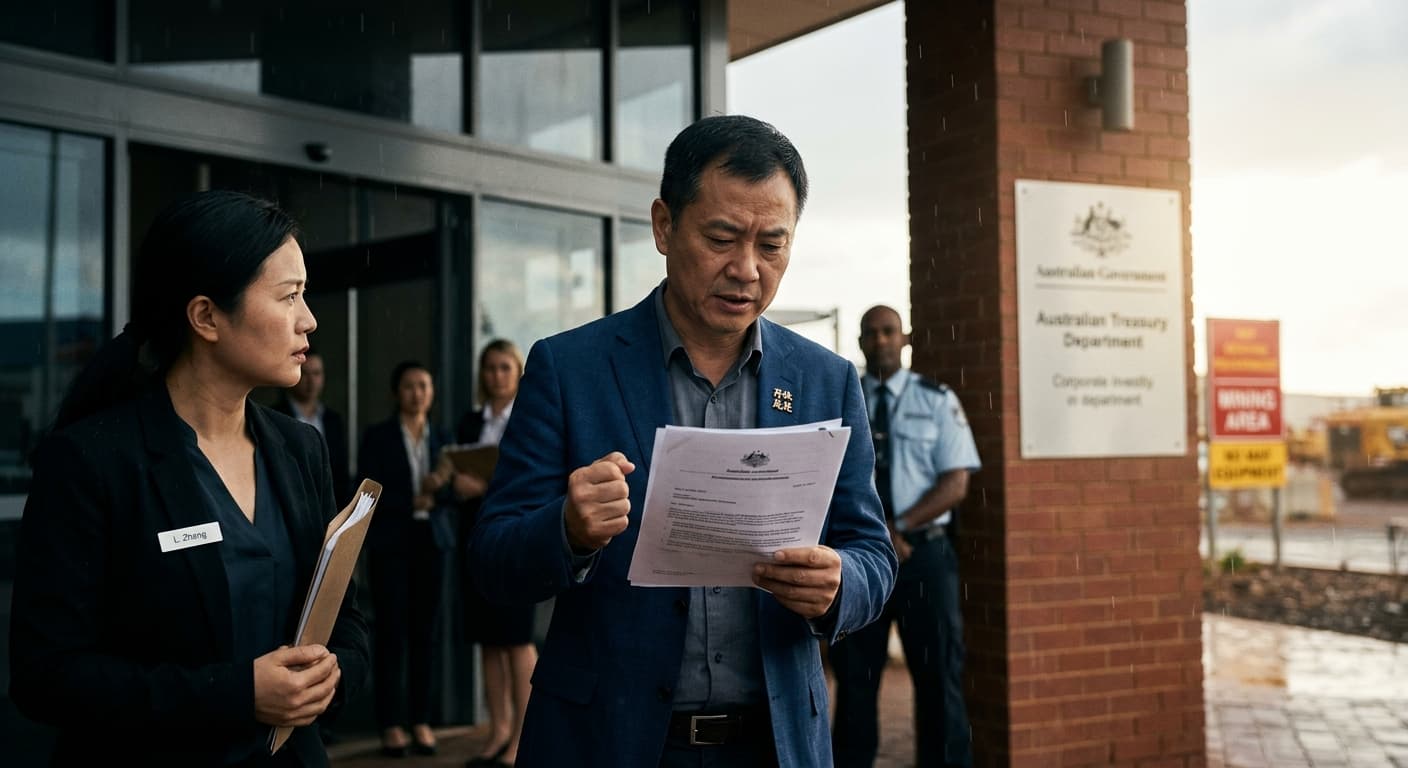
Six China-linked investors ignored Treasurer Jim Chalmers's July 2 order to sell 17% of Northern Minerals. The stall — not the stake — is the strategy.
Six China-linked shareholders in Northern Minerals — the Perth-listed developer of what would be the world's first significant dysprosium mine outside China — let a federal divestment deadline pass on July 2, 2026 while still holding a majority of the 1.68 billion shares Chalmers ordered them to sell in May, according to a filing Northern Minerals made to the Australian Securities Exchange on Tuesday. The behaviour is not a legal miscalculation. It is a rational bet that dragging out Browns Range for another year is worth more to Beijing than the shares themselves — because every quarter of delay preserves China's near-monopoly over the heavy rare earths that go into F-35 magnets, precision munitions and EV traction motors. And Australia's foreign-investment enforcement toolkit, as
the Australian Strategic Policy Institute's Ian Satchwell put it, was never built for shareholders who simply refuse.
What happened, precisely
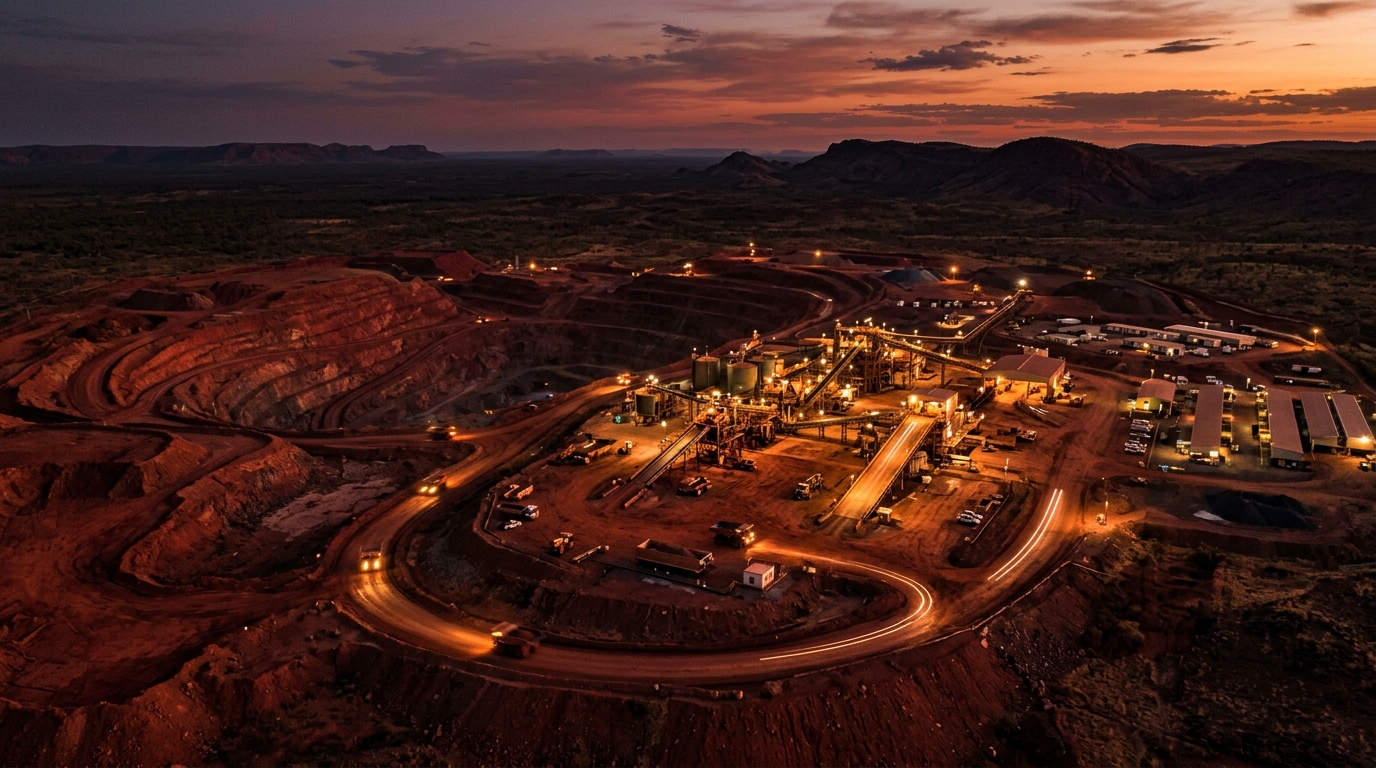
Northern Minerals owns the Browns Range project in the East Kimberley, one of the few high-grade heavy rare earth deposits outside China, with estimated dysprosium reserves of 2,294 tonnes and design capacity of 279,000 kg per year, per CSIS. Its concentrate is contracted to Iluka Resources' Eneabba refinery — the A$1.65 billion, government-backed facility
the BBC reported is expected to supply "a significant proportion of Western demand for rare earths by 2030."
That is why Canberra has spent three years trying to lever Chinese-linked capital out of the register. The pattern is documented in the Cambridge World Trade Review: in August 2020, Baogang was blocked from an 11.1% stake; in February 2023, Chalmers prohibited the Singapore-registered Yuxiao Fund from raising its holding to 19.9%; in June 2024, five China-linked entities were told to divest.
One of them, Indian Ocean International Shipping and Service Company, then transferred its shares to its own former director, Jing Tian. Chalmers took the case to the Federal Court on 26 June 2025 — the first prosecution ever brought by an Australian Treasurer under the 1975 foreign investment law. On 30 January 2026,
the court fined Indian Ocean and Ms Tian A$14 million. The May 2026 orders, now defied, cover six investors holding around 17% between them.
A Treasury spokesperson told the ABC the government would "do what's necessary to protect the national interest and the integrity of our foreign investment framework." That framework, however, was designed for foreign bidders who want approval — not offshore holders indifferent to it.
Why the shares are worth more than the money
The instinct is to read the refusal as bravado. It is not. It is optionality.
Beijing wielded that option twice in the past year. On 4 April 2025, China's Ministry of Commerce imposed export licensing on seven rare earths including dysprosium, terbium and yttrium — precisely the elements Browns Range would supply. On 9 October 2025, MOFCOM's Announcement No. 61 extended controls to five more elements, related equipment and — for the first time — foreign-made magnets containing as little as 0.1% Chinese-origin heavy rare earths. The
European Parliamentary Research Service confirms the second wave was suspended only until 10 November 2026, giving Beijing a live re-imposition trigger just as any alternative supply is meant to arrive.
The market effect of the first wave was extreme. According to the Swedish Institute of International Affairs, European dysprosium oxide spot prices ran 289% above Chinese domestic levels after April 2025. Under Announcement No. 61,
reported by Al Jazeera, applications from foreign militaries and their affiliates are to be denied by default. The
Merics analysis of MOFCOM's licensing regime shows Beijing is now using approval timelines themselves as a tuning knob — slow-walking European magnet exporters while granting a "green channel" whitelist.
Against that backdrop, a delay to Browns Range's ramp-up is worth serial multiples of any share loss. Iluka's Eneabba refinery is two years from commissioning. Every quarter that Northern Minerals is caught in enforcement litigation is a quarter that Japanese, Korean and US automakers cannot walk away from Chinese magnet supply — the exact leverage Beijing spent October 2025 codifying into extraterritorial law.
The enforcement gap Canberra can already see
Australia has better rare-earth screening tools than any Western economy other than Canada. The Cambridge study counts four outright FIRB rejections of China-linked critical minerals bids between 2020 and 2023, plus the 2024 disposal orders — a pattern with no precedent in the previous decade. And unlike the United States, Australia has actually taken a foreign investor to court and won a penalty.
But the reach ends at the beneficial owner. CSIS argues the West's screening regimes were built to police approvals inside their borders, not to force a sale from opaque offshore holders. Satchwell said the same, more bluntly: "if these investors are off-shore somewhere and we don't really know much about them, it's very difficult to enforce."
Chalmers has already conceded the point in Treasury's own paperwork. The May 2026 discussion paper on further reforms — released for the 2026-27 Budget — proposes to:
"enable the Treasurer to issue more targeted and flexible orders and directions. For example, disposal orders might specifically exclude particular entities from acquiring the disposed interests… These changes will restrict investors' ability to circumvent the intention of the orders and directions."
That is a direct answer to the Indian Ocean–Jing Tian transfer trick. It also lowers the threshold for using the "last resort" power to unwind approvals mid-life. It is, in effect, Treasury telling the market that the current toolkit was insufficient to hold Northern Minerals's register.
The wider pattern: Peak, Ngualla, and the ownership contest
Northern Minerals is not the only Australian rare-earth developer caught in the Chinese ownership vortex. In May 2025, CSIS documents that Shenghe Resources — through its Ganzhou Chenguang subsidiary — acquired Peak Rare Earths and its Ngualla project in Tanzania for around A$158 million, delisting it from the ASX by October. A late US private equity counter-bid, backed by former Congressman Mike Gallagher, arrived too late. Ngualla, widely regarded as one of the top undeveloped rare earth deposits globally, passed into Chinese hands because Canberra's veto stops at the water's edge.
That precedent explains the political stakes at Browns Range. If Canberra cannot compel a divestment on an ASX-listed company operating a mine on Australian soil, the message to Washington and Tokyo — both leaning on Australia to be the anchor of a "de-Chinafied" supply chain, as the Lowy Institute described Japan's JOGMEC play with Lynas — is that even the strongest Western critical-minerals regime is porous at the shareholder level.
Japan has responded by rewriting its own contracts on price. Lynas's renewed offtake to JARE runs to 2038 with a US$110/kg floor on 5,000 tonnes of NdPr — a price alignment mirroring the Trump administration's MP Materials deal. The Critical Minerals Strategic Reserve, which Chalmers used for the first time this year on Arafura Rare Earths' Nolans project
per his own Perth press conference, is Australia's answer. But price floors do not solve ownership. Only enforcement does.
Who benefits, who loses
The immediate winner is Beijing, which retains a delay lever on the one Western dysprosium project close to production without any Chinese state entity needing to lift a finger — the private, dispersed 17% does the work.
The losers are more numerous than they first appear. Iluka Resources' Eneabba refinery loses a feedstock partner it needs. Japan's JOGMEC and Sojitz — which have earmarked A$1.67 billion in co-investment across six Australian projects — lose diversification credibility. So does the US, whose Department of Defense is
funding Lynas's Texas processing plant on the assumption Australia is a reliable upstream partner. And Northern Minerals' non-Chinese shareholders wear a discount as long as the register remains contested.
There is a subtler beneficiary: Iluka itself, whose 650 million-dollar stockpile of dysprosium and terbium byproducts becomes strategically priceless if Browns Range slips. That reads less as a policy failure than as an accidental hedge Canberra built in 2022 when it advanced the A$1.65 billion loan for the Eneabba refinery.
Forward look — dates that matter
- 10 November 2026 — expiry of China's temporary suspension of the second-wave (October 2025) rare earth export controls. Re-imposition would reprice heavy rare earths globally and sharpen the cost of every day Browns Range remains stalled.
- Late 2026 / 2027 Federal Court filings — if Treasury pursues the six May-2026 non-compliers, expect fresh Federal Court action modelled on the Indian Ocean precedent. Watch whether penalties scale with the size of the retained stake.
- 1 January 2027 — commencement of the 2026-27 Budget's foreign investment framework reforms. The redrafted disposal-order powers will be the operative law if a third round of orders is required.
Diplomat View
The refusal to sell is not defiance — it is arbitrage. As long as China can throttle the global dysprosium and terbium market through licensing, a blocking stake in the one credible Western alternative is worth more than its book value, and Australian courts move too slowly to change that calculus inside the window that matters (roughly the next 24 months, until Eneabba and Browns Range are both producing). Our call: Chalmers will file fresh Federal Court action before year-end and secure penalties, but not compliance — and the 17% will change hands only when Treasury's 2027 rules let it name the acceptable buyer. What would revise the forecast: a criminal referral, coordinated allied sanctions on the six named investors, or a Chinese offer to lift the 10 November export-control snapback in exchange for a quiet retention of the shares. The last of these is the outcome Beijing is playing for. It is also the one Canberra cannot be seen to accept.
The Bottom Line
Australia has built the West's most aggressive critical-minerals screening regime — and still cannot force six offshore shareholders to sell 17% of a single Kimberley mine. That gap, not the tonnage in the ground, is what determines whether the "de-Chinafied" rare earth supply chain the US, Japan and the EU are counting on actually arrives before Beijing's next export-licence snapback in November 2026.
Discover more
US Politics
House Ethics Committee Pushes Sexual Miscond.
The House Ethics Committee has shifted responsibility for sexual harassment settlement records to the Office of Congressional Workplace Rights, complicating disclosure efforts.

India
India-South Korea $50B Trade Expansion Plan
India and South Korea target $50 billion in bilateral trade by 2030, focusing on industrial cooperation and strategic alignment amid US pressures.
India
700 Activists Accuse PM Modi of MCC Breach
Over 700 activists allege PM Modi breached election code with a televised address attacking opposition parties just before state elections.

Economics
Fed's Amex AML order puts correspondent banking on notice
Federal Reserve's Amex AML order requires board-level controls and a 90-day plan; OCC fined the bank $350 million over enterprise-wide deficiencies.