Central Asia's Winter Fuel Crisis
Kyrgyzstan, Uzbekistan, and Kazakhstan seek new energy sources.
Model Diplomat8 min readCentral Asia
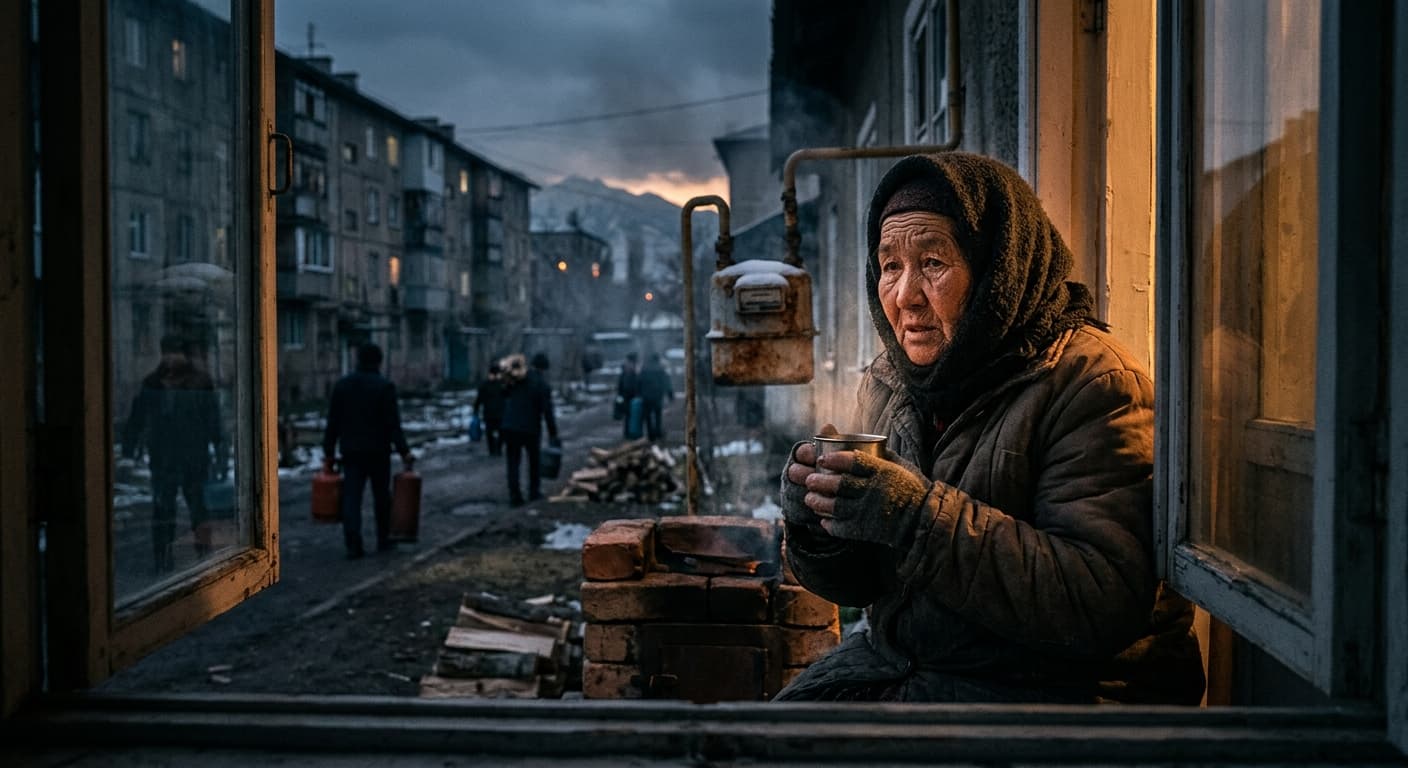
Central Asia's Winter Fuel Squeeze Redraws the Russia Map
Ukrainian drones have cut Russia's refined-oil output by 700,000 barrels a day — and Kyrgyzstan, Uzbekistan and Kazakhstan are now shopping in Beijing, Minsk and Baku for winter fuel that Moscow can no longer guarantee.
Central Asia's winter energy problem is no longer about coal deliveries or aging boilers. It is about a 13% collapse in Russian refining capacity that has spilled through EAEU contracts, rail slots and gas-processing links into every capital from Bishkek to Tashkent — and it is quietly forcing a diversification the region has spent a decade avoiding. On July 7, Kyrgyzstan abolished retail gasoline price regulation and opened talks with China, Belarus and Uzbekistan for supply. On July 6, Uzbek President Shavkat Mirziyoyev signed off on a 120,000-ton emergency gasoline reserve for December and January. On July 8, Kazakh oil-and-gas analyst Olzhas Baidildinov publicly urged the government to call for fuel conservation — a striking break from the Energy Ministry's insistence that 'there is no shortage.' This is what the unwinding of Russia as Central Asia's "external powerbank" looks like in real time.
What broke, and how fast
Ukraine's escalated refinery campaign is the trigger. In April and May 2026, Kyiv launched 26 strikes on Russian refineries — matching the August–September 2025 peak that first cracked the market. The Carnegie Endowment's Sergey Vakulenko calculates that daily refined-oil output fell from about 5.2 million barrels at end-March to as little as 4.5 million in May, with a further 600,000-barrel/day hit after mid-June strikes on the Moscow (Kapotnya) and TANECO refineries. President Vladimir Putin conceded the strain on state television on June 28, telling officials that "problems for drivers and for businesses persist" and that "the harvest depends on" keeping farm-fuel schedules,
per The Times of Central Asia.
The June 24 strike on the Gazprom-owned Orenburg gas processing plant is the pivot that dragged Central Asia in. The plant processes raw gas from Kazakhstan's Karachaganak field; when its intake fell, Karachaganak was forced to throttle back wells, cutting output of oil, gas and gas condensate — the feedstock for gasoline, diesel and jet fuel. Al Jazeera reported that the Norsi refinery near Nizhny Novgorod, Russia's fourth-largest, suspended operations following a drone hit the same week.
BBC Russian Service noted that Uzbekistan's gasoline imports doubled in January–April 2026 versus a year earlier, while diesel imports climbed about 18%.
The dependency the region has quietly ignored
Kyrgyzstan is the extreme case. Deputy Energy Minister Nasipbek Kerimov told The Times of Central Asia the country imports roughly 95% of its 2-million-ton annual fuel-and-lubricants demand from Russia. Bishkek has formally asked Russia, Kazakhstan, Belarus, Azerbaijan, Uzbekistan and Turkmenistan to help secure winter volumes — the widest supplier appeal in a decade. Diesel that traded for around $700 a ton before the war now costs about $1,200, according to information-policy chief Dayirbek Orunbekov, quoted by BBC Kyrgyz; AI-92 gasoline has moved from roughly $650 to about $950 a ton.
Tajikistan, which sources about 84% of its petroleum products from Russia, is already rationing. Diesel prices in Dushanbe rose by 1.5–2 somoni in two days in early July; some filling stations shut, others capped sales at 20 liters per vehicle. On July 6, Tajikistan's economic authorities convened a government-wide meeting on import diversification and domestic crude processing.
Uzbekistan looks better on paper — it operates the Bukhara and Fergana refineries and the Uzbekistan GTL complex — but demand is outrunning supply. In the first four months of 2026, Uzbek gasoline imports reached 568,700 tons worth $327.1 million, more than double the same period in 2025; domestic refineries produced only 417,500 tons. On June 29, AI-92 on the Tashkent exchange hit a record 13.919 million soums per ton (about $1,160), up 11.8% in one month. Uzbekistan Airways cut Russia frequencies in mid-June, citing jet-fuel shortages. Domestic gas production fell 15% year-on-year in Q1 — the number that will matter most once heating season starts.
Kazakhstan has the refineries and reserves to run a winter — alone in the region — but its subsidized pump prices are now a liability. Global Petrol Prices data cited by Kursiv put a liter of AI-95 at $0.69 in Kazakhstan versus $1.01 in Kyrgyzstan, $1.14 in China and $1.34 in Uzbekistan. Prime Minister Olzhas Bektenov was briefed on July 4 that border teams have blocked 593 export attempts totaling more than 40,000 liters since January, with 61 more attempts intercepted over two days. Kazakh oil-and-gas analyst Olzhas Baidildinov, in a July 8 Telegram post reported by Kursiv, urged the government to publicly call for fuel conservation — a striking break from the Energy Ministry's insistence that "there is no shortage."
The powerbank thesis is cracking
For two decades, Kazakh analyst Baidildinov's own framing — that Russia acts as Central Asia's "external powerbank," a supplier of last resort for oil products, gas and electricity — has defined the region's energy strategy. He wrote in Valdai Club that Russia supplies about 1 million tons of oil products a year to Kazakhstan alone, and that "without Russian fuel supplies, it would not be possible to meet the needs of either Kazakhstan or other Central Asian countries." That premise is now being tested by the war, and the response is a scramble to build parallel supply chains before winter.
Three shifts are visible. First, Kyrgyzstan is negotiating diesel and jet fuel from China through the Torugart and Irkeshtam crossings, alongside contracts in Belarus and Uzbekistan — the first serious break from a Russia-only fuel mix. Second, Kazakhstan is quietly redirecting Kashagan crude to the Shymkent refinery (a KazMunayGas–CNPC joint venture) and to the Atasu–Alashankou pipeline to China after Ukrainian drone strikes on Caspian Pipeline Consortium tankers in November 2025 and January 2026. The Warsaw-based OSW think tank noted that KazTransOil's China-facing pipeline capacity will "soon" reach 146.6 million barrels a year — still only 28% of CPC throughput, but a hedge that did not exist three years ago. Third, Turkmenistan has begun signing gas memoranda with Iraq and Hungary while, in a July 2025 statement, publicly endorsing the Trans-Caspian pipeline it had blocked for two decades,
per the Hudson Institute.
The regulatory footprint is also moving. On October 10, 2025, the Council of the Eurasian Economic Commission — a body Russia normally controls — temporarily zeroed tariffs on fuel imports into the common market, a tacit admission that Russia could no longer meet obligations. OSW's analysis called the move an acknowledgment that intergovernmental supply agreements were failing to deliver actual cargoes. The UK's Office of Financial Sanctions Implementation reinforced the pivot on March 19, 2026, issuing
General Licence INT/2026/9247168 explicitly permitting the supply, purchase and transport of Kazakh oil — a sanctions carve-out designed to keep Kazakh crude flowing westward as CPC volumes wobble.
Who benefits, who loses
The immediate winner is Beijing. China's Belt and Road Initiative signed a record $213.5 billion in new agreements globally in 2025, with Central Asia the second-largest regional recipient at roughly $25 billion in the first half alone, according to CSIS. Chinese firms already operate the Central Asia–China gas pipeline eastward, the Atasu–Alashankou oil pipeline, half of the Shymkent refinery, and the Ulba fuel-assembly plant. Every ton of fuel Kyrgyzstan buys from China this winter, and every barrel Kazakhstan reroutes eastward, deepens a dependency structure CSIS argues "mirrors" the Russian model that Central Asia is trying to escape.
Belarus is the smaller, stranger beneficiary. Minsk's Mozyr and Naftan refineries, themselves dependent on Russian crude via the Druzhba pipeline, are the only large EAEU-integrated source of Euro-5 gasoline outside Russia, and Kyrgyzstan is now negotiating direct offtake. That gives Alexander Lukashenko a leverage moment he has not enjoyed since 2020.
The clear losers are Bishkek's households and Tajik farmers. Kyrgyzstan's July 7 decision to lift retail price regulation, reported by Kursiv, was a fiscal necessity — the subsidy mechanism was set to expire September 30 — but it hands the winter squeeze directly to consumers. And the World Bank's own reform agenda is pulling in the same direction: on June 9, 2026, the Bank approved a $50 million iFIRST project explicitly designed to move Kyrgyz electricity tariffs "closer to cost recovery." Higher power tariffs plus unregulated fuel plus falling Russian supply is a compounding shock heading into a heating season that historically peaks in January.
The counter-argument
Not everyone thinks the region is decoupling. Carnegie's Temur Umarov has argued that with Iran's ports blockaded, Afghanistan unstable and the Middle Corridor still moving only about 6% of regional freight, Central Asian elites are increasingly resigned to waiting Russia out. The Carnegie view is that "the inertia of the region's elites" — many of whom bet the war ends soon and sanctions ease — makes genuine structural diversification unlikely. Baidildinov agrees on the timeline: he expects the EAEU single market for oil, gas and electricity to arrive in 2027 with Russia still at the center.
The counter to that counter is arithmetic. Uzbek gas production fell 15% in Q1 while imports doubled. Karachaganak has been throttled twice in nine months by attacks on a plant 1,200 km inside Russia — a supply chain whose vulnerability no ceasefire can fully repair. Even if the war ends in 2027, the physical infrastructure the region depended on has been degraded, and the alternative infrastructure — Shymkent expansion, Trans-Caspian, China pipelines, Junda refinery in Chuy — is being commissioned now, not later.
Diplomat View
The forecast: Russia will remain Central Asia's dominant fuel supplier through the 2026–27 winter, but its monopoly is broken. Expect Kyrgyzstan to close a diesel/jet-fuel contract with a Chinese state trader before October; expect Kazakhstan to introduce differentiated fuel pricing (higher AI-95, or a border-adjustment excise) by Q4 to stop cross-border bleed; expect Uzbekistan to accelerate the Turkmen and Russian gas import contracts already outlined in its winter plan. The falsifier is a sudden ceasefire in Ukraine that restores Russian refining output above 5 million bpd by November — if that happens, Central Asian diversification will stall and the "external powerbank" framing survives another cycle. Without it, the winter of 2026–27 will be the moment analysts point to when they date Central Asia's real energy pivot away from Moscow — not to a single alternative, but to a hedged portfolio in which Russia is one supplier among several. For a region whose foreign policy has always been about balancing outside powers rather than choosing among them, that is not a rupture. The multi-vector doctrine — long a diplomatic abstraction — has finally arrived in the fuel-and-power ministries where it always mattered most. The question is whether it arrived in time.
What to watch
- September 30, 2026 — Kyrgyzstan's fuel-subsidy mechanism expires; the government's next move on winter price policy sets the political ceiling.
- October–November 2026 — Uzbekistan's 120,000-ton gasoline reserve and 4.161 million-ton coal delivery to thermal power plants must be complete before peak heating demand.
- Q4 2026 — Kazakhstan's Ministry of Energy is due to publish a decision on differentiated fuel pricing or an export tightening; watch for a formal diesel-export ban if Russia's refining output stays below 4.5 million bpd.
- Late 2026 — Any further Ukrainian strike on the Druzhba pipeline or the Orenburg plant will directly test whether the region's new supply hedges can hold.
Discover more

India
Yamini Aiyar on Modi's Federalism Shift
Yamini Aiyar critiques Modi's shift from equity-based to performance-based federalism, highlighting implications for India's political landscape.
US Politics
Virginia's Redistricting Referendum
Virginia's redistricting referendum is drawing a flood of dark money, shaping future elections and the fight for congressional control amid party stakes.

US Politics
US Launches $166B Tariff Refund Portal
The US is launching a $166 billion tariff refund portal to aid importers hit by Trump-era tariffs, with major implications for trade and supply costs.

Conflict & Security
Drone Warfare Killing Aid Workers at Unprec
Over 1,000 humanitarian workers killed in three years as cheap armed drones collapse legal protections. Gaza, Sudan, Ukraine, and DRC see deliberate targeting of aid convoys and hospitals with zero prosecutions.