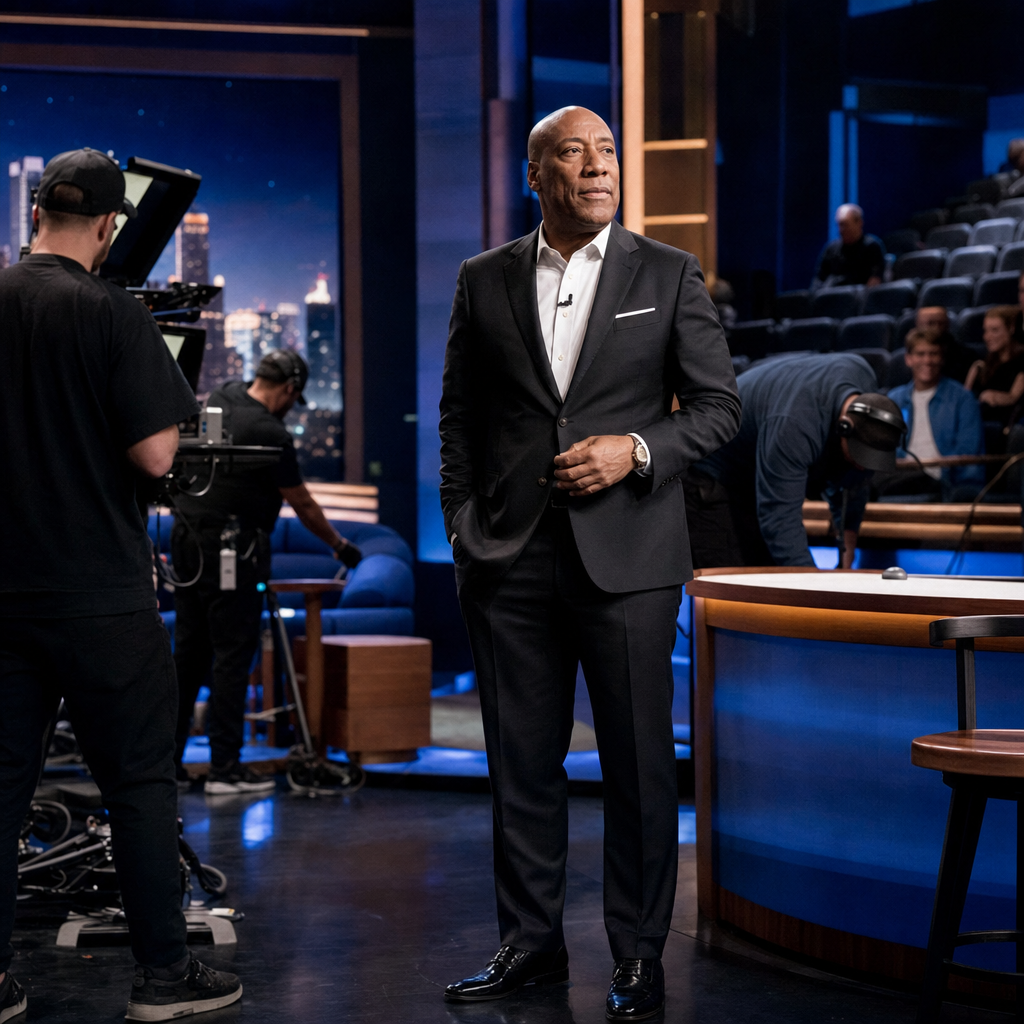
Byron Allen Gets Colbert’s Slot — and Changes the Rules
CBS is replacing Stephen Colbert with Byron Allen’s apolitical comedy block, betting cheaper programming can hold the audience without the late-night politics.
Byron Allen is taking over Stephen Colbert’s CBS time slot, and he is advertising the break with Colbert’s formula rather than continuity. Speaking as Colbert signed off from The Late Show for the final time, Allen called him an “American treasure” and a “phenomenal human being,” while telling CBS viewers the new hour will be built around one rule: “no politics” ( CNN). That is the strategic signal. CBS is not just swapping hosts; it is shifting away from a politically charged flagship and toward a lower-cost comedy block designed to be commercially safer.
CBS is buying margin, not prestige
The move follows CBS’s decision last year to end Colbert’s run, which the network described as a financial call in a difficult late-night market. CNN reported in April that CBS would fill the 11:35 p.m. hour with back-to-back episodes of Comics Unleashed with Byron Allen, followed by Funny You Should Ask, under a time-buy arrangement with Allen Media Group ( CNN). USA Today said CBS’s schedule now reflects the network’s choice to turn a once-prestige slot into a syndicated block it does not have to fully finance (
 USA Today).
That matters because Colbert’s version of The Late Show was not just another late-night show; it was CBS’s clearest late-night political identity. Once Trump became the dominant subject of monologues, Colbert’s ratings lifted the franchise even as the economics of broadcast late night deteriorated (CNN). CBS is now trying to keep the ad inventory while shedding the cost and controversy attached to a star-hosted show.
Allen’s pitch is a reset, not a sequel
Allen is not promising a Colbert substitute. He is promising relief. On CBS Mornings, he said the new lineup is for viewers who want to “come, [and] laugh,” not hear about Washington, and he framed the hour as “timeless,” “inclusive” comedy rather than topical satire (CNN; USA Today).
That is a smart pitch for a network worried about late-night costs. It is also a concession that the old late-night bargain — personality, politics, and live cultural relevance — no longer guarantees returns. Allen is a media operator first and a comedian second; CBS is effectively outsourcing the hour to someone who can package content more cheaply and sell it across multiple affiliate windows. That may benefit CBS’s balance sheet and Allen’s media empire. It almost certainly hurts the idea of late night as a single, nationally shared political stage. For more on how this fits the broader media reset, see  US Politics and United States.
What to watch next
The first rating report will matter less than the pattern. If Allen holds even part of Colbert’s audience, CBS will argue it proved the slot could be monetized without a marquee host. If the numbers sag, the network will have confirmed that late-night viewers were tuning in for Colbert’s political edge, not just a time slot.
The real test is whether Allen’s “no politics” formula can keep affiliates and advertisers happy without hollowing out the audience. Watch the next few weeks for ad sales, retention after the premiere, and whether CBS quietly adjusts the format once the initial launch bump fades.