BJP's Women's Reservation
How a legislative defeat turned into a political strategy
Model Diplomat8 min readIndia
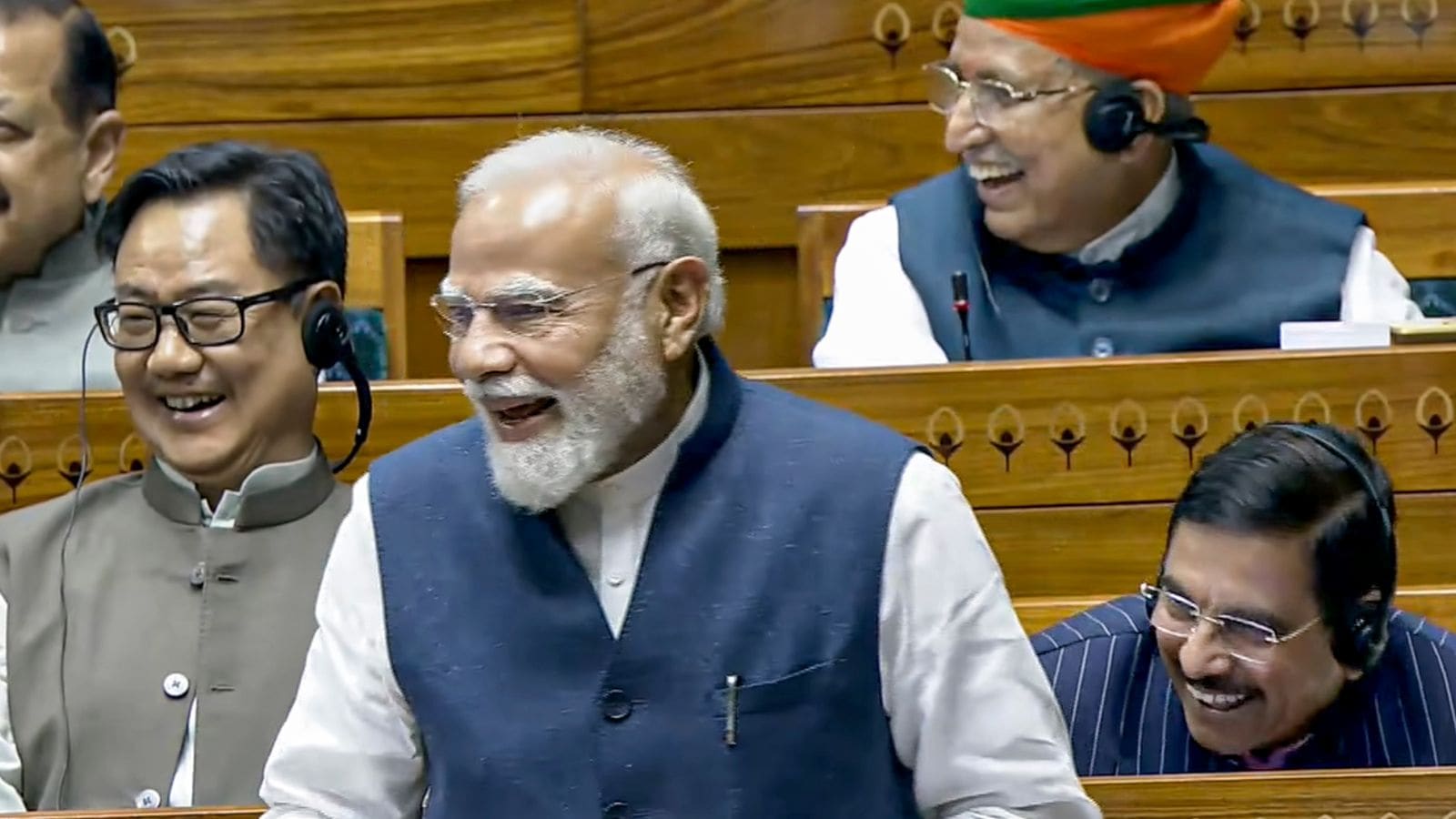
BJP's Women's Reservation Gambit: How a Loss Became a Weapon
The BJP lost the vote on India's women's reservation bill on April 17, 2026 — and then rode it to its first-ever win in West Bengal two weeks later. Here's what the defeat actually bought.
The Constitution (131st Amendment) Bill, 2026 was defeated in the Lok Sabha on April 17, 2026 by 298 votes to 230 — 54 short of the two-thirds majority required, and the first constitutional amendment ever blocked under Narendra Modi. The BJP did not lose the women's reservation debate that day; it bought a five-year political weapon at the cost of one embarrassing vote count. Two weeks later the party won West Bengal for the first time in its history, on a campaign whose loudest note was that the opposition had "committed foeticide" by killing a bill for women — a bill the government knew it did not have the numbers to pass.
That is the story worth telling. Not the parliamentary arithmetic, which was preordained. Not the delimitation row, which was inevitable. But the deliberate use of a legislative defeat as the opening move of a national women-voter strategy that runs through the 2027 census, the 2028 assembly cycle, and the 2029 general election.
The bill nobody expected to pass
The government convened a three-day special session from April 16 to 18, 2026 and tabled three linked bills: the 131st Amendment, a Delimitation Bill, 2026, and a Union Territories Laws (Amendment) Bill, 2026. Together they would have expanded the Lok Sabha from 543 to 850 seats using 2011 census figures, and operationalised the 2023 Nari Shakti Vandan Adhiniyam — the dormant law reserving one-third of Lok Sabha and state assembly seats for women, as Al Jazeera reported on the eve of the debate.
The math never worked. The NDA held 293 seats in the lower house; a constitutional amendment needed 360-plus. Home Minister Amit Shah told the House that 130 MPs, including 56 women, had participated in the debate, per the Press Information Bureau's official record. But floor management with the opposition — the one thing that could have changed the outcome — was skipped. As the
NUS Institute of South Asian Studies noted, the bill "was introduced ... without any prior consultation with opposition parties or floor management," and days before polls in Tamil Nadu and West Bengal — states that were guaranteed to vote against it.
The Carnegie Endowment's post-mortem was more direct: the women's quota, it wrote, "functioned as a vehicle to push through a broader reengineering of India's electoral design". Delimitation was the payload. Women's representation was the packaging.
Why the delimitation link was poison — and why it was chosen anyway
Constituencies have not been redrawn since the 1971 census. The freeze was extended precisely because varying fertility rates across states would penalise the south — Tamil Nadu, Kerala, Karnataka, Telangana and Andhra Pradesh — for having brought population growth down. Basing new seats on the 2011 census, as the 131st Amendment proposed, would tilt the Lok Sabha's centre of gravity toward the Hindi belt where the BJP dominates. Tamil Nadu Chief Minister M.K. Stalin called it a "massive historic injustice" and burned a copy of the bill; Kerala's chief minister called delimitation a "sword of Damocles," according to the BBC's explainer.
Vidhi Centre for Legal Policy's Arghya Sengupta told the BBC that although the bill raised the cap to 850 seats from 550, "the basis for this number is unclear and does not appear to be proportionate to population growth recorded in the 1971 and 2011 census." The Delhi-based Centre for the Study of Developing Societies flagged an unanswered question: how, mechanically, would the new women's seats be identified? "It can't simply be based on population," Sanjay Kumar told the BBC.
Rahul Gandhi's summary on April 16, quoted by Al Jazeera, captured the opposition's frame: "The proposal that the government is now bringing has no connection to women's reservation. It is merely an attempt to seize power through delimitation and gerrymandering." Congress MP Gaurav Gogoi called it delimitation "through the backdoor."
The BJP could have delinked the two. Most opposition parties said publicly they would back a standalone one-third quota on the existing 543 seats. The government chose not to test that offer. That choice is the story.
The Bengal payoff
The special session ran days before West Bengal voted in two phases on April 23 and 29, 2026 — the state where the BJP saw its clearest path to a first-ever win, and where women voters had been Mamata Banerjee's firewall since 2011. Lokniti-CSDS's 2021 post-poll found TMC support among women at 50%, four points above men.
On April 18, hours after the defeat, Prime Minister Modi told a national television audience that "the opposition has committed a sin by opposing women reservation and will surely be punished." The Institute of South Asian Studies documented that Modi began deploying the "foeticide" line at Bengal and Tamil Nadu rallies within 48 hours. BJP national president Nitin Gadkari's outreach machinery had been prepared weeks earlier — 50-plus town halls timed to the special session, as
The Hindu reported.
On May 4, 2026, results came in. The BJP won or led in roughly 200 of West Bengal's 294 seats; the TMC collapsed to about 87, Al Jazeera reported. The BBC's post-election analysis quoted BJP leader Dharmendra Pradhan claiming that "voters, particularly women angered by atrocities and law-and-order failures, had decisively rejected the Trinamool Congress." Post-poll surveys are still incoming, but the ISAS pre-poll had already flagged that the BJP's ₹3,000-a-month women's cash transfer — double the TMC's Lakshmir Bhandar — "dented Mamata's support among women voters."
The women's reservation bill did not deliver Bengal. Anti-incumbency, Hindu consolidation, and the Election Commission's contested Special Intensive Revision — which stripped roughly 9 million voters, about 12% of the electorate, from the rolls per Al Jazeera's tally — did the heavy lifting. But the bill gave the BJP a moral frame the TMC could not counter without looking pro-quota-obstruction on the eve of the vote.
The gender gap the BJP is not closing
Here is the number the BJP does not want highlighted alongside its "anti-women opposition" campaign. In the 2024 Lok Sabha election, 16% of BJP candidates were women, according to ISAS. The Congress fielded 13%. The regional parties the BJP now accuses of blocking reservation nominated far more: Biju Janata Dal 33%, Rashtriya Janata Dal 29%, Trinamool Congress 25%. In the 2026 West Bengal election just concluded, the BJP fielded women in 11% of the 293 seats it contested; the TMC fielded 19%.
Only 74 women were elected to the 18th Lok Sabha in 2024 — 13.6% of the House, a slight fall from 78 in 2019, per Al Jazeera's post-election data. Of the BJP's 240 MPs, 30 are women — 12.5%. The
U.S. Congressional Research Service brief on the 2024 election recorded women at 14% of the chamber, "a slight decline."
Nothing in current law prevents any party from voluntarily nominating a third of women candidates tomorrow. The Observer Research Foundation has long argued for exactly that: make the 33% intra-party quota legally binding on ticket distribution. No party — including the BJP, which controls the legislative machinery — has moved to do so. That is the second, quieter story the reservation debate obscures.
The long game
Neerja Chowdhury's reporting in The Indian Express captured the government's original design: expand the Lok Sabha to 816, allocate the additional 273 seats — one-third of the new total — to women, freeze the north-south seat ratio, and use 2011 census data to move implementation to 2029. That design would have solved three BJP problems at once: honoured a 2014 and 2019 manifesto pledge, defused southern anger about delimitation, and denied the opposition a "women" wedge in the 2029 general election.
The Congress and DMK saw the same design and killed it. The Carnegie Endowment's read is that "the underlying issues have merely been deferred" — the next census, whose enumeration began April 1, 2026, will force the same fight on a slower clock.
For India, the deferral matters. Women's reservation, as the 2023 law is written, cannot take effect until after the census is completed and delimitation carried out. That means the earliest realistic date for a one-third Lok Sabha is 2029 only if the census, delimitation and seat rotation are all completed in three years — a schedule no analyst treats as credible. The likelier date is 2034.
Diplomat View
The BJP's April 2026 defeat looks, on the paper record, like the first constitutional-amendment loss of the Modi era. Treat it as a scoreboard entry and you miss the play. The bill was designed to accomplish two things a passed law could not: force the opposition on record against a women-branded quota during Bengal and Tamil Nadu campaigns, and normalise the idea of a 2011-census-based delimitation before the 2027 census concludes. Both objectives were achieved on April 17. The bill is dead; the frame is alive. Expect a repackaged reservation-only bill in the winter 2026 session or budget 2027 — this time delinked from delimitation, timed to isolate the DMK and TMC individually, with the BJP's own ticket-distribution record left conspicuously unreformed. The forecast changes if, and only if, the BJP unilaterally nominates one-third women in the 2027 state cycle — Uttar Pradesh's panchayat polls and Gujarat's assembly are the tells. Anything less means the party has decided that campaigning on reservation is worth more than delivering it.
What to watch:
- Monsoon session (July–August 2026): whether a standalone women's reservation amendment, delinked from delimitation, is tabled — and whether the DMK, TMC and Congress hold their pre-defeat position that they would back such a bill.
- Census enumeration close (target: mid-2027): the trigger for any renewed delimitation push; the government's stance on whether 2011 or 2027 data will govern.
- BJP ticket distribution for the 2027 UP panchayat and Gujarat assembly polls: the falsifiable test of whether the party's women's-reservation politics survives contact with its own candidate list.
The Bottom Line
The BJP's women's reservation bill was engineered to lose in Parliament and win in the states, and on that measure it worked: the 298–230 defeat on April 17, 2026 handed the party a two-week campaign frame that helped topple Mamata Banerjee in Bengal. The reform itself — a one-third quota that could be delivered voluntarily tomorrow — remains hostage to a delimitation fight the BJP could have avoided and chose not to. Until the BJP nominates a third of women on its own tickets, the "anti-women opposition" line is a slogan, not a record.
Discover more

India
INDIA Bloc's Delimitation Strategy
The INDIA bloc is using delimitation and women's reservation to challenge the BJP's federalism narrative, setting up a high-stakes fight over representation.
India
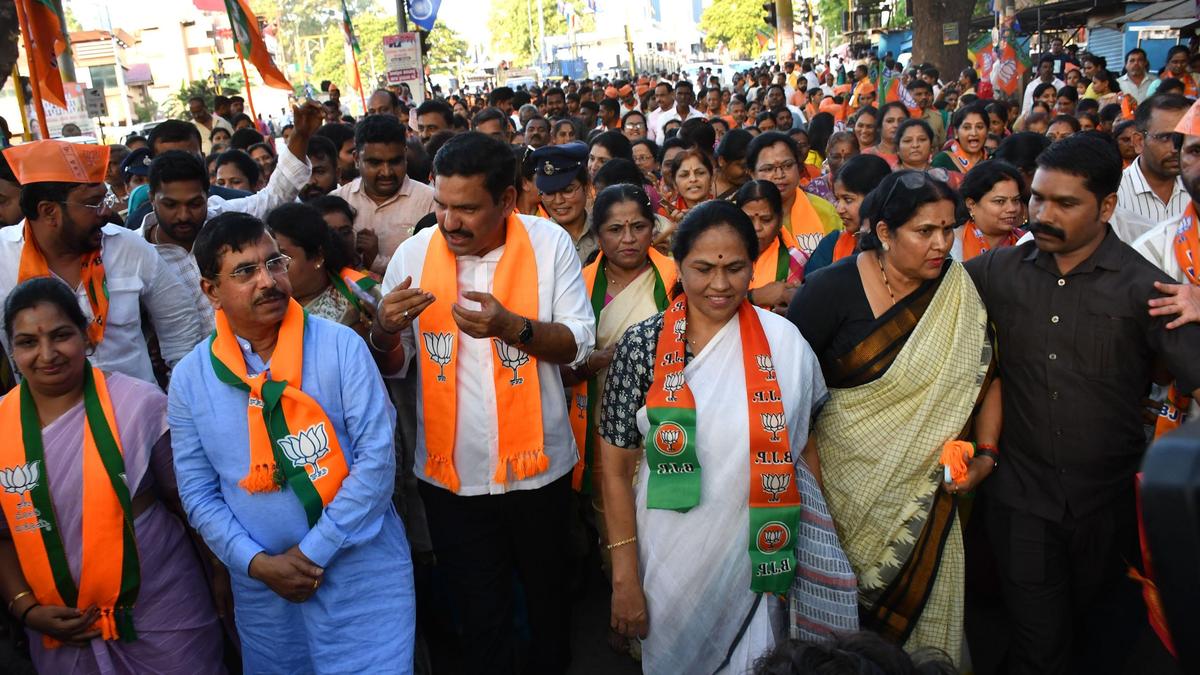
BJP Uses Hubballi Protests for Women's Quota
The BJP is using Hubballi protests to pin blame for delays on women's reservation onto Congress in Karnataka, sharpening its women's quota political offensive.
India
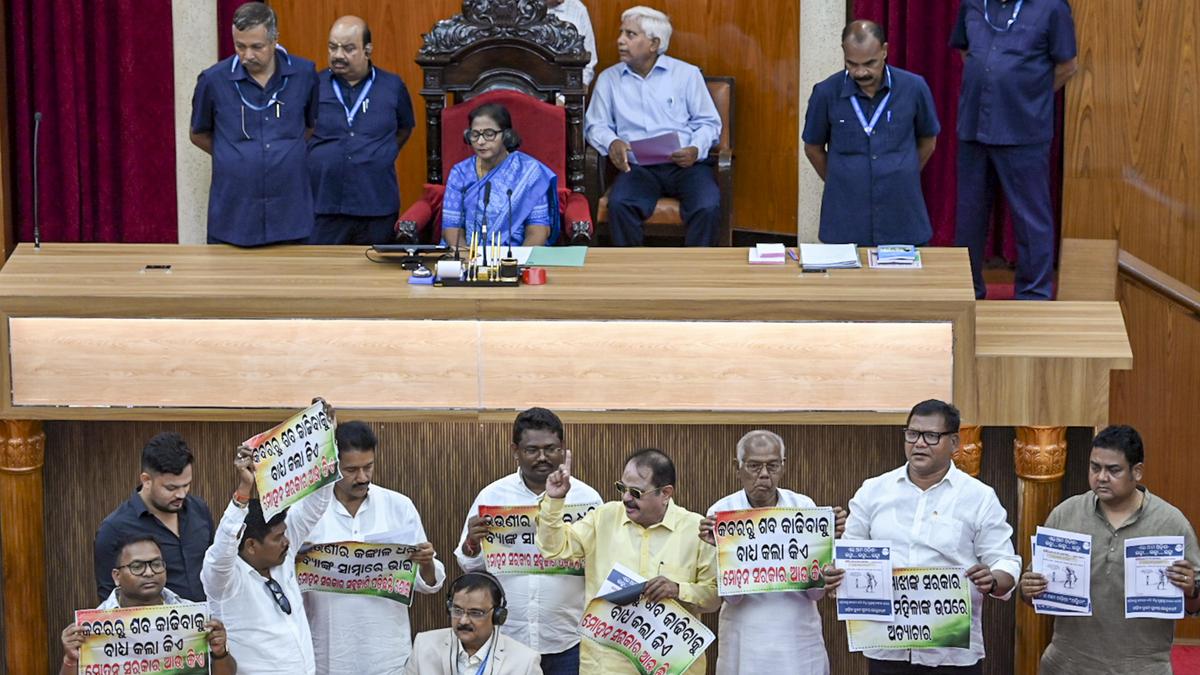
Odisha's Women's Reservation Debate
The fight over women's reservation in Odisha is shaping up as a calculated BJP and BJD strategy aimed squarely at gaining ground before the 2029 elections.
India
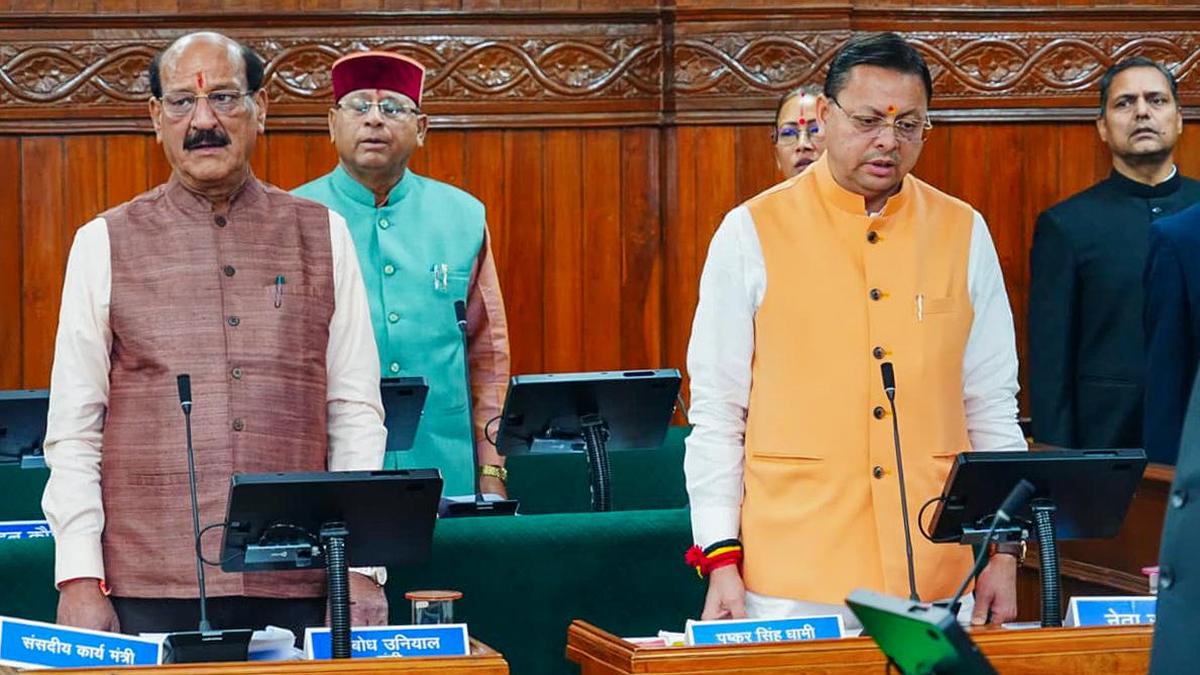
Uttarakhand's Push for Women's Reservation
Uttarakhand CM Dhami's push for women's reservation is a strategic political move that follows national defeat and aims to reclaim momentum for the BJP.