BJP's Shah, Nadda Lead Strategy in Bengal,Ass
Shah and Nadda lead BJP's new state governments.
Model Diplomat7 min readAsia
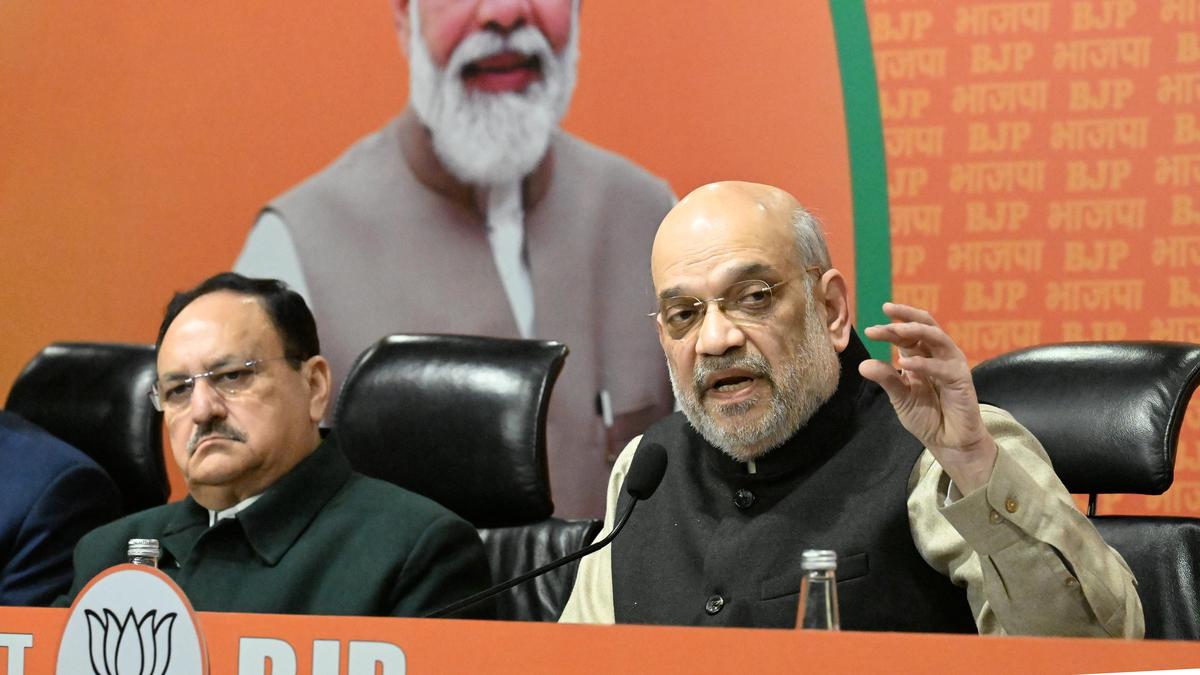
Shah, Nadda Lead BJP's Bengal, Assam CM Picks After Sweep
Amit Shah and J.P. Nadda were named BJP central observers for West Bengal and Assam on May 5, 2026, formalising Delhi's grip on both new state governments.
Amit Shah will decide who runs West Bengal. J.P. Nadda will do the same in Assam. The Bharatiya Janata Party's parliamentary board announced the two central observers on May 5, 2026 — a day after winning Bengal for the first time in its 46-year history with 207 of 294 seats and retaining Assam with a bigger majority than in 2021, Al Jazeera reported. The observer picks are not procedural. Sending the Union Home Minister and the party's national president — not lesser general secretaries — signals that both governments will be run from Delhi's line of sight, and that Bengal in particular is now Shah's personal fief inside the party's internal power ledger.
That is the story worth reading. The headlines said "BJP names observers." The substance is that the man widely tipped as Narendra Modi's successor has just been handed the chairmanship of the party's most prestigious new conquest, while the national president gets the safe, high-performing Assam machine to certify. The choreography of May 5–12, 2026, is not about picking chief ministers. It is about ratifying a succession order.
What "central observer" actually means in the BJP
In the BJP's post-2014 architecture, the "central observer" is not a neutral referee. It is the emissary who tells the legislature party which name to elect as leader. On May 8, 2026, at a meeting of BJP MLAs in Kolkata, Shah announced from the dais that Suvendu Adhikari — the 2020 TMC defector who beat Mamata Banerjee in her own Bhabanipur seat — would be the new chief minister, per BBC Hindi's account of the event. "I declare Suvendu Adhikari elected as leader of the West Bengal legislative party," Shah said, framing his own presence as authorisation. Adhikari was sworn in the next day in Bengali, with Modi, Shah and Defence Minister Rajnath Singh in attendance, according to
the BBC.
The co-observer pairings tell the same story with fewer words. Odisha Chief Minister Mohan Charan Majhi accompanied Shah to Bengal; Haryana Chief Minister Nayab Singh Saini went with Nadda to Assam, The Statesman confirmed. Both co-observers are first-term Modi-era appointees who owe their offices to central patronage — a pattern of assigning CMs from patronage states to bless CMs in newly-won states. It is the BJP's version of laying on of hands.
Why Shah drew Bengal and Nadda drew Assam
The division of labour is deliberate. Shah "effectively ran" the Bengal campaign, camping for 15 nights in north Bengal in the run-up to polling and driving a data-heavy booth-level operation, per The Indian Express and reporting by
India Today on Shah's early planning and seat mapping. "More than Odisha, this would be seen as a personal political victory not only for Narendra Modi, but also for Home Minister Amit Shah," analyst Nilanjan Mukhopadhyay told
the BBC, which called the Bengal result the completion of the BJP's "long march into eastern India" and cast Shah as the informal "man of the match" — a phrase deliberately echoing his elevation after the 2014 Uttar Pradesh sweep.
Assam is the opposite kind of assignment. Himanta Biswa Sarma has already been chief minister since 2021, was returned with 82 of 126 BJP seats (102 with allies), and is himself one of the party's most influential organisers in eastern India, the BBC noted. There was no ambiguity to resolve: Sarma was sworn in for a second term on May 12, 2026, alongside four ministers. Sending Nadda — a Himachal Pradesh Brahmin with organisational rather than electoral heft — to ratify Sarma is the safe pairing. It reflects that Assam is done, and Bengal is where the real internal politics of succession are being played out.
The number that made Delhi cautious
Look past the seat count. The BJP polled 29,224,804 votes in Bengal against the TMC's 26,013,377 — a margin of just over 3.2 million on an electorate of roughly 76 million, according to an Al Jazeera opinion analysis of Election Commission data. TMC still holds roughly 40% of the popular vote, 80 assembly seats and 28 members of parliament,
the BBC reported. This is a landslide in seats, but not in sentiment.
Two structural factors converted a four-point popular-vote lead into a two-thirds seat majority. The first is the Special Intensive Revision (SIR) of electoral rolls: more than nine million voters — about 12% of Bengal's 76 million — lost voting rights before the poll, with deletions disproportionately concentrated in Muslim-majority districts like Murshidabad (460,000), North 24 Parganas (330,000) and Malda (240,000), Al Jazeera found. Constituency-level data cited in the same Al Jazeera opinion piece argues that in several BJP seats, deleted voters exceeded the winning margin. The second is polarisation: Adhikari himself thanked "every Hindu Sanatani" the night of the count, calling the TMC a "pro-Muslim party," per
Al Jazeera's feature on the win.
The Election Commission of India's own record confirms the operational scale. In a PIB release dated April 1, 2026, the ECI said it had deployed 136 central observers in Assam alone for the April 9 poll, and it recorded Bengal Phase-I turnout at 91.78% — the highest since Independence, according to
PIB. The mechanics of that turnout — who got on the rolls, who came off — is now the subject of Banerjee's Supreme Court petition, filed in February 2026 against the ECI's SIR exercise. That litigation is where the legitimacy of the mandate will be fought.
The succession subtext
Sending Shah to close out Bengal has an internal audience of one — the BJP's parliamentary board and RSS interlocutors watching who owns the party's biggest new territory. "It would reinforce Shah's standing as Modi's most likely heir, potentially placing him ahead of rivals such as Yogi Adityanath, Nitin Gadkari and Rajnath Singh," Mukhopadhyay told the BBC. Nadda's Assam role is not diminishing — Nadda remains BJP national president — but a national president does not typically become the party's next prime-ministerial face. Central observers do.
The unspoken loser is Yogi Adityanath. The Uttar Pradesh chief minister campaigned in Bengal but was not asked to install the government there. In BJP semiotics, that is a demotion in the pecking order for 2029, when Modi is expected to seek a fourth term, per NPR/AP. If Modi does not run — the scenario BJP insiders privately game — Shah's Bengal credential will matter more than any other single item on the party's internal résumé.
There is a second-order winner too: Sarma. Retaining Assam with a larger majority makes him the BJP's dominant figure in eastern India and the man who will operationalise any Bengal-style majoritarian agenda across the northeast. His pledge to "break the backbones" of "illegal Bangladeshi Muslims," and his commitment to a Uniform Civil Code, cited in Al Jazeera's post-verdict analysis, is now the template Adhikari will be pressed to adopt. Assam's earlier delimitation exercise, which reduced Muslim electoral weight — 18 of 19 Congress winners in Assam this year are Muslim, a marker of segregation — is the model officials in Bengal will study.
The opposition math after May 4
The INDIA opposition alliance has taken two structural hits. Banerjee, who anchored the anti-BJP regional front in 2024, is out of office. C. Joseph Vijay's TVK broke the DMK in Tamil Nadu, per
Al Jazeera, removing another INDIA pillar. Only Kerala offered Congress a win — and against the Left, not the BJP. Political scientist Praveen Rai told Al Jazeera the verdict "substantially increases the national standing of Modi's leadership and extends the hegemonic power of the party to govern India."
Post-poll violence remains the immediate risk. Four people were killed in Bengal in the days after counting, Al Jazeera reported, and Adhikari's personal assistant Chandranath Rath was shot dead on May 6, according to
the BBC. Shah's tenure as observer effectively means the Union Home Ministry — which he runs — is both the constitutional arbiter of law and order in a newly-BJP state and the political author of that state's government. That fusion is what makes his observer role more than ceremonial.
Diplomat View
The observer appointments are the moment the 2029 succession race broke into public view. Sending Shah to install Adhikari — and not Nadda, not Rajnath Singh, not Yogi Adityanath — signals that inside the BJP, Bengal has been booked as Shah's trophy and, by extension, his claim on the post-Modi era. The forecast: within 18 months, expect Shah to be positioned as the party's operational face for the 2029 campaign, with Adhikari's Bengal government functioning as the flagship showcase of a Sarma-style, majoritarian "double-engine" model. Revise the forecast if: (a) the Supreme Court rules the SIR exercise unconstitutional and Bengal's mandate is legally clouded, (b) Adhikari's government fails to control post-poll violence and the Centre imposes President's Rule — a scenario that would embarrass Shah personally — or (c) Modi publicly elevates Yogi Adityanath to a national portfolio, which would reset the succession queue.
What to watch next
- Supreme Court hearing on Banerjee's SIR petition, filed February 2026; a ruling against the ECI could reopen the legitimacy question in Bengal.
- Bengal cabinet expansion and portfolio allocation — the litmus test of how much of Adhikari's cabinet is his and how much is Shah's; watch for the Home portfolio in particular.
- Bihar assembly elections later in 2026 — the next state test of the BJP machine, and the first campaign in which Shah's post-Bengal stature will be measured against a coalition-dependent battleground.
The Bottom Line
Naming Amit Shah as central observer for West Bengal is not administrative housekeeping — it is the BJP formalising Shah's ownership of its biggest post-2014 conquest, and with it, his front-runner status to succeed Narendra Modi. J.P. Nadda's parallel role in Assam is the ratifying counterweight, not a rival claim. The May 5, 2026 appointments should be read as the opening move of the BJP's 2029 succession contest, staged inside the machinery of government formation.
Discover more
India
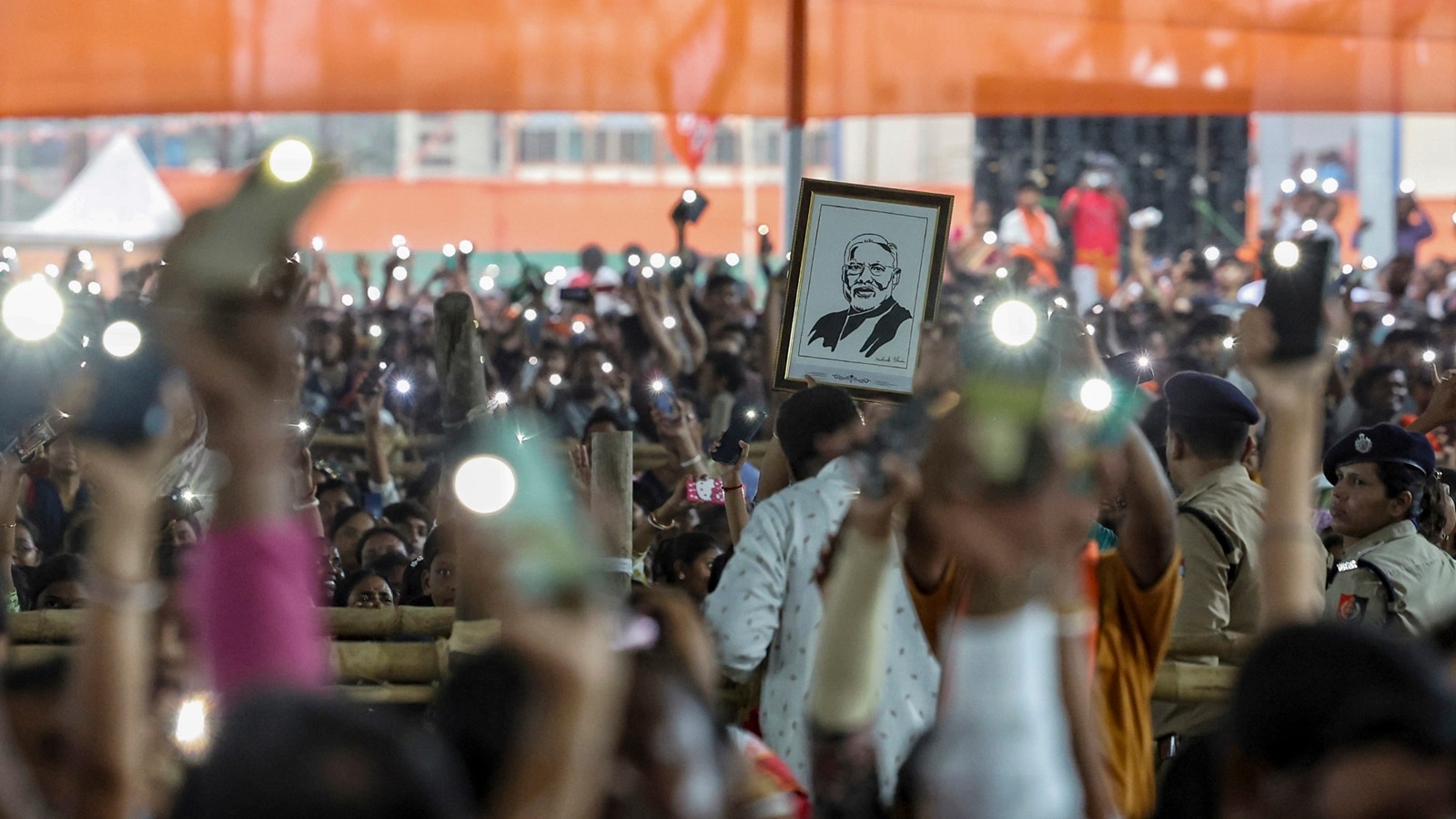
Modi's Women’s Convention in Varanasi
Modi's Varanasi rally frames women's reservation as a national mission, targeting the 2027 Uttar Pradesh elections with a strategic narrative.
India
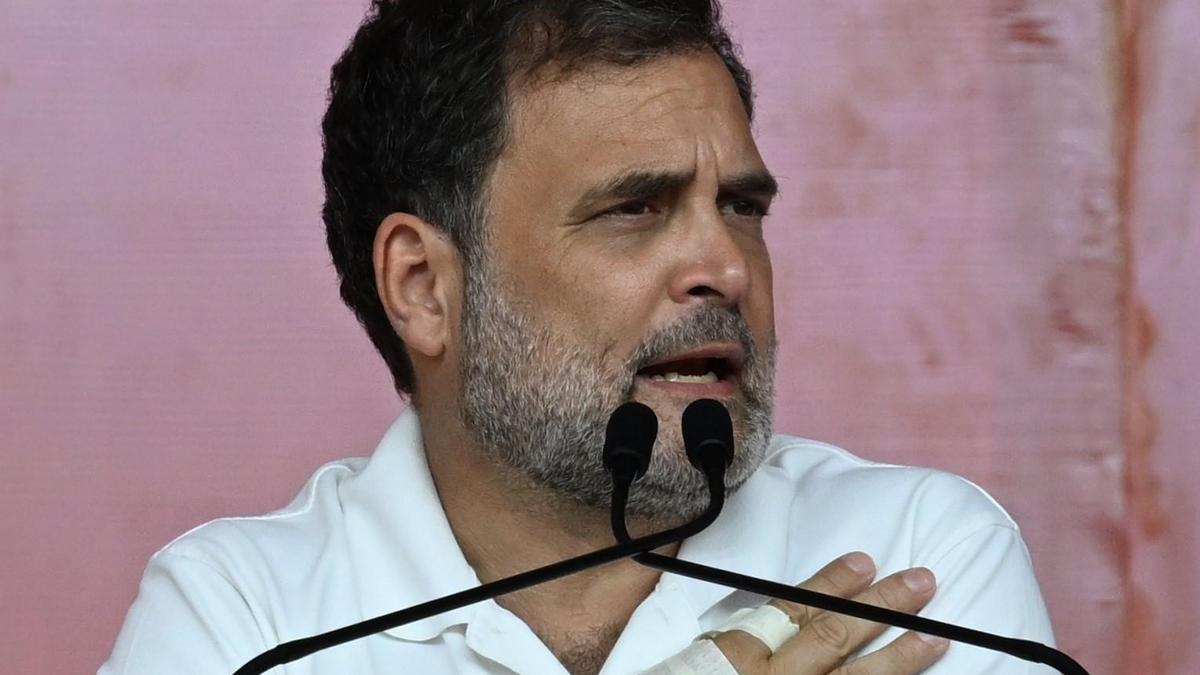
Rajnath Singh's Durga Squad for 2026 Polls
Rajnath Singh's Durga Squad promised women's safety in Bengal but has since disappeared from the agenda, revealing BJP's true priorities.
India
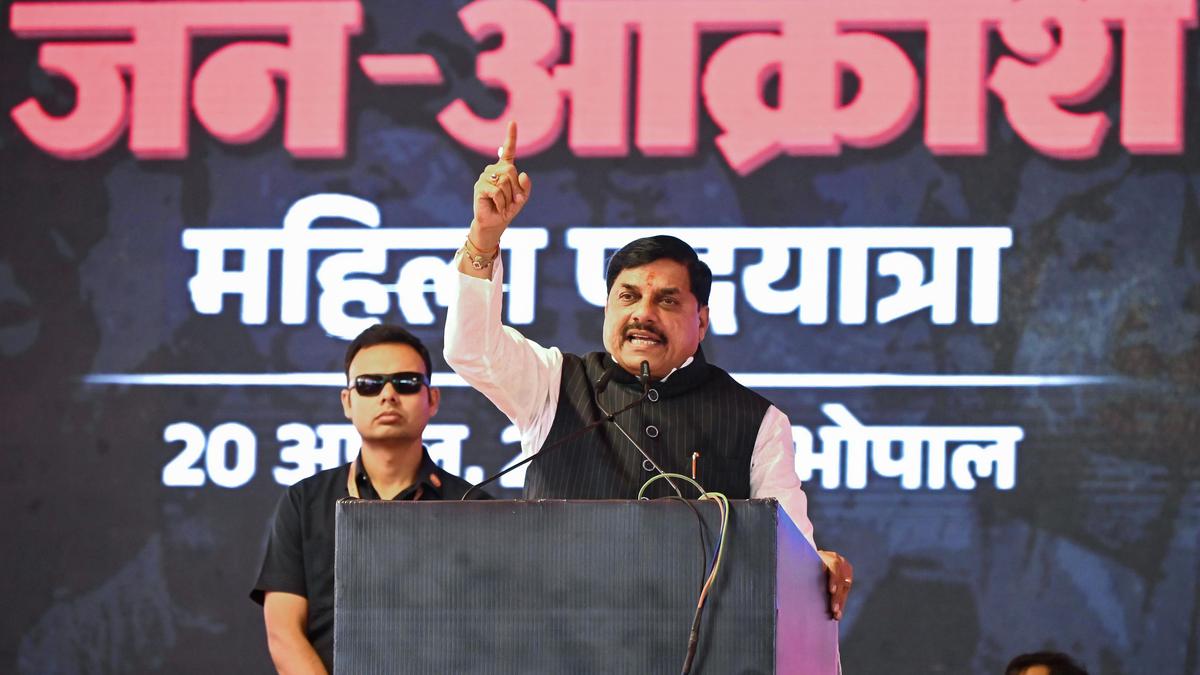
BJP Congress Clash Over MP Bill Defeat
The BJP's defeat of the women's quota amendment sparks a political narrative war with Congress, impacting future elections.

Conflict & Security
Drone Warfare Killing Aid Workers at Unprec
Over 1,000 humanitarian workers killed in three years as cheap armed drones collapse legal protections. Gaza, Sudan, Ukraine, and DRC see deliberate targeting of aid convoys and hospitals with zero prosecutions.