Bulgaria's First Majority Since 1997
Radev's coalition wins decisively, raising foreign policy questions.
Model Diplomat4 min readeurope
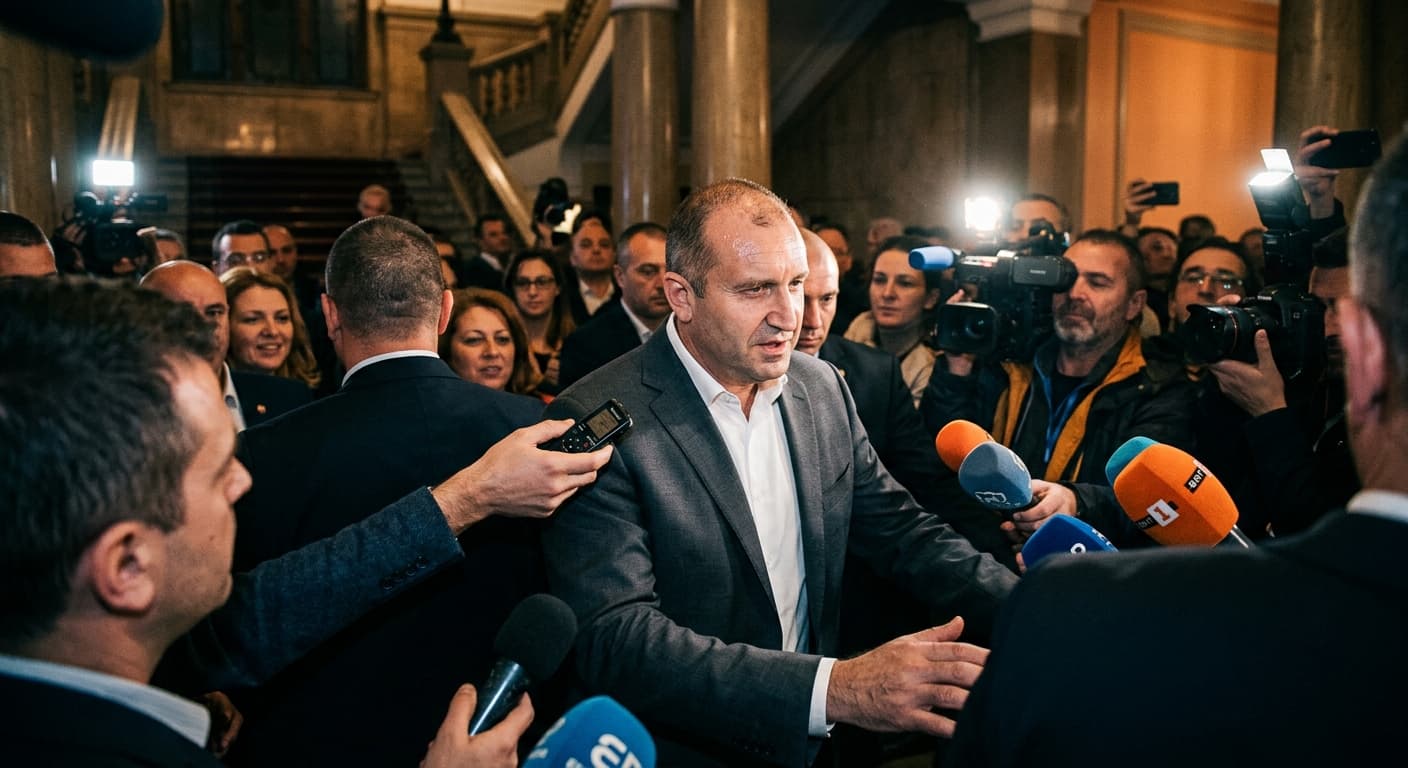
Radev's Landslide Hands Bulgaria Its First Majority Since 1997 — and a Foreign-Policy Question Mark
Rumen Radev's Progressive Bulgaria won 44.7% and 131 seats on April 19, enough to govern alone. The West now faces a Sofia led by a NATO general who opposes arming Ukraine and calls for dialogue with Moscow.
Bulgaria has ended its cycle of political paralysis — and traded it for geopolitical ambiguity. On April 19, 2026, Rumen Radev's Progressive Bulgaria coalition won a decisive 44.7% of the vote and 131 of 240 seats in the National Assembly, delivering the country its first single-party parliamentary majority since 1997, according to the
BBC. The former president, who resigned in January to contest the election, now holds a mandate to form a government without coalition partners — a rarity in a country that has held eight elections in five years.
GERB, the party of ex-prime minister Boyko Borisov that had dominated Bulgarian politics for two decades, collapsed to 13.4% and 39 seats. The reformist PP-DB coalition took 12.6% with 37 seats, while the Turkish-minority DPS, led by US-sanctioned oligarch Delyan Peevski, captured 7.1%. The pro-Kremlin Vazrazhdane barely cleared the threshold at 4.3%. Most strikingly, the Bulgarian Socialist Party — a fixture of every parliament since 1989 — was shut out entirely, the Robert Schuman Foundation noted.
The margin stunned even Radev's own camp. Pre-election polling by Alpha Research had him at 34.2%, not near-majority territory. Turnout surged 10–15 points above recent snap elections, the GSSC/Eastern Europe Studies Centre reported, transforming a predicted plurality into a governing mandate.
What Radev actually believes on foreign policy
Radev is a former MiG-29 pilot and air force commander, trained in the US, who presents himself as a pragmatic nationalist. He has publicly condemned Russia's 2022 invasion of Ukraine but opposes Bulgarian military aid to Kyiv and has called for "practical relations with Russia based on mutual respect," according to Al Jazeera. He objected to the 10-year Bulgaria-Ukraine defence pact signed in March and has advocated resuming Russian energy imports despite the EU's 2027 cutoff.
The security analyst Philip Gounev, a former Bulgarian deputy interior minister, told the BBC that Radev is "more like Slovak premier Robert Fico than outgoing Hungarian premier Viktor Orbán" — meaning he is likely to seek compromise rather than confrontation in Brussels. In practice, Gounev added, that could translate into allowing Bulgarian arms manufacturers to continue exporting to Ukraine through third countries — Bulgaria is a major supplier of Soviet-calibre ammunition — while opting out of EU-level financial support mechanisms.
Radev's coalition programme, as reported by the seed source The Western Balkans, commits to "active participation in policy-making within the EU and NATO," support for NATO collective defence, and deepening EU-NATO cooperation — a "classic Euro-Atlantic package" on paper. But it also insists on upholding the principle of unanimity in key EU decisions, a signal that Sofia under Radev could join the ranks of member states willing to slow or complicate common positions on sanctions and Russia policy.
The Western Balkans dimension
For the Western Balkans, Radev's victory introduces continuity with a harder edge. His programme states that Bulgaria will continue to support EU enlargement "according to the rules already established" and backs NATO expansion in the region. But on North Macedonia specifically, there will be no softening. Radev, during his presidency, consistently pushed for constitutional recognition of the Bulgarian minority in North Macedonia — a condition already embedded in the EU's negotiating framework. "It cannot be expected that he will deviate from this position," The Western Balkans analysis concluded.
Bulgaria's veto power over Skopje's EU accession negotiations remains intact, and Radev has shown no inclination to trade it away. North Macedonia has still not passed the constitutional amendments required to open accession chapters. With a nationalist VMRO-DPMNE government in Skopje equally disinclined to make concessions, the bilateral impasse is likely to freeze further under Radev.
The one stabilising factor: a government in Sofia that actually governs. After years of caretaker cabinets and collapsed coalitions, a majority government with a four-year horizon offers the Western Balkans a predictable interlocutor — even if the positions that interlocutor takes are unwelcome in Skopje and watched warily in Brussels.
What to watch
Radev's first test is domestic. He needs a two-thirds majority to reform the Supreme Judicial Council and amend the constitution — which means he will need votes from PP-DB, who have already signalled willingness to cooperate on judicial appointments. Whether that cooperation extends to foreign policy alignment remains unanswered.
The second test is Brussels. Radev has yet to declare which political family in the European Parliament Progressive Bulgaria will join. That choice — and his first European Council appearance as prime minister — will signal whether his "pragmatism" means accommodation or disruption. The June 2026 EU-Western Balkans summit in Tivat has already occurred, but the next round of enlargement milestones will land on Radev's desk.
The third test is arms. Whether Bulgarian ammunition continues flowing to Ukraine through Romania — and whether Radev faces pressure from his own electorate or from Moscow to curtail it — will be the earliest concrete indicator of how his foreign policy operates in practice.
Discover more

US Politics
SNAP Food Assistance Faces Legal Challenges
In 2026, SNAP faces stricter eligibility rules and mounting legal challenges, threatening food assistance for the millions of Americans who rely on the program.
India
Rajnath Singh's Durga Squad for 2026 Polls
Rajnath Singh's Durga Squad promised women's safety in Bengal but has since disappeared from the agenda, revealing BJP's true priorities.
India
BJP's Misunderstanding of Women's Quota Needs
The BJP's linking of the Women Reservation Bill to delimitation risks delaying women's empowerment in India, misreading the aspirations of female voters.

Conflict & Security
Drone Warfare Killing Aid Workers at Unprec
Over 1,000 humanitarian workers killed in three years as cheap armed drones collapse legal protections. Gaza, Sudan, Ukraine, and DRC see deliberate targeting of aid convoys and hospitals with zero prosecutions.