France's Indo-Pacific Credibility at Stake
New Caledonia's elections test France's regional power status
Model Diplomat4 min readantarctica
France Bets Its Indo-Pacific Credibility on New Caledonia's Elections
As polls open in New Caledonia's first provincial elections since 2019, Paris confronts the gap between its vision of itself as a "sovereign Indo-Pacific power" and the reality of managing restive territories 16,000 kilometers from the métropole.
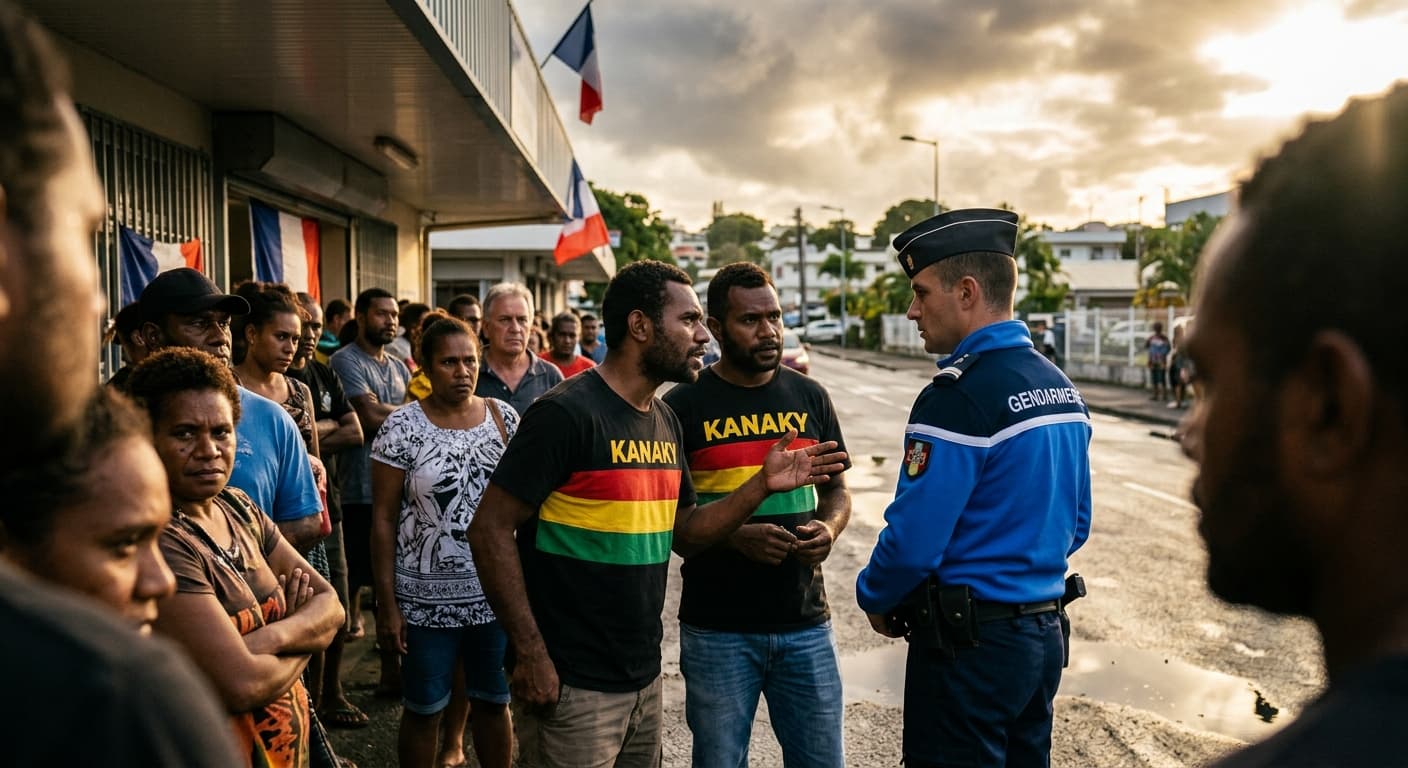
New Caledonia went to the polls Sunday for its first provincial elections in seven years, a vote postponed since 2024 by the deadliest unrest the French territory has seen in decades. About 2,500 police officers secured polling stations as 192,000 voters elected 76 councillors across three provincial assemblies, according to
Al Jazeera. The outcome will determine who controls the levers of future negotiations with Paris over the archipelago's status — and whether France can hold its strategic anchor in the South Pacific.
The stakes extend far beyond Nouméa. France's entire claim to being a resident Indo-Pacific power rests on these territories. As the Sciences Po Observatory Indo-Pacific documents, France maintains 1.6 million citizens, 8,000 permanent military personnel, and 93% of its exclusive economic zone — roughly 9 million square kilometers — across its overseas departments and territories in the Indian and Pacific Oceans. Without New Caledonia and French Polynesia, France's Pacific presence collapses to little more than Clipperton Island.
The sovereignty arithmetic
The military footprint is substantial but finite. Five regional commands — in La Réunion, Mayotte, New Caledonia, French Polynesia, and forward-deployed forces in Djibouti and the UAE — anchor France's presence. The French Armed Forces in New Caledonia (FANC) alone operates a naval base with roughly 10 ships, as detailed by Brookings. These bases provide what Paris calls "points d'appui" — platforms for power projection, maritime surveillance, and coalition operations that no other European power can replicate in the region.
The AUKUS shock of 2021 sharpened everything. When Australia canceled its $90 billion submarine contract with France's Naval Group to join the US-UK pact, Paris recalibrated. Researcher Benoît Trépied, cited by the BBC, described the resulting mindset: "Suddenly there was a huge new interest of French officials in the Pacific. The colonial, imperial reflex was — no, if we want to be powerful in the Pacific, New Caledonia has to stay French. Period."
That reflex has since collided with local reality. In May 2024, a French proposal to extend voting rights to residents of more than 10 years triggered violent protests that killed 11 people — nine civilians and two gendarmes. President Emmanuel Macron visited, halted the reform in June 2024, but the damage was done. The Indigenous Kanak population, roughly 41% of the territory's 270,000 residents, increasingly views Paris as an obstacle to decolonization rather than a partner in it.
A July 2025 autonomy deal declared New Caledonia a "state" within the French republic while eliminating future independence referendums. The main pro-independence bloc rejected it, leaving Sunday's election as the next battlefield.
The China dimension
France's official posture is carefully calibrated: it positions itself as a "mediating, inclusive and stabilizing power" that refuses "bloc against bloc" dynamics, as the CSIS notes. The French navy regularly runs freedom-of-navigation operations through the South China Sea and Taiwan Strait. But Paris also insists on its "non-aligned alliances" — a formula meant to distinguish French cooperation from Washington's more confrontational approach to Beijing.
The Pacific Islands Forum meeting in Tonga last year exposed the credibility problem. French officials attended as "dialogue partners" while essentially chaperoning New Caledonia's pro-independence president Louis Mapou. Small island states, according to the BBC, saw it as a colonial power clinging to territory at the very moment the US and China were competing for regional influence. China sent its largest-ever delegation to the same forum.
This is the structural tension France cannot resolve: it needs New Caledonia and French Polynesia to justify its Indo-Pacific power status, but holding those territories by force or political maneuvering erodes the very legitimacy it requires to be taken seriously as a partner by the region's democracies. The RAND Corporation has argued the US should deepen Army cooperation with French forces in the Pacific, but that calculus shifts if those forces are seen as an occupying power by the local population.
What to watch
Sunday's vote will determine the balance of power in New Caledonia's three provincial assemblies, which together form the territory's Congress. If pro-independence parties consolidate control in the North Province and Loyalty Islands while loyalists hold the wealthier South Province, the stalemate continues — and with it, the unresolved question of whether France can be both a colonial administrator and a credible Indo-Pacific partner.
The timing matters. France's Indo-Pacific strategy, first articulated by Macron in 2018–2019, faces a moment of truth: either Paris finds a sustainable political settlement in Nouméa, or it watches the territorial foundation of its entire regional posture erode from within.
Discover more

US Politics
US Launches $166B Tariff Refund Portal
The US is launching a $166 billion tariff refund portal to aid importers hit by Trump-era tariffs, with major implications for trade and supply costs.
Global Politics
Xi Jinping Calls China-Russia Ties 'Precious'
Xi Jinping's description of China-Russia ties as 'precious' reflects a strategic imbalance, with Beijing dictating terms in the partnership.
US Politics
Virginia's Redistricting Referendum
Virginia's redistricting referendum is drawing a flood of dark money, shaping future elections and the fight for congressional control amid party stakes.

Conflict & Security
Drone Warfare Killing Aid Workers at Unprec
Over 1,000 humanitarian workers killed in three years as cheap armed drones collapse legal protections. Gaza, Sudan, Ukraine, and DRC see deliberate targeting of aid convoys and hospitals with zero prosecutions.