US-China AI Talks: A New Strategic Guardrail
Exploring potential US-China AI discussions at the summit
Model Diplomat3 min readNorth America
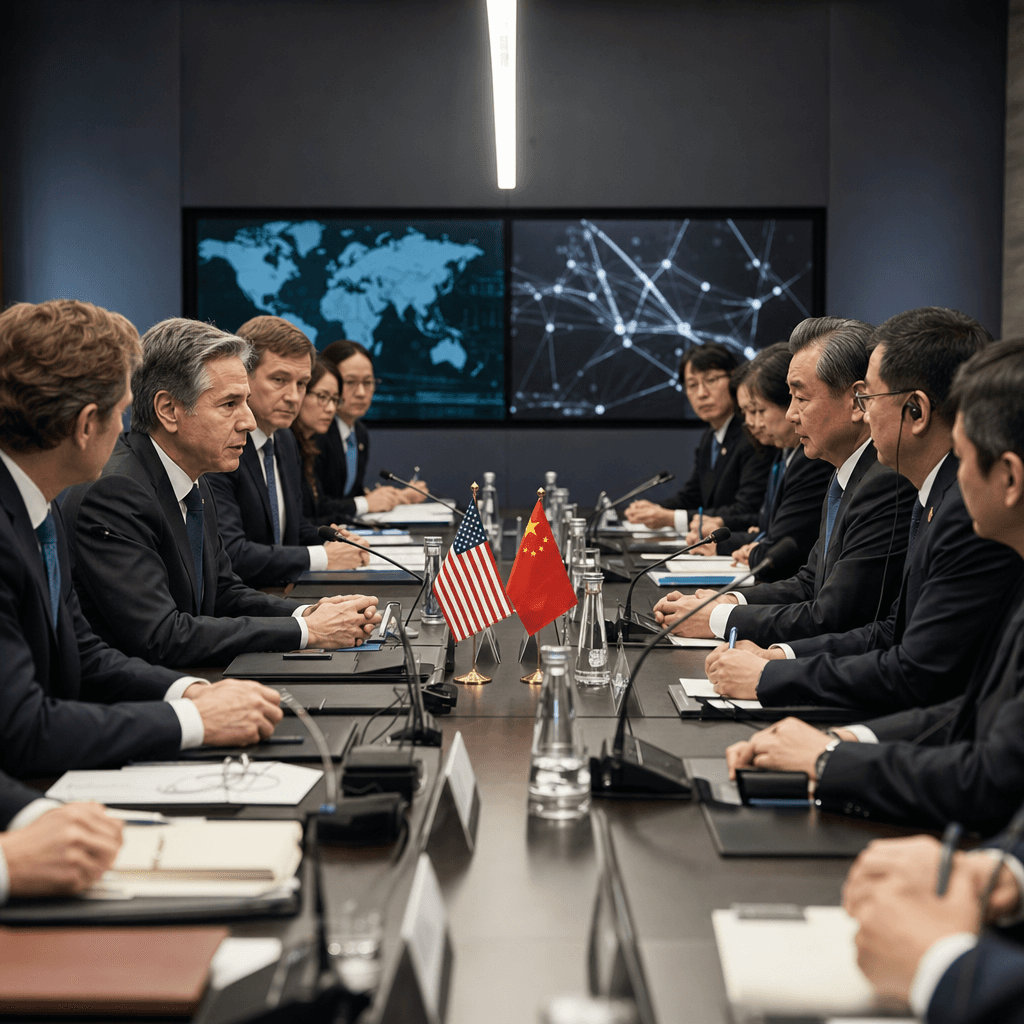
AI Talks Could Become the New US-China Guardrail
Xi Jinping and Trump may use their Beijing summit to open AI talks, because neither side wants the other writing the rules for a strategic technology.
Washington and Beijing are considering formal AI discussions ahead of the May 14-15 Xi-Trump summit in Beijing, according to The Economist and
Reuters. The immediate leverage is simple: the United States still wants to preserve its lead in frontier AI and chip ecosystems, while China wants to avoid being boxed out of the standards, safety norms and military restraints that will define the technology’s use. Neither side is asking for trust. Both are asking for a channel.
Why this is different from earlier tech diplomacy
The new talks matter because AI is not just another export-control fight. It is a dual-use system that touches productivity, surveillance, disinformation, cyber operations and command-and-control. The Economist frames that as a “cold-war-style dilemma” because the logic resembles nuclear arms competition: each side gains power from the technology, and each side fears what happens if the other side gets there first. But AI is messier than the atomic era. The underlying models diffuse faster, open-source tools lower barriers, and private firms are now part of the strategic balance, not just the state.
That is why the reported US line-up matters. Reuters says Treasury Secretary Scott Bessent is leading the American side. Beijing has not yet named its counterpart. That is a clue: Washington is treating this as a policy and macro-strategic issue, but China may still be deciding whether to send a finance official or a more technical interlocutor. If Beijing stays at the finance-ministry level, the talks are likely to produce talking points, not enforceable guardrails.
For readers tracking the broader Global Politics angle, the payoff is not cooperation for its own sake. It is risk management between two rivals that now understand AI can magnify every other dispute, from Taiwan to cyberattacks.
Who benefits — and who loses
The main beneficiary is the bilateral channel itself. If the two governments can agree on regular meetings, a nuclear-use norm, or even an incident hotline, they reduce the chance that a model failure, autonomous system error or AI-enabled cyber operation spirals before either capital can react. The Decoder says a 2024 understanding already held that humans, not AI, should decide nuclear weapons use, and that an AI hotline is now under discussion.
The losers are the actors who prefer pure decoupling. In Washington, that means officials and firms betting that export controls alone can contain China. In Beijing, it means advocates of technological self-reliance who would rather let AI become another arena of sealed-off competition. A formal dialogue would not end that rivalry; it would set minimum rules for how dangerous the rivalry can get.
What to watch next
The next decision point is the Beijing summit itself. Watch whether Xi and Trump mention AI publicly, whether Bessent and his Chinese counterpart are tasked with regular follow-up meetings, and whether the two sides specify a hotline or a nuclear-command norm. If they do, this becomes the first real US-China guardrail on AI. If they do not, the summit will still confirm the core reality: both governments see AI as too important to leave entirely to the other side.
Discover more
US Politics
Congress Targets AI Chatbot Access for Terror
The House passed the Generative AI Terrorism Risk Assessment Act, focusing on AI's role in terrorism and potential surveillance implications.

Conflict & Security
Drone Warfare Killing Aid Workers at Unprec
Over 1,000 humanitarian workers killed in three years as cheap armed drones collapse legal protections. Gaza, Sudan, Ukraine, and DRC see deliberate targeting of aid convoys and hospitals with zero prosecutions.

Global
World Normalises Taliban as Afghan Women Eras
UN data shows Afghan women erased from public life as Russia recognises the Taliban, EU hosts officials in Brussels, and ICC warrants for gender persecution go unenforced.
Conflict & Security
West Africa Food Crisis: Three Shocks in 2026
Conflict, climate extremes, and the Strait of Hormuz closure drive a severe food crisis in West and Central Africa, with fertilizer prices surging 80% and millions displaced.