Adelanto bond denials surge in constitutional
How EOIR defies federal courts on mandatory detention
Model Diplomat8 min readNorth America
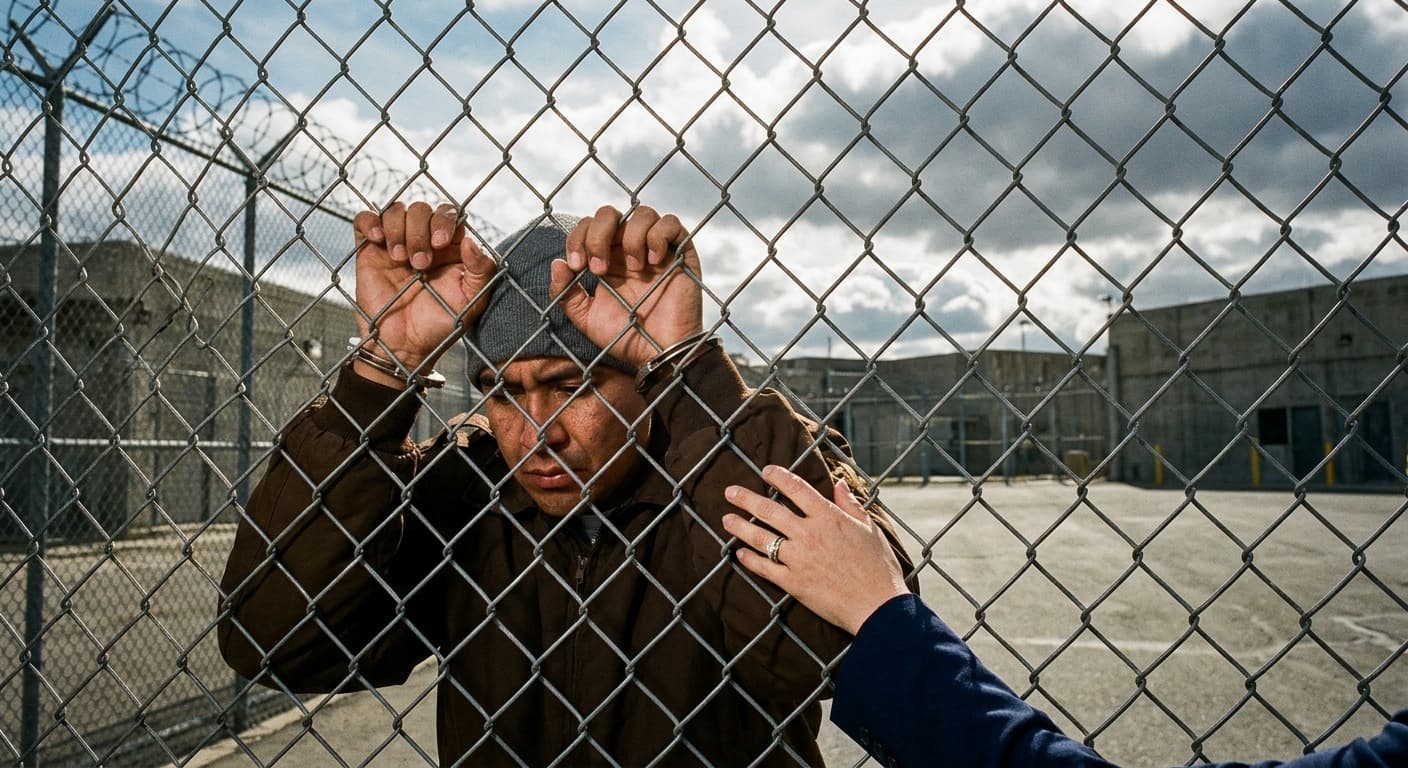
Adelanto's Bond Denial Surge Is a Constitutional Power Play, Not a Policy Shift
Immigration courts under EOIR are enforcing a mandatory-detention reading of §1225(b)(2)(A) that every federal appeals court to address it — except the Fifth Circuit — has rejected, producing a 55% bond denial rate by Q1 2026 and an institutional standoff between the executive branch's own courts and Article III judiciary.
Immigration judges nationwide denied 55% of bond requests in the first three months of 2026, up from 36% in 2024, according to Executive Office for Immigration Review data analyzed by LAist. At the Adelanto detention facility in San Bernardino County, the shift was sharper still: judges denied 57% of bond requests after November 10, 2025, compared with 39% before. The numbers reflect not a gradual judicial trend but a deliberate institutional strategy — EOIR enforcing a legal interpretation that Article III federal courts have overwhelmingly rejected, creating the most direct confrontation between the executive branch's internal court system and the federal judiciary in a generation.
The Mechanism: How EOIR Defies the Federal Courts
The inflection point was September 5, 2025, when the Board of Immigration Appeals issued Matter of Yajure Hurtado, 29 I&N Dec. 216, holding that noncitizens who entered the United States without inspection are "applicants for admission" subject to mandatory detention under 8 U.S.C. §1225(b)(2)(A) — and therefore ineligible for bond hearings, regardless of how long they have lived in the country or whether they have any criminal record. The decision, available on the Department of Justice EOIR website, reversed nearly three decades of agency practice under which interior arrests were governed by §1226(a), which permits discretionary release on bond.
The legal reasoning did not survive contact with Article III courts. By December 2025, the Seventh Circuit rejected the government's interpretation in Castañon-Nava v. DHS, finding that §1225(b)(2)(A)'s mandatory detention applies only to noncitizens "seeking admission" at a border or port of entry — not those apprehended years after entering, according to the U.S. District Court for the District of Massachusetts. On April 29, 2026, the Second Circuit ruled 3-0 against the administration, with Trump appointee Judge Joseph F. Bianco writing that the government's reading "defies the statute's context, structure, history, and purpose" and warning it "would send a seismic shock through our immigration detention system," as
Al Jazeera reported. On May 6, 2026, the Eleventh Circuit joined the Seventh and Second, holding that §1226(a) governs interior arrests, per the
Eleventh Circuit opinion. Only the Fifth Circuit sided with the government, in Buenrostro-Mendez v. Bondi, according to the
Fifth Circuit opinion. More than 370 district court judges nationwide reached the same conclusion as the majority circuits.
The government's response was institutional defiance. On January 13, 2026, Chief Immigration Judge Teresa L. Riley sent guidance to all immigration judges stating that a Central District of California declaratory judgment vacating Hurtado — Maldonado Bautista v. Santacruz — "is not a nationwide injunction and does not purport to vacate, stay, or enjoin Yajure Hurtado," according to a class action filing in the District of Massachusetts. Riley's email asserted that declaratory judgments "differ from injunctions" and "do not, by itself, have the effect of compelling specific action by a party." The practical instruction to immigration judges was explicit: continue denying bond under Hurtado as binding precedent.
The result was documented in real time. In Laredo, Texas, an immigration judge issued an order stating: "The Court finds that it has no jurisdiction to entertain the instant bond request. The Court does not understand the District Court Order in Guerrero-Orellano v. Munoz... to be an injunction or to vacate, stay, or enjoin the ruling in Matter of Yajure Hurtado," per the same Massachusetts filing. On February 17, 2026, an Adelanto immigration judge cited Hurtado to deny a bond hearing outright, according to
LAist.
Who Wins, Who Loses
The winners are DHS enforcement and private detention operators. The losers are long-term residents, their families, and the federal judiciary's authority over executive-branch agencies.
The policy's scope is vast. Bond requests more than doubled from 34,845 in 2024 to 80,130 in 2025, according to LAist's analysis of EOIR data. Nearly 60,000 habeas corpus filings have hit federal courts since January 2025, according to data gathered by ProPublica and analyzed by LAist — against an annual average of fewer than 1,000 over the previous 15 years. The government has not appealed the December 2025 partial final judgment in Guerrero Orellana v. Moniz, nor sought a stay, according to the
Massachusetts court filing. The strategy appears to be: let the rulings stand as declaratory judgments, instruct immigration judges they are not binding, and force detainees into individual habeas litigation.
ICE Acting Director Todd Lyons framed the policy as closing a loophole, telling Fox News that people "using the bond system just to go ahead and be released out into the community, to have a court date in, you know, 2037, 2035, and never show up for court," as NPR reported.
The losers are people like Fidel Arias Torres, who had lived in the United States for 24 years when he was detained. An immigration judge granted him a $2,500 bond in July 2025, but the BIA reversed under Hurtado. The Southern District of California ordered his release, finding that "the BIA's conclusion that Petitioner is ineligible for bond defies statutory construction and the plain meaning of the statute." Or the woman in Washington state who had lived there for nearly two decades, with six U.S. citizen children including a 7-year-old with terminal cancer, whose case formed part of a class action after immigration judges there denied bail, per
NPR.
The median processing time for detained cases nearly doubled from 111 days in 2024 to approximately 222 days in Q1 2026, according to LAist. When bonds are granted, the amounts are higher: the national median rose from $7,500 to $9,211 post-November 2025; at Adelanto, to $10,000.
The Judicial Purge That Enabled the Shift
The bond-denial surge did not happen in a staffing vacuum. The Trump administration fired nearly 100 immigration judges in 2025, and dozens more resigned or retired, reducing the total by approximately 25%, according to NPR. Twelve immigration courts lost over half their judges; two courts have no judges at all. Of 17 new permanent judges hired through a November 2025 campaign, most came from ICE or DHS backgrounds, NPR reported.
The Board of Immigration Appeals underwent a parallel transformation. In 2025, the board published 70 decisions — nearly as many as all decisions posted publicly under Biden — and backed DHS in 97% of publicly posted cases, at least 30 percentage points higher than the 16-year average, according to NPR. Already in 2026, NPR tracked 21 decisions with DHS winning all but one. Former BIA judge Clark told NPR that the bond restrictions "have had a tangible effect on the lives of millions of people."
EOIR lost over 400 legal assistants, attorney advisers, and administrative specialists. About 75% of attorney advisers and 54% of court supervisors departed. The remaining staff are managing multiple courts simultaneously, per NPR. This structural hollowing made Riley's January 2026 directive operationally effective: judges who might have resisted the Hurtado interpretation were gone, and those who remained were managing caseloads that made individual legal resistance costly.
The Historical Parallel: A Statute Rewritten From Within
The closest parallel is not immigration-specific. In 1996, Congress passed the Illegal Immigration Reform and Immigrant Responsibility Act, which the Fifth Circuit's opinion in Buenrostro-Mendez describes as aimed at reducing the "incongruity" whereby aliens who evaded inspection had more procedural rights than those who presented at ports of entry. For 29 years, Democratic and Republican administrations alike read §1225(b)(2)(A) as applying to border arrivals, leaving §1226(a) to govern interior arrests. The CRS analysis confirms that from FY2012 to FY2021, immigration judges granted bond in approximately 48% of cases, with grant rates ranging from 56% in FY2016 to 31% in FY2021.
What changed was not the statute. DHS issued "Interim Guidance Regarding Detention Authority for Applicants for Admission" on July 8, 2025, asserting that all persons who entered without inspection are subject to §1225(b)(2)(A) regardless of when apprehended, per a Western District of Texas filing. The BIA adopted this interpretation in Hurtado two months later. The
American Immigration Council described the decision as creating "a sweeping new rule that strips most noncitizens who entered without inspection of the right to seek bond from an IJ, regardless of how long they have been residing in the country."
The Central District of California vacated Hurtado under the Administrative Procedure Act on February 18, 2026, ordering broad notice to affected detainees. EOIR's response was to instruct judges to treat the vacatur as non-binding, according to the
AILA practice alert.
The Constitutional Stakes
The confrontation is not between two coequal branches of government. Immigration courts are administrative tribunals within the Department of Justice. Their judges are executive-branch employees, not Article III judges with life tenure. When EOIR instructs its judges to disregard declaratory judgments from federal district courts, it is asserting that the executive branch's own adjudicatory body can interpret statutes independently of Article III review — a proposition the Supreme Court rejected in Loper Bright Enterprises v. Raimondo (2024), which held that courts "need not and under the APA may not defer to an agency interpretation of the law simply because a statute is ambiguous," as the Southern District of Florida noted in a ruling ordering a bond hearing.
The class action in Guerrero Orellana v. Moniz frames the question directly. The government has not appealed the December 2025 partial final judgment, has not sought a stay, and has instructed its judges to treat it as non-binding. Class counsel anticipate requesting expedited resolution of the remaining claims, including the APA claim seeking vacatur of Hurtado, per the Massachusetts filing.
Former immigration judge Andrew Arthur, now with the Center for Immigration Studies, told NPR that legal challenges will "ultimately land at the U.S. Supreme Court." The circuit split — Fifth Circuit for the government, Second, Seventh, and Eleventh against — virtually guarantees it.
What to Watch
- Supreme Court certiorari petition. The circuit split makes Supreme Court review likely. Watch for a petition from either side following the Eleventh Circuit's May 6 ruling.
- Guerrero Orellana APA claim. The District of Massachusetts reserved judgment on the APA claim seeking vacatur of Hurtado. Class counsel anticipate requesting an expedited schedule. An injunction — as opposed to a declaratory judgment — would compel EOIR compliance.
- EOIR's response to the Second Circuit ruling. The April 29 decision was the first appellate rejection from a Trump appointee. Whether DOJ appeals or seeks en banc review will signal whether the administration intends to escalate or maintain its declaratory-judgment workaround.
- The BIA's proposed appeals rule. A federal judge blocked most of a rule that would have shortened the appeals window from 30 days to 10, calling it unlawful, per
NPR. The administration's next move on appeals processing will indicate whether it continues trying to compress timelines through regulation.
The Bottom Line
The bond-denial surge at Adelanto and nationwide is not a policy adjustment — it is an executive-branch agency using its own court system to enforce a statutory reading that three federal appeals courts and over 370 district judges have declared unlawful. The administration's strategy of treating adverse rulings as non-binding declaratory judgments, while not appealing them, has produced a constitutional standoff that only the Supreme Court can resolve. Until it does, the decisive leverage rests with EOIR — and the cost falls on tens of thousands of detainees whose release federal courts have ordered but the executive branch has declined to provide.
Discover more

India
India-South Korea $50B Trade Expansion Plan
India and South Korea target $50 billion in bilateral trade by 2030, focusing on industrial cooperation and strategic alignment amid US pressures.
US Politics
House Ethics Committee Pushes Sexual Miscond.
The House Ethics Committee has shifted responsibility for sexual harassment settlement records to the Office of Congressional Workplace Rights, complicating disclosure efforts.

India
Modi's Women’s Convention in Varanasi
Modi's Varanasi rally frames women's reservation as a national mission, targeting the 2027 Uttar Pradesh elections with a strategic narrative.

Conflict & Security
Drone Warfare Killing Aid Workers at Unprec
Over 1,000 humanitarian workers killed in three years as cheap armed drones collapse legal protections. Gaza, Sudan, Ukraine, and DRC see deliberate targeting of aid convoys and hospitals with zero prosecutions.