Actor Vijay's Political Move
Vijay's rise ends Tamil Nadu's 59-year duopoly.
Model Diplomat7 min readAsia
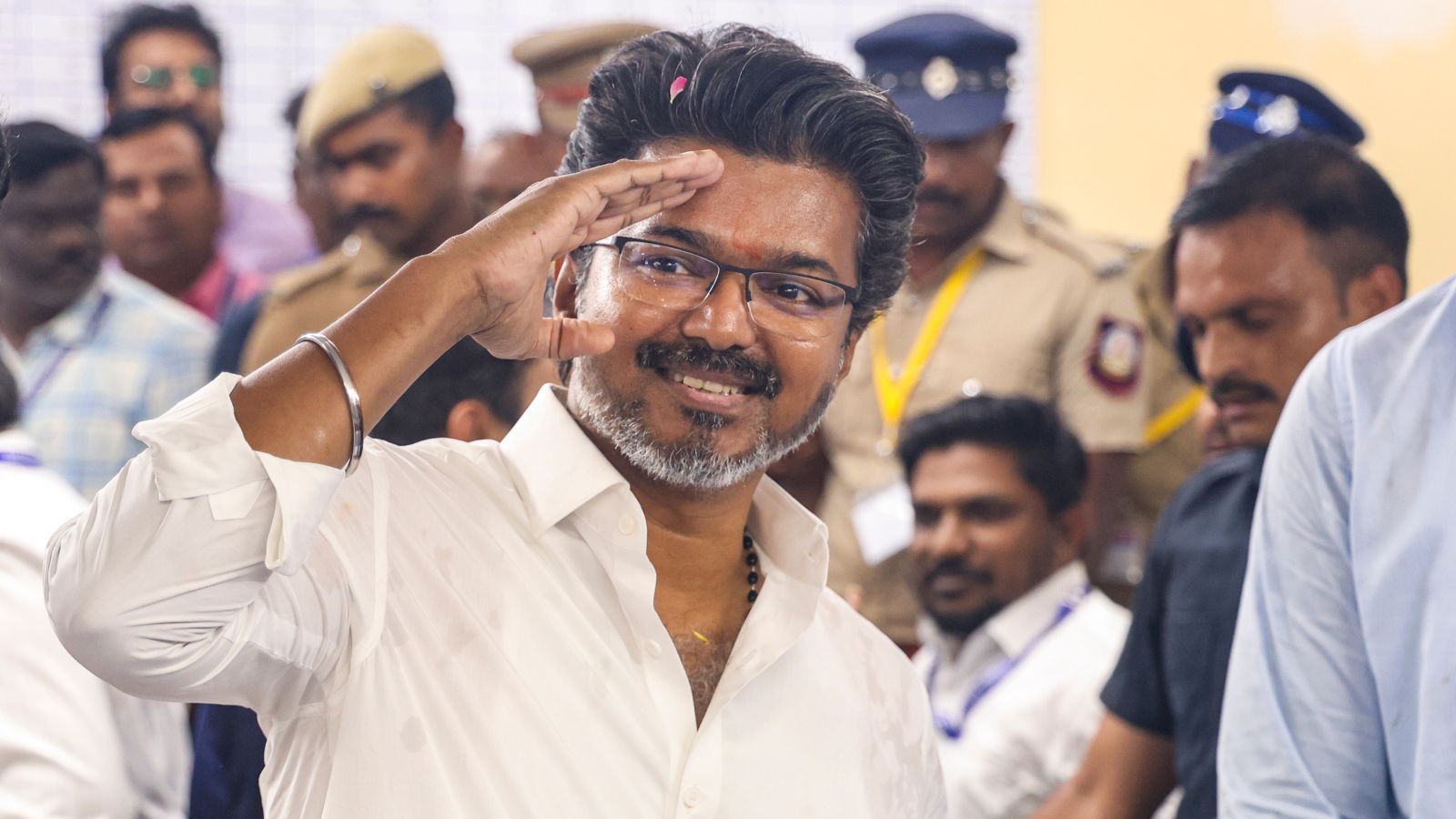
Actor Vijay's Political Move Just Broke Tamil Nadu's 59-Year Duopoly
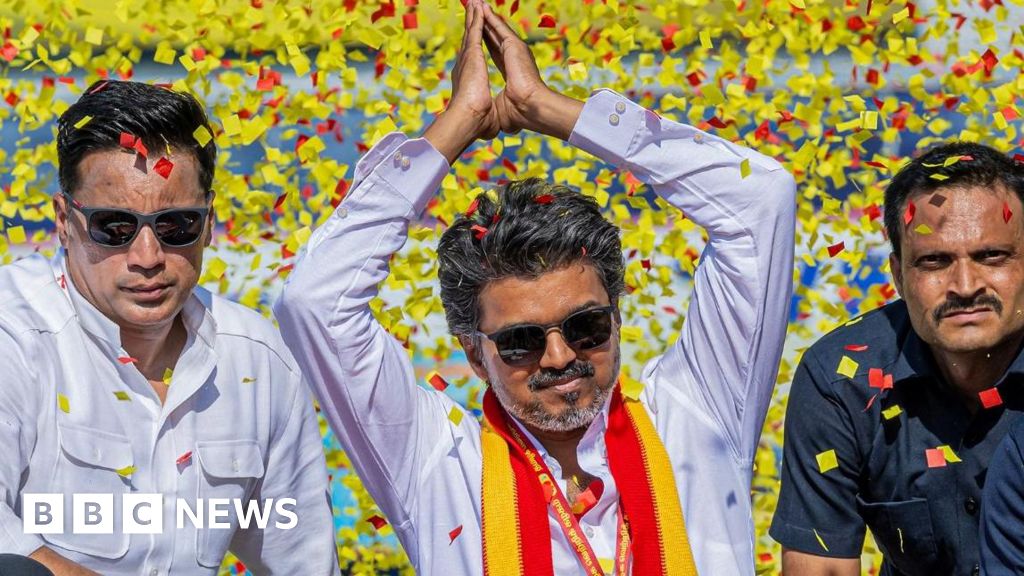
Actor Vijay was sworn in as Tamil Nadu chief minister on May 10, 2026, after his TVK party won 108 of 234 seats — ending Dravidian two-party rule and reshaping India's south.
On May 10, 2026, C. Joseph Vijay took oath at Chennai's Jawaharlal Nehru Stadium as Tamil Nadu's 13th chief minister — the first non-Dravidian to hold the post since 1969. The story is not that a movie star won an election; Tamil Nadu has done that before. The story is that Vijay's Tamilaga Vettri Kazhagam (TVK) has effectively outsourced its ideological programme to the parties propping it up — the Congress, the two Communist parties, VCK and the Muslim League — which means the real victor in India's most industrialised state is the national opposition bloc, not the actor whose face is on the posters.
The numbers and the stand-off
TVK won 108 seats in the 234-member assembly on May 4, according to the BBC's results tracker. The ruling Dravida Munnetra Kazhagam (DMK), led by chief minister M.K. Stalin, collapsed to 73 seats; Stalin himself lost his home constituency of Kolathur. The AIADMK, in alliance with the Bharatiya Janata Party (BJP), finished third at 53. Al Jazeera called it a "shock defeat" in
its post-mortem of the 2026 state polls, noting that Stalin's government had made Tamil Nadu the fastest-growing state economy in India, at roughly 11% in 2024–25.
The polls were held on April 23 and 29, 2026, under a schedule notified by the Election Commission of India on March 15, according to a Press Information Bureau release. Counting on May 4 left Vijay ten seats short of the 118-mark. What followed was a four-day constitutional stand-off with Governor Rajendra Vishwanath Arlekar — a BJP appointee — who declined to invite the single-largest party until it produced signed letters from 118 MLAs. A
BBC News dispatch records that the governor's office publicly stated "the requisite majority support in the legislative assembly, essential for forming the government, has not been established," an unusually blunt intervention that TVK leaders and constitutional lawyers described as a departure from precedent.
Vijay bridged the gap with five INC MLAs, and two each from the CPI, CPI(M), VCK and Indian Union Muslim League — 12 legislators who converted a plurality into a 120-seat working majority with a cushion of exactly two.
The historical rupture
For 59 years, Tamil Nadu has been governed alternately by the DMK and its AIADMK offshoot — parties born of the anti-Brahmin Self-Respect Movement and rooted in what Tamils call Dravidian ideology. Business Standard, in its report on the swearing-in, noted that Vijay is the first non-Dravidian chief minister to take oath in the state since 1969. That is the second-longest single-family political monopoly in independent India, exceeded only by Kerala's LDF-UDF rotation.
The most cited parallel is M.G. Ramachandran, who quit the DMK in 1972 to found the AIADMK and won power in 1977. But MGR was a DMK cadre for two decades before his split; Vijay launched TVK only in February 2024 and has never held any political office. As the
BBC's profile of Vijay's rise put it, he took on "Tamil Nadu's entrenched political giants, the DMK and AIADMK" single-handedly. The 51-year-old walked away from a 69-film career and cashed a fan network — the Vijay Makkal Iyakkam, formed in 2009 — into a distribution system for short-form video content.
The BBC's forensic account of the campaign makes clear how the machine worked: Vijay campaigned in person for fewer than three weeks after a September 27, 2025 crowd crush at his Karur rally killed at least 39 people, according to
Al Jazeera's coverage of the incident. TVK candidates — most first-time debutants — nevertheless swept the state on the strength of Instagram Reels, YouTube Shorts and WhatsApp forwards. In Madurai Central, a Muslim candidate in a skullcap, Madhar Badhurudeen, defeated the DMK's sitting minister Palanivel Thiaga Rajan and the AIADMK's actor-filmmaker Sundar C by more than 19,000 votes without a single visit from Vijay.
Who actually holds the leverage
This is where the received wisdom about Vijay's victory misses the point. The story is not about star power; it is about who now writes Tamil Nadu's policy.
TVK's manifesto, detailed in Al Jazeera's pre-poll analysis, promised six free LPG cylinders a year, ₹2,500 monthly to female heads of household, and interest-free education loans of up to ₹2 million. Analysts across the spectrum — from Ramu Manivannan at the University of Madras to Nilakantan RS — have argued that beyond retail welfare, TVK does not have a programme. "There is an absence of any original position on real issues," Nilakantan told the BBC. "Virality has become the currency of his actions."
That vacuum is now being filled by his allies. The Indian Union Muslim League will demand protection for minority institutions and pushback on citizenship-law implementation. The CPI and CPI(M) will press on labour codes and public-sector spending. The VCK — the Dalit Panthers' political arm — will insist on caste-census legislation and land redistribution, as Al Jazeera has previously documented. And the Congress, having pledged support "within hours" per the
BBC's swearing-in report, has effectively picked up 234 constituencies of leverage without contesting a single seat competitively.
The non-obvious beneficiary is not Vijay. It is Rahul Gandhi's INDIA bloc, which just added India's second-richest state to a portfolio that includes Karnataka, Telangana and Himachal Pradesh — and did so without spending campaign capital. The BJP, whose National Democratic Alliance won West Bengal and retained Assam and Puducherry per Al Jazeera's national round-up, remains locked out of the south. Its beachhead through AIADMK collapsed with the Dravidian party's 53-seat return.
The confrontation ahead
Vijay's most explicit positioning during the campaign was against the BJP. He called Prime Minister Narendra Modi's party his "ideological adversary" and, according to the BBC, mocked Stalin as "uncle" while framing the vote as resistance to what he called "authoritarianism by the federal government." That posture will now be tested on live wires.
Three flashpoints are already visible. First, NEET: the DMK-led assembly passed a resolution in 2021 seeking exemption from the national medical entrance test, and the BBC's explainer on the exam records the state's claim that 26 students have died by suicide since NEET was introduced. TVK's junior allies — particularly the Left and VCK — will insist Vijay push the issue harder than Stalin did. Second, the National Education Policy's three-language formula, which Tamil Nadu has refused to implement; the
BBC has chronicled how the state alleges federal funds have been withheld in retaliation. Third, the 16th Finance Commission's award, expected in 2026, which will determine Tamil Nadu's share of central taxes and is already a live grievance in Chennai.
On each, Vijay inherits a confrontation with Delhi that his campaign rhetoric committed him to escalate — and a governor who has already shown he will exercise discretionary powers to slow him down.
The Karur shadow
The other unresolved variable is the Karur crush. A single-member commission of inquiry under retired judge Aruna Jagadeesan was set up by the Stalin government to investigate the September 2025 disaster, the BBC has reported, with a two-month reporting deadline. Police filed cases against three TVK senior members for culpable homicide and negligence. TVK approached the Madras High Court seeking a federal investigation. Whichever way that dossier lands — with the state (now TVK's own government) or the centre (BJP-controlled) — it becomes political leverage. If the commission finds negligence by TVK organisers, Vijay's opponents get a criminal file. If Vijay's government tries to bury it, the Left and Congress allies who signed up for a "clean administration" platform will have to explain themselves.
What to watch
- Floor test: TVK must demonstrate its 120-legislator majority in the assembly. With a cushion of two, a single defection is a crisis. Watch the 16 Congress-plus-Left-plus-VCK-plus-IUML seats.
- Cabinet allocation: Nine ministers were sworn in with Vijay, per the BBC. Expansion is pending. If the Congress, Left, VCK and IUML demand cabinet berths, the coalition becomes structurally different from a TVK single-party government — closer to a formal front.
- Jagadeesan Commission report: due in the weeks ahead. It will define whether Karur becomes a legal problem or a political one for Vijay.
- First budget: The
state's fiscal position is under stress, with debt at roughly ₹8.3 lakh crore and revenue deficit widening. TVK's cash-transfer promises collide with an FRBM ceiling that Chennai has already breached.
- The 16th Finance Commission award: expected in 2026. The first federal fight of Vijay's tenure.
Diplomat View
The consensus reading of May 10 — that Tamil Nadu just elected a movie star — is the shallow one. The deeper story is that a 51-year-old political novice with no manifesto now runs India's most industrialised state on the sufferance of a five-party coalition whose ideological centre of gravity sits with the Congress and the Left. That is a structural, not personal, victory for the INDIA bloc, and a structural defeat for the BJP's long-standing project to open a southern flank through the AIADMK. Our call: Vijay's government survives its first year, because none of his allies has an interest in bringing it down before the 2029 general election — TVK is worth more to them upright and dependent than defeated. It falters between 2027 and 2028 if any two of the Congress, the Left, or VCK bolt over caste-census legislation, NEET exemption, or minority policy. The forecast is falsifiable in one direction: if Vijay expands the cabinet without giving Congress, Left, VCK and IUML at least four berths between them, revise upward the probability of an early collapse. The Dravidian era did not end because Tamil Nadu grew tired of ideology. It ended because a fan army with better software beat a party machine. What replaces it is a coalition — and coalitions, in Indian state politics, break on the ministries they cannot share.
Related: India.
Discover more
India
Rajnath Singh's Durga Squad for 2026 Polls
Rajnath Singh's Durga Squad promised women's safety in Bengal but has since disappeared from the agenda, revealing BJP's true priorities.
India
Modi's Women’s Convention in Varanasi
Modi's Varanasi rally frames women's reservation as a national mission, targeting the 2027 Uttar Pradesh elections with a strategic narrative.
India
BJP's Delimitation Strategy
Congress leader K.C. Venugopal claims the BJP uses women's reservation to advance delimitation, raising fears over electoral fairness ahead of the 2029 polls.

Conflict & Security
Drone Warfare Killing Aid Workers at Unprec
Over 1,000 humanitarian workers killed in three years as cheap armed drones collapse legal protections. Gaza, Sudan, Ukraine, and DRC see deliberate targeting of aid convoys and hospitals with zero prosecutions.