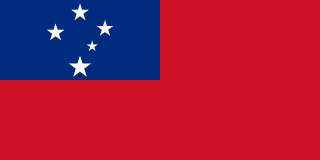
Inside Samoa’s foreign policy.
Independent State of Samoa
Oceania · UN voting record, treaty positions, and alliances — every claim primary-sourced.
In short
Samoa is a small Pacific parliamentary republic that matters more diplomatically than its size suggests because major powers now treat Polynesia as contested strategic space, while Apia’s own priorities remain climate finance, development funding, and room to maneuver between partners.
Capital
ApiaGovernment
Unitary parliamentary republicSamoa's government & politics
Leadership, governance, and democratic trajectory.


Head of government
Tuilaʻepa Saʻilele Malielegaoi
Head of Government
Samoa's UN voting record
How Samoa votes at the UN General Assembly — ideological trajectory, voting partners, topic patterns, and key recent roll calls.
Ideological trajectory
Top voting partners
Topic-level voting
Source: Erik Voeten, “United Nations General Assembly Voting Data”, Harvard Dataverse (CC0). Aggregated by Model Diplomat. Last refresh tracked in profile freshness.
Samoa's foreign policy
Bilateral posture, key relationships, and live diplomatic statements.
Foreign Policy
Samoa’s foreign policy is a small-state balancing strategy built around sovereignty protection, climate diplomacy, and development financing rather than bloc politics. Power over the file sits mainly with the cabinet and prime minister in a parliamentary system, while the Ministry of Foreign Affairs and Trade executes policy; as of the 2021 election period and through the 2026 campaign, Fiame Naomi Mataʻafa served as prime minister and Vaʻaletoʻa Sualauvi II as head of state, with Samoa preparing for a leadership transition after provisional 2026 election results indicated Fiame was likely to lose office Samoa Government, Parliament of Samoa, ABC News. The constant across governments is the same interests pyramid: survival means climate adaptation and disaster resilience for a low-lying Pacific island state; regime and state security mean avoiding dependency on any single outside power; economic interests mean aid, tourism, remittances, connectivity, and market access; status means visibility through Pacific and small-island forums UNFCCC, World Bank, Pacific Islands Forum.
Samoa states its doctrine in the language of “friends to all” and “Pacific regionalism,” but the operational line is strategic diversification. Its foreign ministry identifies regional cooperation, sustainable development, climate action, and the defense of sovereignty as central objectives Ministry of Foreign Affairs and Trade Samoa. That explains why Apia welcomes funding and infrastructure from multiple partners while resisting being cast as a camp follower in US-China competition. The clearest example was Samoa’s cancellation in 2021 of the proposed Chinese-backed Vaiusu Bay port project on the grounds that it was excessive for the country’s needs, even while maintaining diplomatic ties with Beijing and continuing broader cooperation Reuters. That decision was not an anti-China realignment; it was a sovereignty-and-debt signal consistent with Samoa’s effort to extract benefits from outside interest without surrendering control Lowy Institute, RNZ.
Its bilateral relationships reflect that logic. New Zealand and Australia remain Samoa’s deepest security and human ties through migration, remittances, labor mobility, aid, policing, and disaster response New Zealand Foreign Affairs and Trade, Australian DFAT. Japan is a long-running development partner, especially on infrastructure and maritime assistance Embassy of Japan in Samoa. China is important as a financier and diplomatic partner, with high-visibility grants and construction projects, but Samoa has repeatedly tried to keep that relationship transactional rather than strategic Ministry of Foreign Affairs of the People’s Republic of China, Reuters. The United States matters less as a direct economic anchor than as a diplomatic and regional-security actor, especially as Washington has expanded Pacific engagement and reopened attention to Polynesia U.S. Department of State.
Multilaterally, Samoa gets more influence per capita than it can bilaterally. It is active in the Pacific Islands Forum, the Alliance of Small Island States, the Commonwealth, and the UN, and it hosted the 2024 Commonwealth Heads of Government Meeting, a status play that also reinforced its image as a bridge between Pacific priorities and wider multilateral agendas Commonwealth, AOSIS, United Nations. At the UN, Samoa usually aligns with the broad Pacific and AOSIS line on climate, oceans governance, sustainable development, and decolonization, and it has been especially consistent in pushing recognition of climate vulnerability as a security and justice issue UN Digital Library, UNFCCC. Its most useful divergence is that, unlike some states pulled into sharper anti-China or pro-US signaling, Samoa tends to avoid rhetorical escalation and prefers issue-based positioning. It will join Pacific consensus on climate and maritime rules, but it is less willing to turn that consensus into an overtly geopolitical front.
That break from bloc behavior is the key to reading Apia correctly. Samoa is part of the “Pacific family” politically, but it does not behave like a simple extension of Australian, New Zealand, or US regional strategy; nor does it behave like a reliable Chinese client. Its voting and diplomacy are usually principle-framed rather than patron-framed, with climate finance, loss and damage, oceans, and development taking precedence over great-power signaling UN General Assembly, Pacific Islands Forum, AOSIS. The likely trajectory, even with leadership change after the 2026 election, is continuity in this hedge: Samoa will keep widening its partner set, resist militarization of its external relationships, and convert geopolitical attention into adaptation funding and infrastructure where possible. The non-obvious point is that Samoa’s caution is not indecision; it is the


Samoa's treaties & memberships
UN multilateral treaty positions and IGO memberships.
International Organizations
Society & economy
Macro-economic snapshot and demographic context.
GDP (nominal)
$1.2B
#195/250GDP per capita
$5,392.878
#130/250Currency
—
HDI
0.71
#113/250GDP (nominal USD)
GDP per capita (USD)
Top trading partners

In the news
Stories surfacing across Samoa’s authoritative outlets, plus headline events and the diplomatic calendar.
Headlines
Samoa election provisional results show new PM almost certain as Fiame loses grip on power - ABC News
Provisional results indicate a FAST-led government is almost certain in Samoa, signaling the likely end of Fiame Naomi Mata’afa’s tenure as prime minister. Key points: - FAST, led by La’auli Leuatea Schmidt, appeared to win up to 30 of 51 seats in the snap election. - Caretaker PM Fiame Mata’afa (Samoa United Party) appears set to lose power, with her party winning about 3 seats. - HRPP, led by Tuila’epa Sa’ilelei Malielegaoi, is projected to win around 12 seats and become t
Samoa - United States Department of State — Model Diplomat
Summary tailored to your query (Samoa: foreign policy, politics, diplomacy, elections, economy, security): - This page is a Model Diplomat profile on Samoa from the U.S. Department of State entry hosted by Model Diplomat. It does not appear to be a current, official State Department page but a curated synthesis in a modeling/wargaming context. - Content highlights on the page focus broadly on Samoa’s international relations and policy themes as discussed in a diplomatic cont
Samoa Just Had An Election. Was China the Real Winner?
Samoa’s 2025 election produced a dramatic shift toward closer China ties. Key points: - New Prime Minister Laʻaulialemalietoa Leuatea Polataivao Fosi Schmidt swept to power (40% of votes) amid a backdrop of his Beijing-aligned network through Samoa-China Friendship associations and the Pacific China Friendship Association, linked to China’s united front strategy. - The article argues China’s influence in Samoa has been long-term and multifaceted: elite capture, political div
Diplomatic calendar
Upcoming key dates
- Sep 18, 2026Electionpast
2026 Falealili 1 by-election
- Sep 18, 2026Electionpast
September 2026 Vaimauga 3 by-election
Explore Samoa in depth
Frequently asked questions about Samoa
Quick answers to the most common questions about Samoa.
What type of government does Samoa have?
Samoa is governed as a unitary parliamentary republic, with its capital at Apia.
Who is the head of state of Samoa?
Va'aletoa Sualauvi II is the head of state of Samoa, in office since 2017-07-21.
Who leads the government of Samoa?
Tuilaʻepa Saʻilele Malielegaoi serves as the head of government of Samoa, since 1998-11-23.
What is the population of Samoa?
Samoa has a population of approximately 218 thousand people, making it the 189th most populous country.
What is the economy of Samoa like?
Samoa has a nominal GDP of about $1 billion, or roughly $5,393 per capita.
What languages are spoken in Samoa?
The official languages of Samoa are English and Samoan.
When did Samoa join the United Nations?
Samoa has been a member of the United Nations since 1976.
Who are Samoa's closest allies?
Samoa's key allies include New Zealand, Australia, China, and Japan.
More about Samoa
Samoa is a small Pacific parliamentary republic that matters more diplomatically than its size suggests because major powers now treat Polynesia as contested strategic space, while Apia’s own priorities remain climate finance, development funding, and room to maneuver between partners. Samoa’s political system is a unitary parliamentary republic with a largely ceremonial head of state and executive power centered on the prime minister and cabinet, which are responsible to the Legislative Assembly [CIA World Factbook](https://www.cia.gov/the-world-factbook/countries/samoa/), [Constitute Project](https://www.constituteproject.org/constitution/Samoa_2017). The current government is in transition after the 2026 election: ABC reported on 9 June 2026 that provisional results made a new prime minister “almost certain” as Prime Minister Fiame Naomi Mataʻafa lost her grip on power, so any account treating the post-election cabinet as settled should be read cautiously until official formation is complete [ABC News](https://www.abc.net.au/news/2026-06-09/samoa-election-results-new-pm-almost-certain-fiame-loses-grip/). Samoa’s foreign policy machinery is therefore best understood as cabinet-led but highly sensitive to coalition arithmetic and elite consensus rather than ideological blocs [ABC News](https://www.abc.net.au/news/2026-06-09/samoa-election-results-new-pm-almost-certain-fiame-loses-grip/), [New Zealand Ministry of Foreign Affairs and Trade](https://www.mfat.govt.nz/en/countries-and-regions/australia-and-pacific/samoa/new-zealand-high-commission-to-samoa/). In the world today, Samoa positions itself as a sovereign Pacific voice that welcomes external engagement but resists being reduced to a China-West binary. It is active in the United Nations, the Pacific Islands Forum, the Commonwealth, and the Alliance of Small Island States, giving it disproportionate visibility on climate negotiations and ocean governance relative to its population [United Nations Digital Library](https://digitallibrary.un.org/record/3894183), [Pacific Islands Forum](https://forumsec.org/who-we-arepacific-islands-forum), [AOSIS](https://www.aosis.org/members/). That posture is consistent with recent Samoan messaging: Radio New Zealand reported Fiame warning in May 2026 that “every man and his dog is coming,” a blunt summary of how Apia sees intensifying geopolitical courtship across the Pacific [RNZ](https://www.rnz.co.nz/news/political/). Samoa’s practical alignment remains closest to New Zealand and Australia on aid, labor mobility, and security cooperation, but it also works with China, Japan, and the United States on infrastructure, development, and diplomacy rather than exclusive bloc politics [DFAT](https://www.dfat.gov.au/geo/samoa/samoa-country-brief), [U.S. Department of State](https://www.state.gov/countries-areas/samoa/). Economically, Samoa is a small, import-dependent island economy shaped by tourism, remittances, public spending, and external assistance more than by large-scale export capacity. The World Bank puts Samoa’s GDP at roughly $1.1 billion in current US dollars and classifies the economy as highly exposed to shocks, especially natural disasters and swings in tourism demand [World Bank](https://data.worldbank.org/country/samoa), [World Bank Samoa Overview](https://www.worldbank.org/en/country/samoa/overview). Remittances are a major stabilizer, and the Asian Development Bank describes them as a significant source of household income alongside tourism and agriculture [Asian Development Bank](https://www.adb.org/countries/samoa/economy). This produces a foreign policy logic driven less by military questions than by economic resilience: Samoa seeks concessional finance, infrastructure, maritime connectivity, disaster recovery support, and market access, while avoiding commitments that would narrow its donor base [DFAT](https://www.dfat.gov.au/geo/samoa/samoa-country-brief), [World Bank Samoa Overview](https://www.worldbank.org/en/country/samoa/overview). Three issues define Samoa’s current trajectory. The first is political transition after the 2026 election, because leadership change can alter tone, coalition management, and the handling of external partners even if the broad non-aligned Pacific posture stays intact [ABC News](https://www.abc.net.au/news/2026-06-09/samoa-election-results-new-pm-almost-certain-fiame-loses-grip/). The second is climate vulnerability, which is not a rhetorical add-on for Samoa but a survival-tier issue tied to adaptation finance, disaster response, coastal protection, and international pressure for stronger action from major emitters [UNFCCC](https://unfccc.int/), [World Bank Samoa Overview](https://www.worldbank.org/en/country/samoa/overview). The third is strategic competition in the Pacific, where Samoa is trying to extract economic benefit and diplomatic attention without surrendering policy autonomy; recent commentary and official briefs from Australia, New Zealand, and the United States all reflect heightened concern about influence in Polynesia and the wider Blue Pacific [DFAT](https://www.dfat.gov.au/geo/samoa/samoa-country-brief), [U.S. Department of State](https://www.state.gov/countries-areas/samoa/), [RNZ](https://www.rnz.co.nz/news/political/). The key to reading Samoa is that its external behavior is usually conservative, transactional, and sovereignty-minded rather than ideological. Apia will work with whichever partner delivers financing, connectivity, disaster support, and respect for Samoan agency, but it is unlikely to embrace overt militarization or exclusive alignment because those cut against both domestic politics and the country’s development-first interest structure [DFAT](https://www.dfat.gov.au/geo/samoa/samoa-country-brief), [U.S. Department of State](https://www.state.gov/countries-areas/samoa/). For delegates, the headline is simple: Samoa is not trying to choose a camp; it is trying to turn geopolitical attention into climate security, economic resilience, and diplomatic leverage on terms it can control [RNZ](https://www.rnz.co.nz/news/political/), [AOSIS](https://www.aosis.org/members/).