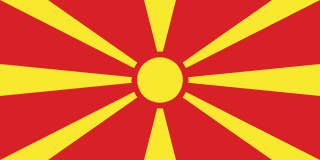
Inside North Macedonia’s foreign policy.
Republic of North Macedonia
Europe · UN voting record, treaty positions, and alliances — every claim primary-sourced.
In short
North Macedonia is a small NATO member and EU candidate whose foreign policy is anchored in Euro-Atlantic integration, but its near-term trajectory is constrained less by strategic ambiguity than by domestic politics and the unresolved dispute with Bulgaria over constitutional changes tied to the accession process…
Capital
SkopjeNorth Macedonia's government & politics
Leadership, governance, and democratic trajectory.

Head of state
Gordana Siljanovska-Davkova
Head of State

Head of government
Hristijan Mickoski
Head of Government
North Macedonia's UN voting record
How North Macedonia votes at the UN General Assembly — ideological trajectory, voting partners, topic patterns, and key recent roll calls.
Ideological trajectory
Top voting partners
Topic-level voting
Source: Erik Voeten, “United Nations General Assembly Voting Data”, Harvard Dataverse (CC0). Aggregated by Model Diplomat. Last refresh tracked in profile freshness.
North Macedonia's foreign policy
Bilateral posture, key relationships, and live diplomatic statements.
Foreign Policy
North Macedonia’s foreign policy is anchored in Euro-Atlantic integration, but its practical hierarchy is clearer than its rhetoric: regime-level and national survival interests sit in NATO, while status and growth interests sit in the EU accession process Government of North Macedonia, NATO, European Commission. The state’s core doctrine since independence has been to lock in sovereignty through Western institutions after repeated exposure to regional instability and external vetoes, first through UN admission under a provisional reference in 1993 and then through NATO accession in 2020 after the Prespa Agreement with Greece resolved the name dispute United Nations, NATO, Prespa Agreement text via Greek MFA. Under President Gordana Siljanovska-Davkova and Prime Minister Hristijan Mickoski, both elected or installed in 2024, the formal line remains pro-EU and pro-NATO, but the government has sharpened its language toward Bulgaria and the EU negotiating framework, showing that identity issues can outrank integration tempo when leaders judge domestic legitimacy to be at stake President of North Macedonia, Government of North Macedonia, European Council.
The decision structure is parliamentary, but foreign-policy authority is shared in practice between the government, which controls negotiations and alliance implementation, and the presidency, which shapes strategic tone and national identity messaging Constitution of North Macedonia, Government of North Macedonia, President of North Macedonia. The top-tier interest is security through NATO collective defence; North Macedonia became NATO’s 30th member on 27 March 2020 and has aligned its defence planning accordingly NATO. The second major interest is EU accession, opened politically in July 2022 through the first intergovernmental conference, because the EU remains North Macedonia’s dominant trade and reform anchor European Council, European Commission. A third, more defensive interest is protection of Macedonian language and identity claims against Bulgarian historical conditionality; this is where Skopje’s external posture becomes least pliable, even when compromise would serve its broader accession strategy European Council, Meta.mk.
Its key bilateral relationships reflect that hierarchy. The United States is North Macedonia’s main hard-security partner and a consistent backer of NATO integration, military modernization, and democratic reform U.S. Department of State. Germany is its most consequential EU partner because Berlin matters both as an investor and as a political sponsor of enlargement inside the Union Federal Foreign Office, European Commission. Greece moved from being the principal blocker to a strategic stabilizer after Prespa, even though implementation disputes still surface, because the agreement unlocked NATO membership and remains the legal foundation of bilateral normalization NATO, Prespa Agreement text via Greek MFA. Bulgaria is the hardest relationship: Sofia’s linkage of accession progress to constitutional changes and historical-language issues gives it direct leverage over North Macedonia’s top economic and status objective, which turns a neighborly dispute into a strategic bottleneck European Council, European Commission. Ties with Turkey also matter, especially in defence and political support within NATO, but Ankara is complementary to rather than a substitute for the Euro-Atlantic track Republic of Türkiye Ministry of Foreign Affairs, NATO.
In multilateral terms, North Macedonia is structurally Western-aligned. It is a UN member, NATO ally, OSCE participating State, and EU candidate country, and those memberships shape both its diplomatic bandwidth and its voting behavior United Nations, NATO, OSCE, European Commission. At the UN, Skopje has aligned closely with EU and U.S. positions on Russia’s war against Ukraine, including support for General Assembly resolutions affirming Ukraine’s territorial integrity and condemning Russia’s attempted annexations United Nations Digital Library, ES-11 resolutions voting records, Government of North Macedonia. That pattern fits its NATO


North Macedonia's treaties & memberships
UN multilateral treaty positions and IGO memberships.
International Organizations
Society & economy
Macro-economic snapshot and demographic context.
GDP (nominal)
$17.0B
#139/250GDP per capita
$9,291.857
#101/250Currency
—
HDI
0.77
#80/250GDP (nominal USD)
GDP per capita (USD)
Top trading partners


In the news
Stories surfacing across North Macedonia’s authoritative outlets, plus headline events and the diplomatic calendar.
Headlines
President of North Macedonia: If Bulgaria insists on disputing our identity, we should stop the EU accession negotiations – Meta.mk
Summary: - North Macedonia president Stevo Pendarovski says if Bulgaria continues to pressure over history and identity, the country should consider withdrawing from EU accession negotiations rather than waiting for a blockade. - He views the French-proposed framework as a transitional compromise that would lift Bulgaria’s veto and allow formal start of negotiations, while maintaining that the Macedonian language remains official in the EU with no footnotes. - PM Dimitar Kova
Polls: 58,9% of the citizens are pleased by the new government, SDSM leads the polls ahead of VMRO-DPMNE – Meta.mk
Summary: - A May 28, 2026 poll in North Macedonia reports broad satisfaction with the new government in its first 100 days: 58.9% pleased, 34.9% displeased, 6.2% unsure/refused. - Ethnic breakdown: 54.35% of Macedonians pleased; 40.22% displeased. Among Albanians, 71.36% pleased and 21.11% displeased. - Policy focus: respondents credit foreign policy (38.5%) as the government’s area of activity; other areas cited include social programs (7.4%), economic development (3.2%), a
North Macedonia Should Not Blindly Follow Trump, Ex-President ...
Summary: Former North Macedonian president Stevo Pendarovski criticizes his country’s current government for blindly aligning with US policy, especially on Iran, arguing that such one-sided foreign policy risks jeopardizing EU accession. He warns that as a small state, North Macedonia should balance US and EU interests rather than take a side in the US-EU rift. The article notes the government, under VMRO-DPMNE and PM Hristijan Mickoski, publicly supported US-Israel actions a
Explore North Macedonia in depth
Frequently asked questions about North Macedonia
Quick answers to the most common questions about North Macedonia.
What type of government does North Macedonia have?
North Macedonia is governed as a unitary parliamentary constitutional republic, with its capital at Skopje.
Who is the head of state of North Macedonia?
Gordana Siljanovska-Davkova is the head of state of North Macedonia, in office since 2024-05-12.
Who leads the government of North Macedonia?
Hristijan Mickoski serves as the head of government of North Macedonia, since 2024-06-23.
What is the population of North Macedonia?
North Macedonia has a population of approximately 1.8 million people, making it the 152nd most populous country.
What is the economy of North Macedonia like?
North Macedonia has a nominal GDP of about $17 billion, or roughly $9,292 per capita.
What languages are spoken in North Macedonia?
The official language of North Macedonia is Macedonian.
When did North Macedonia join the United Nations?
North Macedonia has been a member of the United Nations since 1993.
Who are North Macedonia's closest allies?
North Macedonia's key allies include United States, Germany, United Kingdom, Türkiye, and Greece.
More about North Macedonia
North Macedonia is a small NATO member and EU candidate whose foreign policy is anchored in Euro-Atlantic integration, but its near-term trajectory is constrained less by strategic ambiguity than by domestic politics and the unresolved dispute with Bulgaria over constitutional changes tied to the accession process [NATO](https://www.nato.int/cps/en/natohq/topics_48830.htm), [European Commission](https://neighbourhood-enlargement.ec.europa.eu/north-macedonia-report-2024_en), [Council of the European Union](https://www.consilium.europa.eu/en/policies/enlargement/republic-north-macedonia/). It is a unitary parliamentary republic, with President Gordana Siljanovska-Davkova elected in 2024 and Prime Minister Hristijan Mickoski heading a government formed after the 2024 parliamentary election [State Election Commission of North Macedonia](https://www.sec.mk/en/), [Government of the Republic of North Macedonia](https://vlada.mk/node/36667). Power sits primarily with the cabinet and parliamentary majority, not the presidency, and the current government is led by VMRO-DPMNE in coalition with the Albanian bloc VLEN and ZNAM, after VMRO-DPMNE won the largest number of seats in the May 2024 election [Assembly of the Republic of North Macedonia](https://www.sobranie.mk/), [Government of the Republic of North Macedonia](https://vlada.mk/node/36667), [State Election Commission of North Macedonia](https://www.sec.mk/en/). That matters because foreign policy is formally pro-EU and pro-NATO across most of the mainstream spectrum, but the Mickoski government has taken a harder line on accepting the constitutional amendments demanded under the 2022 EU negotiating framework with Bulgaria, making accession politics the defining test of its regional posture [European Commission](https://neighbourhood-enlargement.ec.europa.eu/north-macedonia-report-2024_en), [Council of the European Union](https://www.consilium.europa.eu/en/press/press-releases/2022/07/19/north-macedonia-and-albania-intergovernmental-conferences/), [Meta.mk](https://meta.mk/en/president-of-north-macedonia-if-bulgaria-insists-on-disputing-our-identity-we-should-stop-the-eu-accession-negotiations/). In the world today, North Macedonia is a reliability-seeking state: too small to shape regional order alone, but determined to lock in security and status through institutions. It became NATO’s 30th member in 2020 and has aligned closely with Alliance positions, including support for Ukraine after Russia’s full-scale invasion, while continuing to frame EU membership as its strategic objective [NATO](https://www.nato.int/cps/en/natohq/topics_48830.htm), [Ministry of Foreign Affairs of North Macedonia](https://mfa.gov.mk/en), [European Commission](https://neighbourhood-enlargement.ec.europa.eu/north-macedonia-report-2024_en). The core foreign-policy pattern is therefore not balancing between blocs but managing frustration: Skopje has already changed its constitutional name to resolve the dispute with Greece and enter NATO, yet it still faces veto leverage from an EU member state, which has deepened public skepticism about the accession bargain [Prespa Agreement text via United Nations](https://peacemaker.un.org/node/3021), [NATO](https://www.nato.int/cps/en/natohq/topics_48830.htm), [European Commission](https://neighbourhood-enlargement.ec.europa.eu/north-macedonia-report-2024_en). Economically, North Macedonia is a small upper-middle-income economy integrated into European manufacturing and trade chains, with GDP around $17 billion in current prices and a strong dependence on EU markets, especially Germany, for exports and investment [World Bank](https://data.worldbank.org/country/north-macedonia), [IMF](https://www.imf.org/en/Countries/MKD), [OEC](https://oec.world/en/profile/country/mkd). Its export base is concentrated in automotive components, chemical products, and machinery-linked production from the country’s technological-industrial zones, which creates jobs and foreign-exchange earnings but leaves the economy exposed to euro-area demand, energy-price shocks, and weak domestic productivity growth [OEC](https://oec.world/en/profile/country/mkd), [World Bank](https://www.worldbank.org/en/country/northmacedonia/overview), [European Commission](https://economy-finance.ec.europa.eu/economic-surveillance-eu-economies/north-macedonia/economic-forecast-north-macedonia_en). The government’s room for maneuver abroad is therefore tied closely to growth, inflation control, and continued investor confidence at home [IMF](https://www.imf.org/en/Countries/MKD), [World Bank](https://www.worldbank.org/en/country/northmacedonia/overview). Three issues define the country’s current trajectory. First is the Bulgaria file: whether Skopje accepts, delays, or tries to renegotiate constitutional changes linked to opening the next phase of EU talks will shape nearly every major diplomatic choice [Council of the European Union](https://www.consilium.europa.eu/en/press/press-releases/2022/07/19/north-macedonia-and-albania-intergovernmental-conferences/), [European Commission](https://neighbourhood-enlargement.ec.europa.eu/north-macedonia-report-2024_en), [Meta.mk](https://meta.mk/en/president-of-north-macedonia-if-bulgaria-insists-on-disputing-our-identity-we-should-stop-the-eu-accession-negotiations/). Second is coalition management in a multiethnic political system: stable governance still depends on maintaining workable Macedonian-Albanian power-sharing, a domestic fact with direct implications for external credibility and reform delivery [Assembly of the Republic of North Macedonia](https://www.sobranie.mk/), [Government of the Republic of North Macedonia](https://vlada.mk/node/36667), [European Commission](https://neighbourhood-enlargement.ec.europa.eu/north-macedonia-report-2024_en). Third is rule-of-law reform, because progress on corruption, judicial independence, and public administration is not secondary to accession anymore; it is the metric by which both Brussels and investors judge whether the country is converging or stalling [European Commission](https://neighbourhood-enlargement.ec.europa.eu/north-macedonia-report-2024_en), [World Bank](https://www.worldbank