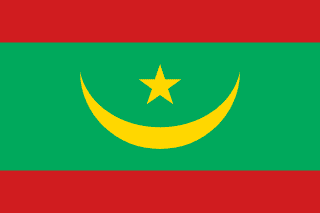
Inside Mauritania’s foreign policy.
Islamic Republic of Mauritania
Africa · UN voting record, treaty positions, and alliances — every claim primary-sourced.
In short
Mauritania is a security-focused, non-aligned hinge state between North and West Africa whose foreign policy is driven first by regime stability, then by border security in the Sahel, and then by mining, gas, and external financing…
Capital
NouakchottMauritania's government & politics
Leadership, governance, and democratic trajectory.


Mauritania's UN voting record
How Mauritania votes at the UN General Assembly — ideological trajectory, voting partners, topic patterns, and key recent roll calls.
Ideological trajectory
Top voting partners
Topic-level voting
Source: Erik Voeten, “United Nations General Assembly Voting Data”, Harvard Dataverse (CC0). Aggregated by Model Diplomat. Last refresh tracked in profile freshness.
Mauritania's foreign policy
Bilateral posture, key relationships, and live diplomatic statements.
Foreign Policy
Mauritania’s foreign policy is a hedge strategy built around regime security and border stability first, then aid, investment, and diplomatic optionality. President Mohamed Ould Cheikh El Ghazouani was re-elected in June 2024, and the presidency remains the decisive foreign-policy center in a semi-presidential system where the president chairs the Council of Ministers, accredits ambassadors, and negotiates treaties under the constitution; Moctar Ould Diay was appointed prime minister in August 2024, confirming that the external file still runs through the presidency rather than parliament Mauritanian Presidency, Constitute Project: Mauritania 1991 Constitution, as amended to 2012, Reuters. Nouakchott’s stated line is non-interference, support for Arab and African causes, and multilateral cooperation, but in practice its doctrine is closer to strategic balancing: keep working relations with the Gulf, Morocco, Algeria, France, the EU, China, and the United States while avoiding entanglement in their rivalries Ministry of Foreign Affairs, Cooperation and Mauritanians Abroad, BTI 2026 Mauritania Country Report, European Council on Foreign Relations.
Its core interests are unusually clear. Survival means insulating Mauritania from Sahel jihadist spillover from Mali and managing a long, thinly governed border zone; the government has repeatedly framed counterterrorism and border control as top priorities, and the U.S. State Department and International Crisis Group both treat Mauritania as one of the few Sahel states that has contained jihadist violence on its own territory for more than a decade through a mix of coercion, local mediation, and border management U.S. Department of State, International Crisis Group. Regime security comes next: external partnerships are valued less for ideology than for what they deliver in budget support, security assistance, and elite insulation from regional shocks BTI 2026 Mauritania Country Report. Economic interests are increasingly concentrated in iron ore, fisheries, offshore gas, and migration financing. The World Bank estimated GDP at about $10.4 billion in 2023, while the IMF linked medium-term growth to the Greater Tortue Ahmeyim gas project and extractives revenues, making foreign policy strongly oriented toward investors and donors with technical and financial capacity World Bank, IMF Article IV Consultation, Mauritania. Status matters too, but mostly as an instrument: Mauritania uses African Union, Arab League, and Organisation of Islamic Cooperation platforms to signal Arab-African bridge status rather than to lead an ideological camp African Union, League of Arab States.
Its bilateral map reflects that balancing logic. The European Union is one of Mauritania’s most important external partners because migration control, fisheries, and development finance all converge there; the EU and Mauritania signed a migration partnership declaration in March 2024 and maintain a long-running fisheries agreement that ties market access to budget revenue and maritime governance European Commission, Council of the European Union. Mauritania also keeps close ties with Saudi Arabia and the UAE, which provide political backing and capital, while France remains relevant on security and development despite declining influence across the Sahel ECFR, French Ministry for Europe and Foreign Affairs. With Morocco and Algeria, Nouakchott’s policy is deliberate ambiguity. It has expanded practical ties with Rabat, including trade routes and high-level visits, but it avoids full alignment because it also needs a workable relationship with Algiers and because the Western Sahara file touches Mauritania’s own security perimeter Kingdom of Morocco Ministry of Foreign Affairs, Algerian Press Service, Crisis Group. Senegal is a key functional partner because the two states share the offshore GTA gas project and river-basin interests, giving energy diplomacy a concrete bilateral anchor bp, Kosmos Energy.
In multilateral forums, Mauritania generally votes with the broad African-Arab consensus on Palestinian statehood, decolonization language, and sovereignty-sensitive resolutions, and it routinely backs multilateral development and climate positions advanced through the African Group and the OIC UN Digital Library, Organisation of Islamic Cooperation, African Group at the UN. Its behavior is more cautious on divisive enforcement questions. On Ukraine-related UN votes, Mauritania has not acted like a hard-line anti-Western state; it supported the 2 March 2022 General Assembly resolution demanding that Russia withdraw from Ukraine, aligning with most African and Arab states that favored the resolution rather than with abstaining governments such as


Mauritania's treaties & memberships
UN multilateral treaty positions and IGO memberships.
International Organizations
Society & economy
Macro-economic snapshot and demographic context.
GDP (nominal)
$10.9B
#154/250GDP per capita
$2,110
#170/250HDI
0.556
#158/250GDP (nominal USD)
GDP per capita (USD)
Top trading partners


In the news
Stories surfacing across Mauritania’s authoritative outlets, plus headline events and the diplomatic calendar.
Headlines
Foreign relations of Mauritania - Wikipedia
Mauritania’s foreign policy since 1960 has centered on Western Sahara/secession issues, neighboring recognition (notably from Morocco), and balancing regional relations. Key points: - Governance of foreign relations: Handled by the Minister of Foreign Affairs and Cooperation (currently Mohamed Salem Ould Merzoug). - Western Sahara and regional dynamics: Mauritania’s stance and relations with Morocco have driven much of its diplomacy; shifts occurred with Algeria and other ne
Europe, Mauritania and the Gulf states: Securing stability and growth ...
Summary: - Mauritania sits at a fragile political and security edge in the Sahel, hosting about 300,000 Malian refugees as Islamist spillover from Mali continues to threaten regional stability. - Key regional fault line is Western Sahara, with ongoing Morocco–Algiers tensions that Nouakchott must navigate to prevent escalation on its northern frontier. - For Europe, Mauritania is strategically important as a buffer to Sahelian instability, a key security partner amid regiona
Mauritania Country Report 2026 - BTI Transformation Index
Mauritania’s 2026 BTI country report highlights a cautiously stable but tightly controlled political system and cautiously evolving economy, with clear implications for foreign policy, diplomacy, elections, economy, and security. Key points relevant to your query: - Politics and diplomacy - The ruling El Insaf party dominates politics. President Mohamed Ould Ghazouani has pursued a status-quo path, relying on military elite networks and technocratic insiders. - Oppositio
Diplomatic calendar
Upcoming key dates
- Jan 1, 2028Electionin 1y
next Mauritanian parliamentary election
Explore Mauritania in depth
Frequently asked questions about Mauritania
Quick answers to the most common questions about Mauritania.
What type of government does Mauritania have?
Mauritania is governed as a unitary semi-presidential islamic republic, with its capital at Nouakchott.
Who is the head of state of Mauritania?
Mohamed Ould Ghazouani is the head of state of Mauritania, in office since 2019-08-01.
Who leads the government of Mauritania?
Moctar Ould Djay serves as the head of government of Mauritania, since 2024-08-02.
What is the population of Mauritania?
Mauritania has a population of approximately 5.2 million people, making it the 126th most populous country.
What is the economy of Mauritania like?
Mauritania has a nominal GDP of about $11 billion, or roughly $2,110 per capita.
What languages are spoken in Mauritania?
The official language of Mauritania is Arabic.
When did Mauritania join the United Nations?
Mauritania has been a member of the United Nations since 1961.
Who are Mauritania's closest allies?
Mauritania's key allies include Saudi Arabia, United Arab Emirates, Morocco, France, and Senegal.
More about Mauritania
Mauritania is a security-focused, non-aligned hinge state between North and West Africa whose foreign policy is driven first by regime stability, then by border security in the Sahel, and then by mining, gas, and external financing [BTI Mauritania Country Report 2026](https://bti-project.org/en/reports/country-report/MRT) [World Bank Mauritania Overview](https://www.worldbank.org/en/country/mauritania/overview) [IMF Mauritania: 2024 Article IV Consultation](https://www.imf.org/en/Publications/CR/Issues/2024/01/31/Islamic-Republic-of-Mauritania-2024-Article-IV-Consultation-Press-Release-Staff-Report-and-544180). It is a unitary semi-presidential Islamic republic, with President Mohamed Ould Cheikh El Ghazouani re-elected in June 2024 and Prime Minister Moctar Ould Djay appointed in August 2024, operating through a system in which the presidency dominates strategic decision-making and the government executes rather than sets the main foreign-policy line [African Union Election Observation Mission, Mauritania 2024](https://www.africanews.com/2024/07/01/mauritanias-president-ghazouani-re-elected/) [Presidency of Mauritania](https://www.presidence.gov.mr) [BTI Mauritania Country Report 2026](https://bti-project.org/en/reports/country-report/MRT). The current government is anchored by Ghazouani’s ruling El Insaf party, which retained parliamentary primacy in the 2023 legislative elections and remains the core vehicle for executive control, alongside allied notables and administrative networks rather than a strongly programmatic coalition structure [International Foundation for Electoral Systems, Mauritania Election Guide](https://www.ifes.org/tools-resources/election-snapshots/mauritania) [BTI Mauritania Country Report 2026](https://bti-project.org/en/reports/country-report/MRT). For MUN purposes, the key point is that Mauritania is not an ideological spoiler state; it prefers calibrated relations with France, the Gulf monarchies, Morocco, the African Union, and Western security partners while also keeping room to work with China on infrastructure and extractives [European Council on Foreign Relations, Europe, Mauritania and the Gulf states](https://ecfr.eu/article/europe-mauritania-and-the-gulf-states-securing-stability-and-growth/) [Why Mauritania Matters to China, NATO, Russia, and the Gulf States](https://nationalinterest.org/feature/why-mauritania-matters-china-nato-russia-and-gulf-states) [Ministry of Foreign Affairs of Mauritania](https://www.diplomatie.gov.mr). Its economic profile is narrow but geopolitically useful. Mauritania’s GDP was about $10.9 billion in current US dollars in 2024, with growth tied heavily to iron ore, gold, fisheries, and the expected medium-term boost from offshore gas production at the Greater Tortue Ahmeyim project shared with Senegal [World Bank Data, GDP current US$](https://data.worldbank.org/indicator/NY.GDP.MKTP.CD?locations=MR) [IMF Mauritania: 2024 Article IV Consultation](https://www.imf.org/en/Publications/CR/Issues/2024/01/31/Islamic-Republic-of-Mauritania-2024-Article-IV-Consultation-Press-Release-Staff-Report-and-544180) [bp Greater Tortue Ahmeyim project](https://www.bp.com/en/global/corporate/what-we-do/gas-and-low-carbon-energy/gta-phase-1.html). That structure creates a familiar pattern: high exposure to commodity prices, dependence on external capital and food imports, and strong official interest in presenting Mauritania as a reliable gateway for energy, logistics, and investment rather than as another coup-prone Sahel state [World Bank Mauritania Overview](https://www.worldbank.org/en/country/mauritania/overview) [IMF Mauritania: 2024 Article IV Consultation](https://www.imf.org/en/Publications/CR/Issues/2024/01/31/Islamic-Republic-of-Mauritania-2024-Article-IV-Consultation-Press-Release-Staff-Report-and-544180). Three issues define Mauritania’s current trajectory. The first is security insulation from the Sahel: Nouakchott has worked to keep jihadist violence from spilling across its borders through tight military control, regional diplomacy, and selective cooperation with European partners on border management and migration [BTI Mauritania Country Report 2026](https://bti-project.org/en/reports/country-report/MRT) [European Council on Foreign Relations, Europe, Mauritania and the Gulf states](https://ecfr.eu/article/europe-mauritania-and-the-gulf-states-securing-stability-and-growth/). The second is gas and extractives governance: if offshore gas revenues are managed credibly, Mauritania gains fiscal room and diplomatic weight; if not, the country’s dependence on elites, rents, and external lenders deepens [IMF Mauritania: 2024 Article IV Consultation](https://www.imf.org/en/Publications/CR/Issues/2024/01/31/Islamic-Republic-of-Mauritania-2024-Article-IV-Consultation-Press-Release-Staff-Report-and-544180) [World Bank Mauritania Overview](https://www.worldbank.org/en/country/mauritania/overview). The third is domestic legitimacy, especially around inequality, unemployment, and the long-running issue of slavery and caste-based exclusion, where the state’s reform language has moved faster than structural change [U.S. Department of State 2023 Human Rights Report: Mauritania](https://www.state.gov/reports/2023-country-reports-on-human-rights-practices/mauritania/) [BTI Mauritania Country Report 2026](https://bti-project.org/en/reports/country-report/MRT). Mauritania’s place in the world today is larger than its size suggests because it offers something many partners want at once: Atlantic access, relative internal stability, usable ties to both Arab and African institutions, and a government that still prefers pragmatic balancing over bloc confrontation [African Union](https://au.int/en/member_states/countryprofiles2/mauritania) [League of Arab States](http://www.lasportal.org) [Organisation of Islamic Cooperation](https://www.oic-oci.org/member_states/?lan=en). Its likely behavior is therefore conservative and transactional. On most international questions,