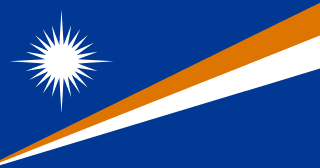
Inside Marshall Islands’ foreign policy.
Republic of the Marshall Islands
Oceania · UN voting record, treaty positions, and alliances — every claim primary-sourced.
In short
The Marshall Islands is a very small Pacific state with outsized diplomatic relevance because its security, budget stability, and international positioning all hinge on the United States compact relationship, Taiwan recognition, and climate diplomacy…
Capital
MajuroGovernment
Unitary parliamentary republicMarshall Islands's government & politics
Leadership, governance, and democratic trajectory.

Marshall Islands's UN voting record
How Marshall Islands votes at the UN General Assembly — ideological trajectory, voting partners, topic patterns, and key recent roll calls.
Ideological trajectory
Top voting partners
Topic-level voting
Source: Erik Voeten, “United Nations General Assembly Voting Data”, Harvard Dataverse (CC0). Aggregated by Model Diplomat. Last refresh tracked in profile freshness.
Marshall Islands's foreign policy
Bilateral posture, key relationships, and live diplomatic statements.
Foreign Policy
Marshall Islands foreign policy is narrow in resources but unusually consequential because it sits at the junction of U.S. strategic basing, Taiwan diplomacy, and frontline climate politics. The state is a unitary parliamentary republic, and President Hilda Heine returned to office in January 2024 after election by the Nitijela, with the presidency effectively driving external policy alongside the Ministry of Foreign Affairs and Trade rather than through an independent security establishment Parliament of the Republic of the Marshall Islands Office of the President, Republic of the Marshall Islands Republic of the Marshall Islands Ministry of Foreign Affairs and Trade. Its foreign policy doctrine is not codified in a single grand strategy document, but official practice is consistent: survival means climate action and protection of atoll habitability; regime and state security mean preserving the Compact of Free Association with the United States; economic security means aid, trust-fund stability, fisheries access, and migration access; status means punching above its weight through Pacific diplomacy, AOSIS, and moral authority on nuclear justice RMI Permanent Mission to the United Nations U.S. Department of State AOSIS.
The United States is the indispensable bilateral relationship. Under the Compact of Free Association, renewed in 2023, Washington provides economic assistance and retains full authority and responsibility for Marshall Islands security and defense matters, while the Ronald Reagan Ballistic Missile Defense Test Site at Kwajalein gives the islands strategic value far beyond their size U.S. Department of State U.S. Department of the Interior, Office of Insular Affairs U.S. Space Force, Reagan Test Site. That relationship is cooperative but not frictionless. Marshallese governments have repeatedly tied compact implementation to unresolved nuclear legacy issues from U.S. testing between 1946 and 1958, including compensation, health effects, and environmental remediation, making the relationship both a security alliance and a persistent justice claim Nuclear Claims Tribunal, Republic of the Marshall Islands International Court of Justice, Marshall Islands cases background. The country’s other defining bilateral choice is its recognition of Taiwan rather than the People’s Republic of China; Majuro has publicly reaffirmed support for Taipei, placing it among a small group of states that resist Beijing’s diplomatic pressure in the Pacific Ministry of Foreign Affairs, Republic of China (Taiwan) Taiwan News.
Regionally, Marshall Islands operates through the Pacific Islands Forum and the broader Pacific climate-security agenda, but its behavior is more Atlantic-facing and security-linked than that of some larger Melanesian members because U.S. compact ties shape almost every hard-power calculation Pacific Islands Forum U.S. Department of State. In multilateral forums it is a member of the United Nations, admitted in 1991, and is highly active in the Alliance of Small Island States, where it pushes for stronger mitigation, adaptation finance, and language tied to 1.5°C survival rather than abstract environmentalism United Nations Digital Library AOSIS. Climate is not a branding issue for Majuro; it is territorial survival policy, because sea-level rise, storm surge, freshwater salinization, and infrastructure vulnerability threaten the physical viability of low-lying atolls Intergovernmental Panel on Climate Change World Bank Climate Change Knowledge Portal.
Its UN voting alignment often tracks the United States and Taiwan-linked diplomatic camp more closely than the median Pacific small-island state. The clearest divergence is on Israel-Palestine resolutions: Marshall Islands has repeatedly voted with the United States and Israel, including on high-profile General Assembly texts where most Pacific Island countries either backed the majority position critical of Israel or split from Washington United Nations Digital Library voting records U.S. Department of State, UN Voting Practices. That break matters more analytically than its climate rhetoric, because it shows that security dependence can override small-state solidarity and Global South voting habits. By contrast, on climate, decolonization, oceans, and sustainable development, Marshall Islands usually sits with the broader Pacific and AOSIS consensus rather than with U.S. preferences AOSIS United Nations Framework Convention on Climate Change.
The most useful way to read Marshall Islands diplomacy is as a hierarchy of dependencies. When climate negotiations are at issue, survival interests dominate and Majuro is often sharper than its patrons. When strategic competition touches compact funding, defense access, or Taiwan recognition, regime and economic security pull it toward Washington and Taipei even if that means standing apart from much of the UN membership or parts of the Pacific bloc U.S. Department of State Pacific Islands Forum Ministry of Foreign Affairs, Republic of China (Taiwan). That is the country’s defining foreign-policy pattern: existentially aligned with vulnerable island states on climate, structurally aligned with the United States on security, and willing to absorb diplomatic isolation on selected UN votes to preserve the relationships it considers indispensable.


Marshall Islands's treaties & memberships
UN multilateral treaty positions and IGO memberships.
International Organizations
Society & economy
Macro-economic snapshot and demographic context.
GDP (nominal)
$290M
#207/250GDP per capita
$7,726.337
#109/250Currency
—
HDI
0.64
#132/250GDP (nominal USD)
GDP per capita (USD)
Top trading partners


In the news
Stories surfacing across Marshall Islands’s authoritative outlets, plus headline events and the diplomatic calendar.
Headlines
Looking south: Marshall Islands president visits Australia - Islands Business
Summary: Marshall Islands President Dr. Hilda C. Heine made a rare state visit to Australia—the first RMI presidential visit since 1993—to strengthen diplomacy beyond the United States, and to press on climate finance and regional issues. In Canberra, she met Prime Minister Anthony Albanese and senior ministers, signaling a push to diversify allies as U.S. prominence wanes in the region. The visit highlights ongoing strategic and economic ties with Washington via the Compact
#KYR: Marshall Islands – Diplomacy - The Cove - Australian Army
The Marshall Islands (RMI) pursues a three-pillar foreign policy centered on: 1) strong security guarantees and development support from the United States under the Compact of Free Association (COFA), which gives the US defense responsibility, migration rights for Marshallese, and significant financial assistance while limiting RMI autonomy over defense; 2) a principled, stakeholding alliance with Taiwan (no formal diplomatic ties with Beijing) driven by sovereignty and non-t
U.S.-Marshall Islands Policy and History
Summary: The page titled "U.S.-Marshall Islands Policy and History" is unavailable due to technical difficulties (forbidden error). As a result, no detailed content from the site can be retrieved to summarize specific policies, historical context, diplomacy, elections, economy, or security relations between the United States and the Marshall Islands. If you’re seeking information on this topic, consider: - Checking back later for access to embassy_resources on U.S.–Marshall
Explore Marshall Islands in depth
Frequently asked questions about Marshall Islands
Quick answers to the most common questions about Marshall Islands.
What type of government does Marshall Islands have?
Marshall Islands is governed as a unitary parliamentary republic, with its capital at Majuro.
Who is the head of state of Marshall Islands?
Hilda Heine is the head of state of Marshall Islands, in office since 2024-01-03.
What is the population of Marshall Islands?
Marshall Islands has a population of approximately 38 thousand people, making it the 220th most populous country.
What is the economy of Marshall Islands like?
Marshall Islands has a nominal GDP of about $290 million, or roughly $7,726 per capita.
What languages are spoken in Marshall Islands?
The official languages of Marshall Islands are English and Marshallese.
When did Marshall Islands join the United Nations?
Marshall Islands has been a member of the United Nations since 1991.
Who are Marshall Islands's closest allies?
Marshall Islands's key allies include United States, Taiwan, Japan, and Australia.
More about Marshall Islands
The Marshall Islands is a very small Pacific state with outsized diplomatic relevance because its security, budget stability, and international positioning all hinge on the United States compact relationship, Taiwan recognition, and climate diplomacy [U.S. Department of State](https://www.state.gov/u-s-relations-with-the-marshall-islands/), [Office of the President of the Republic of the Marshall Islands](https://www.rmigov.org/). It is a unitary parliamentary republic in which the Nitijela elects the president, and President Hilda C. Heine returned to office in January 2024 after winning the parliamentary vote, serving as both head of state and head of government [Office of the President of the Republic of the Marshall Islands](https://www.rmigov.org/), [RNZ](https://www.rnz.co.nz/international/pacific-news/506104/marshall-islands-elects-hilda-heine-as-president). Marshallese politics is candidate-centered rather than driven by disciplined mass parties, so foreign policy depends heavily on the president, cabinet, and elite parliamentary coalitions rather than a rigid party system [CIA World Factbook](https://www.cia.gov/the-world-factbook/countries/marshall-islands/), [RNZ](https://www.rnz.co.nz/international/pacific-news/506104/marshall-islands-elects-hilda-heine-as-president). The current government’s external line is clear: tight strategic alignment with Washington, continued diplomatic recognition of Taiwan, and active participation in Pacific and climate forums [U.S. Department of State](https://www.state.gov/u-s-relations-with-the-marshall-islands/), [Ministry of Foreign Affairs, Republic of China (Taiwan)](https://en.mofa.gov.tw/), [Pacific Islands Forum](https://forumsec.org/). The most important institutional fact is the Compact of Free Association with the United States, renewed in 2023, under which Washington provides economic assistance and retains full authority and responsibility for Marshall Islands defense and security matters [U.S. Department of the Interior](https://www.doi.gov/oia/compact/marshall-islands), [U.S. Congress](https://www.congress.gov/). That arrangement gives the Marshall Islands unusual leverage for its size because it sits inside the strategic competition running through the North Pacific, while also depending on U.S. funding flows and access arrangements tied to Kwajalein Atoll and the Ronald Reagan Ballistic Missile Defense Test Site [U.S. Army Garrison Kwajalein Atoll](https://home.army.mil/kwajalein/), [U.S. Department of State](https://www.state.gov/u-s-relations-with-the-marshall-islands/). Economically, the country is narrow-based, aid-dependent, and highly exposed to external shocks. The World Bank lists GDP at roughly $290 million and population at around 38,000, which captures both its limited domestic market and the scale constraints facing any development strategy [World Bank](https://data.worldbank.org/country/marshall-islands). Government services, compact transfers, fisheries revenue, and donor-funded activity underpin the economy, while remoteness, import dependence, and high transport costs keep production shallow [Asian Development Bank](https://www.adb.org/countries/marshall-islands/economy), [World Bank](https://www.worldbank.org/en/country/rmi). The fisheries sector matters disproportionately because tuna access fees are one of the few major domestic revenue sources, linking the Marshall Islands’ finances directly to Pacific regional fisheries governance and ocean diplomacy [Pacific Islands Forum Fisheries Agency](https://www.ffa.int/), [Asian Development Bank](https://www.adb.org/countries/marshall-islands/main). Three issues define its current trajectory. First is compact implementation: the political question is no longer whether the deal exists, but whether funds, trust, and U.S. follow-through are strong enough to stabilize the relationship after years of friction over nuclear legacy and delayed negotiations [U.S. Department of the Interior](https://www.doi.gov/oia/compact/marshall-islands), [The Diplomat](https://thediplomat.com/). Second is climate survival. The government treats sea-level rise, coastal damage, and adaptation finance as survival-tier issues, not branding, and it consistently pushes this line through the Alliance of Small Island States and UN climate diplomacy [AOSIS](https://www.aosis.org/), [UNFCCC](https://unfccc.int/). Third is Taiwan recognition. Majuro remains one of Taipei’s formal diplomatic partners and has publicly reaffirmed that relationship, which gives the Marshall Islands visibility beyond its size but also places it directly inside U.S.-China-Taiwan competition [Taiwan News](https://www.taiwannews.com.tw/), [Ministry of Foreign Affairs, Republic of China (Taiwan)](https://en.mofa.gov.tw/). The non-obvious point is that Marshall Islands foreign policy is often read as simple alignment, but in practice it is a negotiation strategy built around asymmetry. The government stays close to the United States on security and to Taiwan on recognition, yet it also presses hard on compensation, climate justice, and sovereign respect when dealing with larger partners [U.S. Department of State](https://www.state.gov/u-s-relations-with-the-marshall-islands/), [Office of the President of the Republic of the Marshall Islands](https://www.rmigov.org/). That makes the country neither nonaligned nor merely dependent: it is a microstate using legal agreements, moral authority on climate and nuclear issues, and strategic geography to extract attention and resources from far larger powers [U.S. Department of the Interior](https://www.doi.gov/oia/compact/marshall-islands), [AOSIS](https://www.aosis.org/).