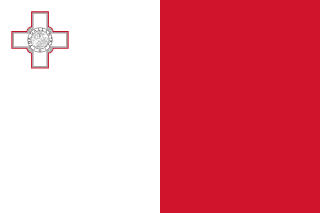
Inside Malta’s foreign policy.
Republic of Malta
Europe · UN voting record, treaty positions, and alliances — every claim primary-sourced.
In short
Malta is a small EU member that punches above its size by pairing eurozone credibility with hard-edged pragmatism on migration, maritime services, and neutrality.
Capital
VallettaResearch Malta on your topic
Start a Quick answer framed for your committee — official statements, UN votes, and bloc context.
Malta's government & politics
Leadership, governance, and democratic trajectory.


Malta's UN voting record
How Malta votes at the UN General Assembly — ideological trajectory, voting partners, topic patterns, and key recent roll calls.
Ideological trajectory
Top voting partners
Topic-level voting
Source: Erik Voeten, “United Nations General Assembly Voting Data”, Harvard Dataverse (CC0). Aggregated by Model Diplomat. Last refresh tracked in profile freshness.
Malta's foreign policy
Bilateral posture, key relationships, and live diplomatic statements.
Foreign Policy
{{emit_card card_type="key_facts" data={ "System of government":"Unitary parliamentary constitutional republic", "Head of state":"President Myriam Spiteri Debono", "Head of government":"Prime Minister Robert Abela", "Population":"about 569,000", "GDP":"about US$25.0 billion", "Regional bloc memberships":"European Union, Commonwealth of Nations", "UN membership date":"1 December 1964" } }}
Malta’s foreign policy is anchored by one doctrine-level constraint: constitutional neutrality, paired with full participation in the EU’s foreign-policy machinery. Article 1(3) of the Maltese Constitution commits the state to neutrality and non-alignment, including a ban on foreign military bases on Maltese territory except in limited circumstances, while Article 3 of the Treaty on European Union binds Malta to the EU’s Common Foreign and Security Policy framework Constitution of Malta, Treaty on European Union. After Labour’s June 2026 election win, Robert Abela remained prime minister and Myriam Spiteri Debono remained president, preserving a decision structure in which the cabinet and foreign ministry set day-to-day diplomacy but major security choices are filtered through the neutrality norm and domestic political sensitivity about militarisation POLITICO, President of Malta, Government of Malta. Malta’s core interests sit in a clear hierarchy: survival means securing Mediterranean sea lanes and border management; regime and domestic-political security mean avoiding moves that look like alliance entrapment; economic interests mean protecting tourism, shipping, financial services, aviation and energy links; status means presenting Malta as a small-state mediator, especially on Mediterranean files IMF Country Report No. 26/029, European Commission: Malta.
That logic explains Malta’s bilateral map. Italy is the indispensable partner because of geographic proximity, energy interconnection, migration management, and day-to-day Mediterranean coordination; Malta’s electricity interconnector links it to Sicily, giving Rome practical leverage over Maltese energy resilience Interconnect Malta, European Commission: Malta Energy Profile. The United Kingdom remains important through historical ties, trade, education, and Commonwealth links, even after Brexit Commonwealth Secretariat: Malta, UK Government country profile: Malta. France matters through EU security coordination and Mediterranean diplomacy, while the United States is a security and political partner but not a treaty ally in the NATO sense, which Malta avoids because it is not a NATO member NATO Member Countries, U.S. Department of State: U.S. Relations With Malta. Malta’s memberships give it influence disproportionate to size: it is in the UN since 1 December 1964, in the EU since 2004, and in the euro area since 2008, so most trade and regulatory choices are structurally European even when its rhetoric stresses sovereign neutrality United Nations Member States, European Union: Malta, European Central Bank: Euro area members.
In the UN, Malta usually votes with the EU line on Ukraine, human rights, and rules-based-order questions, but its most revealing departures come on hard-security and migration issues where neutrality and geography bite. During its 2023–2024 term on the UN Security Council, Malta backed humanitarian access in Gaza and supported resolutions demanding civilian protection, aligning with much of the EU on humanitarian law while also trying to preserve a broker image with Arab states UN Security Council Members 2023, UN News on S/RES/2728 (2024). On Russia’s war against Ukraine, Malta supported UN General Assembly resolutions defending Ukraine’s territorial integrity, showing that neutrality does not mean equidistance between aggressor and victim UN Digital Library, ES-11 resolutions voting records. The sharper divergence is intra-EU: Malta is often more cautious than northern and eastern member states on defence integration language, military postures, and migration burden-sharing formulas, because any step that looks like alliance deepening can trigger domestic backlash and constitutional scrutiny European Parliament: Malta country factsheet, Constitution of Malta.
Malta’s break from its bloc is therefore not pro-Russian or anti-European; it is selective restraint inside the Western camp. It accepts EU sanctions and legal positions when treaty obligations are clear, but it resists any drift from civilian external policy toward overt military alignment, and it is tougher on irregular migration than the EU’s liberal mainstream because Malta sees migration first as a state-capacity issue for a microstate on the central Mediterranean route Council of the European Union: EU restrictive measures in view of Russia’s actions in Ukraine, European Commission: Migration and Home Affairs, Government of Malta. That divergence is analytically useful because it shows where Malta will block consensus: not on broad EU identity questions, but where security cooperation threatens neutrality or where asylum and relocation schemes collide with administrative limits and domestic politics European


Malta's treaties & memberships
UN multilateral treaty positions and IGO memberships.
International Organizations
Society & economy
Macro-economic snapshot and demographic context.
GDP (nominal)
$25.0B
#120/250GDP per capita
$43,899
#34/250HDI
0.918
#23/250GDP (nominal USD)
GDP per capita (USD)
Top trading partners

In the news
Coverage from Malta’s authoritative outlets and headline events from the last 30 days.
Diplomatic calendar
Upcoming key dates
- Jan 1, 2027Electionin 3mo
2027 Maltese general election
Explore Malta in depth
Frequently asked questions about Malta
Quick answers to the most common questions about Malta.
What type of government does Malta have?
Malta is governed as a unitary parliamentary constitutional republic, with its capital at Valletta.
Who is the head of state of Malta?
Myriam Spiteri Debono is the head of state of Malta, in office since 2024-04-04.
Who leads the government of Malta?
Robert Abela serves as the head of government of Malta, since 2020-01-01.
What is the population of Malta?
Malta has a population of approximately 569 thousand people, making it the 174th most populous country.
What is the economy of Malta like?
Malta has a nominal GDP of about $25 billion, or roughly $43,899 per capita.
What languages are spoken in Malta?
The official languages of Malta are English and Maltese.
When did Malta join the United Nations?
Malta has been a member of the United Nations since 1964.
Who are Malta's closest allies?
Malta's key allies include Italy, United Kingdom, France, and United States.
More about Malta
Malta is a small EU member that punches above its size by pairing eurozone credibility with hard-edged pragmatism on migration, maritime services, and neutrality. It is a unitary parliamentary republic; President Myriam Spiteri Debono is head of state, Prime Minister Robert Abela heads government, and Labour won a fourth consecutive term in the June 2026 snap election, extending its control over the executive and parliament Parliament of Malta, POLITICO, France 24.
Foreign policy is shaped by three facts: Malta is an EU state on the central Mediterranean migration route, a constitutionally neutral country, and a services-based economy dependent on external openness. The foreign-policy file is formally run by the cabinet under Abela, but EU membership constrains the range of options on sanctions, internal-market rules, and asylum policy, while neutrality still frames how Valletta talks about security and military alignment Government of Malta, Constitution of Malta, European Union. In practice, Malta usually stays inside the EU mainstream on economic and regulatory issues, but it defends room for maneuver on migration burden-sharing and on language that could be read as eroding neutrality European Council, TVMnews.mt.
Economically, Malta is rich by regional standards but unusually concentrated. The IMF said real GDP growth remained strong at 6 percent in 2024, driven by tourism and export-oriented services, and identified gaming, professional services, tourism, and remote gaming among key drivers of the economy IMF Country Report No. 26/029. The World Bank reports GDP at roughly $25 billion and population at about 569,000, which means Malta’s prosperity rests on a very small domestic base and high exposure to external demand, imported labor, shipping conditions, and EU regulatory scrutiny World Bank, National Statistics Office Malta. That structure gives Malta leverage as a hub for finance, aviation and maritime registration, and digital services, but it also makes reputational risk a foreign-policy issue, not just a domestic one IMF Country Report No. 26/029, European Commission.
Three issues define Malta’s current trajectory. The first is migration management in the central Mediterranean: Malta wants tougher external border control, more EU burden-sharing, and flexibility in handling irregular arrivals because migration lands directly in its domestic politics and state capacity calculations European Commission, Government of Malta. The second is neutrality and security positioning, sharpened by the wars in Ukraine and Gaza; Malta remains inside EU diplomacy and sanctions frameworks but presents neutrality as a constitutional asset and an economic stabilizer rather than an excuse for disengagement Constitution of Malta, TVMnews.mt, Council of the European Union. The third is governance and rule-of-law credibility, because financial services, investment, and Malta’s standing in Brussels all depend on whether the government can keep proving that the country is a safe and compliant place to do business European Commission Rule of Law Report, IMF Country Report No. 26/029.
The current government’s strength is continuity: Labour can still promise growth, welfare spending, and administrative control after its 2026 win POLITICO, France 24. Its constraint is that nearly every major national objective runs through external systems Malta does not control, from EU regulation and migration policy to tourism flows, shipping, and regional instability in the Mediterranean European Union, IMF Country Report No. 26/029. The result is a foreign policy that is rarely ideological: Malta seeks access, stability, and policy flexibility first, and it measures almost every external question against those interests.