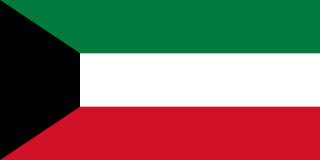
Inside Kuwait’s foreign policy.
State of Kuwait
Asia · UN voting record, treaty positions, and alliances — every claim primary-sourced.
In short
Kuwait is a small but high-income Gulf monarchy whose foreign policy is shaped by one hard fact: it survives by balancing oil wealth, U. S.
Capital
Kuwait CityGovernment
Constitutional emirateKuwait's government & politics
Leadership, governance, and democratic trajectory.


Kuwait's UN voting record
How Kuwait votes at the UN General Assembly — ideological trajectory, voting partners, topic patterns, and key recent roll calls.
Ideological trajectory
Top voting partners
Topic-level voting
Source: Erik Voeten, “United Nations General Assembly Voting Data”, Harvard Dataverse (CC0). Aggregated by Model Diplomat. Last refresh tracked in profile freshness.
Kuwait's foreign policy
Bilateral posture, key relationships, and live diplomatic statements.
Foreign Policy
Kuwait’s foreign policy is conservative, mediation-first, and regime-security driven. The decisive actors are the Emir and the royal court, with the foreign ministry executing rather than setting grand strategy; the current Emir, Sheikh Mishal Al-Ahmad Al-Jaber Al-Sabah, suspended parts of parliamentary life in 2024, which further concentrated decision-making at the top Kuwait News Agency, Reuters. Kuwait’s core interests sit in a clear hierarchy: survival through protection from larger neighbors and spillover from Iran-Iraq-Gulf crises; regime security through internal stability and dynastic continuity; economic security through uninterrupted hydrocarbon exports and sovereign investment returns; and status through a reputation for humanitarian diplomacy and quiet mediation U.S. State Department, Council on Foreign Relations, The World Bank. That logic explains why Kuwait pairs a strong security dependence on the United States with a persistent preference for de-escalation with Iran and intra-Arab dispute management Congressional Research Service, Kuwait Ministry of Foreign Affairs.
Security ties with Washington are the hard backbone of Kuwaiti foreign policy. Kuwait is a Major Non-NATO Ally of the United States and hosts substantial U.S. military infrastructure, including Camp Arifjan and Ali Al Salem Air Base, making the relationship central to deterrence and logistics in the Gulf The White House, U.S. Central Command. At the same time, Kuwait has consistently avoided the more confrontational anti-Iran posture associated at times with Saudi Arabia and the United Arab Emirates, keeping diplomatic channels open and emphasizing non-interference and dialogue Reuters, International Crisis Group. Its ties with Saudi Arabia remain structurally important because of geography, GCC politics, and shared energy interests, but even there Kuwait has shown that sovereignty concerns can override bloc discipline, as seen in the long-running dispute and eventual negotiated management of the Neutral Zone oil fields Reuters, OPEC. Relations with Iraq have also shifted from existential threat management after 1990 toward border, reparations, and missing-persons diplomacy under UN frameworks UN Assistance Mission for Iraq, UN Security Council.
Kuwait uses multilateral institutions to amplify caution and legitimacy. It is a member of the GCC, Arab League, OIC, OPEC, and the UN, and it routinely frames its diplomacy through Arab consensus, international law, and humanitarian relief rather than ideological leadership GCC Secretariat, League of Arab States, OIC, United Nations. In OPEC, its interest is economic-systemic rather than revisionist: Kuwait supports production coordination that preserves price stability and budget predictability for a rentier state whose public finances remain heavily tied to oil revenue OPEC Annual Statistical Bulletin, IMF. In the UN system, Kuwait has tried to preserve an image as a rules-based small state. That was especially visible during its 2018–2019 term on the Security Council, when it pushed humanitarian and Palestinian issues while maintaining working relations across rival camps UN Security Council, Kuwait Mission to the UN.
At the UN General Assembly, Kuwait’s voting pattern broadly aligns with Arab and Global South positions on Palestine, sovereignty, and development, not with the United States on the highest-salience Middle East files. Kuwait has repeatedly backed resolutions calling for protection of Palestinian civilians and for ceasefire-oriented positions in Gaza-related diplomacy, in line with Arab League consensus UN Digital Library, Arab League. It also tends to support resolutions that stress territorial integrity and non-interference, reflecting small-state vulnerability as much as abstract legalism UN Digital Library. Where Kuwait breaks from parts of its bloc is more important than where it conforms: unlike the UAE and, at times, Bahrain, it has not normalized relations with Israel UAE Ministry of Foreign Affairs, Reuters; unlike Saudi and Emirati activism in several regional theaters, it has preferred aid, mediation, and low-visibility diplomacy over expeditionary ambition International Crisis Group, Kuwait Fund for Arab Economic Development. That divergence is not


Kuwait's treaties & memberships
UN multilateral treaty positions and IGO memberships.
International Organizations
Society & economy
Macro-economic snapshot and demographic context.
GDP (nominal)
$160.2B
#59/250GDP per capita
$32,717.719
#48/250Currency
—
HDI
0.83
#50/250GDP (nominal USD)
GDP per capita (USD)
Top trading partners


In the news
Stories surfacing across Kuwait’s authoritative outlets, plus headline events and the diplomatic calendar.
Headlines
US and Iran Exchange Strikes Across the Gulf
The fragile US-Iran ceasefire cracked wide open overnight with strikes exchanged across the Gulf, raising concerns over escalating tensions.
US and Iran Trade Strikes Across Four
A US helicopter downed near Hormuz; Iran retaliates with strikes on US targets in Bahrain, Kuwait, and Jordan.
Kuwait: Governance, Security, and U.S. Policy - EveryCRSReport.com
Summary: - The report provides an overview of Kuwait’s governance, security environment, and U.S. policy relations, with emphasis on domestic politics, parliament dynamics, and recent election developments. - Key political context: Kuwait’s Amir and cabinet reshuffles, a history of parliamentary questioning and ministerial resignations, and the 2020 and 2021 National Assembly elections. The opposition maintained 24 of 50 seats in 2020; women’s representation remained limited.
Explore Kuwait in depth
Frequently asked questions about Kuwait
Quick answers to the most common questions about Kuwait.
What type of government does Kuwait have?
Kuwait is governed as a constitutional emirate, with its capital at Kuwait City.
Who is the head of state of Kuwait?
Mishal Al-Ahmad Al-Jaber Al-Sabah is the head of state of Kuwait, in office since 2023-12-16.
Who leads the government of Kuwait?
Sabah Al-Khalid Al-Sabah serves as the head of government of Kuwait.
What is the population of Kuwait?
Kuwait has a population of approximately 4.9 million people, making it the 128th most populous country.
What is the economy of Kuwait like?
Kuwait has a nominal GDP of about $160 billion, or roughly $32,718 per capita.
What languages are spoken in Kuwait?
The official language of Kuwait is Arabic.
When did Kuwait join the United Nations?
Kuwait has been a member of the United Nations since 1963.
Who are Kuwait's closest allies?
Kuwait's key allies include United States, Saudi Arabia, United Kingdom, United Arab Emirates, and Egypt.
More about Kuwait
Kuwait is a small but high-income Gulf monarchy whose foreign policy is shaped by one hard fact: it survives by balancing oil wealth, U.S.-anchored security, and careful regional mediation in a neighborhood that can turn violent fast [World Bank](https://data.worldbank.org/country/kuwait) [U.S. Department of State](https://www.state.gov/u-s-relations-with-kuwait/) [GCC](https://www.gcc-sg.org/en-us/AboutGCC/Pages/StartingPointsAndGoals.aspx). It is a constitutional emirate in which the Al Sabah family controls the executive, with Emir Sheikh Mishal Al-Ahmad Al-Jaber Al-Sabah as head of state and Sheikh Sabah Al-Khaled Al-Hamad Al-Sabah appointed prime minister in April 2024 after the government resigned and the National Assembly was dissolved in May 2024 [Kuwait News Agency](https://www.kuna.net.kw/ArticleDetails.aspx?id=3145852&language=en) [Kuwait News Agency](https://www.kuna.net.kw/ArticleDetails.aspx?id=3153429&language=en) [Reuters](https://www.reuters.com/world/middle-east/kuwait-emir-dissolves-parliament-suspends-some-constitution-articles-2024-05-10/). Kuwait has no legal political parties; politics instead runs through royal appointments, cabinet blocs, tribal and urban factions, and parliamentary alliances that can obstruct policy even when they do not formally govern [Carnegie Endowment for International Peace](https://carnegieendowment.org/research/2024/05/kuwaits-political-reset?lang=en). Kuwait matters internationally less because of military scale than because of location, energy exports, sovereign wealth, and diplomatic access. It sits at the northern tip of the Gulf, borders Iraq and Saudi Arabia, hosts U.S. forces under a Major Non-NATO Ally relationship, and remains a member of the GCC, OPEC, the Arab League, and the OIC [U.S. Department of State](https://www.state.gov/u-s-relations-with-kuwait/) [The White House](https://georgewbush-whitehouse.archives.gov/news/releases/2004/04/20040401-3.html) [OPEC](https://www.opec.org/opec_web/en/about_us/25.htm). Its oil sector dominates the economy: petroleum accounts for around 90 percent of export revenues and government income according to official and multilateral summaries, leaving Kuwait unusually exposed to price swings despite its large financial buffers [OPEC](https://www.opec.org/opec_web/en/about_us/167.htm) [IMF](https://www.imf.org/en/Countries/KWT) [World Bank](https://www.worldbank.org/en/country/gcc/publication/gulf-economic-update). That combination gives Kuwait influence beyond its size, but it also means external shocks hit fiscal politics quickly. The current government is effectively a royal executive rather than a party cabinet, and that matters for how foreign and domestic policy are made. The emir sets the top line on security and constitutional order; the prime minister and cabinet manage day-to-day policy; the foreign ministry executes a cautious, consensus-seeking external line; and parliament, when active, can slow budgets and reform even if it does not control defense policy [Kuwait News Agency](https://www.kuna.net.kw/ArticleDetails.aspx?id=3145852&language=en) [Reuters](https://www.reuters.com/world/middle-east/kuwait-emir-dissolves-parliament-suspends-some-constitution-articles-2024-05-10/) [Carnegie Endowment for International Peace](https://carnegieendowment.org/research/2024/05/kuwaits-political-reset?lang=en). The most important recent shift is the suspension of some constitutional articles and the pause in parliamentary life announced by the emir in May 2024, justified by the leadership as a response to prolonged political deadlock [Kuwait News Agency](https://www.kuna.net.kw/ArticleDetails.aspx?id=3153429&language=en) [Reuters](https://www.reuters.com/world/middle-east/kuwait-emir-dissolves-parliament-suspends-some-constitution-articles-2024-05-10/). That has reduced open institutional contest in the short term, but it also concentrates responsibility for delivery on the palace and cabinet. Economically, Kuwait is rich on paper and constrained in practice. Its nominal GDP was about $161 billion in 2023 and its population is roughly 4.9 million, with non-citizens forming a large share of residents and workforce participation [World Bank](https://data.worldbank.org/indicator/NY.GDP.MKTP.CD?locations=KW) [World Bank](https://data.worldbank.org/indicator/SP.POP.TOTL?locations=KW) [PACI Kuwait](https://www.paci.gov.kw/Default.aspx). The state’s core strengths are vast hydrocarbon reserves and one of the world’s largest sovereign wealth pools through the Kuwait Investment Authority, but growth outside oil remains limited and fiscal reform has repeatedly stalled amid executive-legislative conflict [Kuwait Investment Authority](https://kia.gov.kw/) [IMF](https://www.imf.org/en/Publications/CR/Issues/2024/01/29/Kuwait-2023-Article-IV-Consultation-Press-Release-Staff-Report-and-Statement-by-the-543934). For MUN delegates, the key point is that Kuwait is not a diversification success story yet; it is still an oil-rent state trying to buy time with assets while governance bottlenecks delay structural change [IMF](https://www.imf.org/en/Countries/KWT) [World Bank](https://www.worldbank.org/en/country/gcc/publication/gulf-economic-update). Three issues define Kuwait’s current trajectory. First is regime and state functionality: after years of cabinet-parliament deadlock, the leadership is testing whether centralization can produce faster decisions without damaging Kuwait’s legitimacy advantage as one of the Gulf’s more politically open systems [Reuters](https://www.reuters.com/world/middle-east/kuwait-emir-dissolves-parliament-suspends-some-constitution-articles-2024-05-10/) [Carnegie Endowment for International Peace](https://carnegieendowment.org/research/2024/05/kuwaits-political-reset?lang=en). Second is exposure to Gulf insecurity: with U.S.-Iran tensions again spilling across the Gulf, Kuwait’s priority is survival and de-escalation, not alignment theater, because it hosts U