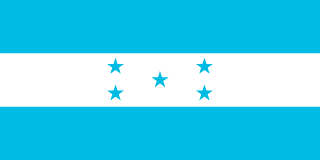
Inside Honduras’ foreign policy.
Republic of Honduras
Americas · UN voting record, treaty positions, and alliances — every claim primary-sourced.
In short
Honduras is a left-led but pragmatically nonaligned Central American state whose foreign policy is driven less by ideology than by migration pressure, economic dependence on the United States, and the government’s search for fiscal and political room to maneuver under President Xiomara Castro…
Capital
TegucigalpaHonduras's government & politics
Leadership, governance, and democratic trajectory.

Head of state & government
Nasry Asfura
Head of State
Honduras's UN voting record
How Honduras votes at the UN General Assembly — ideological trajectory, voting partners, topic patterns, and key recent roll calls.
Ideological trajectory
Top voting partners
Topic-level voting
Source: Erik Voeten, “United Nations General Assembly Voting Data”, Harvard Dataverse (CC0). Aggregated by Model Diplomat. Last refresh tracked in profile freshness.
Honduras's foreign policy
Bilateral posture, key relationships, and live diplomatic statements.
Foreign Policy
Honduras under President Xiomara Castro runs a pragmatic, sovereignty-first foreign policy: it talks in the language of Latin American autonomy and social development, but in practice it balances dependence on the United States against a newer opening to China and a continued need for regional coordination through Central American institutions Presidency of Honduras, U.S. Department of State, Ministry of Foreign Affairs of Honduras. Castro has served as both head of state and head of government since January 2022, and Foreign Minister Enrique Reina has been the main public executor of foreign policy, but the presidency holds the file on the biggest strategic questions, especially recognition, migration, and security partnerships Government of Honduras, Ministry of Foreign Affairs of Honduras. Honduras is a unitary presidential republic, a member of the UN, OAS, and the Central American Integration System (SICA), with a population of about 10.8 million and nominal GDP around $37.1 billion in the supplied country context; the UN lists Honduras as an original member from 1945 United Nations Member States, SICA, OAS.
Honduras does not project a grand doctrine in the way larger powers do. Its operational doctrine is closer to an interests pyramid. At the top is survival and internal security: reducing organized crime, preserving territorial control, and managing migration pressures that directly affect relations with Washington and neighbors U.S. Department of State, Congressional Research Service. Next is regime and political security: the Castro government frames non-intervention and sovereignty as protection against external pressure over domestic governance disputes Ministry of Foreign Affairs of Honduras, CELAC. Economic interests come immediately after: Honduras depends heavily on the U.S. market, remittances, and external finance, which constrains any anti-U.S. posture regardless of rhetoric World Bank, IMF. Status matters too, but mostly through regional leadership bids in SICA and through symbolic positioning in CELAC and South-South diplomacy rather than through hard-power ambition SICA, Ministry of Foreign Affairs of Honduras.
The key bilateral relationship is still the United States. Washington remains Honduras’s principal economic and security partner, and U.S.-Honduras ties are anchored in trade, counternarcotics cooperation, migration management, and development assistance U.S. Department of State, Office of the United States Trade Representative. That structural dependence limits how far Tegucigalpa can move against U.S. preferences. The most watched counterweight is China. Honduras switched diplomatic recognition from Taiwan to the People’s Republic of China in March 2023, with the Honduran government explicitly presenting the move as a sovereign decision aimed at expanding investment and cooperation Ministry of Foreign Affairs of Honduras, Ministry of Foreign Affairs of the PRC, Reuters. Even so, the break with Taipei did not produce a wholesale geopolitical realignment. Honduras has sought Chinese financing and commercial openings while avoiding a frontal rupture with the United States, which is the core pattern delegates should expect in negotiations The Diplomat, U.S. Department of State.
Regionally, Honduras behaves like a small state that needs institutions to multiply leverage. SICA is central because border management, customs integration, energy coordination, and migration are immediate national interests, not abstract commitments SICA, Central American Bank for Economic Integration. In the OAS, Honduras generally supports multilateral cooperation and democratic principles in formal language, but it is cautious when those principles are applied in ways that can legitimize external pressure on sitting governments OAS, Ministry of Foreign Affairs of Honduras. At the UN, Honduras usually aligns with the broad Latin American preference for negotiated solutions, development finance, climate vulnerability recognition, and defense of international law United Nations Digital Library, UN Climate Change. Its voting behavior is not that of a rigid ideological outlier. The more revealing pattern is selective alignment: Honduras can sound closer to left governments in regional political statements while remaining materially tied to U.S.-backed security and economic frameworks United Nations Digital Library, U.S. Department of State.
The analytically useful divergence is that Honduras does not fully behave like either of the blocs it is often sorted into. It does not act like a reliably anti-U.S. ALBA-style government, because trade, migration, remittances, and security cooperation make that too costly World Bank Migration and Remittances Data, U.S. Department of State. But it also breaks from the more conservative Central American line by embracing China diplomatically and using sovereignty rhetoric to resist outside scrutiny more openly than some neighbors Reuters


Honduras's treaties & memberships
UN multilateral treaty positions and IGO memberships.
International Organizations
Society & economy
Macro-economic snapshot and demographic context.
GDP (nominal)
$37.1B
#106/250GDP per capita
$3,426.435
#149/250Currency
—
HDI
0.62
#136/250GDP (nominal USD)
GDP per capita (USD)
Top trading partners


In the news
Stories surfacing across Honduras’s authoritative outlets, plus headline events and the diplomatic calendar.
Headlines
Honduras Shows How the US Is Limiting China’s Diplomatic Gains in Central America – The Diplomat
Summary: - Honduras, after recognizing China in 2023, is now reassessing its China alignment due to real economic constraints and the costs of cutting ties with Taiwan. - Beijing’s offer to Honduras centers on exports, infrastructure, and diversification, but trade data show an imbalanced benefit: imports from China rose from about $2.0B (2023) to $2.63B (2025) while exports to China grew modestly from $12.9M to $44.7M. - The Taiwan severance caused immediate economic pain, n
Honduras Country Report 2026 - BTI Transformation Index
Summary: - Politics and governance: Honduras experiences ongoing political dysfunction alongside relative economic stability. The 2021 presidential and congressional elections were free and fair by international observers, with Xiomara Castro becoming the first female president, marking a peaceful power transfer for the first time since the 2009 coup. The campaign period saw heightened political violence, and turnout was about 68%. The Electoral Council and opposition parties
Honduras: An Overview - EveryCRSReport.com
Summary: - Political timeline and elections: Honduras is set to hold presidential, legislative, and municipal elections on November 30, 2025. The presidential contest is a three-way race among LIBRE candidate Rixi Moncada, PN’s Nasry Asfura, and Salvador Nasralla (backed by the Liberal Party). A plurality vote is required to win. - U.S.-Honduras relationship: The U.S. has historically prioritized regional security and stability, with JTF-Bravo operating from Soto Cano Air Bas
Explore Honduras in depth
Frequently asked questions about Honduras
Quick answers to the most common questions about Honduras.
What type of government does Honduras have?
Honduras is governed as a unitary presidential constitutional republic, with its capital at Tegucigalpa.
Who is the head of state of Honduras?
Nasry Asfura is the head of state of Honduras, in office since 2026-01-27.
What is the population of Honduras?
Honduras has a population of approximately 10.8 million people, making it the 89th most populous country.
What is the economy of Honduras like?
Honduras has a nominal GDP of about $37 billion, or roughly $3,426 per capita.
What languages are spoken in Honduras?
The official language of Honduras is Spanish.
When did Honduras join the United Nations?
Honduras has been a member of the United Nations since 1945.
Who are Honduras's closest allies?
Honduras's key allies include Guatemala, El Salvador, and China.
More about Honduras
Honduras is a left-led but pragmatically nonaligned Central American state whose foreign policy is driven less by ideology than by migration pressure, economic dependence on the United States, and the government’s search for fiscal and political room to maneuver under President Xiomara Castro [U.S. Department of State](https://www.state.gov/u-s-relations-with-honduras/), [Presidencia de la República de Honduras](https://www.presidencia.gob.hn/). It is a unitary presidential constitutional republic, with Castro serving as both head of state and head of government after winning the 2021 election; her Libertad y Refundación party, usually operating with congressional support from allied forces rather than uncontested dominance, anchors the current government [Consejo Nacional Electoral](https://resultadosgenerales2021.cne.hn/#resultados/PRE/HN), [Encyclopaedia Britannica](https://www.britannica.com/place/Honduras), [Library of Congress](https://www.loc.gov/item/global-legal-monitor/2022-02-25/honduras-president-xiomara-castro-sworn-in/). In the world today, Honduras matters more than its size suggests because it sits at the intersection of three regional files: irregular migration to the United States, organized crime and governance in northern Central America, and the diplomatic competition between Taiwan and the People’s Republic of China [Congressional Research Service](https://crsreports.congress.gov/product/pdf/IF/IF11151), [U.S. Department of State](https://www.state.gov/u-s-relations-with-honduras/). Tegucigalpa switched recognition from Taipei to Beijing in 2023, but that did not displace the United States as Honduras’s central economic and security partner; Washington remains the main destination for Honduran exports and remittances, and the U.S.-Honduras relationship still structures much of the country’s external room for action [Reuters](https://www.reuters.com/world/americas/honduras-cuts-taiwan-ties-establishes-with-china-2023-03-26/), [Observatory of Economic Complexity](https://oec.world/en/profile/country/hnd), [World Bank](https://data.worldbank.org/indicator/BX.TRF.PWKR.CD.DT?locations=HN). Economically, Honduras is a lower-middle-income economy with modest scale and high external exposure: the World Bank estimated GDP at about $34 billion in current U.S. dollars for 2024, while goods exports remain concentrated in apparel, coffee, bananas, electrical machinery, and other low-to-mid value-added products tied closely to U.S. demand [World Bank](https://data.worldbank.org/indicator/NY.GDP.MKTP.CD?locations=HN), [Observatory of Economic Complexity](https://oec.world/en/profile/country/hnd). Remittances are a structural pillar, not a side variable; World Bank data show personal remittances received at levels equivalent to well over a quarter of GDP in recent years, which stabilizes consumption but also exposes Honduras to U.S. labor-market and immigration-policy shocks [World Bank](https://data.worldbank.org/indicator/BX.TRF.PWKR.DT.GD.ZS?locations=HN). That dependence helps explain why Honduran leaders talk about sovereignty and diversification but usually avoid direct confrontation with Washington on core economic questions [U.S. Department of State](https://www.state.gov/u-s-relations-with-honduras/), [BTI Transformation Index](https://bti-project.org/en/reports/country-report/HND). Three issues define Honduras’s current trajectory. The first is security and state authority: the Castro government has relied on states of exception and anti-extortion measures to respond to gang violence and criminal control, reflecting a survival-tier priority to reassert territorial governance even at civil-liberties cost [Human Rights Watch](https://www.hrw.org/world-report/2025/country-chapters/honduras), [Reuters](https://www.reuters.com/world/americas/honduras-extends-state-emergency-combat-gangs-2024-02-20/). The second is democratic governance and institutional credibility, because anti-corruption promises helped bring Castro to power but implementation has been uneven, including delays and political friction around the long-discussed UN-backed anti-corruption mechanism known as CICIH [United Nations](https://www.un.org/sg/en/content/sg/note-correspondents/2022-12-15/note-correspondents-agreement-between-the-united-nations-and-the-government-of-honduras), [International Crisis Group](https://www.crisisgroup.org/latin-america-caribbean/central-america/honduras/b100-honduras-can-un-backed-anti-corruption-body-succeed). The third is external balancing: ties with China offer financing and diplomatic symbolism, but Honduras has so far gained less than headline announcements implied, while U.S. leverage through trade, migration cooperation, and security assistance remains stronger in practice [The Diplomat](https://thediplomat.com/2026/06/honduras-shows-how-the-us-is-limiting-chinas-diplomatic-gains-in-central-america/), [Reuters](https://www.reuters.com/world/americas/honduras-president-seeks-investment-china-after-breaking-with-taiwan-2023-06-11/). The decision structure is formally presidential, and in practice Castro and her inner political circle hold the file, but foreign and economic policy are constrained by Congress, fiscal weakness, and the need to manage relations with business elites, the military, and external donors [BTI Transformation Index](https://bti-project.org/en/reports/country-report/HND), [U.S. Department of State](https://www.state.gov/u-s-relations-with-honduras/). The result is a government that uses left rhetoric, selective security hardening, and diplomatic diversification, yet behaves cautiously where remittances, export access, and international financing are at stake. For delegates, the key read is simple: Honduras will usually support language on sovereignty, development, and anti-inequality, but when those positions collide with migration management, macroeconomic stability, or access to U.S.-linked markets, regime and economic security win [World Bank](https://data.worldbank.org/country/honduras), [Congressional Research Service](https://crsreports.congress.gov/product/pdf/IF/IF11151).