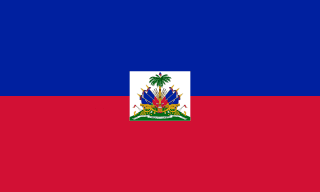
Inside Haiti’s foreign policy.
Republic of Haiti
Americas · UN voting record, treaty positions, and alliances — every claim primary-sourced.
In short
Haiti is a fragile transitional state whose foreign policy is currently driven less by ideology than by immediate survival: restoring basic security, keeping international support flowing, and recovering enough state capacity to reach elections UN Integrated Office in Haiti,…
Capital
Port-au-PrinceGovernment
Unitary semi-presidential republicResearch Haiti on your topic
Start a Quick answer framed for your committee — official statements, UN votes, and bloc context.
Haiti's government & politics
Leadership, governance, and democratic trajectory.


Haiti's UN voting record
How Haiti votes at the UN General Assembly — ideological trajectory, voting partners, topic patterns, and key recent roll calls.
Ideological trajectory
Top voting partners
Topic-level voting
Source: Erik Voeten, “United Nations General Assembly Voting Data”, Harvard Dataverse (CC0). Aggregated by Model Diplomat. Last refresh tracked in profile freshness.
Haiti's foreign policy
Bilateral posture, key relationships, and live diplomatic statements.
Foreign Policy
Haiti’s foreign policy is defensive, aid-dependent, and unusually constrained by state collapse at home: the transitional authorities use external relations first to secure survival, then to preserve a path back to constitutional rule, and only after that to pursue trade or status United Nations Security Council, CARICOM. Haiti does not operate from a grand strategic doctrine in the way larger states do; its external line is instead set by the Transitional Presidential Council, the prime minister, and the foreign ministry under intense pressure from security realities, donors, CARICOM mediation, and UN crisis management Government of Haiti, United Nations Integrated Office in Haiti (BINUH). The core interest hierarchy is clear: physical security against gang control and institutional collapse is the survival tier; maintaining a legitimate transition and restoring elections is regime-security tier; keeping aid, remittances, trade access, and fuel and food flows open is the economic tier; and defending sovereignty against open-ended foreign tutelage is the status tier UN Security Council, World Bank, International Organization for Migration.
That hierarchy explains Haiti’s central diplomatic ask: outside security support without formal loss of sovereignty. Haiti requested international assistance against armed gangs, and the UN Security Council authorized the Multinational Security Support mission in Resolution 2699 (2023), led by Kenya rather than by a traditional occupying power, a design meant to make intervention more politically acceptable at home and in the region UN Security Council Resolution 2699, Kenya Ministry of Foreign and Diaspora Affairs. Haiti’s strongest operational bilateral relationships therefore run through security, migration, and aid: the United States is the single most consequential external actor in sanctions, policing support, and humanitarian financing; Canada has paired sanctions and policing assistance with support for the transition; France remains symbolically important but is not the decisive external security actor; and the Dominican Republic is the unavoidable neighbor relationship, marked by trade interdependence, migration tension, and repeated disputes over border controls and security spillover U.S. Department of State, Government of Canada, France Diplomatie, International Crisis Group. Jamaica and other CARICOM states matter beyond their size because CARICOM has been the main regional political broker of the transition formula, giving Haiti a legitimacy channel that neither Washington nor the OAS can provide on their own CARICOM, Organization of American States.
In regional and multilateral institutions, Haiti is active but structurally weak. It is a member of the UN, OAS, CARICOM, and the International Organization of La Francophonie, and these forums are less venues for Haitian agenda-setting than for mobilizing security backing, humanitarian assistance, election support, and political recognition for transitional arrangements United Nations, CARICOM, OAS, Organisation internationale de la Francophonie. Haiti’s diplomatic capacity is limited by the broader collapse of public administration, which reduces its room for autonomous coalition-building compared with other Caribbean states World Bank, BINUH. On paper Haiti still endorses the standard small-state priorities of sovereignty, non-intervention, development finance, climate vulnerability, and multilateralism, but in practice it accepts deeper external involvement in domestic security than most Latin American and Caribbean governments would tolerate, because the alternative is further territorial loss to gangs UN Security Council Resolution 2699, International Crisis Group.
At the UN, Haiti generally aligns with broad Global South and CARICOM positions on development, decolonization, racial equality, and climate vulnerability, while also tending to stay close to Western-backed humanitarian and governance language because of its dependence on external support UN Digital Library, CARICOM. The most important divergence from its nominal bloc is not ideological but institutional: CARICOM and many Latin American states defend non-intervention as a reflex, yet Haiti has repeatedly sought exceptional outside security mechanisms on its own territory, including support that culminated in the Kenya-led mission authorized by the Security Council UN Security Council Resolution 2699, CARICOM. That break matters more than any single roll-call vote because it shows Haiti’s foreign policy is driven less by bloc identity than by state-survival needs. A second, quieter divergence is migration diplomacy: Caribbean solidarity exists rhetorically, but Haiti’s interests often clash with neighbors’ domestic politics, especially in the Dominican Republic, where border closures, deportations, and security measures regularly override regional community language International Organization for Migration, International Crisis Group.
The practical assessment is that Haiti will continue to support multilateral formulas that maximize external resources while diffusing sovereignty costs across CARICOM, the UN, Kenya, the United States, and Canada rather than placing any one foreign power in visible control CARICOM, UN


Haiti's treaties & memberships
UN multilateral treaty positions and IGO memberships.
International Organizations
Society & economy
Macro-economic snapshot and demographic context.
GDP (nominal)
$25.2B
#118/250GDP per capita
$2,143
#167/250HDI
0.535
#166/250GDP (nominal USD)
GDP per capita (USD)
Top trading partners


In the news
Coverage from Haiti’s authoritative outlets and headline events from the last 30 days.
Diplomatic calendar
Upcoming key dates
- Aug 30, 2026Electionpast
next Haitian presidential election
Explore Haiti in depth
Frequently asked questions about Haiti
Quick answers to the most common questions about Haiti.
What type of government does Haiti have?
Haiti is governed as a unitary semi-presidential republic, with its capital at Port-au-Prince.
Who is the head of state of Haiti?
Transitional Presidential Council is the head of state of Haiti, in office since 2024-04-25.
Who leads the government of Haiti?
Alix Didier Fils-Aimé serves as the head of government of Haiti, since 2024-11-11.
What is the population of Haiti?
Haiti has a population of approximately 11.8 million people, making it the 83rd most populous country.
What is the economy of Haiti like?
Haiti has a nominal GDP of about $25 billion, or roughly $2,143 per capita.
What languages are spoken in Haiti?
The official languages of Haiti are French and Haitian Creole.
When did Haiti join the United Nations?
Haiti has been a member of the United Nations since 1945.
Who are Haiti's closest allies?
Haiti's key allies include Jamaica, Canada, and France.
More about Haiti
Haiti is a fragile transitional state whose foreign policy is currently driven less by ideology than by immediate survival: restoring basic security, keeping international support flowing, and recovering enough state capacity to reach elections UN Integrated Office in Haiti, CARICOM. Formally, Haiti is a unitary semi-presidential republic, but in practice power is being exercised through the Transitional Presidential Council created under the April 2024 political agreement, with Alix Didier Fils-Aimé serving as prime minister after his appointment in November 2024 Constitute Project, CARICOM, Reuters. There is no normal ruling party in the usual sense because elected national institutions remain largely nonfunctional; governance rests on a negotiated transitional coalition among political groups and civil-society actors rather than a fresh electoral mandate United Nations Security Council, International Crisis Group.
The key to understanding Haiti’s external posture is that the security file dominates everything else. Armed gangs have expanded territorial control, disrupted ports, roads, fuel access, and public administration, and the UN secretary-general reported that gang violence caused thousands of killings and widespread displacement in 2024 alone UN Secretary-General report on BINUH, International Organization for Migration. That reality has pushed Haiti to rely heavily on external partners, especially the United States, Canada, France, CARICOM, the OAS, and the Kenya-led Multinational Security Support mission authorized by the UN Security Council in Resolution 2699 UN Security Council, U.S. Department of State, Government of Canada. Haiti is therefore internationally important less because of its material weight than because it sits at the intersection of regional migration, organized crime, humanitarian emergency, and debate over how far external intervention can rebuild a collapsed security environment OAS, International Crisis Group.
Economically, Haiti is one of the poorest countries in the Western Hemisphere, with a small, import-dependent economy vulnerable to political disruption, natural disasters, and food and fuel shocks World Bank, IMF. The World Bank estimates GDP at roughly $20 billion in current U.S. dollars in recent reporting, far below most Caribbean and Latin American peers, while the economy has repeatedly contracted or stagnated under the combined pressure of insecurity, weak infrastructure, and governance breakdown World Bank Data, IMF. Textiles assembled for export to the U.S. market remain a major formal-sector earner under U.S. trade preference programs, while remittances from Haitians abroad are a critical economic lifeline that in recent years have amounted to a very large share of national income U.S. International Trade Administration, World Bank Migration and Remittances Data. That mix leaves Haiti acutely exposed: if ports close, roads become impassable, or migration channels tighten, domestic purchasing power and fiscal stability deteriorate quickly World Food Programme, World Bank.
Three issues define Haiti’s current trajectory. The first is whether the transitional authorities can create enough security for elections; repeated delays in the electoral timetable have reinforced doubts about whether the transition can produce legitimate institutions on schedule The Haitian Times, United Nations Security Council. The second is whether the Kenya-led security mission and Haitian National Police can actually reverse gang control rather than merely contain it around key corridors and state sites UN Security Council, Reuters. The third is whether outside donors will keep financing humanitarian relief and state operations despite repeated disappointments in governance and implementation UN Office for the Coordination of Humanitarian Affairs, IMF.
Haiti’s foreign policy decision structure is correspondingly narrow. The transitional executive, prime minister’s office, and foreign ministry matter, but external behavior is constrained above all by the state’s dependence on foreign security assistance, humanitarian aid, and diplomatic recognition Ministère des Affaires Étrangères et des Cultes, CARICOM. Its top-tier interest is survival of the state against gang fragmentation; regime security comes next in the form of keeping the transition intact; economic priorities center on aid flows, remittances, customs revenues, and keeping trade routes open; status concerns are secondary and mostly expressed through appeals for solidarity in CARICOM, the UN, and the OAS UN Integrated Office in Haiti, World Bank, OAS