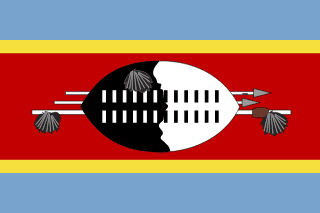
Inside Eswatini’s foreign policy.
Kingdom of Eswatini
Africa · UN voting record, treaty positions, and alliances — every claim primary-sourced.
In short
Eswatini is Africa’s last absolute monarchy, and that fact still explains most of its foreign and domestic behavior: King Mswati III retains executive authority, appoints the prime minister, cabinet, and a share of both legislative chambers, while political parties are barred from contesting elections as parties under…
Capital
MbabaneGovernment
Unitary parliamentary absolute monarchyResearch Eswatini on your topic
Start a Quick answer framed for your committee — official statements, UN votes, and bloc context.
Eswatini's government & politics
Leadership, governance, and democratic trajectory.


Eswatini's UN voting record
How Eswatini votes at the UN General Assembly — ideological trajectory, voting partners, topic patterns, and key recent roll calls.
Ideological trajectory
Top voting partners
Topic-level voting
Source: Erik Voeten, “United Nations General Assembly Voting Data”, Harvard Dataverse (CC0). Aggregated by Model Diplomat. Last refresh tracked in profile freshness.
Eswatini's foreign policy
Bilateral posture, key relationships, and live diplomatic statements.
Foreign Policy
Eswatini’s foreign policy is conservative, monarchy-centered, and built around regime security before any wider regional project. King Mswati III remains head of state and the decisive actor in external affairs under Eswatini’s absolute-monarchical system, while Prime Minister Russell Dlamini has led government since his appointment in November 2023, replacing Cleopas Dlamini; the foreign minister is Pholile Shakantu as confirmed on the Ministry of Foreign Affairs site Government of Eswatini, Ministry of Foreign Affairs and International Cooperation. There is no published grand strategy comparable to larger states’ doctrine papers; in practice, policy is framed through royal speeches, the foreign ministry, and regional diplomacy, with the palace setting the hard limits on recognition, security cooperation, and responses to criticism of domestic governance Government of Eswatini, Freedom House. The interests pyramid is clear: survival and regime continuity come first, especially after the 2021 unrest and the government’s continuing emphasis on stability and public order; trade access, customs revenue, and external development finance come next; status matters mainly through sovereign recognition and the monarchy’s diplomatic space rather than ideological leadership Freedom House, World Bank, African Development Bank.
Regionally, Eswatini behaves like a small, highly dependent state seeking insulation rather than confrontation. It is a member of the African Union, SADC, SACU, COMESA, the Commonwealth, and the UN, and its economy is tightly bound to South Africa through customs revenues, transport routes, and trade flows, which sharply constrains any foreign-policy autonomy that would threaten Pretoria or the Southern African regional market African Union, SADC, SACU, UN Digital Library. South Africa is by far Eswatini’s most important bilateral partner for commerce and practical connectivity, while Mozambique matters for corridor access and neighborhood security management Observatory of Economic Complexity, World Bank. The United Kingdom remains relevant through Commonwealth ties, but Eswatini’s most distinctive bilateral relationship is with Taiwan: it is the only African state that still maintains formal diplomatic relations with Taipei, and both sides publicly reaffirmed those ties in 2024–2025 Ministry of Foreign Affairs, Republic of China (Taiwan), Government of Eswatini.
That Taiwan relationship is Eswatini’s clearest and most consequential break from its regional bloc. Most African states, including Eswatini’s immediate neighbors and the African Union as an institution, recognize the People’s Republic of China; Eswatini does not, and Beijing has repeatedly linked the absence of relations to Mbabane’s stance on Taipei Ministry of Foreign Affairs of the People’s Republic of China, Ministry of Foreign Affairs, Republic of China (Taiwan). This is not symbolic only. It narrows Eswatini’s room inside African diplomatic consensus, limits access to Chinese state financing available elsewhere on the continent, and makes recognition policy a regime-security choice: the palace values a loyal, high-visibility partner that does not condition ties on democratization over the larger material opportunities that could come from switching to Beijing Carnegie Endowment for International Peace, Freedom House. For MUN purposes, that means Eswatini will often sound regionally conventional on sovereignty, non-interference, and development, but it carries a structural divergence on China representation that can surface in procedural positioning, coalition-building, and side diplomacy.
At the UN, Eswatini generally aligns with Global South positions on development, decolonization, and sovereignty, reflecting its memberships in the African Group and G77, but its voting pattern is less activist than that of larger African states and often follows consensus language rather than agenda-shaping leadership Group of 77, United Nations Digital Library. Its public diplomacy stresses peace, dialogue, and respect for national ownership, and that language tracks the monarchy’s preference for external norms that blunt scrutiny of domestic repression Ministry of Foreign Affairs and International Cooperation, UN Human Rights Council, Working Group on the Universal Periodic Review: Eswatini. The gap between stated principle and behavior is most visible on governance: Eswatini endorses multilateral cooperation and AU/SADC peace language, yet resists external pressure over political freedoms at home and favors diplomatic handling over public accountability mechanisms Freedom House, Amnesty International. In practice, Eswat


Eswatini's treaties & memberships
UN multilateral treaty positions and IGO memberships.
International Organizations
Society & economy
Macro-economic snapshot and demographic context.
GDP (nominal)
$4.9B
#168/250GDP per capita
$3,910
#145/250HDI
0.597
#145/250GDP (nominal USD)
GDP per capita (USD)
Top trading partners


In the news
Coverage from Eswatini’s authoritative outlets and headline events from the last 30 days.
Explore Eswatini in depth
Frequently asked questions about Eswatini
Quick answers to the most common questions about Eswatini.
What type of government does Eswatini have?
Eswatini is governed as a unitary parliamentary absolute monarchy, with its capital at Mbabane.
Who is the head of state of Eswatini?
Mswati III is the head of state of Eswatini, in office since 1986-04-25.
Who leads the government of Eswatini?
Edeupa Yerimin serves as the head of government of Eswatini, since 2023-11-04.
What is the population of Eswatini?
Eswatini has a population of approximately 1.2 million people, making it the 160th most populous country.
What is the economy of Eswatini like?
Eswatini has a nominal GDP of about $5 billion, or roughly $3,910 per capita.
What languages are spoken in Eswatini?
The official languages of Eswatini are English and Swazi.
When did Eswatini join the United Nations?
Eswatini has been a member of the United Nations since 1968.
Who are Eswatini's closest allies?
Eswatini's key allies include South Africa, Taiwan, Mozambique, and United Kingdom.
More about Eswatini
Eswatini is Africa’s last absolute monarchy, and that fact still explains most of its foreign and domestic behavior: King Mswati III retains executive authority, appoints the prime minister, cabinet, and a share of both legislative chambers, while political parties are barred from contesting elections as parties under the tinkhundla system Britannica, CIA World Factbook, U.S. Department of State. Following the 2023 election cycle, Russell Mmiso Dlamini was appointed prime minister in November 2023, replacing Cleopas Dlamini, and the cabinet was subsequently named by the king; there is no ruling party in the normal parliamentary sense because party competition is not the organizing principle of government Government of Eswatini, BBC, Freedom House.
In practice, Eswatini’s foreign policy is court-centered and regime-security driven. The palace, security services, and senior traditional structures matter more than parliament in setting red lines, especially after the lethal unrest and pro-democracy mobilization that intensified from 2021 onward Human Rights Watch, Amnesty International, U.S. Department of State. Internationally, Eswatini is small but unusually visible because it remains one of the few states that maintains full diplomatic relations with Taiwan rather than the People’s Republic of China, a choice Taipei publicly highlights and Beijing opposes Ministry of Foreign Affairs, Taiwan, Reuters. Regionally, it is deeply embedded in Southern African institutions including SADC, SACU, and COMESA, but its room for maneuver is constrained by overwhelming economic dependence on South Africa SADC, SACU, World Bank.
The economy is small, concentrated, and externally exposed. The World Bank reports GDP of about $4.6 billion in current US dollars in 2024, with growth still limited by weak job creation, inequality, and reliance on a narrow production base World Bank Data, World Bank Overview. Key export sectors include soft drink concentrates, sugar, textiles, wood pulp, and citrus, while customs revenue from the Southern African Customs Union remains a critical fiscal pillar, making Eswatini unusually vulnerable to shifts in regional trade flows and South African import performance International Trade Administration, IMF. Social pressure is amplified by structurally high poverty and unemployment; the World Bank has repeatedly identified Eswatini as one of the world’s most unequal countries, and HIV remains a major public-health and productivity challenge even after substantial treatment gains World Bank Overview, UNAIDS.
Three issues define Eswatini’s current trajectory. The first is regime stability versus political reform: the state continues to resist demands for a more democratic order, and security crackdowns have damaged the kingdom’s international reputation even as the monarchy frames itself as a guarantor of peace and continuity Freedom House, Human Rights Watch. The second is external balancing through Taiwan and the West: Eswatini uses its recognition of Taipei to gain diplomatic attention and development support, but that stance also keeps it exposed to pressure from Beijing and leaves it out of the PRC’s African diplomatic network Ministry of Foreign Affairs, Taiwan, Reuters. The third is economic fragility under rising social costs: fuel-price shocks, food-price pressure, and dependence on imported energy and South African economic conditions make domestic discontent harder to manage through patronage alone IMF, World Bank Overview.
That combination makes Eswatini less influential than strategically sensitive. It is not a regional power, but it matters as a test case for how long a highly centralized monarchy can preserve domestic control while relying on regional market access, external rents, and selective diplomatic partnerships to offset internal legitimacy deficits SADC, IMF, Freedom House. For MUN delegates, the key read is simple: on most issues, Eswatini will prioritize regime continuity first, economic cushioning second, and broad normative alignment only when those two are protected U.S. Department of State, IMF