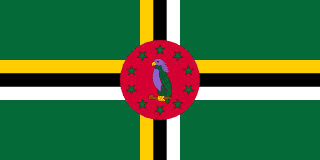
Inside Dominica’s foreign policy.
Commonwealth of Dominica
Americas · UN voting record, treaty positions, and alliances — every claim primary-sourced.
In short
Dominica is a small parliamentary republic that punches above its weight in Caribbean diplomacy by pairing tight regional integration with an unusually durable one-party governing center at home.
Capital
RoseauGovernment
Parliamentary republicDominica's government & politics
Leadership, governance, and democratic trajectory.


Dominica's UN voting record
How Dominica votes at the UN General Assembly — ideological trajectory, voting partners, topic patterns, and key recent roll calls.
Ideological trajectory
Top voting partners
Topic-level voting
Source: Erik Voeten, “United Nations General Assembly Voting Data”, Harvard Dataverse (CC0). Aggregated by Model Diplomat. Last refresh tracked in profile freshness.
Dominica's foreign policy
Bilateral posture, key relationships, and live diplomatic statements.
Foreign Policy
Dominica’s foreign policy is transactional, sovereignty-focused, and unusually willing to diverge from the Caribbean mainstream when economic or regime-security interests are at stake. The state is a parliamentary republic, but foreign-policy direction is highly centralized in Prime Minister Roosevelt Skerrit’s government rather than diffused across institutions; President Sylvanie Burton is head of state, while Skerrit remains the decisive political actor and has publicly framed external policy around development finance, climate resilience, and non-interference Government of Dominica, Commonwealth Secretariat, Caribbean Today. Dominica has no published grand strategy comparable to a national security doctrine, but its repeated diplomatic themes are clear: survival through climate adaptation, economic security through concessional finance and investment, and status through active small-state multilateralism in the Caribbean and UN system UNFCCC, AOSIS, IMF.
Its interests pyramid is stark. Survival comes first because Dominica is one of the world’s most climate-vulnerable small island states; after Hurricane Maria, the government made “climate-resilient” reconstruction the organizing principle of both domestic and external policy, and the IMF still describes the economy as exposed to severe natural-disaster shocks despite recent growth World Bank, IMF. Regime and fiscal security come next: the government relies heavily on external financing and on revenues from the citizenship-by-investment program, which the IMF identifies as a major fiscal support but also a vulnerability because of reputational and external-policy pressures IMF. That dependence helps explain why Roseau prioritizes partners that deliver infrastructure, grants, or political backing with limited governance conditionality. Status matters too, but mainly as leverage: Dominica uses the UN, AOSIS, CARICOM, and the OECS to amplify climate and development claims that it cannot press bilaterally on its own CARICOM, OECS, United Nations.
The key bilateral relationship is with China, not the United States or the European Union. Dominica established relations with Beijing in 2004 after ending ties with Taiwan, and the PRC has since financed or built major public projects including a hospital, schools, roads, housing, and a grammar school, giving China outsized influence in a state with limited domestic capital and narrow export capacity Ministry of Foreign Affairs of the People’s Republic of China, Government of Dominica, U.S. Department of State. Dominica’s regional relationships remain dense and practical: it is embedded in CARICOM and the OECS, participates in the Eastern Caribbean Currency Union through the Eastern Caribbean Central Bank, and aligns closely with neighboring microstates on climate finance, disaster response, and freedom of movement CARICOM, OECS, ECCB. The United States remains important for tourism, remittances, and security cooperation, but not politically dominant; Dominica’s diplomacy toward Washington is often careful and defensive rather than aligned U.S. Department of State, CIA World Factbook.
At the UN, Dominica usually votes with the wider Global South and with small-island coalitions on climate, development, decolonization, and sovereignty questions, while also backing repeated annual resolutions calling for an end to the U.S. embargo on Cuba United Nations Digital Library, UN General Assembly. Its rhetoric emphasizes international law and peaceful settlement of disputes, as Skerrit reiterated in 2026, but behavior matters more than rhetoric: on Venezuela, Dominica has often been more accommodating toward Nicolás Maduro than several CARICOM partners, reflecting a longer pattern of engagement with ALBA-linked politics and a stronger aversion to externally driven regime change Caribbean Today, DOM767, Reuters. That is the analytically important break: Dominica belongs institutionally to a moderate Caribbean bloc, but on some geopolitical questions it tilts toward non-Western patrons and anti-sanctions positions more readily than Barbados, Jamaica, or Bahamas typically do CARICOM, United Nations Digital Library.
The same divergence appears in how Dominica balances principles and incentives. Like other CARICOM members, it supports multilateralism, climate justice, and rules-based diplomacy; unlike some of its neighbors


Dominica's treaties & memberships
UN multilateral treaty positions and IGO memberships.
International Organizations
Society & economy
Macro-economic snapshot and demographic context.
GDP (nominal)
$689M
#201/250GDP per capita
$10,405
#97/250HDI
0.720
#105/250GDP (nominal USD)
GDP per capita (USD)
Top trading partners


In the news
Stories surfacing across Dominica’s authoritative outlets, plus headline events and the diplomatic calendar.
Headlines
DOMINICA-FINANCE-Government defends decision to extend key fiscal measures to ease cost of living • Nature Isle News
Summary: Dominica’s Prime Minister Roosevelt Skerrit defended extending VAT and import-duty waivers on essential goods until July 2026 to ease the cost of living amid rising global prices linked to the Middle East conflict. He framed the move as necessary for vulnerable households and as part of a broader fiscal strategy noted in the IMF’s 2026 Article IV report, which cautions risks from geopolitical tensions and natural disasters. The government emphasizes disciplined fisca
Skerrit Appeals for Diplomacy After Maduro Taken Into U.S. Custody – DOM767
Summary: Dominica calls for restraint and renewed diplomacy after U.S. confirmation that Venezuelan President Nicolás Maduro was taken into custody. Prime Minister Roosevelt Skerrit urged dialogue through established international mechanisms, emphasizing Dominica’s commitment to peace, sovereignty, and the rule of law. He warned that escalation could destabilize the region and disrupt travel, trade, and cooperation. Dominica maintains friendly relations with both the U.S. and
Dominica's economic outlook remains positive but subject to elevated downside risks - IMF - Caribbean News Global
Summary: - The IMF project that Dominica’s economy will grow around 3.0% in the near term, easing to about 2% as construction slows. - The economy remains expansionary due to strategic infrastructure spending, but fiscal and external imbalances are large (notably a high current account deficit and public debt above the currency union benchmark). - The current account is expected to narrow by 2031 as Tourism improves, investment-related imports fall, and fuel needs decline wit
Explore Dominica in depth
Frequently asked questions about Dominica
Quick answers to the most common questions about Dominica.
What type of government does Dominica have?
Dominica is governed as a parliamentary republic, with its capital at Roseau.
Who is the head of state of Dominica?
Sylvanie Burton is the head of state of Dominica, in office since 2023-10-02.
Who leads the government of Dominica?
Roosevelt Skerrit serves as the head of government of Dominica, since 2004-01-08.
What is the population of Dominica?
Dominica has a population of approximately 66 thousand people, making it the 206th most populous country.
What is the economy of Dominica like?
Dominica has a nominal GDP of about $689 million, or roughly $10,405 per capita.
What languages are spoken in Dominica?
The official language of Dominica is English.
When did Dominica join the United Nations?
Dominica has been a member of the United Nations since 1978.
Who are Dominica's closest allies?
Dominica's key allies include Antigua and Barbuda, Saint Lucia, Saint Vincent and the Grenadines, and China.
More about Dominica
Dominica is a small parliamentary republic that punches above its weight in Caribbean diplomacy by pairing tight regional integration with an unusually durable one-party governing center at home. Its president is Sylvanie Burton, elected by the House of Assembly in 2023, while Prime Minister Roosevelt Skerrit has led the government since 2004 and heads the Dominica Labour Party, which won 19 of 21 seats contested in the 2022 general election after an opposition boycott [Commonwealth Secretariat](https://thecommonwealth.org/our-member-countries/dominica), [Dominica News Online](https://dominicanewsonline.com/news/homepage/news/politics/skerrits-dlp-wins-19-seats-in-general-election/), [Government of Dominica](https://dominica.gov.dm/prime-minister), [BBC News](https://www.bbc.com/news/world-latin-america-67925436). Foreign policy is driven primarily by the prime minister and cabinet rather than the presidency, which matters because Skerrit’s long tenure has made continuity, not turnover, the key fact in understanding Dominica’s external behavior [Government of Dominica](https://dominica.gov.dm/prime-minister), [Commonwealth Secretariat](https://thecommonwealth.org/our-member-countries/dominica). In the world today, Dominica acts less like an isolated microstate than like a coalition player embedded in CARICOM, the Organisation of Eastern Caribbean States, the Commonwealth, the United Nations, and the Alliance of Small Island States [CARICOM](https://caricom.org/member-states-and-associate-members/), [OECS](https://www.oecs.org/en/who-we-are/member-states), [United Nations](https://www.un.org/en/about-us/member-states/dominica), [AOSIS](https://www.aosis.org/about/members/). Its diplomatic profile is defined by three habits: close coordination with Eastern Caribbean neighbors, strong climate-vulnerability advocacy, and a pragmatic willingness to cultivate partners beyond the Western hemisphere, including the People’s Republic of China, with which it maintains diplomatic relations [Ministry of Foreign Affairs of the People’s Republic of China](https://www.fmprc.gov.cn/eng/gjhdq_665435/2795_665439/2811_664310/), [CARICOM](https://caricom.org/member-states-and-associate-members/), [AOSIS](https://www.aosis.org/about/members/). Skerrit’s government has also framed current international turbulence through the language of law and diplomacy, recently calling for adherence to international law and urging diplomacy over escalation in the Venezuela crisis [Caribbean Today](https://www.caribbeantoday.com/sections/news/dominicas-prime-minister-reiterates-call-for-adherence-to-principles-of-international-law), [DOM767](https://dom767.com/news/skerrit-appeals-for-diplomacy-after-maduro-taken-into-u-s-custody/). Economically, Dominica remains a very small upper-middle-income island economy whose growth model rests on tourism, construction, public investment, agriculture, and a large citizenship-by-investment revenue stream. The IMF said in its 2026 Article IV consultation that the economic outlook remains positive but downside risks are elevated, a formulation that captures the country well: recovery and rebuilding continue, but fiscal and external shocks still bite hard in a disaster-prone economy [IMF](https://www.imf.org/en/News/Articles/2026/06/03/pr26221-dominica-imf-executive-board-concludes-2026-article-iv-consultation). Dominica uses the Eastern Caribbean dollar through the Eastern Caribbean Currency Union, which gives it monetary stability but limits national monetary flexibility [Eastern Caribbean Central Bank](https://www.eccb-centralbank.org/currency-union/about-the-eccu). The government has recently defended extending fiscal measures to ease cost-of-living pressures, showing that household affordability and social protection remain immediate political priorities alongside macroeconomic repair [Nature Isle News](https://natureisle.news/finance/government-defends-decision-to-extend-key-fiscal-measures-to-ease-cost-of-living/), [IMF](https://www.imf.org/en/News/Articles/2026/06/03/pr26221-dominica-imf-executive-board-concludes-2026-article-iv-consultation). Three issues define Dominica’s current trajectory. First is climate resilience and disaster recovery: after Hurricane Maria destroyed an estimated 226 percent of GDP in 2017, the state reorganized much of its development agenda around becoming the world’s first climate-resilient nation, and that goal still shapes infrastructure, financing, and diplomacy [World Bank](https://www.worldbank.org/en/country/dominica/overview), [Government of Dominica](https://www.gov.dm/index.php/climate-resilience-execution-agency-for-dominica-cread). Second is fiscal credibility: Dominica needs investment and social spending, but the IMF has stressed the importance of prudent fiscal policy and stronger resilience to external shocks, especially as small-island financing conditions tighten [IMF](https://www.imf.org/en/News/Articles/2026/06/03/pr26221-dominica-imf-executive-board-concludes-2026-article-iv-consultation). Third is democratic legitimacy at home. The Skerrit government remains electorally dominant, but the 2022 opposition boycott and longstanding debate over electoral reform mean governance questions still shadow the country’s otherwise stable external posture [Dominica News Online](https://dominicanewsonline.com/news/homepage/news/politics/skerrits-dlp-wins-19-seats-in-general-election/), [Caribbean Court of Justice](https://www.ccj.org/news/dominica-electoral-reform-judgment/). The bottom line is that Dominica is stable, regionally connected, and diplomatically more active than its size suggests, but its room for maneuver is constrained by exposure to storms, import costs, and a narrow economic base. Its foreign policy is best read through an interests pyramid in which survival means climate adaptation, regime security means preserving the Skerrit-led governing order, and economic policy means securing reconstruction finance, tourism income, and external partnerships without losing fiscal control [World Bank](https://www.worldbank.org/en/country/dominica/overview), [IMF](https://www.imf.org/en/News/Articles/2026/06/03/pr26221-dominica-imf-executive-board-concludes-2026-article-iv-consultation), [Government of Dominica](https://dominica.gov.dm/prime-minister).