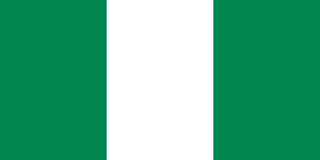
Nigeria.
Federal Republic of Nigeria
In short
Nigeria is Africa’s largest country by population and still behaves like a regional power, but President Bola Tinubu’s government is constrained by domestic insecurity, weak growth per person, and a hard tradeoff between fiscal repair at home and ambition abroad [World Bank Nigeria Overview](https://www. worldbank.
Capital
Abuja
Government
Federal presidential c…
Nigeria's government & politics
Leadership, governance, and democratic trajectory.

Nigeria's UN voting record
How Nigeria votes at the UN General Assembly — ideological trajectory, voting partners, topic patterns, and key recent roll calls.
Ideological trajectory
Top voting partners
Topic-level voting
Source: Erik Voeten, “United Nations General Assembly Voting Data”, Harvard Dataverse (CC0). Aggregated by Model Diplomat. Last refresh tracked in profile freshness.
Nigeria's foreign policy
Bilateral posture, key relationships, and live diplomatic statements.
Foreign Policy
Nigeria’s foreign policy is still formally anchored in the long-running “Africa as the centrepiece” doctrine, but under President Bola Ahmed Tinubu it has become more explicitly security-driven and economically transactional, with ECOWAS crisis management, investment attraction, and energy diplomacy taking priority over older non-alignment rhetoric [Ministry of Foreign Affairs, Nigeria](https://foreignaffairs.gov.ng/) [Presidency, Federal Republic of Nigeria](https://statehouse.gov.ng/) [Council on Foreign Relations, Nigeria’s Tinubu and West Africa](https://www.cfr.org/article/nigerias-tinubu-and-future-west-africa). The decision structure is presidential: Tinubu is both head of state and head of government, and the presidency, National Security Adviser Nuhu Ribadu, and the foreign ministry shape external policy more than the National Assembly does in day-to-day diplomacy [Presidency, Federal Republic of Nigeria](https://statehouse.gov.ng/) [Office of the National Security Adviser](https://onsa.gov.ng/) [Ministry of Foreign Affairs, Nigeria](https://foreignaffairs.gov.ng/). Nigeria’s core interests rank clearly by tier. Survival means containing jihadist and separatist violence and preventing spillover from the Sahel and Lake Chad basin; regime security means avoiding regional instability that could deepen domestic insecurity; economic interests mean protecting oil revenue, attracting capital, and stabilizing energy exports; status means preserving Nigeria’s claim to continental leadership through ECOWAS, the African Union, and its long campaign for a permanent African seat on a reformed UN Security Council [UNDP Nigeria](https://www.undp.org/nigeria) [World Bank Nigeria Overview](https://www.worldbank.org/en/country/nigeria/overview) [Permanent Mission of Nigeria to the United Nations](https://www.un.int/nigeria/).
Regionally, ECOWAS is the main arena where Nigeria tries to convert size into influence. Nigeria has repeatedly framed unconstitutional changes of government in West Africa as direct security threats to itself, which explains its hard line after the July 2023 coup in Niger and its support for ECOWAS sanctions and the threat of force, even as several member states and much of northern Nigerian opinion were more cautious [ECOWAS, Decisions on the Political Situation in Niger](https://www.ecowas.int/) [International Crisis Group, Niger and the Regional Response](https://www.crisisgroup.org/africa/sahel/niger) [Chatham House, Nigeria and the Niger Coup](https://www.chathamhouse.org/). That episode showed both Nigeria’s ambition and its limits: Abuja set the regional line, but Mali, Burkina Faso, and Guinea rejected it, and the intervention option lost credibility when domestic political backing thinned and the military burden became obvious [Reuters, ECOWAS and Niger crisis coverage](https://www.reuters.com/world/africa/) [International Crisis Group, Niger and the Regional Response](https://www.crisisgroup.org/africa/sahel/niger). Nigeria remains central in the AU and is one of Africa’s larger diplomatic actors, but its effective leverage is strongest in West Africa, not continent-wide [African Union Member States](https://au.int/en/member_states/countryprofiles2) [Permanent Mission of Nigeria to the United Nations](https://www.un.int/nigeria/).
Nigeria’s key bilateral relationships are deliberately diversified. The United States and United Kingdom remain important on security cooperation, intelligence, finance, and diaspora ties, while China is indispensable on infrastructure finance, construction, and trade, and Nigeria has avoided framing those relationships as exclusive choices [U.S. Department of State, U.S.-Nigeria Relations](https://www.state.gov/u-s-relations-with-nigeria/) [UK Foreign, Commonwealth & Development Office, UK and Nigeria](https://www.gov.uk/world/nigeria/news) [Embassy of the People’s Republic of China in Nigeria](http://ng.china-embassy.gov.cn/eng/) [IMF Nigeria page](https://www.imf.org/en/Countries/NGA). Nigeria also keeps energy and investment channels open with Gulf states and works pragmatically with France despite sharp regional frictions over Paris’s role in the Sahel [OPEC, Nigeria facts and figures](https://www.opec.org/opec_web/en/about_us/167.htm) [Business France / French diplomacy in Nigeria](https://ng.ambafrance.org/). Relations with South Africa mix partnership and rivalry: both back African institutional reform and G20-style representation for the continent, but they compete for agenda-setting power and commercial influence [South African Government News Agency, South Africa-Nigeria relations](https://www.sanews.gov.za/) [African Union](https://au.int/). Nigeria’s external balancing is therefore less ideological than instrumental: it wants arms, capital, market access, and diplomatic recognition from multiple poles at once.
At the UN, Nigeria usually votes with the broad African and Global South mainstream on decolonization, Palestinian self-determination, and development finance, while also supporting sovereignty principles that reflect its own sensitivity to separatism and unconstitutional power seizures [UN Digital Library, Nigeria voting record](https://digitallibrary.un.org/) [Permanent Mission of Nigeria to the United Nations](https://www.un.int/nigeria/). Its behavior is not mechanically anti-Western. Nigeria has often tried to preserve room for mediation, and on some high-salience crises it prefers language around dialogue, ceasefire, and negotiated settlement over bloc-polarizing positions [UN Digital Library, Nigeria statements](https://digitallibrary.un.org/) [UN News coverage of General Assembly debates](https://news.un.org/en/). The analytically useful divergence is inside Africa itself: Nigeria is more willing than several coup-led Sahel governments to defend ECOWAS treaty order and sanctions enforcement, and more willing than some oil producers in the developing world to present gas as a transition fuel rather than accept a simple fossil-fuel phaseout frame [ECOWAS](https://www.ecowas.int/) [OPEC, Nigeria facts and figures](https://www.opec.org/opec_web/en/about_us/167.htm) [Presidency, Federal Republic of Nigeria](https://statehouse.gov.ng/). That combination makes Abuja simultaneously a status-quo regional actor on constitutional order and a revisionist actor on global climate equity and UN reform.
Domestic constraints explain most of that pattern. Nigeria’s population was estimated at 232.7 million in 2024, the largest in Africa, but growth has not translated into commensurate state capacity, and chronic insecurity, foreign-exchange stress, inflation, and oil theft narrow the range of sustainable foreign-policy options [World Bank Data, Population total - Nigeria](https://data.worldbank.org/indicator/SP.POP.TOTL?locations=NG) [World Bank Nigeria Overview](


Nigeria's treaties & memberships
UN multilateral treaty positions and IGO memberships.
International Organizations
Society & economy
Macro-economic snapshot and demographic context.
GDP (nominal)
$252.3B
#54/250GDP per capita
$1,084.16
#187/250Currency
—
HDI
0.54
#165/250GDP (nominal USD)
GDP per capita (USD)
Top trading partners


In the news
Stories surfacing across Nigeria’s authoritative outlets, plus headline events and the diplomatic calendar.
Headlines
Coalition of the Willing on Fossil Fuel Phase
A new coalition of nations meets to discuss phasing out fossil fuels, but major emitters are absent, limiting impact.
Ribadu meets Vance, Rubio as Nigeria deepens cooperation with US
Summary: Nigeria and the United States are expanding security-focused cooperation under a structured bilateral framework. Nigerian National Security Adviser Nuhu Ribadu’s May visit to the U.S. included high-level talks with Vice President JD Vance, the Acting National Security Advisor, Secretary of State, and other senior officials. The discussions covered counterterrorism, defence cooperation, intelligence sharing, border security, regional stability in West Africa and the S
Nigeria turns to domestic capital as global economy fractures - Businessday NG
Summary: - Nigeria should not rely on foreign capital alone to fund development as global investment becomes selective and geopolitical factors influence capital flows. - Lagos/Berlin: BCG argues Nigeria must mobilize domestic savings, deepen local capital markets, and finance more projects domestically to compete in the evolving global economy. - Key themes: governance, domestic productive capacity, and capital mobilisation as drivers of competitiveness; leveraging Nigeria’s
Explore Nigeria in depth
Frequently asked questions about Nigeria
Quick answers to the most common questions about Nigeria.
What type of government does Nigeria have?
Nigeria is governed as a federal presidential constitutional republic, with its capital at Abuja.
Who is the head of state of Nigeria?
Bola Ahmed Tinubu is the head of state of Nigeria, in office since 2023-05-29.
What is the population of Nigeria?
Nigeria has a population of approximately 232.7 million people, making it the 6th most populous country.
What is the economy of Nigeria like?
Nigeria has a nominal GDP of about $252 billion, or roughly $1,084 per capita.
What languages are spoken in Nigeria?
The official language of Nigeria is English.
When did Nigeria join the United Nations?
Nigeria has been a member of the United Nations since 1960.
Who are Nigeria's closest allies?
Nigeria's key allies include Ghana, South Africa, United Kingdom, United States, and Kenya.