Kosovo's Election Results Force Kurti's Hand
Kurti's coalition talks become unavoidable after election loss.
Model Diplomat4 min readeurope
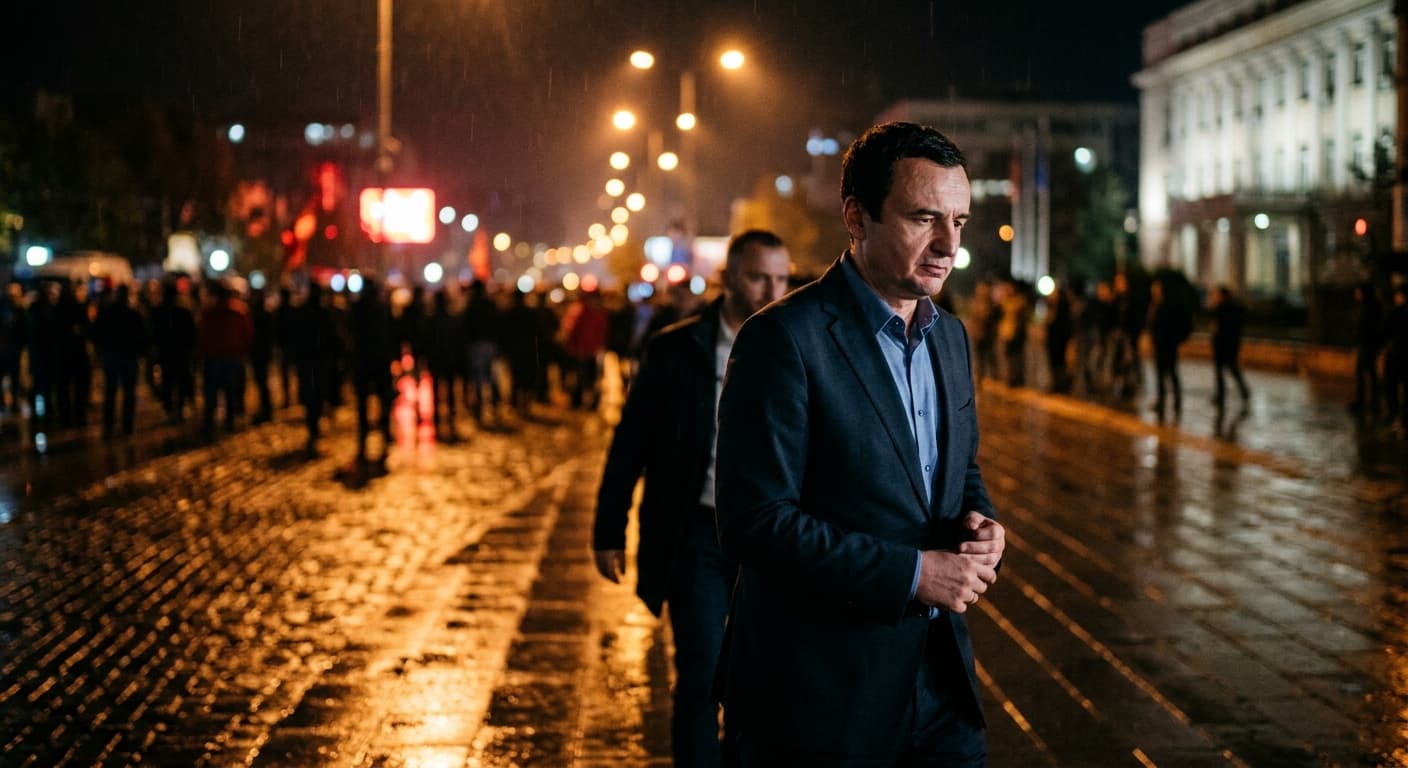
Kosovo's Third Election in 16 Months Leaves Kurti Weaker — And Finally Forces a Compromise
Kosovo's June 7 snap election handed Albin Kurti a third victory but stripped him of his majority, making coalition talks with former rivals unavoidable — and putting the presidency at the center of the bargain.
Albin Kurti's Vetëvendosje (LVV) won Kosovo's June 7 snap parliamentary election with 42.9% of the vote — a clear first-place finish, but a collapse from the 51.1% majority he secured just six months earlier in December 2025. With roughly 53 seats in the 120-seat assembly, Kurti cannot govern alone, cannot elect a president alone, and for the first time since his rise to power in 2021, cannot avoid genuine coalition talks.
The result ends the fiction that Kosovo could vote its way out of institutional paralysis. It was the country's third election in 16 months, triggered after parliament failed to elect a president following the expiration of Vjosa Osmani's mandate in April 2026. Turnout cratered to 36.1%, down from 44% in December. As Kurti himself conceded afterward: "Kosovo did not need these elections — and the results proved this." Balkan Insight
How Kosovo Burned 16 Months
The arc is punishing. In February 2025, LVV won 48 seats — short of the 61 needed to govern. The Democratic Party of Kosovo (PDK) and Democratic League of Kosovo (LDK) both refused to enter coalition with Kurti. It took 57 attempts over eight months just to elect an Assembly Speaker. Deadlock forced December 2025 elections, where LVV surged to 57 seats. Kurti formed a government in February 2026.
Then the presidency blew it apart.
Kurti refused to back Osmani for a second term, nominating Foreign Minister Glauk Konjufca instead. The break had been building for months: the decisive rupture came when Osmani joined Donald Trump's "Board of Peace" initiative without consulting the prime minister, asserting an autonomous foreign policy role Kurti considered unconstitutional overreach. New Eastern Europe On March 5, 2026, the first presidential vote failed. Osmani dissolved parliament, but the Constitutional Court unanimously annulled her decree. When her mandate expired on April 4, Assembly Speaker Albulena Haxhiu became acting president — and when no candidate reached the required 81 votes by April 28, parliament dissolved automatically, triggering the June 7 vote.
EFE
The New Arithmetic
The June 7 results: LVV ~53 seats, PDK 22, LDK 18, AAK 7, with the Serbian List and minority parties holding the remaining 20 reserved seats. European Western Balkans
Kurti needs only 61 votes to form a government. The real choke point is the presidency, which requires a two-thirds majority — 81 votes. No party is remotely close alone. That is where the leverage shifts decisively away from Kurti.
Two scenarios dominate. The first is an LVV-LDK deal, which analyst Donika Emini calls "the more natural option." LDK deputy chairman Lutfi Haziri has already signaled openness, stating that LDK's votes "could be decisive" for electing a president — but with an unmistakable condition: if Kurti wants LDK as a partner, "the post of President must belong to LDK." Albeu.com That means Osmani, who returned to LDK after her split with Kurti and ran on its ticket, becomes the price of stability.
The second scenario is an LVV-PDK coalition — numerically stronger but politically explosive given years of mutual hostility. PDK leader Bedri Hamza has said he has "no red lines," but the history of polarization between the two parties makes any deal fragile. Balkanweb/REL
The wildcard is the Serbian List, which holds roughly 6 seats. Opposition parties could potentially form an "all against Kurti" bloc with Serbian List support, though this remains logistically difficult and politically toxic. European Western Balkans
What to Watch
Emini's warning is the operative one: any deal must address "the full institutional package from the outset — government, parliament speaker, and presidency simultaneously. Attempting to form a government first and defer the presidential question will only reproduce the same crisis months down the line." European Western Balkans
The international dimension sharpens the urgency. The U.S. suspended its strategic dialogue with Kosovo in September 2025 over Kurti's unilateral actions in the north. The EU has made clear that further institutional chaos will freeze Kosovo's already-stalled integration process — it remains the only Western Balkan country without official EU candidate status. BTA
The certification of final results by the Central Election Commission is the next procedural milestone. After that, the real negotiation begins. If Kurti accepts that the presidency is the price of governing, Kosovo gets a government. If he doesn't, a fourth election — and deeper voter exhaustion — is the only alternative.
Discover more

US Politics
SNAP Food Assistance Faces Legal Challenges
In 2026, SNAP faces stricter eligibility rules and mounting legal challenges, threatening food assistance for the millions of Americans who rely on the program.
US Politics
Congress Targets AI Chatbot Access for Terror
The House passed the Generative AI Terrorism Risk Assessment Act, focusing on AI's role in terrorism and potential surveillance implications.
India
Rajnath Singh's Durga Squad for 2026 Polls
Rajnath Singh's Durga Squad promised women's safety in Bengal but has since disappeared from the agenda, revealing BJP's true priorities.

Conflict & Security
Drone Warfare Killing Aid Workers at Unprec
Over 1,000 humanitarian workers killed in three years as cheap armed drones collapse legal protections. Gaza, Sudan, Ukraine, and DRC see deliberate targeting of aid convoys and hospitals with zero prosecutions.