UN Rules Israel's Detention of Doctor Arbitr
UN demands release of Gaza doctor held without charge.
Model Diplomat7 min readMiddle East
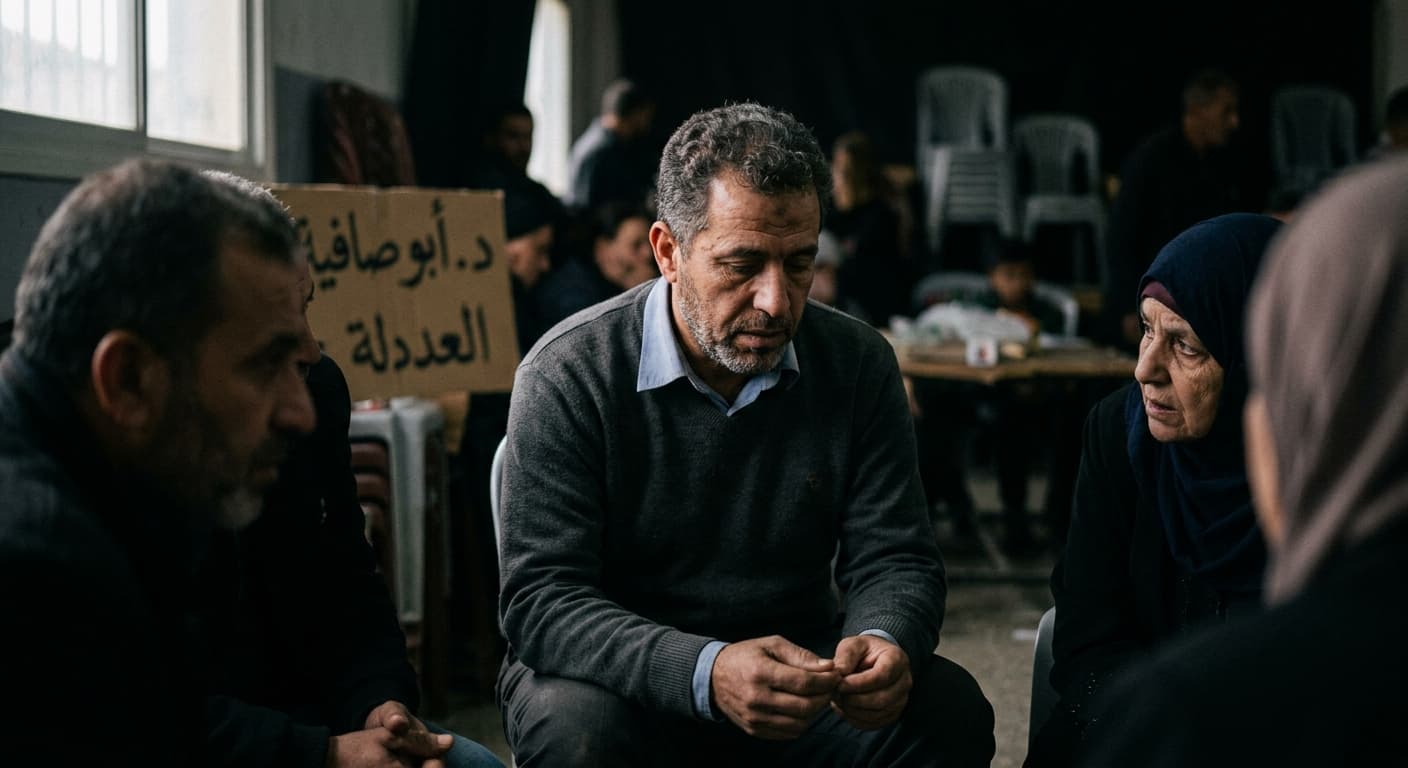
UN Rules Abu Safiya Detention Arbitrary — Israel Ordered to Release Gaza Doctor
Three UN bodies in 72 hours ruled Israel's detention of Dr. Hussam Abu Safiya arbitrary and possibly criminal — a treaty-body verdict on a system holding 9,500 Palestinians without charge.
In the space of 72 hours, three separate United Nations human-rights mechanisms formally demanded that Israel release Dr. Hussam Abu Safiya, the paediatrician and director of Gaza's Kamal Adwan Hospital held without charge since December 27, 2024. The UN Working Group on Arbitrary Detention published Opinion 14/2026 on July 6, 2026 finding his detention arbitrary under three separate categories of international law; four Special Rapporteurs demanded his release on July 7; and on July 8 the UN Commission of Inquiry on the Occupied Palestinian Territory said the treatment of Abu Safiya and other detainees "likely amount[s] to international crimes." The individual case is now doing something larger: it is being used by UN treaty bodies to convert Israel's 2002 Unlawful Combatants Law from a domestic security instrument into a documented pattern of systemic arbitrary detention.
That is the leverage story. The individual verdict is the wedge. The Working Group told member states that Abu Safiya's file is one of many that "may indicate a widespread or systematic practice of arbitrary detention" — language designed to travel from Geneva to national courts, universal-jurisdiction prosecutors and arms-transfer reviews. What is being tested is not Israel's grip on one detainee, but the treaty architecture built to constrain wartime states from the inside.
What the UN actually ruled
The Working Group on Arbitrary Detention is a five-member panel established by the UN Commission on Human Rights in 1991. It hears individual complaints and adopts formal opinions. Opinion 14/2026, dated June 3 and released publicly on July 6, ran a full quasi-judicial procedure: a communication was transmitted to Israel on July 30, 2025; Israel filed no reply. The panel found Abu Safiya's detention arbitrary under Category I (no legal basis), Category III (grave fair-trial violations), and Category V (discrimination), citing multiple articles of the Universal Declaration of Human Rights and the International Covenant on Civil and Political Rights, to which Israel is a state party. Its remedy: "release [him] immediately and accord him an enforceable right to compensation and other reparations." The advance edited version of the opinion is published on the OHCHR site.
The opinion also contains the numbers that give the case weight beyond one man. Citing figures from the Israel Prison Service as of April 2025, it records "nearly 9,792 Palestinian 'security' inmates, including 1,747 'unlawful combatants,'" and notes that "over 1,402 Palestinian health professionals were killed and over 362 detained by Israeli forces between 7 October 2023 and 18 April 2025."
The following day, four Special Rapporteurs — Tlaleng Mofokeng (health), Francesca Albanese (Palestine), Morris Tidball-Binz (extrajudicial executions) and Ben Saul (counter-terrorism and human rights) — issued a joint press release through OHCHR saying Abu Safiya's detention "is a reflection of Israel's systematic targeting of Palestinian health workers," according to the OHCHR statement of July 7. On July 8, the Commission of Inquiry — chaired by Indian jurist S. Muralidhar — issued its own call for immediate release, saying the reported conduct of Israeli Prison Service guards "raise[s] grave concerns of violations of international law that likely amount to international crimes," as
Al Jazeera reported.
The instrument at issue: the Unlawful Combatants Law
Abu Safiya is not held under a criminal indictment. He is held under Israel's Incarceration of Unlawful Combatants Law, 5762-2002, which permits indefinite detention on classified evidence and has been renewed against him repeatedly, most recently on June 16, 2026, when Israel's Supreme Court declined his appeal and extended his detention to at least October. According to Al Jazeera, the ruling left him in solitary confinement in Nafha Prison.
The Israel Defense Forces say Abu Safiya held the rank of colonel in the health department of Gaza's Hamas-run interior ministry — an agency providing medical treatment to police and their families — and was apprehended "for suspected involvement in terrorist activities," the BBC reported. Colleagues and international aid groups that worked with him deny any operational cooperation with Hamas. The Israel Prison Service told the BBC that allegations of mistreatment were "false and without factual basis."
The scale of the regime around him is the reason UN bodies are pushing. Physicians for Human Rights Israel filed a petition to the Supreme Court on April 30, 2026 for the release of Abu Safiya and 13 other Gaza doctors held without charge. As of March 2026, roughly 9,500 Palestinians were in Israeli prisons — about half of them under administrative detention or the Unlawful Combatants Law, according to figures from B'Tselem and HaMoked circulated through the UN's NGO Action News of April 2, 2026. Amnesty International's
urgent action on West Bank human-rights defender Ayman Bani Owda, issued in April 2026, cites HaMoked's count of 3,358 Palestinians in administrative detention as of February 2026.
Why this ruling travels
Working Group opinions are not self-executing. Israel has ignored them before — the group ruled Salah Hammouri's detention arbitrary in 2018, without effect. What is different this time is the convergence: three UN mechanisms pointing at the same file within a single week, and a Commission of Inquiry explicitly linking the conduct to potential international crimes. That combination has legal reach in three directions.
First, national courts. In September 2025, the Commission of Inquiry already found reasonable grounds to conclude Israel had committed genocidal acts against Palestinians in Gaza, including the targeting of the healthcare system, as its chair confirmed at a UN press conference on October 28, 2025. In June 2026 the Commission followed with a 94-page report finding "reasonable grounds" that Israel is committing genocide, war crimes and crimes against humanity against Palestinian children, the
BBC reported. Each such finding hardens the evidentiary base for universal-jurisdiction cases and for national prosecutors reviewing arms exports.
Second, treaty-body pressure on the Unlawful Combatants Law itself. In November 2025, the UN Committee against Torture said it was deeply concerned about reports of "a de facto state policy of organised and widespread torture and ill-treatment" of Palestinian detainees. Physicians for Human Rights Israel has documented at least 94 Palestinian deaths in Israeli custody since October 2023. The Working Group's Opinion 14/2026 tacitly invites future opinions to be issued as a series — a treaty-body version of pattern litigation.
Third, the domestic Israeli argument. On March 30, 2026, Israel's Knesset passed a Death Penalty for Terrorists Law which, according to the BBC, applies almost exclusively to Palestinians and coincides with 1,283 people being held as "unlawful combatants" without formal charges. UN High Commissioner for Human Rights Volker Türk urged Israel to repeal it, saying it would "institutionalize discriminatory and one-sided justice." The Abu Safiya rulings are being read in Geneva as a deliberate line drawn before executions under that law become possible.
Who benefits, who loses
The immediate beneficiary of a UN pile-on is not Abu Safiya — he remains in solitary confinement, on July 2, 2026 his lawyer Nasser Odeh reportedly could not recognise him, according to PHRI's account carried by Al Jazeera. The beneficiary is the accountability infrastructure. Every additional named UN mechanism attached to the same file raises the political cost for third states of arms transfers, visa concessions and diplomatic cover for Israeli officials sought by the International Criminal Court.
The loser, in the short term, is any narrative that the Unlawful Combatants Law functions as targeted counter-terrorism. Israeli military intelligence's own database, reviewed by +972 Magazine, Local Call and The Guardian, was reported to list only about a quarter of Gazan "unlawful combatant" detainees as suspected Hamas or Islamic Jihad fighters. The Working Group's opinion adopts a similar logic — Abu Safiya's detention has "no legal basis" — and elevates it to formal UN jurisprudence. That is the finding governments will now be asked about in parliaments.
Israel's Foreign Ministry has rejected UN Commission of Inquiry outputs as a "libellous sham" designed to "vilify" Israel — a position it restated when the Commission released its June 2026 children's report. That posture has domestic political logic; it also removes any procedural argument Israel might have made inside Geneva, since it did not file a reply to the Working Group communication.
What to watch
- October 2026 — the current expiry of Abu Safiya's detention order under the Unlawful Combatants Law, upheld by the Israeli Supreme Court on June 16, 2026. A renewal will trigger a new PHRI petition and a follow-up communication from the Working Group under paragraph 20 of its methods of work.
- The PHRI Supreme Court petition on the 14 Gaza doctors — filed April 30, 2026; the government was ordered to respond by early July. A negative ruling would exhaust domestic remedies and open the file to further international mechanisms.
- The Commission of Inquiry's next report to the UN General Assembly Third Committee — following its June 2026 findings on Palestinian children, the Commission's autumn 2026 session will test whether member states move from statements to arms-transfer reviews of the kind its September 2025 report recommended.
- Enforcement of the Death Penalty for Terrorists Law — the Israel Prison Service reportedly began logistical preparations in early 2026. Any first application against a detainee held under the Unlawful Combatants Law would collide directly with the Working Group's Opinion 14/2026 and the Committee against Torture's November 2025 finding.
The Bottom Line
The UN did not free Dr. Hussam Abu Safiya this week — it built the record that will follow Israel's Unlawful Combatants Law into every foreign court, arms-export review and universal-jurisdiction file for the next decade. When three UN mechanisms converge on one prisoner in 72 hours and one of them uses the phrase "likely amount to international crimes," the target is not the individual case; it is the statute. The question now is whether member states treat Opinion 14/2026 as advisory paper or as the trigger it was drafted to be.
Discover more
Global Politics
US-Iran Tensions Rise
Tensions escalate in the Strait of Hormuz as Iran and the US clash over maritime control, with a ceasefire hinging on a contested MoU paragraph.

US Politics
US Launches $166B Tariff Refund Portal
The US is launching a $166 billion tariff refund portal to aid importers hit by Trump-era tariffs, with major implications for trade and supply costs.
US Politics
Congress Targets AI Chatbot Access for Terror
The House passed the Generative AI Terrorism Risk Assessment Act, focusing on AI's role in terrorism and potential surveillance implications.

Conflict & Security
Drone Warfare Killing Aid Workers at Unprec
Over 1,000 humanitarian workers killed in three years as cheap armed drones collapse legal protections. Gaza, Sudan, Ukraine, and DRC see deliberate targeting of aid convoys and hospitals with zero prosecutions.