Trump's Iran War
Congress struggles to assert authority over Trump's military actions.
Model Diplomat3 min readUnited States

Trump's Iran War Hits the 60-Day Clock — Congress Can't Pull the Trigger
The War Powers Resolution deadline hits May 1. With four failed votes and no authorization in sight, the law's bark may be worse than its bite.
The United States is now approaching the legal limit of an unauthorized war. May 1 is the operative deadline under the 1973 War Powers Resolution — 60 days from when Trump notified Congress of military action against Iran — and Congress has failed, four times, to force a resolution. The question is no longer whether Trump will ask for authorization. It's whether the law means anything at all when he doesn't.
Four Votes, Zero Leverage
The numbers tell the story. The Senate voted 47–52 on April 15 to reject a Democratic war-powers resolution, with only Sen. Rand Paul breaking Republican ranks — and Sen. John Fetterman crossing to oppose it. Days later, the House defeated a parallel measure 213–214, a razor-thin margin that underscores just how precarious congressional unity is, even on the question of who gets to declare war. Democrats have now lost four such votes since hostilities began — each time falling short of the threshold needed to compel a withdrawal under the Resolution's framework.
Sen. Tammy Duckworth has led the Senate push, framing the votes around transparency and constitutional authority. House Democratic Leader Hakeem Jeffries has called the conflict "reckless." Neither has the votes to matter. The White House, for its part, argues Trump is acting on inherent commander-in-chief authority — the same constitutional escape hatch every president since Nixon has reached for to neutralize the Resolution.
The Law's Structural Problem
The War Powers Resolution has never successfully terminated a military action in its 53-year history. Presidents routinely dispute the clock's start date — here, there's genuine ambiguity between the notification date and the start of hostilities, with ceasefire periods adding further confusion. Even if the 60-day deadline lapses, the enforcement mechanism is essentially political: Congress would need a veto-proof supermajority to compel withdrawal, which, at 213 votes in the House, is nowhere close.
The real leverage the Resolution creates is reputational and political — not legal. And with Iran ruling out direct talks while Trump dispatches Steve Witkoff and Jared Kushner to negotiate through Pakistan as an intermediary, the administration is simultaneously prosecuting a war and pursuing diplomacy — two tracks that give it political cover to simply run out the clock.
For more on the broader international dimensions of the Iran conflict and its ripple effects on energy markets and regional alliances, the diplomatic picture is shifting fast.
What to Watch Next
May 1 is the hard date. If Congress takes no authorizing action before then, the administration will almost certainly declare the conflict legal regardless — and Democrats will have to decide whether to launch a fifth war-powers vote or pivot to attaching conditions to defense appropriations, where the leverage is real. Watch Sen. Paul: if he recruits even two more Republican senators, the Senate math shifts. Watch the Strait of Hormuz disruption data — prolonged economic pain from energy price spikes is the one variable that could move Republican votes faster than any constitutional argument.
The law sets the clock. Only politics resets it. Right now, the White House is betting Congress won't.
Discover more
Global Politics
Trump's Conflicting Messages on Iran War
Trump's mixed messages on Iran reflect a strategy of audience management, benefiting Tehran amid a complex geopolitical landscape.

Conflict & Security
Drone Warfare Killing Aid Workers at Unprec
Over 1,000 humanitarian workers killed in three years as cheap armed drones collapse legal protections. Gaza, Sudan, Ukraine, and DRC see deliberate targeting of aid convoys and hospitals with zero prosecutions.

Global
World Normalises Taliban as Afghan Women Eras
UN data shows Afghan women erased from public life as Russia recognises the Taliban, EU hosts officials in Brussels, and ICC warrants for gender persecution go unenforced.
Conflict & Security
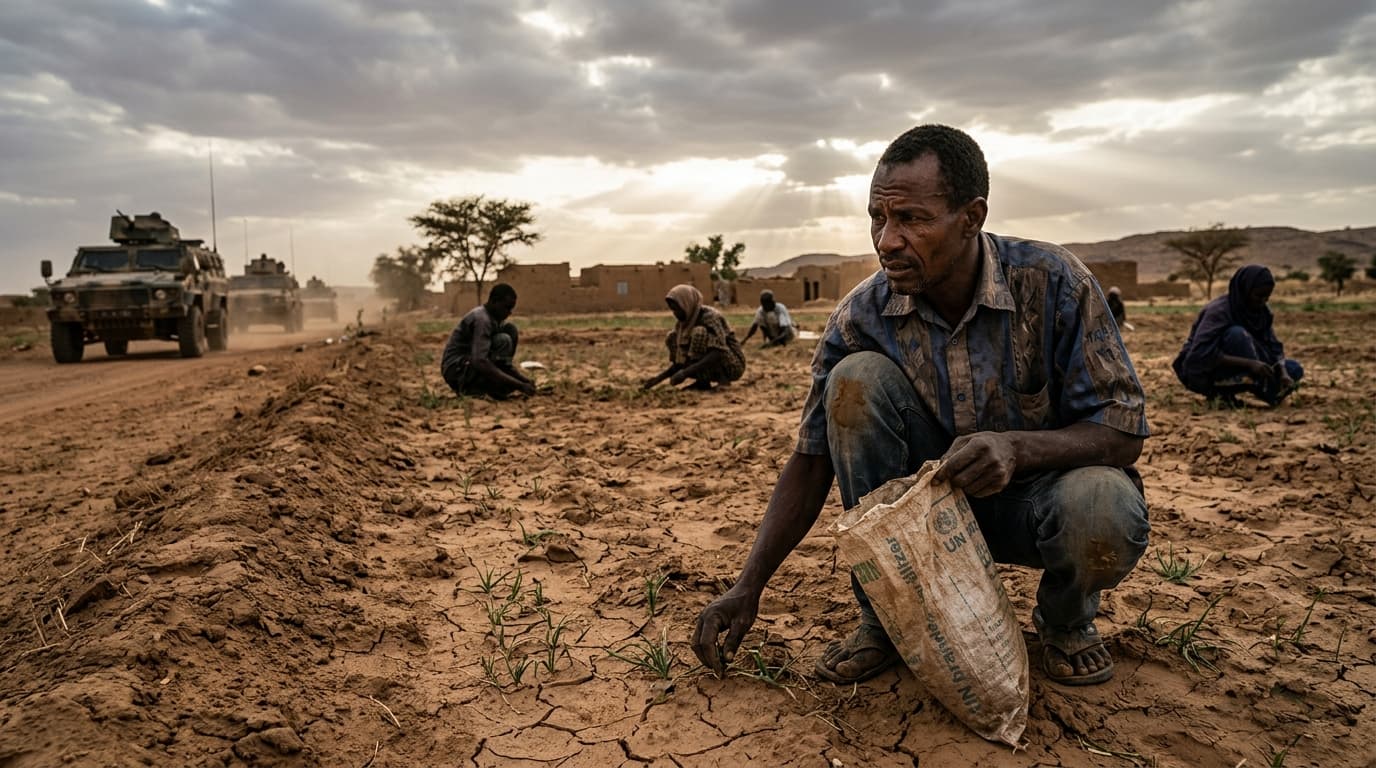
West Africa Food Crisis: Three Shocks in 2026
Conflict, climate extremes, and the Strait of Hormuz closure drive a severe food crisis in West and Central Africa, with fertilizer prices surging 80% and millions displaced.