Trump's Approval Crisis Threatens GOP Redistr
Republicans face challenges as Trump's approval plummets.
Model Diplomat3 min readUnited States
Trump's Approval Collapse Leaves the GOP Map Gamble Exposed
With disapproval hitting 67% and the Iran war backfiring, Republicans' mid-decade redistricting push faces diminishing returns ahead of the 2026 midterms.
Donald Trump opened an Oval Office event Thursday by admitting his own drug-pricing executive order probably wouldn't move his poll numbers. He's right to be worried — and the redistricting gamble his party is running may not save him.
The math is bleak. The CNN Poll of Polls for April 16–20 puts Trump at 33% approval / 67% disapproval, a 34-point gap that marks the worst stretch of his second term. The
NBC News Decision Desk finds 67% of Americans disapproving of his handling of the Iran war, with 54% disapproving strongly. Only 32% approve of his management of inflation and the cost of living. These aren't soft numbers that a news cycle can reverse — they are structural.
The Redistricting Bet Isn't Paying Off
Republicans bet that an aggressive mid-decade redistricting push — unprecedented in scope — would lock in a House majority regardless of the political environment. The strategy involved pressuring friendly state legislatures to redraw maps ahead of 2026, with Missouri courts greenlighting Trump-backed districts in late March, and Florida scheduling a redistricting special session for April 28.
The problem: it isn't working as designed. A Washington Post review found that Democrats have countered effectively, limiting GOP gains and leaving Republicans with "no stronger footing in the House." Gerrymandering compresses margins; it does not absorb a 34-point disapproval gap. When a wave builds, packed and cracked maps become liabilities — artificially competitive districts flip, and the party that drew the lines loses more seats than a neutral map would have produced.
Iran Is the Accelerant
Trump's Iran conflict — which US allies have broadly refused to join — is driving both the foreign-policy and economic drags simultaneously. Higher energy costs and Red Sea shipping disruptions are feeding directly into the inflation numbers that already define his worst polling category. British PM Keir Starmer, Italian PM Giorgia Meloni, and Japanese leadership have all distanced themselves from the conflict, denying Trump the allied legitimacy that might soften the domestic optics. The IMF has warned of global growth slowing to 2.5% this year, with energy-dependent allies absorbing the worst of it.
For US politics broadly, the pattern is familiar: a second-term president with underwater approval, a foreign conflict with no clear exit, and an economy that voters feel in their grocery bills. The redistricting overlay is new — but maps can only do so much.
What to Watch Next
April 28 is the first hard date: Florida's redistricting special session. If Republicans push through a maximally aggressive map and it faces immediate legal challenge under the state's Fair Districts Amendment, the resulting uncertainty will cloud House seat projections through summer. More critically, watch whether any Republican senator breaks publicly on the Iran conflict before the Memorial Day recess — that's the signal that the 2026 calculus has shifted from damage control to triage.
Discover more

US Politics
Next Generation Republicans
A leaked survey shows 39% of Republicans under 30 do not identify as MAGA, revealing a split in the GOP's future leadership.

Conflict & Security
Drone Warfare Killing Aid Workers at Unprec
Over 1,000 humanitarian workers killed in three years as cheap armed drones collapse legal protections. Gaza, Sudan, Ukraine, and DRC see deliberate targeting of aid convoys and hospitals with zero prosecutions.

Global
World Normalises Taliban as Afghan Women Eras
UN data shows Afghan women erased from public life as Russia recognises the Taliban, EU hosts officials in Brussels, and ICC warrants for gender persecution go unenforced.
Conflict & Security
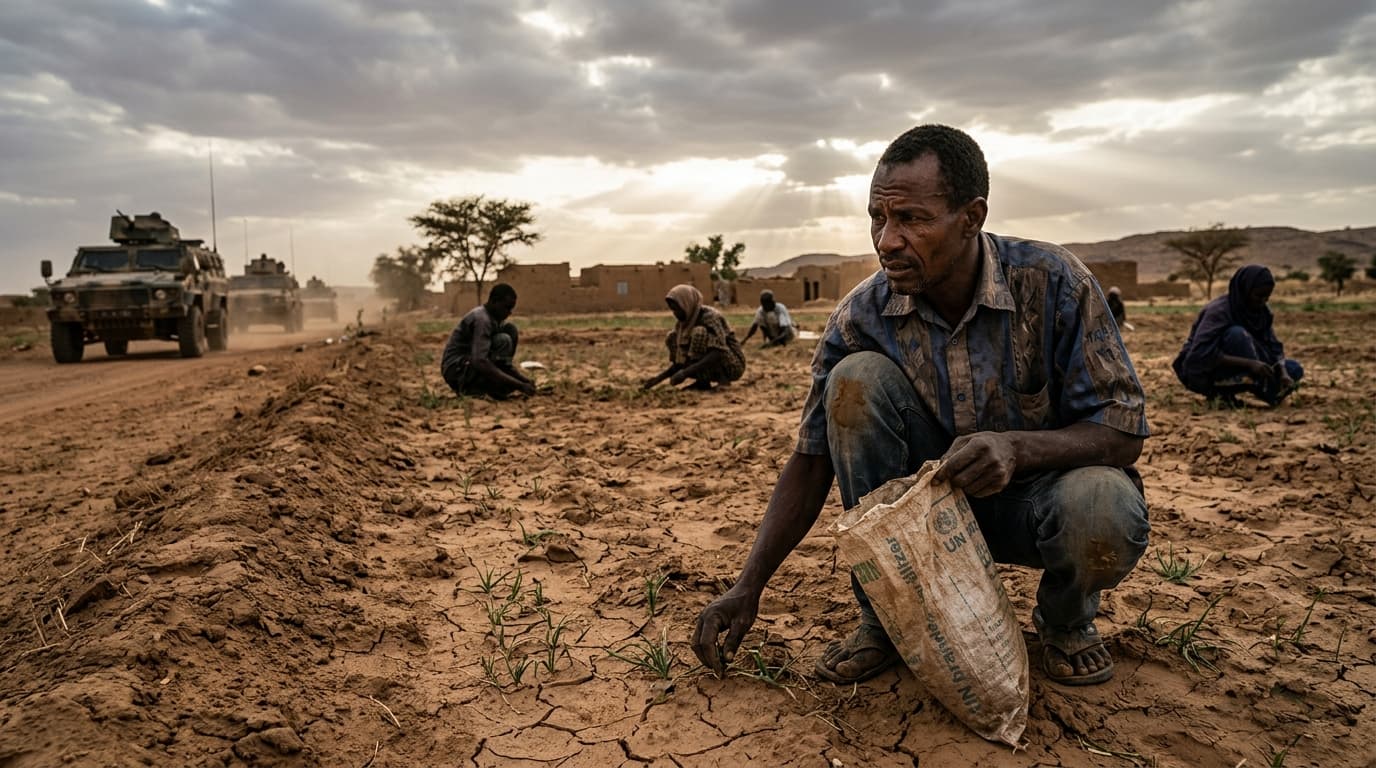
West Africa Food Crisis: Three Shocks in 2026
Conflict, climate extremes, and the Strait of Hormuz closure drive a severe food crisis in West and Central Africa, with fertilizer prices surging 80% and millions displaced.