Trump's AI Review Fight
The White House's AI testing battle reveals deeper government tensions.
Model Diplomat3 min readNorth America
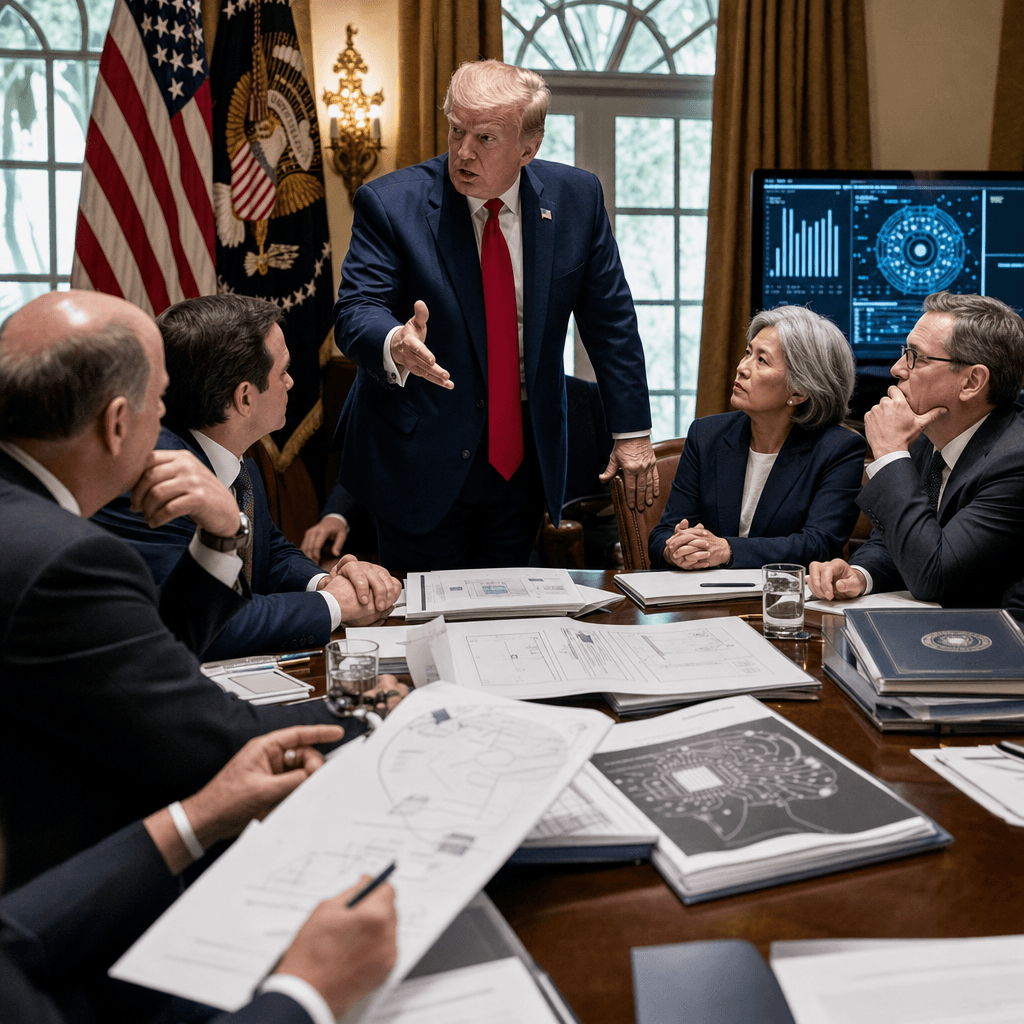
Trump’s AI Review Fight Is About Who Gets the Gate
The White House is edging toward pre-release AI testing, but the real battle is over which part of government gets to control it — and which firms get squeezed.
The newest AI policy fight in Washington is not about whether the government should have a say. It is about who owns the say. The White House is considering an executive order that would create a voluntary pre-launch review for frontier AI models, with companies sharing advanced systems with the government before public release, according to CNN (CNN). Politico’s West Wing Playbook framed the issue as an internal turf battle: national security officials want a larger role, while the administration’s earlier light-touch posture is being strained by cybersecurity fears (
Politico).
The leverage is shifting toward security agencies
This is the key shift for US Politics: AI policy is moving from a pure innovation question to a national security process. CNN reported that one draft EO splits the issue into cybersecurity and “covered frontier models,” with a voluntary clearinghouse built around the Treasury Department and other agencies to find vulnerabilities before deployment (
CNN). That matters because it gives the government a formal channel to inspect models before they hit the market — even if the order stays voluntary.
The early beneficiaries are the agencies already positioned to test models, especially the Commerce Department’s National Institute of Standards and Technology and its Center for AI Standards and Innovation. NIST has already been running pre-deployment evaluations on models from Google, Microsoft and xAI, after announcing expanded industry partnerships earlier this month (CNN). The losers are the companies that want speed, not scrutiny. A review period — CNN reported one draft contemplated 90 days, while industry preferred 14 — would slow product launches and widen the advantage for firms with deeper compliance budgets (
CNN).
Anthropic’s breakthrough forced the issue
The policy drift did not happen in a vacuum. Washington Post reporting says Anthropic’s “Mythos” model — described as unusually strong at cybersecurity tasks — jolted the administration into reconsidering its hands-off line (The Washington Post). That pressure explains why the White House is now entertaining a process it previously resisted. In other words, the government is not regulating AI because it has suddenly become more philosophical; it is doing it because the frontier systems are now good enough to expose real weaknesses in federal and private networks.
That also explains the split inside the administration. The security side sees a chance to harden systems before a model is broadly released. The tech-growth side sees another federal choke point. Anthropic, for its part, has benefited from the debate even while fighting with the Pentagon over military use of its tools; the company has pushed safety guardrails while rivals have won defense contracts and government access (CNN,
The Washington Post). That leaves Anthropic in a paradoxical position: it helped trigger tighter oversight, but the new framework may also favor larger incumbents with the resources to satisfy it.
What to watch next
The next decision point is whether Trump signs an executive order as soon as Thursday, as CNN reported, and whether it stays voluntary or becomes the first step toward a harder federal review regime (CNN). Watch two things: whether national security agencies get a formal seat in model evaluation, and whether the White House freezes out or incorporates the firms that can least afford delay. If the order lands, the real battle will move from policy chatter to implementation — and that will decide who controls the AI gate in Washington.
Discover more
US Politics
Congress Targets AI Chatbot Access for Terror
The House passed the Generative AI Terrorism Risk Assessment Act, focusing on AI's role in terrorism and potential surveillance implications.
Global Politics
Trump's Conflicting Messages on Iran War
Trump's mixed messages on Iran reflect a strategy of audience management, benefiting Tehran amid a complex geopolitical landscape.

Conflict & Security
Drone Warfare Killing Aid Workers at Unprec
Over 1,000 humanitarian workers killed in three years as cheap armed drones collapse legal protections. Gaza, Sudan, Ukraine, and DRC see deliberate targeting of aid convoys and hospitals with zero prosecutions.

Global
World Normalises Taliban as Afghan Women Eras
UN data shows Afghan women erased from public life as Russia recognises the Taliban, EU hosts officials in Brussels, and ICC warrants for gender persecution go unenforced.