Slovakia's Druzhba Ultimatum: Pipeline Crisis
Bratislava's veto power over EU sanctions revealed
Model Diplomat3 min readeurope
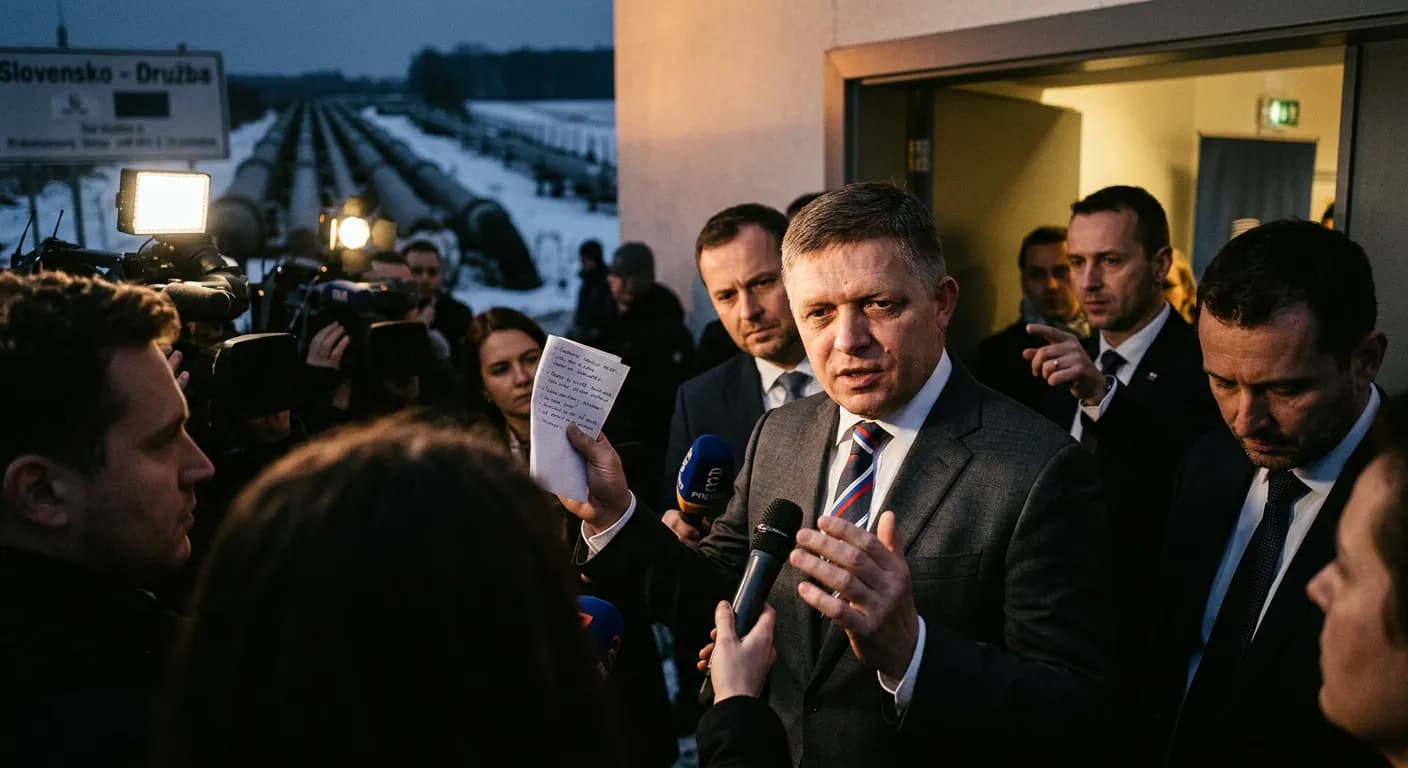
Slovakia's Druzhba Ultimatum: How a Pipeline Became Brussels' Veto Point
Slovak Foreign Minister Juraj Blanár threatened to block the EU's 20th sanctions package in April 2026 unless the Druzhba oil pipeline was restored — a three-month energy hostage crisis that momentarily made Bratislava the decisive veto in Brussels.
On April 16, 2026, Slovak Foreign Minister Juraj Blanár told parliament that Bratislava would not approve the European Union's 20th package of sanctions against Russia until it received "clear, transparent and verifiable" guarantees that the Druzhba oil pipeline would resume operations, as reported by Pravda Slovakia. "If the Druzhba oil pipeline is not operational and if the 20th package has been approved, we will not accept it," Blanár said, adding that Slovakia had "no other tools" to pressure Ukraine and the European Commission, according to
Xinhua.
The threat was not bluster measured against Slovakia's actual leverage. EU sanctions require unanimity — a single member state can hold the entire package hostage, and Bratislava was doing exactly that.
The pipeline as a weapon
The crisis traces to January 27, 2026, when a Russian attack struck the Brody pumping station in western Ukraine's Lviv region, severing oil flows through the Soviet-era Druzhba pipeline to Hungary and Slovakia. Satellite images obtained by the BBC showed a major oil storage tank smouldering for days; Ukrainian engineers could only work during daylight hours because of nightly air raids. Both landlocked countries, which secured exemptions from the EU's 2022 ban on Russian seaborne oil, saw their refineries cut off from their primary crude supply.
Viktor Orbán and Robert Fico — the EU's two most Russia-aligned leaders — accused Kyiv of a political stall, not a technical repair. Hungary blocked both the €90 billion EU loan to Ukraine and the 20th sanctions package as early as February. Slovakia declared an oil emergency, released strategic reserves, and threatened to cut emergency electricity exports to Ukraine, as Al Jazeera reported.
The standoff held for nearly three months. Then the political arithmetic shifted.
Hungary exits the veto seat
Orbán's Fidesz party suffered a decisive defeat in Hungary's April 12 parliamentary elections. His successor-in-waiting, Péter Magyar, signalled readiness to drop Budapest's veto once he takes office. That left Slovakia as the last blocker — and Fico seized the moment. European Pravda noted that Fico had explicitly said he wanted to "assume Orbán's position" on the matter.
Blanár's April 16 statement was, in effect, Bratislava's price: restore the pipeline, or no sanctions package. Critically, the minister carved out the Ukraine loan — Slovakia would not block it, having secured an opt-out from guarantees and interest repayments alongside Hungary and the Czech Republic.
The gambit worked. On April 21, President Volodymyr Zelenskyy confirmed repairs were complete. Pumping resumed the following day. On April 23, EU ambassadors gave preliminary approval to both the sanctions package and the loan; formal sign-off followed on April 24, as the BBC reported.
What to watch next
The pipeline is flowing, the sanctions passed, the loan is disbursing. But the episode reveals a structural vulnerability that Fico will exploit again.
First, Druzhba remains the choke-point. Slovakia has not diversified away from Russian crude despite the EU exemption being explicitly temporary. The Adria pipeline from Croatia can partially substitute, but Slovak refineries — like Hungary's MOL-owned Slovnaft — are configured for Russian-grade crude. Every future outage, whether from Russian attack or Ukrainian repair delays, hands Fico leverage.
Second, Fico's broader posture is hardening, not softening. He has refused to participate in NATO-backed military aid programs, opposes new European military assistance to Ukraine, and declined to join commitments at the Ankara NATO summit. The pipeline victory will likely embolden him to test Brussels on other fronts.
Third, the €90 billion loan package's first tranche is expected in Q2 2026, with €16.7 billion for Ukraine's budget and €28.3 billion for defence procurement — including Ukrainian-made drones. Whether Fico seeks to disrupt future tranches when the political benefit outweighs the cost is an open question.
The immediate crisis is resolved. The architecture that produced it remains intact.
Discover more
US Politics
SNAP Food Assistance Faces Legal Challenges
In 2026, SNAP faces stricter eligibility rules and mounting legal challenges, threatening food assistance for the millions of Americans who rely on the program.

India
India-South Korea $50B Trade Expansion Plan
India and South Korea target $50 billion in bilateral trade by 2030, focusing on industrial cooperation and strategic alignment amid US pressures.
US Politics
Congress Targets AI Chatbot Access for Terror
The House passed the Generative AI Terrorism Risk Assessment Act, focusing on AI's role in terrorism and potential surveillance implications.

Conflict & Security
Drone Warfare Killing Aid Workers at Unprec
Over 1,000 humanitarian workers killed in three years as cheap armed drones collapse legal protections. Gaza, Sudan, Ukraine, and DRC see deliberate targeting of aid convoys and hospitals with zero prosecutions.