RBI Warns of Supply Shock Impacting India
RBI warns of supply pressures impacting India's economy.
Model Diplomat3 min readAsia

RBI Flags Supply Shock as India Growth Outlook Softens
[Domestic demand is still holding India up, but the RBI now sees West Asia-linked supply pressure, higher food costs, and oil volatility as the main near-term risk.]
India’s macro story has shifted from demand weakness to supply shock. In its State of the Economy note, the RBI said the near-term outlook is “somewhat clouded by supply side pressures” even as domestic demand remains the main engine of growth, with headline inflation still inside the tolerance band but needing close monitoring for pass-through from higher costs (The Indian Express;
The Hindu).
Why the RBI is sounding cautious
The RBI’s warning is not about a collapse in activity; it is about the cost of keeping activity going. The central bank says the West Asia conflict is still disturbing commodity markets, trade routes and supply chains, with crude prices, financial conditions and capital flows now the main external vulnerabilities (The Indian Express;
The Hindu).
That matters because India is entering a phase where inflation pressure can come from places monetary policy cannot quickly fix. April CPI rose to 3.5%, driven largely by food inflation, while wholesale inflation jumped to 8.3%, a 42-month high, led by fuel and power prices (The Indian Express). The RBI is effectively saying the headline number still looks manageable, but the pipeline is getting warmer.
Who is cushioned, and who is exposed
India is not entering this shock from a weak position. The RBI says foreign exchange reserves still cover about 11 months of goods imports and roughly 90% of external debt outstanding, while robust services exports and positive net FDI help absorb some of the pressure (The Indian Express;
The Hindu). That gives the central bank room to wait rather than react with a rushed policy move.
But the sectors most tied to imported energy and freight are already on alert. The RBI’s own minutes said elevated energy and commodity prices, plus Strait of Hormuz disruption, could drag on domestic production and squeeze downstream industries; The Hindu reported the same concern in the MPC record, noting the risk that supply disruption could become a broader demand shock if it persists (The Hindu;
The Hindu).
For now, the beneficiaries are the usual ones in a shock-driven economy: firms with pricing power, exporters with diversified demand, and policymakers who can point to healthy reserves and rural resilience. The losers are the energy-intensive sectors, import-dependent manufacturers, and households already facing firmer food and fuel bills.
What to watch next
The next test is whether this remains a controlled inflation scare or turns into something broader. The RBI noted that high-frequency food data up to May 19 already pointed to a marginal uptick in wheat and rice prices, while its April report also flagged that inflation pass-through needs monitoring (The Indian Express). If oil stays elevated, if weather turns adverse, or if the West Asia disruption widens, the RBI will have less room to protect growth without losing control of prices.
For now, India’s buffer is real — but so is the vulnerability. The next inflation print and the next RBI policy readout will show which force is winning.
Discover more
India
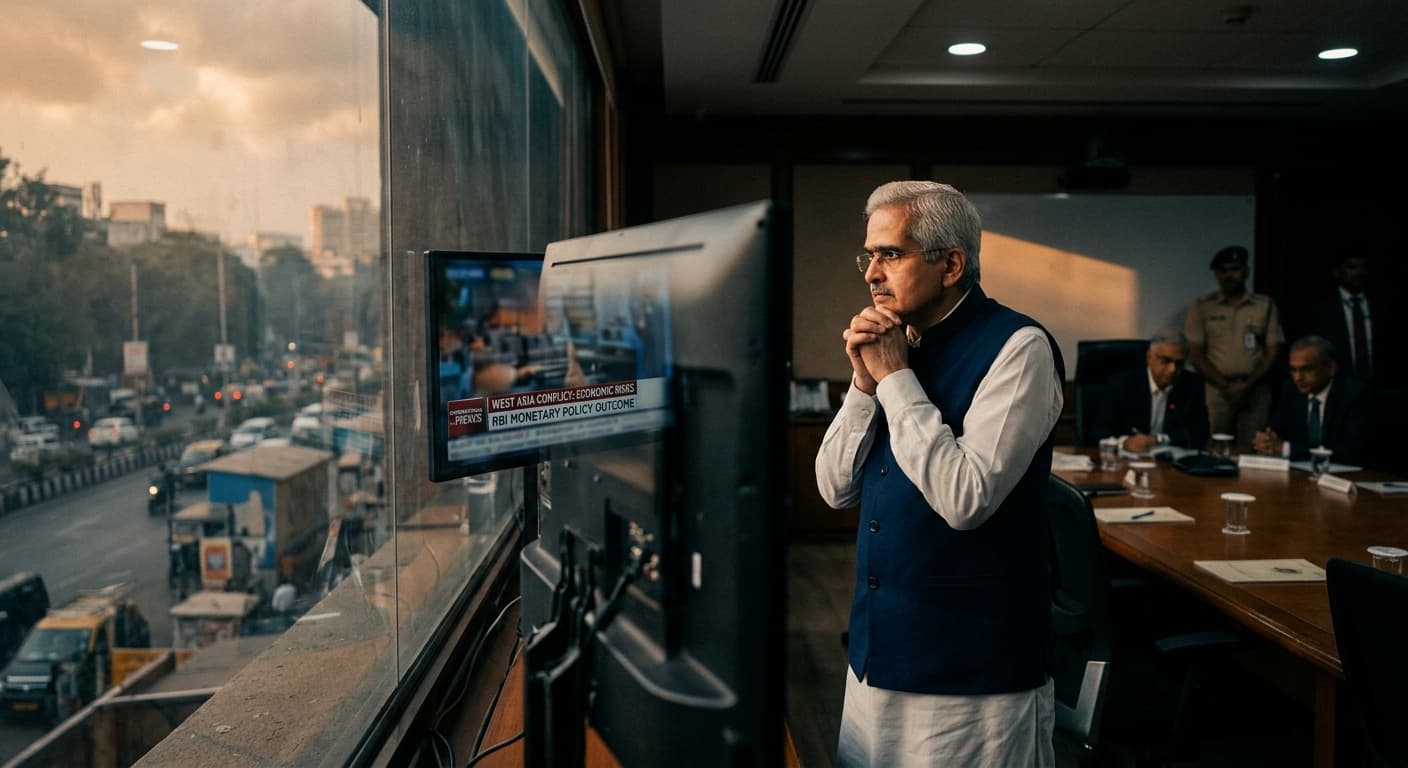
RBI Holds Rates Amid West Asia Conflict
India's RBI keeps interest rates steady, citing the West Asia conflict as a key risk to inflation and the economic outlook amid heightened global uncertainty.
India
Rupee's Slide to 94.90
The rupee's slide to 94.90 against the dollar shows global risks, oil prices, and foreign outflows outweighing domestic sentiment, testing the RBI's defenses.
India
RBI-ECB Pact Strengthens India-Europe Ties
India's RBI and the ECB are deepening ties through a new pact, strengthening financial diplomacy and building a closer monetary bridge between India and Europe.
India
Rupee Decline: FPIs Maintain Control
Persistent selling by foreign portfolio investors has driven the rupee to record lows, showing how much leverage FPIs still hold over India's currency.