Northwest, Central India Heatwave Stretches to May 29
IMD says relief starts only on May 29, after several more days of extreme heat that is straining power demand and public health across northern India.
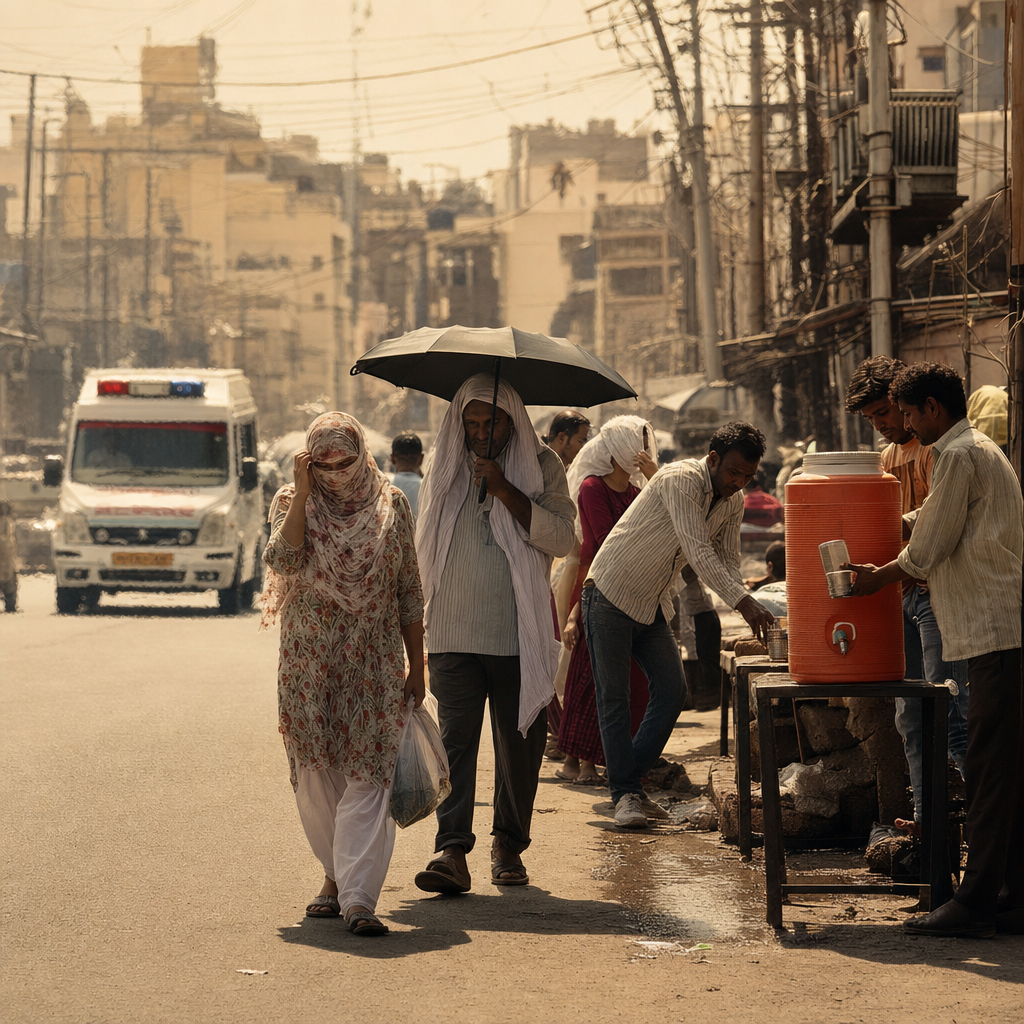
The India Meteorological Department says relief only from May 29 for northwest and central India, after heatwave conditions hold for three to four more days across Punjab, Haryana, Delhi, Uttar Pradesh, Rajasthan, Madhya Pradesh and Vidarbha, with warm nights in several of those states and humid heat farther east and south ( The Indian Express). For
  India, that makes this a short-term governance test: the risk is not just the temperature, but how much damage piles up before the cooldown arrives.
The leverage sits with the weather office
IMD’s forecast is doing more than describing the weather; it is setting the timeline for local authorities. The agency says temperatures should start easing on May 29, except in parts of Rajasthan, which means state governments can only plan temporary fixes — water tankers, revised work hours, school advisories and load management — until then (The Indian Express). That matters because the heat is not a one-day spike. Warm night conditions are also likely in Uttar Pradesh, Madhya Pradesh, Telangana, Vidarbha and Odisha, which reduces recovery time and raises health risk (The Indian Express).
The power system is already absorbing the shock
India’s grid is under visible strain. The power ministry said peak demand reached 270.82 GW on May 22, the fourth straight day of record highs, as cooling use surged during the heatwave ( CNA). It said demand was met, but the warning is clear: older wiring and transformers are more vulnerable in this kind of weather, and localised blackouts become more likely if the heat persists (CNA). This is the second-order story behind the weather bulletin. The first-order story is temperature; the political pressure comes when air conditioners, hospitals and water pumps all compete for the same strained system.
The wider cost is already visible
The human toll is not theoretical. AFP reported at least 16 heatstroke deaths in Telangana this summer, with officials urging statewide vigilance as temperatures stayed above 45C in parts of the country ( BSS News). Even where fatalities are lower, the combination of daytime heat and hot nights hits outdoor workers, the elderly and children first. That shifts the response from weather messaging to operational management: water, health services, transport, labour enforcement and power scheduling all have to run in sync. This is the kind of stress point that belongs on Global Politics: climate pressure is no longer abstract, it is an administrative burden.
What to watch next
The next decision point is May 29. If IMD’s cooling arrives on schedule, authorities can start unwinding emergency measures across north and central India; if it slips, Rajasthan, Madhya Pradesh and Uttar Pradesh will keep carrying the heat into early June (The Indian Express). Watch for the next IMD bulletin, state heat advisories and whether power demand eases as fast as temperatures do.