Nigeria's ₦8.83tn Off-Budget Spending Crisis
Atiku and Obi demand probe into fiscal transparency issues.
Model Diplomat9 min readAfrica
Nigeria's ₦8.83tn Off-Budget Hole: Atiku, Obi Force a Fiscal Reckoning
Atiku and Obi demand a probe after the IMF flagged ₦8.83 trillion in unreported 2025 spending — the biggest fiscal transparency test of Tinubu's tenure.
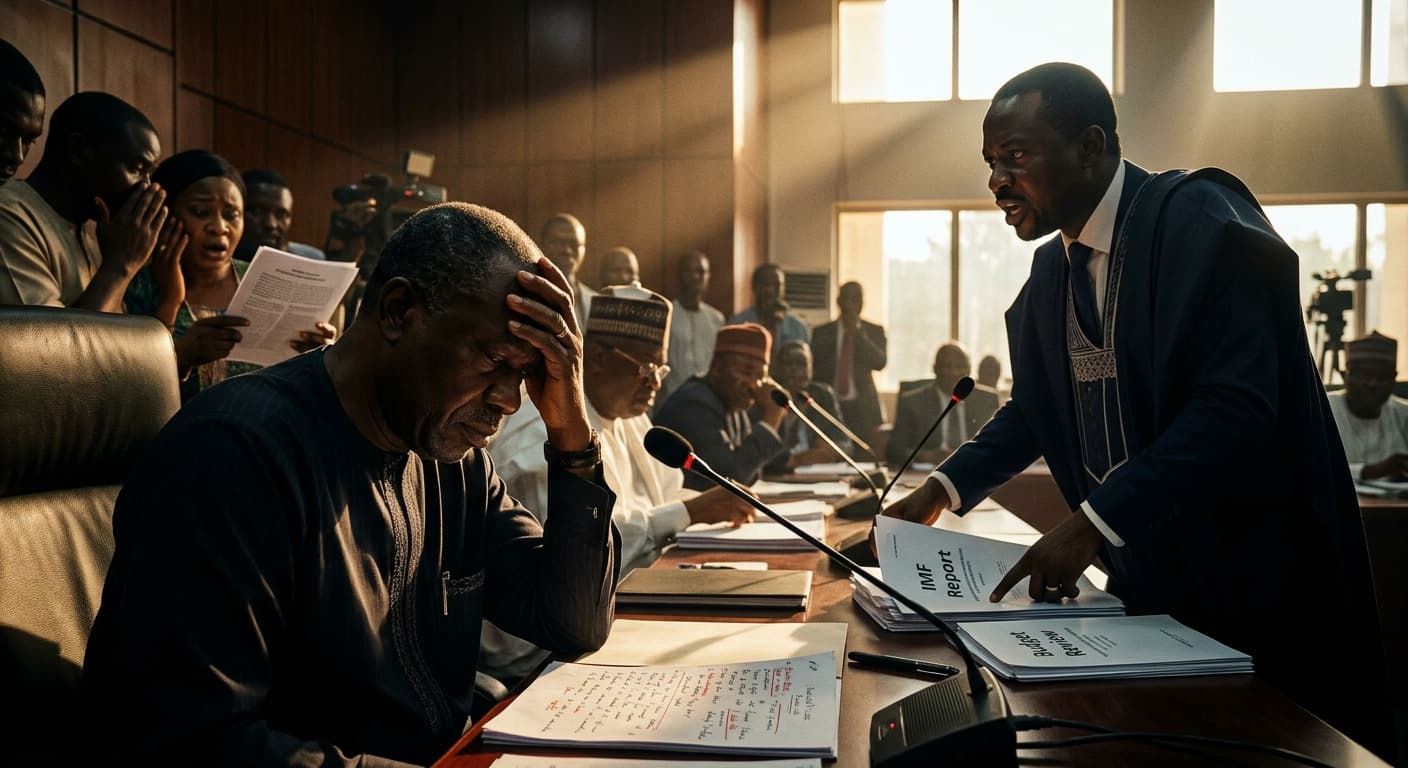
The single most consequential number in Nigerian politics this week is ₦8.83 trillion — roughly US$6 billion, or 2% of GDP — that the International Monetary Fund says the federal government spent in 2025 without recording it in the official budget. On July 5, 2026, former Vice President Atiku Abubakar and former Anambra governor Peter Obi seized on that finding to demand a formal probe of the Tinubu administration, with Obi calling for the president's resignation. The story is not that opposition politicians are attacking the government; it is that the IMF's own Executive Board — after concluding its Article IV consultation on June 1, 2026 — put fiscal transparency at the centre of its assessment of Africa's largest economy, and Abuja is now trapped between a technical defence that concedes the point and a political attack that turns a classification dispute into a corruption charge 18 months before the 2027 election.
What the IMF actually said
The relevant primary document is IMF Country Report 26/125, released after the Board meeting on June 1, 2026. Its press release notes that Directors, "highlighting concerns about off-budget spending and complex financing instruments… called for accelerating reforms to strengthen the budget process, public financial management, fiscal reporting and risk framework, transparency, and accountability," according to the IMF Executive Board statement. That language is the operative smoking gun: it is the Fund's Board — not a staffer — putting the issue in writing.
The specific ₦8.83 trillion figure came later, from Christian Ebeke, the IMF's Resident Representative in Nigeria, at a Lagos event in late June. "So far, we think that there is about two per cent of GDP of expenditure that is not reported, and it should be reported and recorded, so that this statistical discrepancy will disappear," Ebeke said, in remarks first widely reported by BBC News Pidgin. Applied to Nigeria's 2025 nominal GDP of ₦442 trillion in the Fund's tables, 2% resolves to the ₦8.83 trillion headline now dominating Nigerian front pages.
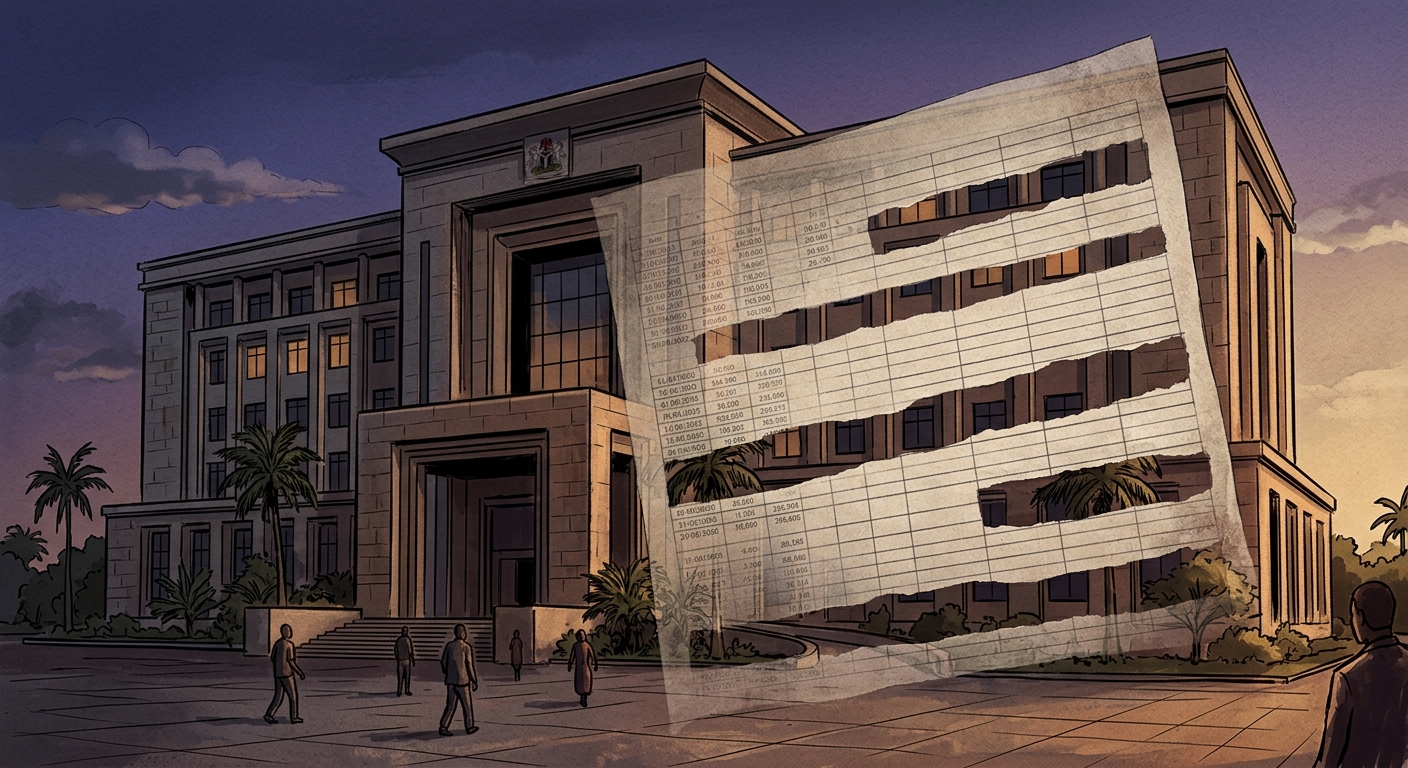
The Board report itself is even more damaging in one respect: it acknowledges that "some additional capital spending that took place outside the budget perimeter has now been included in the budget through the repeal and reenactment bills." Translation — the government has already implicitly conceded that expenditures existed outside the appropriation act and is retrofitting them into the budget through amending legislation. That is the definition of extrabudgetary spending, not a classification quirk.
The government's rebuttal — and its weak spot
Finance and Coordinating Minister of the Economy Taiwo Oyedele, appointed in the April 21, 2026 cabinet reshuffle that replaced Wale Edun, issued a lengthy denial on Sunday, July 5. "The Federal Government does not operate a 'shadow budget' or spend public funds outside the constitutional and statutory framework established for public finance," he said, according to BBC News Pidgin. Oyedele's core argument is technical: statutory transfers, first-line charges and intervention mechanisms established by Acts of the National Assembly are legally authorised even when they do not appear in the annual Appropriation Act. "Classification differences," he argued, "should not be misrepresented as evidence of unlawful expenditure."
On that narrow point Oyedele is right. Nigeria's federal accounts have long carried first-line charges — statutory transfers to bodies like NDDC, UBEC and the judiciary — that bypass the appropriation process. But the IMF's complaint is not about legality; it is about visibility. When roughly 2% of GDP moves through channels that never surface in the budget document parliament debates, the country's headline deficit and borrowing requirement are systematically understated. That is precisely the point the Board made when it called for reforms to "the budget process, public financial management, fiscal reporting and risk framework."
The 2025 IMF Selected Issues paper on Nigeria had already flagged the problem in a chapter titled "Fiscal Forecasting Errors in Nigeria," which documented persistent gaps between projected and outturn expenditures, per the IMF Country Report 25/158. This week's controversy is the culmination of a two-year staff drumbeat, not a bolt from the blue.
Why ₦8.83tn actually matters
Strip out the political theatre and the number does real work on three fronts.
One: the debt picture is worse than the official one. Nigeria's total public debt reached ₦159.28 trillion at end-2025, roughly 39.4% of rebased GDP, according to a peer-reviewed macro survey by Olaniyi Evans in Hequation Review. The IMF puts the 2025 consolidated deficit at 4.4% of GDP. Add unreported spending of ~2% of GDP financed somehow, and the true fiscal gap is closer to 6% — a level that puts Nigeria uncomfortably close to the "high risk of debt distress" territory the
Brookings Africa Growth Initiative warned about when external debt exposure crossed 40% of the total stock.
Two: it undercuts the reform narrative. Since May 2023, Tinubu has spent political capital on fuel-subsidy removal and FX unification — the two moves the IMF has celebrated in every Article IV since. The Fund noted that "strong reforms over the past three years have yielded improved macroeconomic outcomes and built resilience." Investor confidence, a successful Eurobond return, and reserves rising to US$46 billion by end-2025 all rest on the credibility of that story. Off-budget spending is a credibility solvent. Rating agencies and Eurobond investors reprice on transparency, not on ministerial denials.
Three: it is bigger than most social ministries. Obi's line — that ₦8.83 trillion exceeds Nigeria's 2026 health and education budgets combined and equals over 35% of the 2025 capital budget — is arithmetically correct and politically devastating. It converts an abstract IMF finding into a comparison every voter understands.
The politics: an opposition that has finally found a common enemy
The most consequential political fact of the week is not the accusation but the coordination behind it. Atiku Abubakar, now flying the flag of the African Democratic Congress (ADC), and Peter Obi, now running under the Nigeria Democratic Congress (NDC), spent 2023 competing to lose the presidential election to Tinubu on splintered opposition votes. Their coordinated statements over the July 4–5 weekend — Atiku demanding EFCC and ICPC probes, Obi demanding Tinubu's resignation, both citing the same IMF number — mark the first substantive alignment between the two camps ahead of 2027.
Atiku's spokesman Phrank Shaibu called it "the biggest fiscal breach in Nigeria's democratic history," per BBC News Yoruba. The Human Rights Writers Association of Nigeria (HURIWA), in a statement carried by
Prime Times, called the revelations a "fiscal emergency" demanding legislative and judicial intervention. That civil-society amplification — HURIWA is not aligned with Atiku or Obi — is what turns a partisan attack into a governance narrative.
The Tinubu camp's exposure is compounded by the BBC News Pidgin fact-check published in the same news cycle, which confirmed that a "Presidential Foreign Intervention Promotion Council" the presidency now claims never existed did in fact appear on pages 50–51 of the 2026 Appropriation Act. Two transparency stories running simultaneously is not a coincidence; it is a pattern, and the opposition will treat it as one.
What the historical parallel actually is
The Nigerian off-budget question is not new — it is the country's oldest governance file. In 2015, the discovery of ₦2.1 trillion in arms-procurement spending outside the appropriation process launched the "Dasukigate" prosecutions. In 2020, the Central Bank of Nigeria's Ways and Means advances to the federal government — later found to have ballooned to over ₦22 trillion — were similarly extrabudgetary until they were securitised into formal debt in 2023.
The pattern is consistent: quasi-fiscal operations, statutory-transfer creep, and central-bank financing accumulate outside the budget for years, then are legalised retrospectively when the numbers become impossible to hide. The IMF's 2025 Selected Issues chapter warned that Nigeria's reliance on such instruments produced systematic forecasting errors that biased official deficits downward. The Fund is now naming the accumulated 2025 slice: ₦8.83 trillion.
The uncomfortable second-order implication for markets is this. If off-budget spending was 2% of GDP in a single year, and if the government's response is to defend the classification rather than publish the underlying items, foreign investors have to price in a hidden fiscal deficit going forward. That widens Eurobond spreads at exactly the moment Nigeria needs cheap dollars to fund a 2026 budget that assumes ₦529 trillion nominal GDP and continued disinflation, per the IMF's Nigeria country page.
What the National Assembly can — and probably won't — do
The constitutional lever is Section 88 of the 1999 Constitution, which empowers either chamber of the National Assembly to investigate any matter within its legislative competence, including how public funds are disbursed. The opposition's demand is essentially for the House Public Accounts Committee and the Senate to open a Section 88 probe.
The problem is arithmetic. The ruling APC and its allies hold decisive majorities in both chambers, and the leadership has spent the past year rejecting motions less politically explosive than this one. Expect a token committee, a long timeline, and a report that treats the matter as a classification issue — precisely Oyedele's framing. The real venue for accountability will be the 2027 campaign, where Atiku and Obi have just been handed the single most quotable number in Nigerian political finance.
Diplomat View
The forecast: the ₦8.83 trillion number becomes the defining fiscal-transparency benchmark of the Tinubu presidency, and by end-2026 the Fund will have secured a formal Nigerian commitment — in either the next Article IV staff report or a technical-assistance MOU — to migrate first-line charges and intervention-fund spending into the appropriation perimeter. Oyedele will lose the classification argument in slow motion, because the IMF Board has already ruled against him and rating agencies read Board language, not ministerial rebuttals. Expect one credit outlook revision to "negative" from Fitch or Moody's within six months if there is no visible remediation plan by the 2027 budget cycle.
What would change the forecast: a credible, itemised disclosure by the Ministry of Finance — project names, amounts, statutory authority, and financing source — for the disputed ₦8.83 trillion within 60 days. That would collapse Obi and Atiku's political case and let the market breathe. The opposite trigger: silence past September, at which point the IMF's next mission (typically Q1 2027) becomes the choke point, and Nigeria negotiates against an election clock.
The falsifiable call: if by December 31, 2026 the Federal Government has not published a line-item reconciliation of the disputed spending, expect a Eurobond spread widening of at least 50 basis points on the 2033 note and formal 2027 campaign coordination between the ADC and NDC around this file.
What to watch next
- September 2026 Q3 GDP release from the National Bureau of Statistics — if oil revenues undershoot again, the pressure to keep intervention spending off-book rises, not falls.
- October 2026 budget submission — the 2027 Appropriation Bill will show whether Tinubu is folding first-line charges into the on-budget perimeter, as the IMF Board demanded on June 1, 2026.
- Q1 2027 IMF staff mission — the moment the "concerns about off-budget spending and complex financing instruments" language is either escalated or softened. That single paragraph in next year's Article IV will move Eurobond spreads more than any Nigerian domestic development.
The Bottom Line
The ₦8.83 trillion is not really about ₦8.83 trillion. It is about whether Nigeria's headline reform story — the one that unlocked Eurobond access, reserves accumulation and disinflation — survives contact with its own accounting. The IMF Board has already said the emperor is partly clothed; Atiku and Obi are simply pointing at the gap. If Tinubu answers with itemised disclosure, the story dies. If he answers with classification arguments, it becomes the frame of the 2027 election.
Discover more
US Politics
Congress Targets AI Chatbot Access for Terror
The House passed the Generative AI Terrorism Risk Assessment Act, focusing on AI's role in terrorism and potential surveillance implications.
India
Rajnath Singh's Durga Squad for 2026 Polls
Rajnath Singh's Durga Squad promised women's safety in Bengal but has since disappeared from the agenda, revealing BJP's true priorities.
India
Congress Advocates 33% Women’s Quota
Congress calls for a 33% women's reservation in the existing 543 Lok Sabha seats, countering Modi's plan to expand the house to 850 seats.

Conflict & Security
Drone Warfare Killing Aid Workers at Unprec
Over 1,000 humanitarian workers killed in three years as cheap armed drones collapse legal protections. Gaza, Sudan, Ukraine, and DRC see deliberate targeting of aid convoys and hospitals with zero prosecutions.