Kerala Vote Count
May 4 vote count tests Kerala's political factions and alliances.
Model Diplomat2 min readAsia

Kerala Count Turns on Congress Factions, Not Turnout
Kerala’s May 4 vote count will test whether Congress factionalism or Left alliance discipline matters more after 79.63% turnout.
Kerala’s immediate power struggle is no longer about mobilizing voters; it is about who can convert alliance discipline into seats when counting begins at 8 a.m. on May 4. The Election Commission has set up 140 counting centres across 43 locations, with 15,465 officials deployed, and postal ballots will be counted first Kerala Assembly elections: Counting arrangements in place for May 4. With turnout at 79.63%, the real leverage now sits with coalition managers — especially the competing Kerala Congress factions whose seat performance could shape the next government’s internal balance
Kerala Assembly elections: Counting arrangements in place for May 4.
Why the factions matter more than the headline result
The sharpest test is not statewide rhetoric but whether Jose K. Mani’s Kerala Congress (M) can prove it still delivers votes after moving from the Congress-led UDF to the Left Democratic Front (LDF) ahead of the 2021 election Kerala elections 2026: May 4 is day of reckoning for State’s Congress factions. That shift gave the LDF access to a Christian agrarian vote base in central Kerala; this count will show whether that bargain still holds.
The key seat is Pala, where Mani’s performance is a proxy for more than one constituency. A strong showing would reinforce his bargaining power inside the LDF and justify the coalition’s investment in him. A weak result would reopen questions about whether the LDF’s alliance expansion delivered durable gains or merely imported a liability Kerala elections 2026: May 4 is day of reckoning for State’s Congress factions.
For the UDF, the benefit of any Kerala Congress underperformance is straightforward: it would validate the argument that defections weakened individual leaders more than the opposition bloc. For the LDF, the benefit of a solid Mani showing is equally clear: it would confirm that coalition breadth still beats factional fragmentation in Kerala’s seat-by-seat politics. This is a state contest, but it feeds directly into broader debates over opposition coherence in India.
What to watch on May 4
Three indicators matter more than the first television tally. First, watch the postal ballot trend, because it sets the tone for early narratives before EVM rounds deepen the picture Kerala Assembly elections: Counting arrangements in place for May 4. Second, watch Pala and other Kerala Congress strongholds, because that is where coalition leverage will be priced in real time
Kerala elections 2026: May 4 is day of reckoning for State’s Congress factions. Third, watch the margin — not just the winner. A narrow verdict would hand disproportionate influence to smaller allies in cabinet formation and future seat-sharing.
For more on the national backdrop, track Global Politics alongside Kerala’s constituency map. The next decision point is simple: who emerges from May 4 with enough seats to govern — and enough internal authority to hold their coalition together.
Discover more
India
BJP Congress Clash Over MP Bill Defeat
The BJP's defeat of the women's quota amendment sparks a political narrative war with Congress, impacting future elections.

Conflict & Security
Drone Warfare Killing Aid Workers at Unprec
Over 1,000 humanitarian workers killed in three years as cheap armed drones collapse legal protections. Gaza, Sudan, Ukraine, and DRC see deliberate targeting of aid convoys and hospitals with zero prosecutions.

Global
World Normalises Taliban as Afghan Women Eras
UN data shows Afghan women erased from public life as Russia recognises the Taliban, EU hosts officials in Brussels, and ICC warrants for gender persecution go unenforced.
Conflict & Security
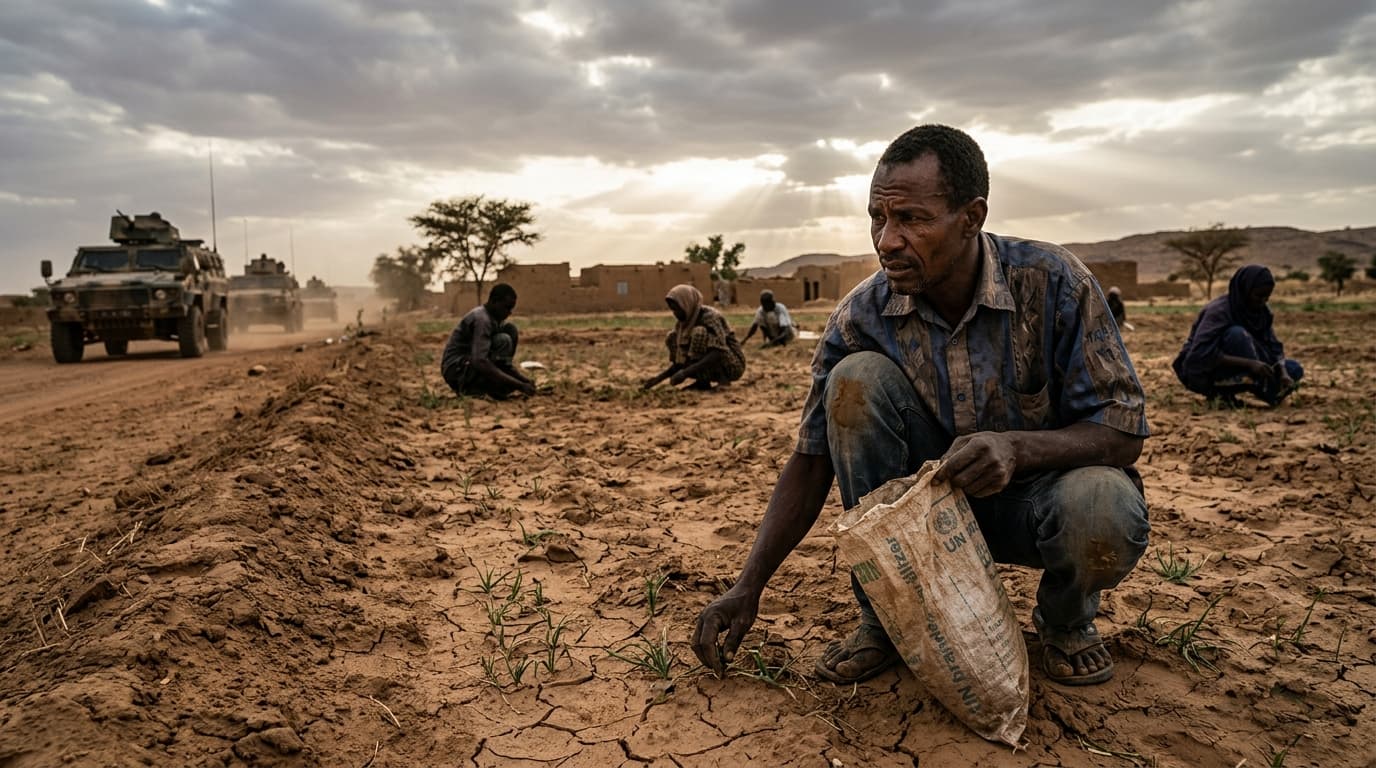
West Africa Food Crisis: Three Shocks in 2026
Conflict, climate extremes, and the Strait of Hormuz closure drive a severe food crisis in West and Central Africa, with fertilizer prices surging 80% and millions displaced.