Keiko Fujimori Wins Peru by 49,641 Votes
Fujimori's narrow victory shapes Peru's Congress and presidency.
Model Diplomat7 min readSouth America
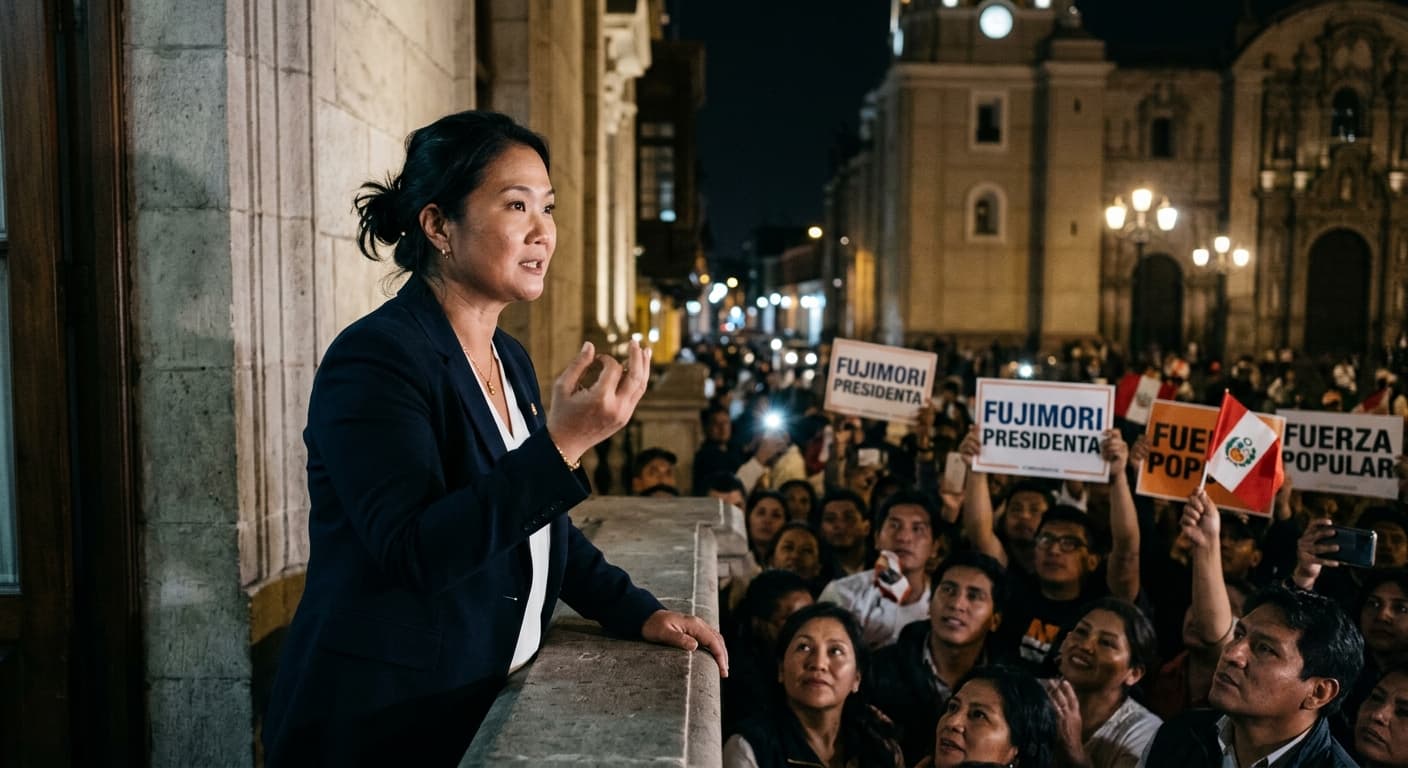
Keiko Fujimori Wins Peru by 49,641 Votes — and Inherits Her Father's Congress
Keiko Fujimori certified winner of Peru's 2026 presidential runoff by 0.27 points as rival Roberto Sánchez concedes. What her Fuerza Popular bloc does next in the restored bicameral Congress will define the presidency.
Peru's electoral court certified Keiko Fujimori as president-elect on July 3, 2026, with 50.135% of the vote to Roberto Sánchez's 49.865% — a margin of 49,641 ballots out of 18.4 million cast — and on July 6 the left-wing challenger conceded, ending three weeks of impugned tallies and fraud allegations that produced no evidence. The decisive fact is not the margin but the Congress that comes with it: Fujimori's Fuerza Popular is the largest single bloc in both chambers of Peru's first bicameral legislature since 1992, the year her father dissolved the last one. She will not have a governing majority. She will have enough votes to block her own removal, shape the new Senate's rules from day one, and lock in the amnesty and anti–Inter-American Court legislation her party has spent two years advancing.
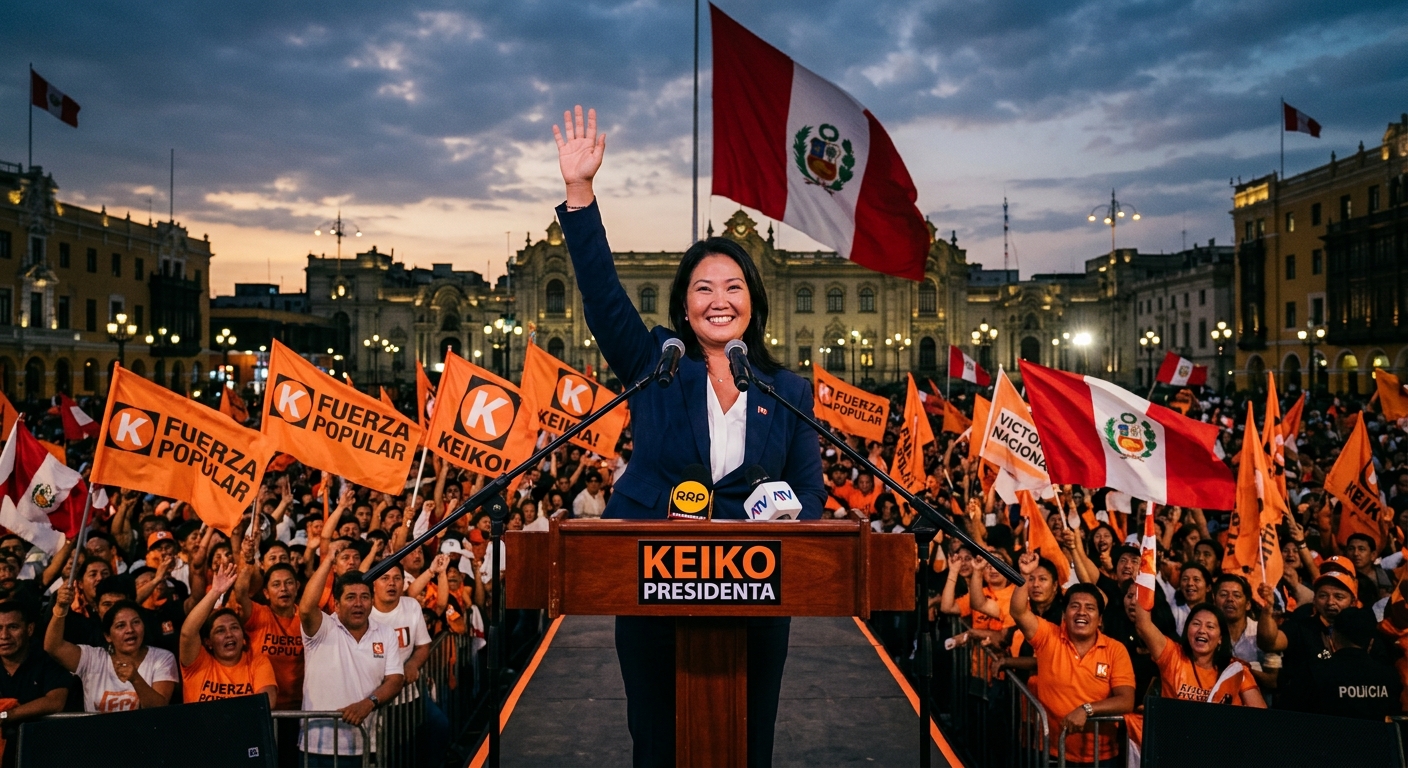
A concession, not a mandate
Sánchez, the former Culture Minister under Pedro Castillo, had spent two weeks calling the runoff "fraudulent" and vowing not to recognise a Fujimori government. On June 23 he told supporters he would "declare" resistance to the result, accusing electoral authorities of manipulating overseas ballots, as Al Jazeera reported. His grievance had a mathematical basis:
BBC Mundo calculated that if only Peruvians resident inside Peru had voted, Sánchez would have won 50.08% to 49.91% — a domestic lead of 32,014 votes. Fujimori took the diaspora by 63.2% to 36.8%, a gap of roughly 81,000 votes that flipped the race.
That is the mirror image of 2021, when Castillo's rural vote overcame Fujimori's urban and expatriate base. The Organization of American States, the European Union observation mission and Peru's own National Jury of Elections found no evidence to back the fraud claim. The EU mission head
Annalisa Corrado said in April observers had "not found objective elements to support the narrative of fraud," a finding the mission reiterated after the June runoff.
Sánchez's decision to concede on July 6 followed his party's failed appeal to nullify the JNE's proclamation. As the BBC noted, Juntos por el Perú had asked the electoral tribunal to void the ballot; it lost. What is left is a president-elect who takes office on July 28 with the narrowest popular mandate of any Peruvian leader since her own 2011 defeat — and the weakest anti-fujimorista coalition in fifteen years.
The Congress her father dissolved
The load-bearing element of this presidency is the legislature. Under a constitutional reform passed in 2024 and applied for the first time this cycle, Peru now has a 190-seat bicameral Congress — 130 deputies and 60 senators — replacing the unicameral body Alberto Fujimori created after his 1992 self-coup. CSIS explains that the Senate splits its 60 seats between a national constituency (30) and departmental constituencies (30), and that parties must clear a 5% national threshold plus a seven-deputy / three-senator minimum to hold registration.
BBC Mundo's seat allocation reporting puts Fuerza Popular at 22 of 60 senators and 40 of 130 deputies — the largest bloc in each chamber, but well short of the 66 deputies or 31 senators needed to govern outright. The Atlantic Council's
Latin America program reads the arithmetic in the direction that matters most for Fujimori: her bloc "holds enough Senate and Congress seats to avoid impeachment." Peru's Constitution requires two-thirds of the unicameral Congress — 87 votes — to remove a president via vacancia por permanente incapacidad moral, the mechanism that has ended most presidencies since 2018. In the new bicameral scheme, the Senate's confirmation role over the Constitutional Tribunal, the Ombudsman and the JNE gives whichever bloc anchors 22 senators a veto over the country's core institutional machinery.
The political scientist Alberto Vilca warned in April that bicameralism could turn Peru's two-way institutional crisis into a three-way one — deputies against senators against president. But he also flagged the source-code advantage: "This whole system has been designed by the parties that are currently in Congress. And in particular, the one that has controlled the Constitutional Committee all these years has been Fuerza Popular."
The amnesty question is already answered
The angle almost every wire missed today: Fujimori inherits a policy fait accompli on the human-rights file that her father's cases created. On August 13, 2025, then-president Dina Boluarte signed a blanket amnesty for members of the armed forces, police and self-defence committees accused of crimes committed during Peru's 1980–2000 internal armed conflict. It also mandated release of anyone over 70 convicted of such crimes, according to Human Rights Watch. The Inter-American Court of Human Rights had ordered Peru on July 24, 2025 to suspend the bill pending review; Boluarte proceeded anyway.
"Peru is joining the ranks of Nicaragua, Venezuela, and others that defy the Inter-American human rights system and, in doing so, dismiss the rights of victims," Juanita Goebertus, Americas director at Human Rights Watch, said in the
statement accompanying the law's signing.
Fujimori campaigned on retiring Peru from the Inter-American Court's jurisdiction entirely — a step that would formally align Peru with Venezuela and Nicaragua on the regional human-rights architecture. Her Popular Force party, as Al Jazeera's April preview noted, has "embraced her father's legacy and supported amnesty for human rights abuses committed during his time in office." Denunciation of the American Convention requires one year's notice under Article 78 of the
convention itself. A Fuerza Popular Senate could initiate that process within the first legislative session.
The Court's own jurisprudence anticipates this fight. In the Barrios Altos and La Cantuta cases, analysed in the American Journal of International Law, the Inter-American Court held that amnesty laws for gross human-rights violations "lacked any legal effect." Peru's 2025 amnesty statute is designed to test whether that jurisprudence still binds a state that no longer wishes to be bound.
The economic story: markets got the outcome they paid for
The Atlantic Council's Latin America team frames the runoff bluntly: Sánchez "questioned the foundations of Peru's market-led growth model and drew support from poorer and more rural regions," while Fujimori "offered an unapologetic defense of the economic model that has defined Peru for three decades, attracting support from more affluent urban voters and Peruvians abroad." Copper prices, the Lima Stock Exchange's IGBVL and the sol had all priced in a Fujimori win by late June once ONPE's diaspora numbers landed. The Konrad-Adenauer-Stiftung noted before the first round that Peru's foreign-policy continuity — including the China port complex at Chancay opened under Boluarte and preferential trade access to the United States — would hold "under a new government of any political persuasion."
What changes is enforcement. Fujimori has pledged a 60-day security emergency decree, mega-prisons and military deployment against organised crime, elements her platform grouped under the slogan Vuelve el orden — "Order returns." The security push is what her voters bought; the Congress arithmetic is what she can actually deliver.
The bicameral trap
Peru's political scientists have argued for months that bicameralism, layered onto an atomised 35-party system with a 5% threshold, does not stabilise governance — it multiplies veto points. The Instituto de Estudios Peruanos analyst Martín Tanaka, in a widely-cited column, warned that without deeper party reform, the new Senate "will have great power and many attributions" — including appointing the Ombudsman and the Constitutional Tribunal — but be filled by the same parliamentarians voters currently reject. A
June 2026 arXiv paper on the election observed that voter choice tracked "perceived viability" more than ideology, consistent with the mal menor — lesser-evil — logic that finally carried Fujimori across 50%.
That logic is not a mandate. It is a ceiling. Fujimori enters office as the ninth Peruvian president in ten years, according to the BBC's runoff coverage. Eight of her eight predecessors left under corruption charges, impeachment, or forced resignation. Fuerza Popular's 40 deputies are not enough to pass her agenda alone, but they are enough — combined with allies from Renovación Popular and Alianza para el Progreso — to block the 87-vote threshold for vacancia. That is the durability her three predecessors lacked.
What to watch
- July 28, 2026: Inauguration in Lima; simultaneous seating of the 60-member Senate. Watch the Senate presidency vote — Fuerza Popular's candidate signals coalition depth.
- First 60 days: Fujimori has pledged a security emergency decree. Executive decrees now require notification to the Senate under the 2024 reform, per the Peruvian
Constitutional Court's implementing framework.
- August–September 2026: Deadline for the JNE to publish final departmental Senate certifications; last window for Juntos por el Perú to file amparo actions.
- First ordinary session: Watch for a bill formally denouncing the American Convention on Human Rights. Article 78 requires one year's notice — a filing in 2026 would take effect before Peru's 2027 mid-term crisis window.
- Alberto Fujimori pardon file: The Inter-American Court's compliance monitoring on Barrios Altos and La Cantuta remains open. A Fuerza Popular executive is unlikely to comply.
The Bottom Line
Keiko Fujimori's 49,641-vote win is the thinnest presidential mandate in Peru's recent history, but the legislature that comes with it — the first bicameral Congress since her father dissolved the last one in 1992 — is the real prize. With 22 of 60 senators and 40 of 130 deputies, Fuerza Popular cannot govern alone, but it can block impeachment, shape the new Senate's institutional appointments, and push through the amnesty and Inter-American Court withdrawal agenda her party has already staged. The story of this presidency is not whether Fujimori survives; it is what she rewrites while she does.
Discover more
India
Rajnath Singh's Durga Squad for 2026 Polls
Rajnath Singh's Durga Squad promised women's safety in Bengal but has since disappeared from the agenda, revealing BJP's true priorities.
India
Modi's Women’s Convention in Varanasi
Modi's Varanasi rally frames women's reservation as a national mission, targeting the 2027 Uttar Pradesh elections with a strategic narrative.
US Politics
Congress Targets AI Chatbot Access for Terror
The House passed the Generative AI Terrorism Risk Assessment Act, focusing on AI's role in terrorism and potential surveillance implications.

Economics
Fed's Amex AML order puts correspondent banking on notice
Federal Reserve's Amex AML order requires board-level controls and a 90-day plan; OCC fined the bank $350 million over enterprise-wide deficiencies.