JD Vance's Praise for Orbán
Exploring the GOP's growing affinity for illiberal leaders
Model Diplomat3 min readUnited States

JD Vance’s Praise of Orbán Signals Rising US Republican Affinity for Illiberal Allies
JD Vance’s defense of praising Hungary’s Viktor Orbán spotlights a GOP shift toward embracing illiberal right-wing leaders, raising potential friction with traditional US Europe policy.
On April 15, 2026, Senator JD Vance publicly defended his characterization of Hungary’s Prime Minister Viktor Orbán as a “great guy” who has done a “very good job.” Vance also signaled openness to working with Orbán’s close associate, Péter Magyar. This unapologetic endorsement comes amid escalating debates within the Republican Party about foreign alliances and ideological affinities in Europe.
Why Vance’s Praise of Orbán Matters
Orbán’s government, in power since 2010, has been internationally controversial for its illiberal policies: curbing independent media, undermining judicial independence, and cracking down on civil society organizations in Hungary. These moves have put Orbán at odds with the European Union and the US State Department over Hungary’s democratic backsliding.
Vance’s comments reflect a distinct current within the Republican Party that is less concerned with traditional bipartisan commitments to liberal democracy and more attracted to populist, nationalist leaders who challenge globalist norms. This stance is emblematic of a broader rightward realignment in parts of the GOP, which increasingly praises leaders who reject progressive social policies and emphasize national sovereignty — even at the cost of democratic norms.
The willingness to work with Péter Magyar, Orbán’s ally and a figure representing Hungarian illiberal intellectual currents, further signals a desire among some US conservatives to build ideological and strategic relationships beyond the usual NATO or Western European channels.
Historical Context and Strategic Implications
The US has long viewed Hungary as a critical NATO ally in Central Europe, a democratic bulwark against Russian aggression. Orbán’s pivot toward Russia and China in recent years undercuts this role and complicates US foreign policy. Vance’s remarks therefore come at a time when consensus in Washington about Hungary is fraying, along with broader transatlantic ties.
For example, past administrations pressured Hungary to uphold democratic norms and rule of law as a condition of engagement and funding from the EU and US. Vance’s approach signals a possible departure from this principle-driven diplomacy toward one based on shared opposition to progressive Western policies at home.
This also risks alienating mainstream Republicans and Democrats who view Orbán’s Hungary as a cautionary example rather than a model. It further complicates US efforts to present a united front with European allies on Russia, climate change, and human rights.
What to Watch Next
Look closely at how Vance’s views resonate within the GOP, especially ahead of the 2026 midterms and the 2028 presidential campaign. If this faction grows, expect more vocal support for illiberal governments as legitimate US partners, potentially reshaping US-Europe relations fundamentally.
Also monitor responses from US allies in Europe, including traditional partners wary of Hungary’s trajectory. Will this lead to a splintering of US diplomatic efforts in Europe? Will the State Department push back or accommodate this realignment within the Republican Party?
Finally, Péter Magyar’s rising profile in US conservative circles could mark the beginning of a new ideological export from Eastern Europe to American right-wing politics — a development that deserves close attention.
For more on evolving US political dynamics and global alliances, visit Global Politics and
United States.
Discover more

US Politics
J.D. Vance's Iowa Visit
J.D. Vance's early Iowa visit signals a likely 2028 presidential bid, courting Republican voters and key allies like Zach Nunn in a pivotal caucus state.

US Politics
JD Vance Courts Iowa GOP for 2028 Run
Vice President JD Vance's visit to Iowa, alongside Rep. Zach Nunn, signals an early courtship of the GOP base and clear ambitions for a 2028 presidential bid.
US Politics
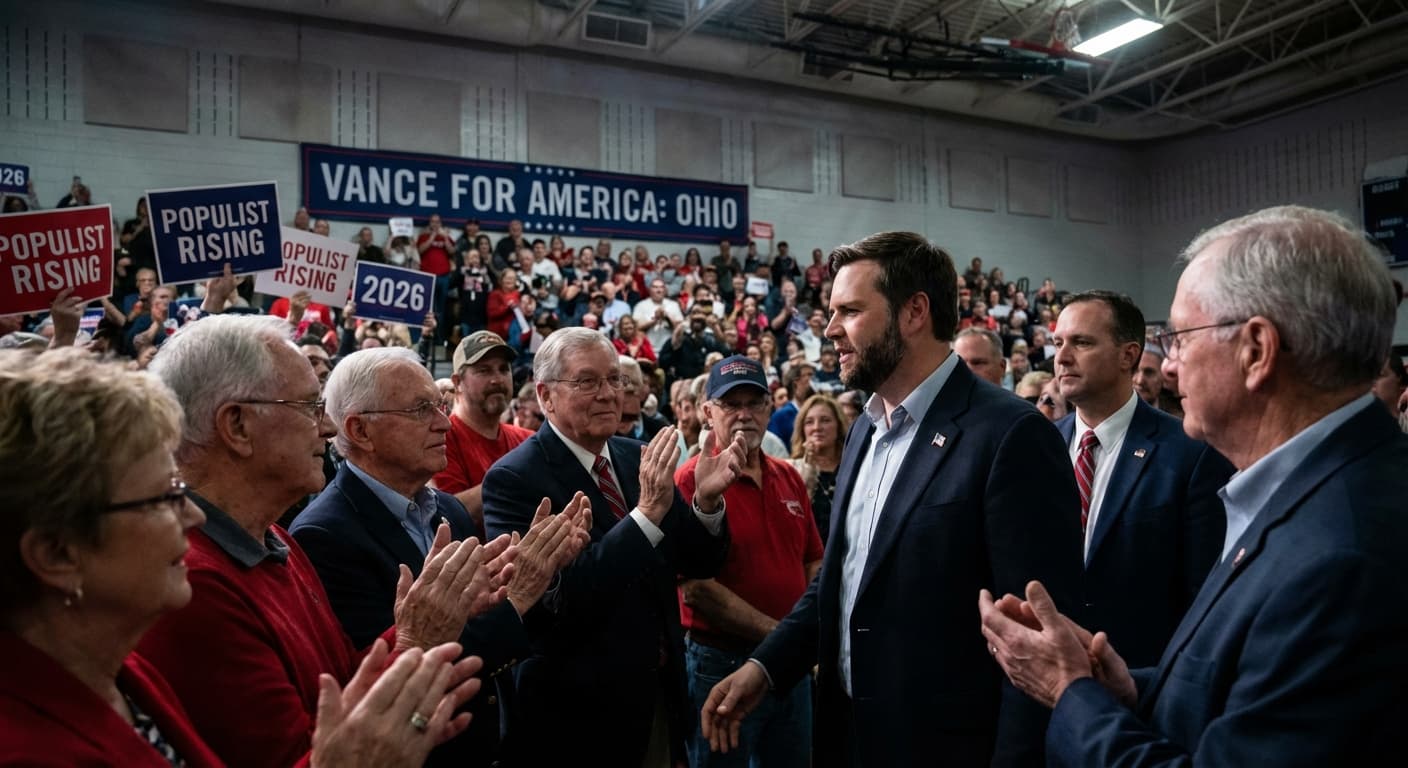
JD Vance's Rising Power in GOP for 2026
JD Vance's rising influence signals shifting GOP dynamics ahead of the 2026 midterms, as the party leans into populism and economic nationalism themes.

Economics
Fed's Amex AML order puts correspondent banking on notice
Federal Reserve's Amex AML order requires board-level controls and a 90-day plan; OCC fined the bank $350 million over enterprise-wide deficiencies.