JD Vance's Rising Power in GOP for 2026
Exploring JD Vance's impact on Republican strategies for 2026.
Model Diplomat3 min readUnited States
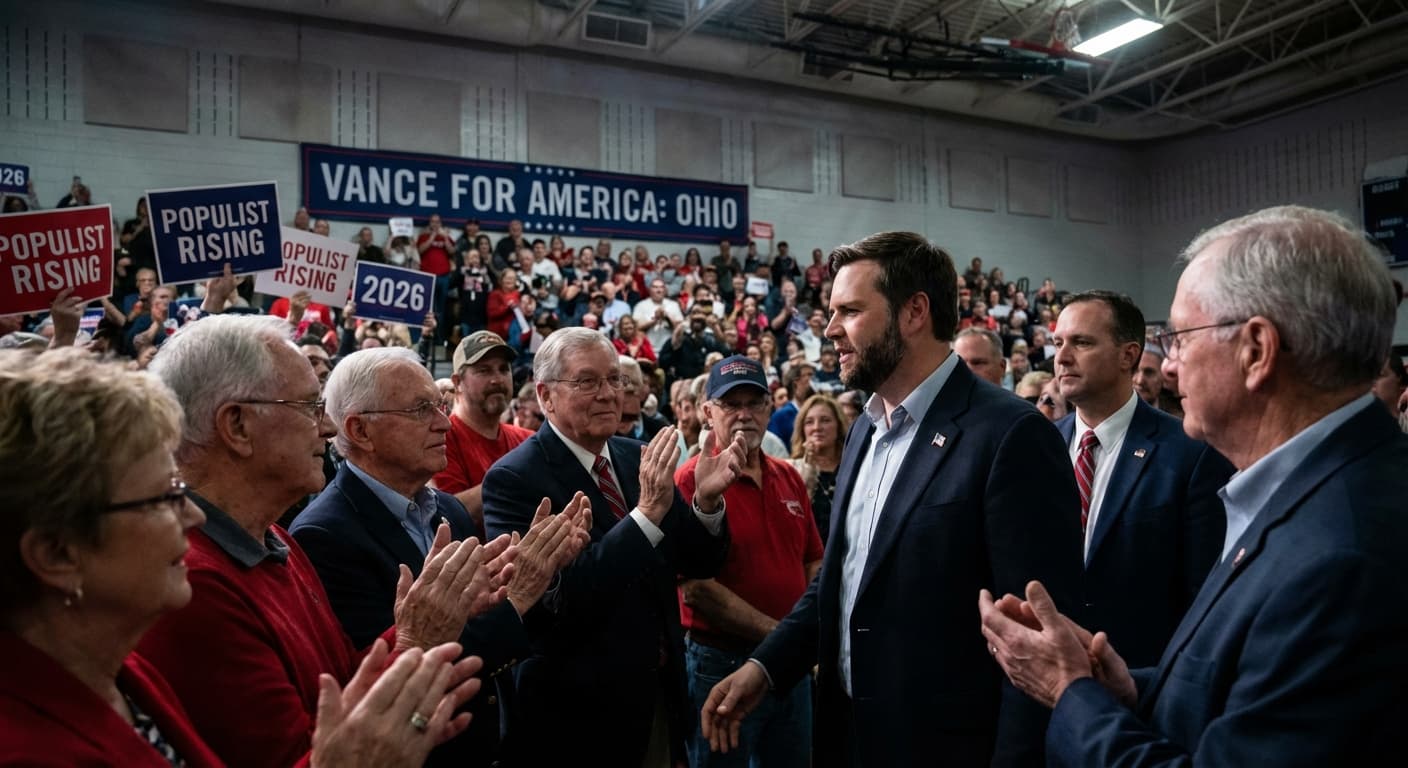
JD Vance's Rising Influence in GOP Shapes 2026 Congressional Battles
JD Vance’s increasingly vocal role on Capitol Hill signals a sharpening conservative edge in GOP policy fights ahead of the 2026 midterms.
JD Vance, the Ohio senator and former venture capitalist turned conservative firebrand, is no longer a side note in Republican politics. His recent surge in visibility—from legislative maneuvers to public speeches—reveals a key fault line in the GOP as it wrestles with its identity heading into the 2026 midterm elections. Vance is carving out a niche as a disruptor inside the Senate, aligning with hard-right conservatives pushing to reshape both policy and party strategy.
A Conservative Voice Gaining Clout
Vance’s background as an author and commentator on populist themes gives him a distinct profile compared to establishment Republicans. Since taking office, he has leveraged his platform to emphasize themes like economic nationalism, stricter immigration controls, and skepticism of foreign entanglements. These stances echo the "America First" posture still influential after Donald Trump’s presidency and resonate with significant GOP primary voters.
Recently, Vance’s involvement has been felt in debates over key legislation that shape the White House’s agenda. For example, on issues such as social spending and trade policy, he has joined forces with senators like Josh Hawley and Ted Cruz to push back against bipartisan compromises, arguing these deals fall short of conservative demands.
Vance’s ability to influence younger, more populist-leaning Republicans marks him as a growing force in the intra-party power dynamics that will fight for dominance over the Republican agenda. His approach often contrasts with GOP leaders focused on traditional market-friendly policies and party unity.
Why This Matters: The 2026 Midterms and Beyond
With Republicans aiming to reclaim control of Congress, voices like Vance’s complicate the party's path forward. If the GOP swings too far right, it risks alienating moderate voters crucial in swing states like Ohio. Yet, ignoring this faction could fracture party cohesion and undermine enthusiasm among the grassroots base.
Vance also pushes the party to prioritize economic and cultural issues that may shape not only midterm messaging but also presidential primary debates in 2028. His brand of conservative populism reflects growing skepticism about globalization and federal bureaucracy, themes increasingly central to GOP voter concerns.
Moreover, Vance’s alignment with populist conservatives underscores the ongoing redefinition of the Republican Party post-Trump—less about traditional fiscal conservatism and more about culture, identity, and economic nationalism.
What to Watch Next
- Will Vance’s ideas influence upcoming GOP legislative strategies, particularly on spending, trade, and immigration?
- How will party leaders reconcile the demands of this insurgent wing with efforts to appeal to moderate suburban voters?
- What role could Vance play in the 2028 Republican presidential primaries as a thought leader for populist conservatives?
JD Vance’s trajectory encapsulates a broader shift in US politics where ideological purity tests within parties have economic and electoral consequences. Observing his next moves offers a window into the enduring tug-of-war shaping the future of the Republican Party and Congress.
For more on the evolving political landscape, see our coverage on United States politics and
global political trends.
Discover more

US Politics
J.D. Vance's Iowa Visit
J.D. Vance's early Iowa visit signals a likely 2028 presidential bid, courting Republican voters and key allies like Zach Nunn in a pivotal caucus state.

US Politics
JD Vance Courts Iowa GOP for 2028 Run
Vice President JD Vance's visit to Iowa, alongside Rep. Zach Nunn, signals an early courtship of the GOP base and clear ambitions for a 2028 presidential bid.

Global Politics
JD Vance's Praise for Orbán
JD Vance's praise for Hungary's Orban signals a Republican pivot toward illiberal alliances, challenging long-standing US foreign policy and transatlantic ties.

Economics
Fed's Amex AML order puts correspondent banking on notice
Federal Reserve's Amex AML order requires board-level controls and a 90-day plan; OCC fined the bank $350 million over enterprise-wide deficiencies.