Israel's Strikes Pressure Lebanon's Ceasefire
Israeli actions intensify pressure on Lebanon amid US talks.
Model Diplomat2 min readMiddle East
Israel Turns Lebanon’s Ceasefire Into Displacement Pressure
Israel’s latest strikes and evacuation orders tighten pressure on Lebanon as Washington talks approach and Hezbollah resists disarmament.
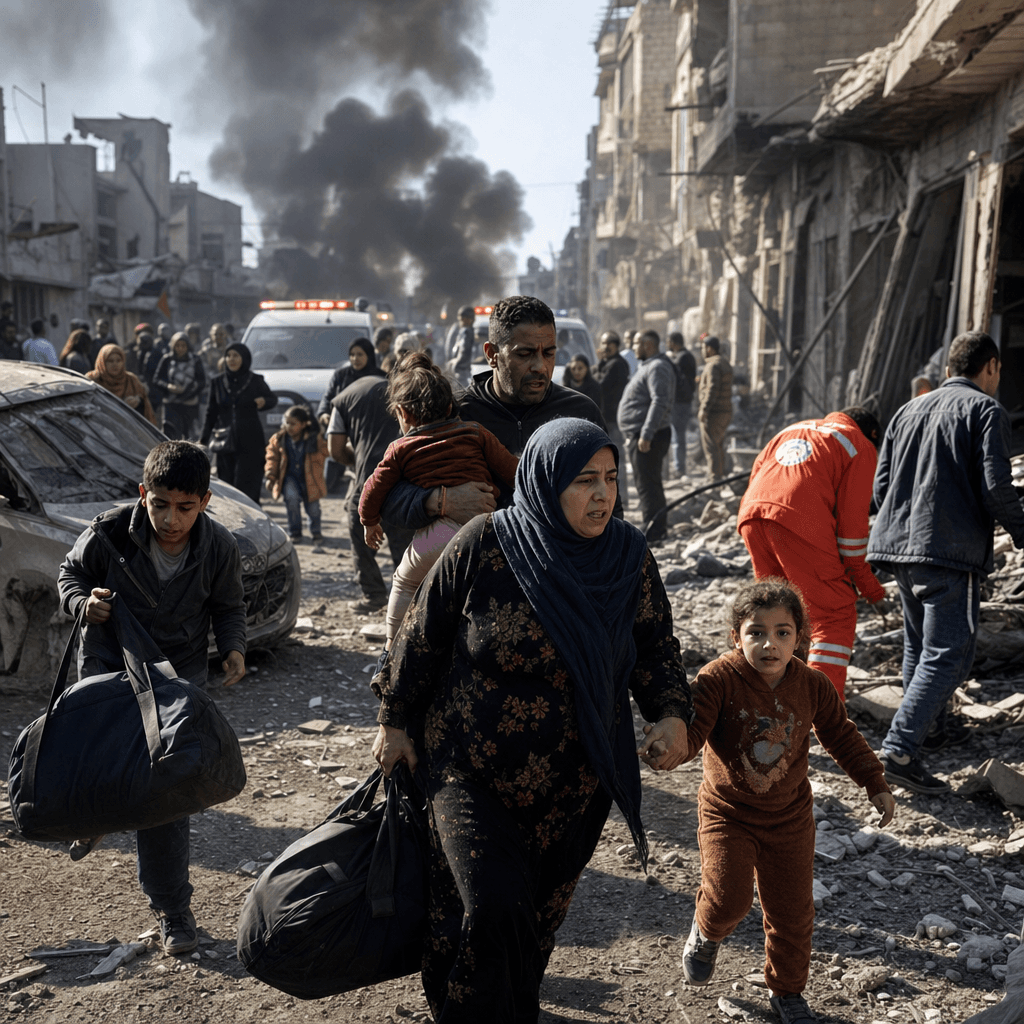
Israel is using airpower and evacuation warnings to reshape the battlefield in southern Lebanon before the diplomacy catches up. On Monday, Israeli drone strikes killed three people on roads in the Nabatieh area, and the army then ordered residents of 10 villages — including Nabatieh al-Tahta, Kafr Reman and Maydun — to leave immediately, saying Hezbollah had violated the ceasefire and that forces would act “with force,” according to Al Jazeera.
The leverage is in the map, not just the air
This is bigger than a single strike cycle. Since the April 17 ceasefire, Israeli warnings have spread well beyond the border strip, with evacuation orders reaching towns in southern Lebanon and the western Bekaa, and the number of warned locations rising to 95, according to Asharq Al-Awsat. That makes the ceasefire look less like a pause and more like a managed displacement regime: civilians are pushed out, roads are emptied, and Israel keeps the option to strike deeper without paying the political cost of a full new offensive.
For Conflict, that matters because Israel is not just targeting Hezbollah. It is changing the civilian geography around Hezbollah, which weakens the group’s local operating space and burdens Lebanon’s state with the fallout. The immediate losers are southern villagers, emergency crews and municipal authorities trying to keep people in place while warning sirens keep moving the front line.
Beirut is being squeezed between two veto players
Lebanon’s leadership wants a ceasefire that can be sold as sovereignty, not surrender. President Joseph Aoun has said Israel’s withdrawal is non-negotiable, while Hezbollah chief Naim Qassem has rejected direct talks with Israel and refused to disarm, according to Al Jazeera. That leaves Beirut trying to negotiate around the very actor — Hezbollah — whose military presence gives Israel its justification for continued strikes.
The human toll is already severe. Lebanon’s health ministry says more than 3,100 people have been killed and 1.6 million displaced since March 2, while Israel says 23 soldiers and one civilian contractor have been killed since hostilities resumed, according to Anadolu Agency and
Al Jazeera. That casualty exchange is why each side still thinks it has leverage: Israel can inflict costs faster; Hezbollah can keep the border unsafe.
What to watch next
The next pressure point is procedural. A US-facilitated security track was slated to begin on May 29, with another round of talks in Washington on June 2-3, and the current ceasefire extension runs into early July, according to Al Jazeera. If Israel keeps issuing displacement orders while talks proceed, it will be signalling that negotiations are being held under active coercion — not under a stable truce.
Discover more
Tech Policy
Iran's Cavern Manticore Targets Israel's IT
Cavern Manticore, an Iran-linked hacking group, targets Israeli IT vendors, prompting a shift in Israel's cybersecurity policy and legislative efforts.

Tech Policy
Iran's Cavern Manticore Cyber Threat
Iran's Cavern Manticore cyber group exploits Israeli IT networks, leading to new cybersecurity regulations in Israel.
Conflict & Security
UN Report: Israel Targets Palestinian Kids
A UN report accuses Israel of genocide against Palestinian children in Gaza, citing grave human-rights violations and intensifying scrutiny of the war's toll.
Conflict & Security
Israel's Annexation Strategy Escalates
Israel's annexation push goes public as minister Smotrich declares intent in Hebron, signaling an open strategy to entrench West Bank settlements and control.