Israel’s Lebanon Strikes: Leverage Tactics
Israel uses military pressure to shape negotiations with Hezbollah.
Model Diplomat3 min readMiddle East
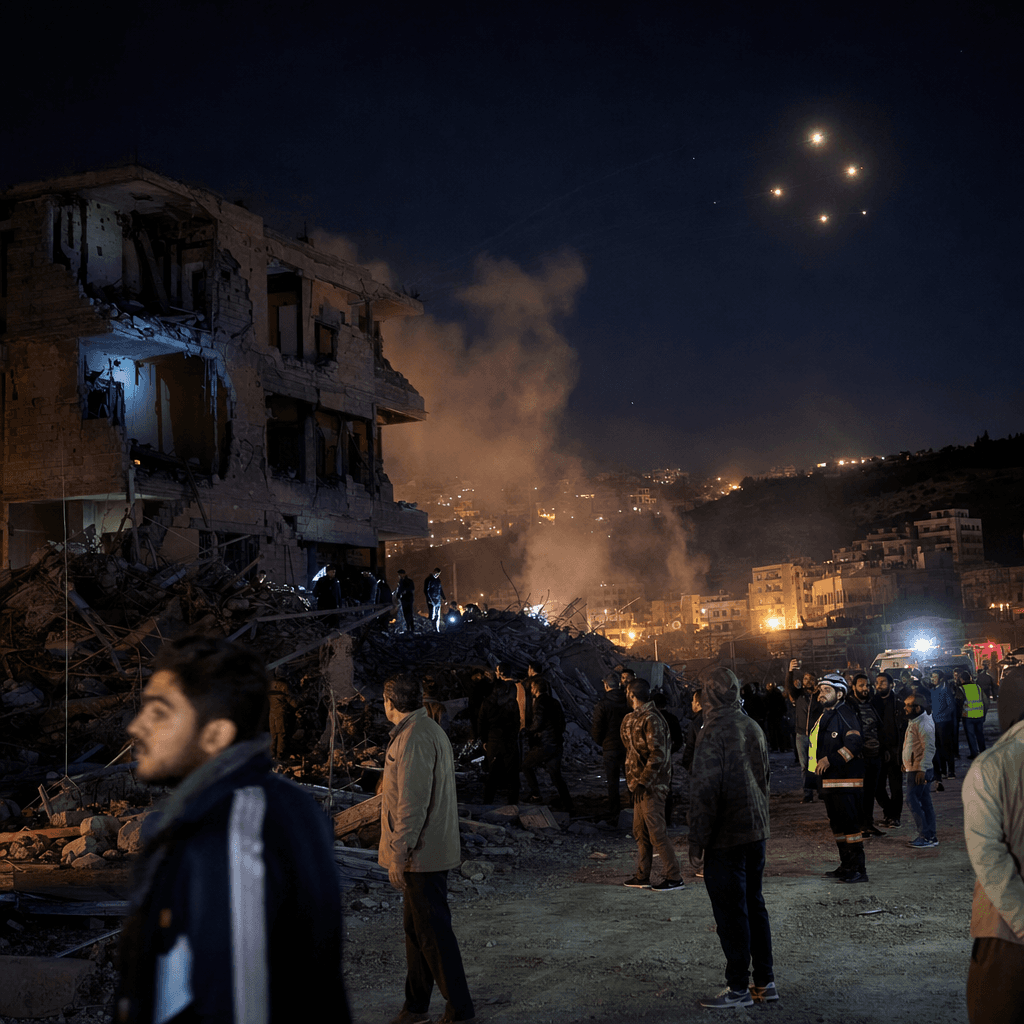
Israel’s Lebanon strikes are leverage, not drift
Israel is using the ceasefire’s ambiguity to press Hezbollah, force terms on Lebanon, and shape talks due in Washington next week.
Israel’s escalation in Lebanon is not a breakdown in policy; it is the policy. Al Jazeera reports that Israel has intensified strikes across Lebanon and killed or wounded dozens despite the US-brokered ceasefire, while the network’s guests linked the timing to ongoing US-Iran indirect talks and to Israel’s insistence that Hezbollah’s military pressure must stop first (Al Jazeera). South China Morning Post, citing Reuters, said Israeli forces carried out one of the heaviest bombing days in weeks on May 27, killing 31 people, after Benjamin Netanyahu said he had authorized “more intensive strikes” against Hezbollah (
South China Morning Post).
Israel is using force to improve its negotiating position
The power dynamic is straightforward: Israel holds the escalatory advantage. It can widen the cost of non-compliance faster than Lebanon or Hezbollah can absorb it, and it is using that advantage to rewrite the terms of the ceasefire in real time. SCMP’s Reuters report said Netanyahu told Israelis to expect intensified blows, while two far-right ministers urged renewed bombing of Beirut and even called for harsher measures against Lebanon (South China Morning Post). That matters because it shows this is not only battlefield signaling; it is coalition management. The political beneficiaries are the Israeli security hawks who want freedom of action against Hezbollah, not a frozen line that constrains them.
Hezbollah is also playing for leverage, but from a weaker position. Al Jazeera said the group has continued drone attacks on northern Israel and argues any durable deal must end Israeli attacks as well (Al Jazeera). That gives Hezbollah a way to keep pressure on Israel, but it does not change the basic balance: its attacks create a pretext for Israeli escalation, not a path to parity.
Lebanon is trapped between enforcement failure and foreign bargaining
Lebanon’s problem is that it is not the main broker of its own ceasefire. The mechanism is being managed through US channels, not by a strong bilateral enforcement structure, and that leaves Beirut exposed. Reuters reporting carried by Asharq Al-Awsat said Lebanese and Israeli military delegations are due to meet at the Pentagon on May 29, ahead of another round of direct talks in Washington on June 2–3 (Asharq Al-Awsat). The same report said President Joseph Aoun is insisting on Israeli withdrawal from the south as a “non-negotiable” demand, while Hezbollah chief Naim Qassem rejects direct talks and refuses disarmament (
Asharq Al-Awsat).
That leaves Lebanon in the worst possible position: politically responsible for calm, but militarily unable to guarantee it. The result is that every Hezbollah drone launch and every Israeli strike becomes ammunition in a larger negotiation over border control, Hezbollah’s arms, and who gets to define the ceasefire in the first place. For policymakers following Global Politics, the key point is that Lebanon is being used as a pressure valve in a wider US-Iran-Israel contest, not treated as a sovereign arena with equal leverage.
What to watch next
The next real decision point is the Pentagon meeting on May 29 and the Washington talks on June 2–3 (Asharq Al-Awsat). If Israel keeps striking hard while those talks proceed, it will be signaling that the diplomatic track is subordinate to the military one. If Washington presses for restraint, the question is whether it can actually impose it on Israel — or only ask Lebanon to absorb the cost.
Discover more
Tech Policy
Iran's Cavern Manticore Targets Israel's IT
Cavern Manticore, an Iran-linked hacking group, targets Israeli IT vendors, prompting a shift in Israel's cybersecurity policy and legislative efforts.
Tech Policy
Iran's Cavern Manticore Cyber Threat
Iran's Cavern Manticore cyber group exploits Israeli IT networks, leading to new cybersecurity regulations in Israel.
Conflict & Security
UN Report: Israel Targets Palestinian Kids
A UN report accuses Israel of genocide against Palestinian children in Gaza, citing grave human-rights violations and intensifying scrutiny of the war's toll.
Conflict & Security
Israel's Annexation Strategy Escalates
Israel's annexation push goes public as minister Smotrich declares intent in Hebron, signaling an open strategy to entrench West Bank settlements and control.