Israel Expands Operations in Lebanon
Israel deepens military presence in southern Lebanon.
Model Diplomat2 min readMiddle East
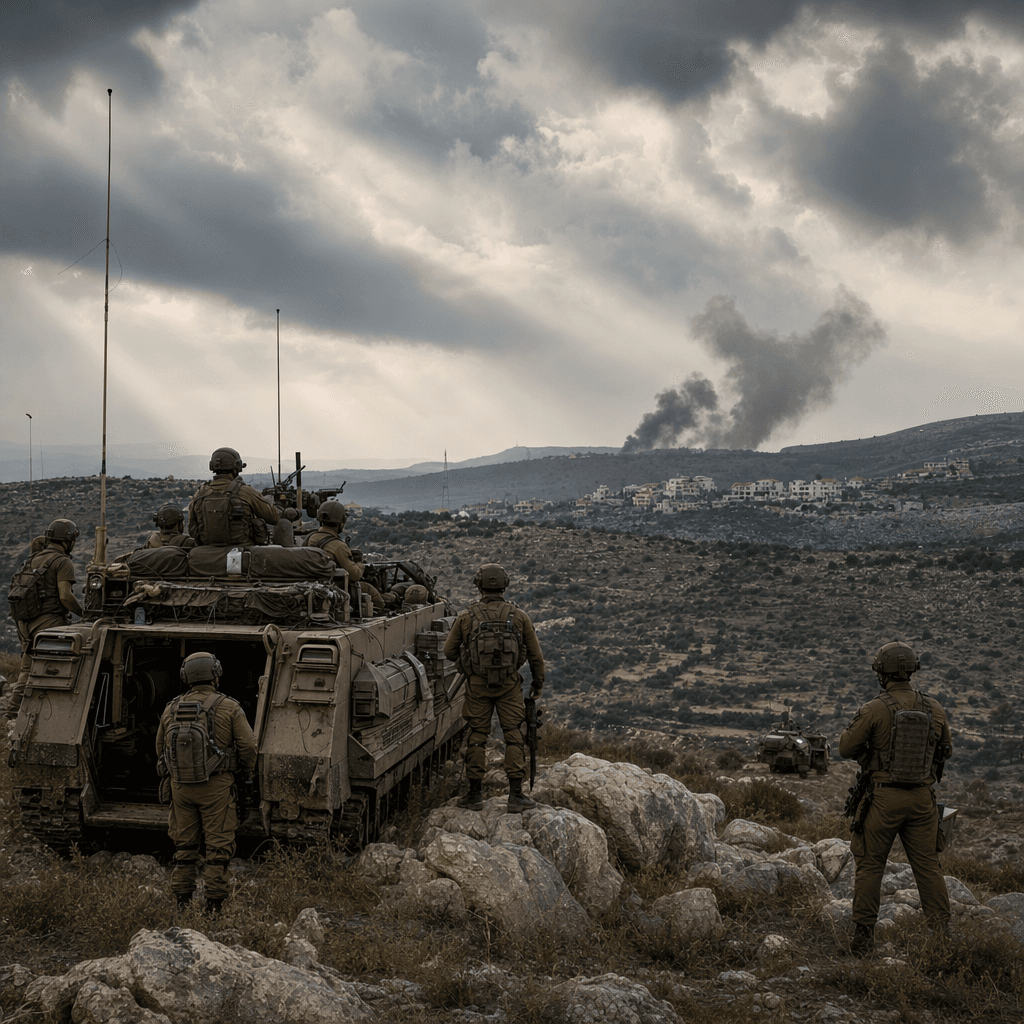
Israel Pushes Past the Yellow Line in Lebanon
Israel is deepening its buffer-zone logic in south Lebanon, betting that force now will shape the June talks in Washington.
Israeli strikes killed 31 people in south Lebanon on Tuesday, including children and women, as Israel expanded ground operations beyond the army’s self-declared “Yellow Line,” Lebanese health officials said (France 24). An Israeli military official said troops had begun operating deeper inside Lebanese territory, while Prime Minister Benjamin Netanyahu said Israel was “intensifying” attacks to protect communities in northern Israel and secure a buffer zone (
France 24).
Israel is using escalation to improve its bargaining position
The power dynamic is clear: Israel is trying to convert battlefield gains into negotiating leverage before new US-brokered talks in Washington, set for May 29 and early June, according to Al Jazeera and France 24 (Al Jazeera,
France 24). Netanyahu has framed the campaign as necessary to “crush” Hezbollah, while Israeli evacuation orders for dozens of southern towns are widening the civilian footprint of the war (
France 24,
Al Jazeera).
That matters because the operational map is now part of the diplomacy. An Israeli official told AFP the army was moving beyond the line Israel had marked roughly 10 kilometers into Lebanon, a signal that the temporary “security strip” is becoming the new baseline unless outside pressure forces a pullback (France 24). In short, Israel is not just hitting Hezbollah; it is trying to normalize a deeper ground presence.
Hezbollah is still fighting, but it is losing the escalatory contest
Hezbollah says its fighters confronted Israeli troops near Zawtar al-Sharqiyah and launched drones and rockets at Israeli forces and northern Israel in response to what it calls ceasefire violations (France 24,
Al Jazeera). But the balance of damage is asymmetrical: Lebanon’s health ministry says Israeli strikes since March 2 have killed more than 3,100 people, while AP, carried by NBC News, says more than a million people have been displaced and at least 23 Israeli soldiers and one civilian contractor have been killed since hostilities resumed (
NBC News,
Al Jazeera).
The political effect inside Lebanon is worse than the military one. Beirut’s government is being dragged into talks it does not control, while Hezbollah insists it will not disarm and rejects direct negotiations with Israel (Al Jazeera). For readers tracking the wider picture, this is the southern front in a broader contest over deterrence and state authority; see
Conflict.
What to watch next
The next decision point is the Pentagon meeting on May 29 and the Washington talks on June 2-3 (Al Jazeera,
France 24). If Israel keeps expanding ground operations while Hezbollah sustains drone and rocket fire, the talks will look less like a ceasefire track and more like damage control. If Washington cannot restrain the pace of strikes, the real bargaining will shift from the table back to the border — with Lebanon’s sovereignty, and the security of northern Israel, both further eroded.
Discover more
Tech Policy
Iran's Cavern Manticore Targets Israel's IT
Cavern Manticore, an Iran-linked hacking group, targets Israeli IT vendors, prompting a shift in Israel's cybersecurity policy and legislative efforts.

Tech Policy
Iran's Cavern Manticore Cyber Threat
Iran's Cavern Manticore cyber group exploits Israeli IT networks, leading to new cybersecurity regulations in Israel.
Conflict & Security
UN Report: Israel Targets Palestinian Kids
A UN report accuses Israel of genocide against Palestinian children in Gaza, citing grave human-rights violations and intensifying scrutiny of the war's toll.
Conflict & Security
Israel's Annexation Strategy Escalates
Israel's annexation push goes public as minister Smotrich declares intent in Hebron, signaling an open strategy to entrench West Bank settlements and control.