Iran's Hormuz Gambit
Tehran's strategy in the Strait of Hormuz standoff unfolds.
Model Diplomat3 min readMiddle East
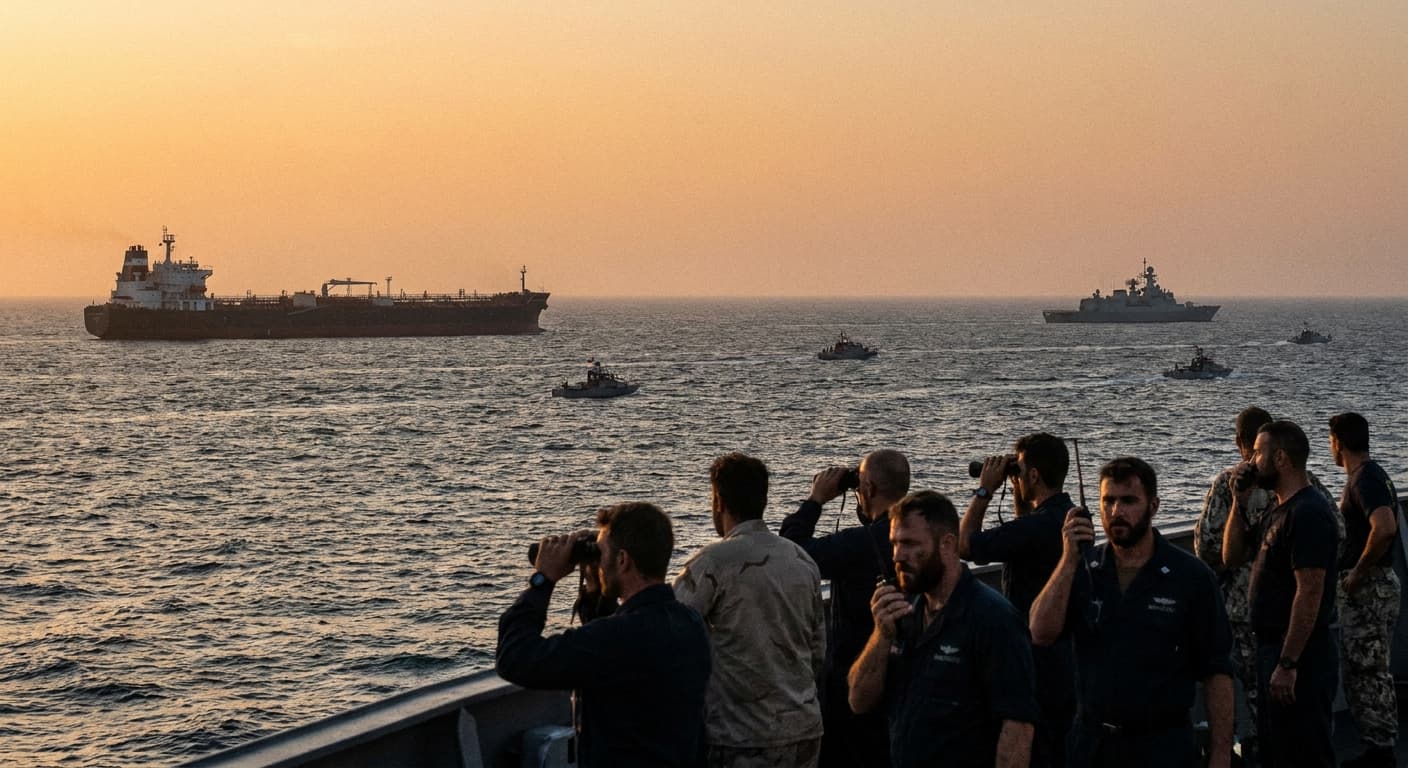
Iran's Hormuz Gambit: Tehran Is Selling the Same Key Twice
Iran's conditional offer to reopen the Strait of Hormuz reframes the standoff as a bargaining table — but the gap between Washington's demands and Tehran's red lines remains wide.
Iran's Islamic Revolutionary Guard Corps has the world's most consequential chokepoint under its guns — and on April 27, Tehran made explicit what has been implicit for weeks: it will reopen the Strait of Hormuz, but only if the United States lifts its naval blockade of Iranian ports and ends the broader conflict. The offer, reported by AP News, is less a peace signal than a structured coercive exchange. Iran holds the chokepoint; Washington holds the blockade. Neither side is blinking yet.
How the Standoff Was Built
The timeline matters. The US began blockading Iranian ports in mid-April 2026, after Pakistan-mediated talks collapsed without a deal, with President Trump framing the operation as stopping Iran from charging "tolls" on Hormuz traffic. Admiral Brad Cooper confirmed the blockade was fully implemented and effective within 48 hours — zero ships broke through in the first two days. The IRGC responded by fully closing the strait and warning that any vessel approaching would be treated as cooperating with the enemy.
The economic math is brutal. The Strait of Hormuz carries roughly 20% of global oil supply. Iran was exporting approximately 1.84 million barrels per day in March — now effectively zeroed out. Oil markets surged past $100/barrel on the disruption. Iran's losses are estimated at several hundred million dollars daily, but the global knock-on — hitting Asian importers, European refiners, and Gulf producers with nowhere to reroute — gives Tehran meaningful systemic leverage.
Who Holds What Leverage
Iran controls physical access and is willing to use it. The IRGC has fired on vessels attempting to transit and has threatened to extend disruptions to the Red Sea and Sea of Oman. Parliament Speaker Mohammad Bagher Ghalibaf has publicly stated a final deal remains "far off," signaling Tehran is not under immediate pressure to capitulate.
Washington controls the blockade architecture — 10,000+ US personnel are enforcing it — and, critically, controls whether Iran can earn the foreign revenue it needs to sustain the war. NATO allies (Britain, France) refused to join the blockade, per Reuters, undercutting any coalition legitimacy but not operational capacity. Trump has publicly rejected what he's calling Iranian "blackmail," a framing that narrows his own negotiating room domestically.
China and India are the overlooked pressure points. Roughly 100 million barrels of Iranian crude sit in floating storage near Malaysia and Indonesia. India summoned Iran's ambassador after IRGC forces fired on Indian-flagged vessels — a signal that Tehran's pressure tactics are generating blowback from non-Western partners it cannot afford to alienate on international trade routes.
What to Watch Next
The critical date is the expiry of the two-week ceasefire linked to the broader Iran-US-Israel conflict — midweek, approximately April 29–30. If it lapses without renewal, the blockade-versus-closure standoff loses its diplomatic scaffolding entirely.
Pakistan's mediators are reportedly circulating new US proposals. The specific terms — whether Washington will offer partial blockade suspension in exchange for partial strait reopening — will determine whether today's conditional offer is a genuine opening or a positioning move ahead of the ceasefire deadline. Watch for back-channel signals from Oman, which has historically served as the quiet conduit when US-Iran talks move toward substance. Oman's role became explicit when Iran proposed letting ships transit safely via the Omani side of the strait — a proposal still unresolved. That lane, if opened, is where the first real concession will show up.
Discover more

Global Politics
US Seizes Iranian Ship, Tensions Surge
The US seizure of the Iranian ship Touska highlights a shift in control over the Strait of Hormuz, favoring Iran's strategic position.

Conflict & Security
Drone Warfare Killing Aid Workers at Unprec
Over 1,000 humanitarian workers killed in three years as cheap armed drones collapse legal protections. Gaza, Sudan, Ukraine, and DRC see deliberate targeting of aid convoys and hospitals with zero prosecutions.

Global
World Normalises Taliban as Afghan Women Eras
UN data shows Afghan women erased from public life as Russia recognises the Taliban, EU hosts officials in Brussels, and ICC warrants for gender persecution go unenforced.
Conflict & Security
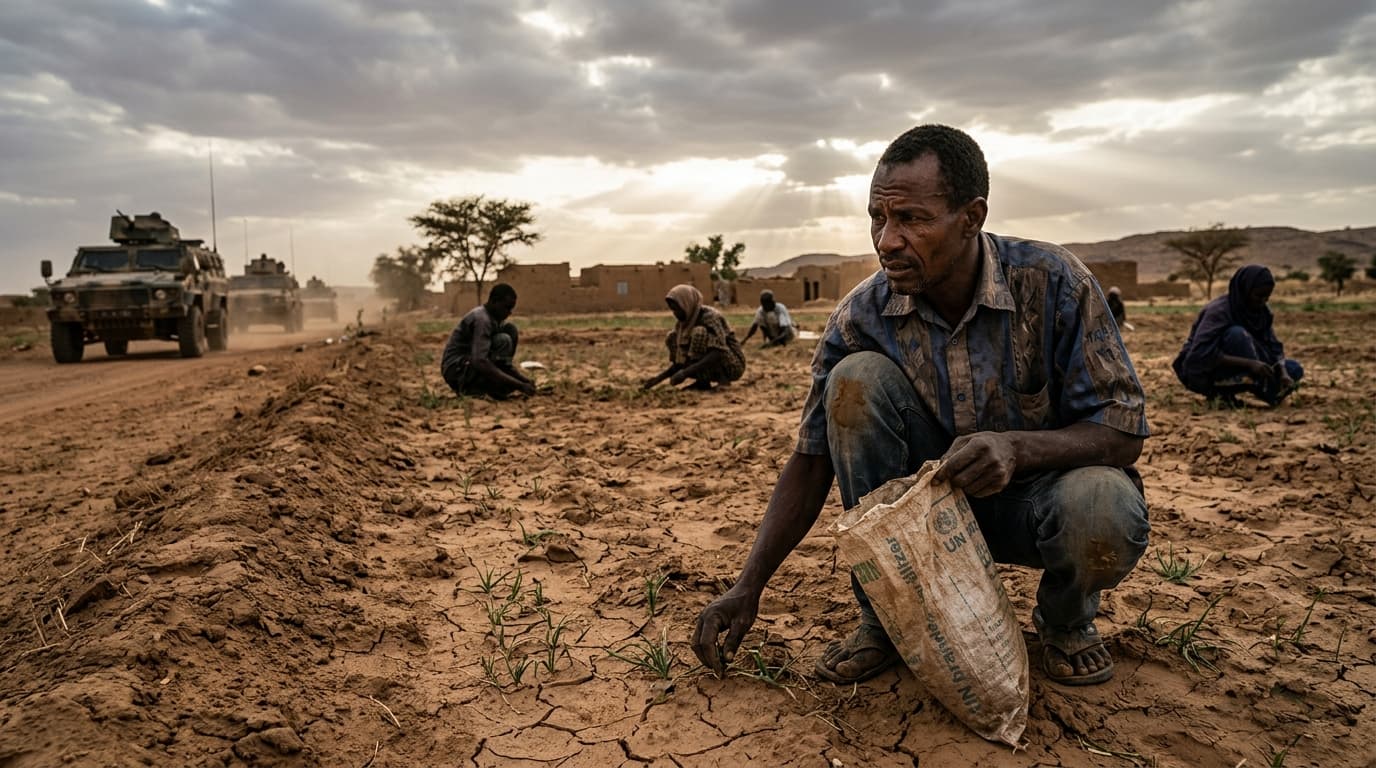
West Africa Food Crisis: Three Shocks in 2026
Conflict, climate extremes, and the Strait of Hormuz closure drive a severe food crisis in West and Central Africa, with fertilizer prices surging 80% and millions displaced.