India Supreme Court Expands to 38 Judges
Cabinet approves increase in Supreme Court judges to 38.
Model Diplomat2 min readAsia
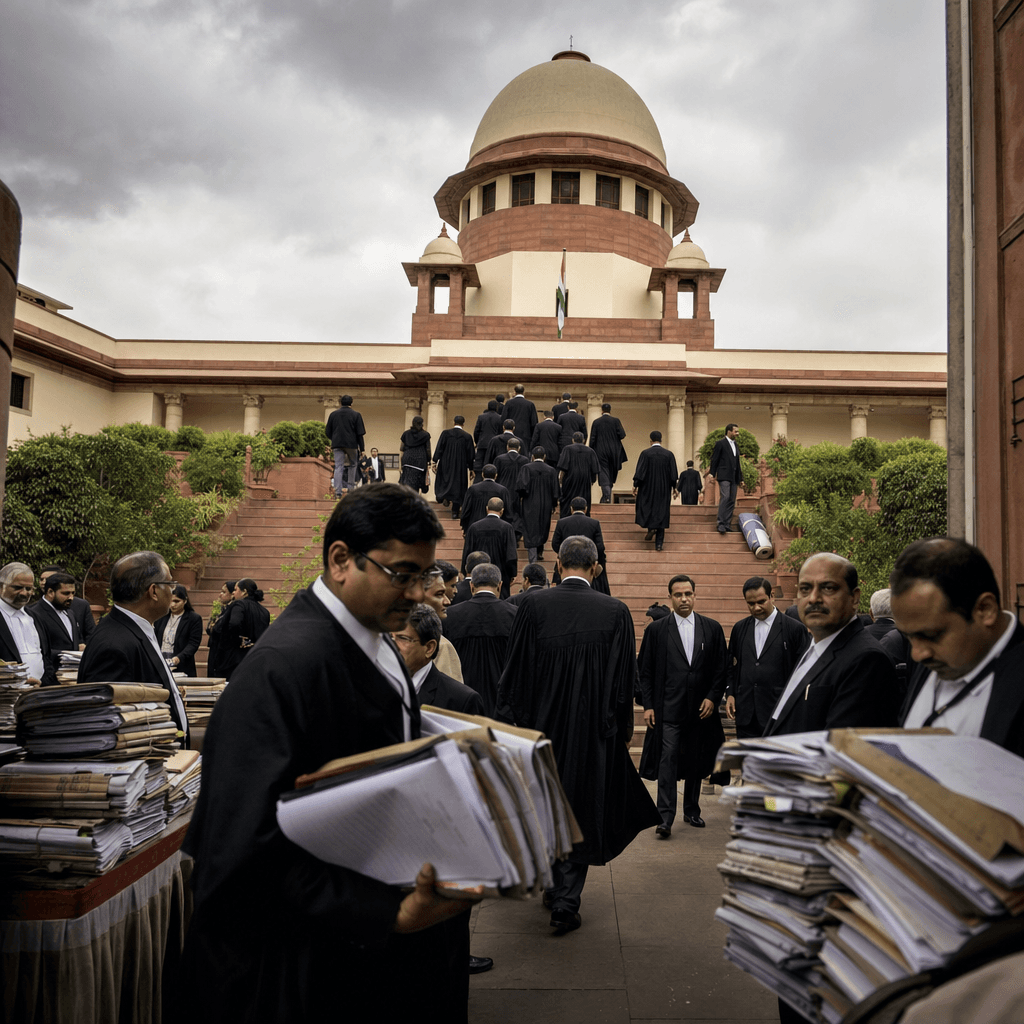
India’s Supreme Court Gets Bigger — But Not Faster
Cabinet clearance to raise the bench to 38 is a pressure-release move, not a cure: the real bottleneck is pendency, not headcount.
The cabinet has approved a proposal to increase the Supreme Court’s sanctioned strength to 38 judges, according to NDTV, which would require an amendment to the Supreme Court (Number of Judges) Act before it takes effect. NDTV
Why this matters
The government is responding to a court that has been under structural strain for years. The Supreme Court already returned to its full sanctioned strength of 34 judges in 2025 after new appointments brought the bench back to capacity. The Hindu,
The Hindu
But the capacity problem is not just vacancies. The court’s pendency hit an all-time high of 88,417 cases in 2025 even while it was functioning at full strength, which means adding two more judges is unlikely to produce a meaningful dent unless listing, bench allocation, and case-selection practices also change. The Hindu
That is the core political economy here: the executive can show it is acting on judicial delay without conceding anything on judicial independence. For India, this is a low-cost way to signal institutional responsiveness ahead of a broader debate over justice delivery. For litigants, it is mainly a reminder that more seats do not automatically mean more throughput.
The Hindu
Who benefits, who loses
The immediate winners are the government and the Supreme Court administration. The government gets to claim action on backlog; the court gets more flexibility to spread work across Constitution Benches and routine matters. The Hindu
The losers are petitioners waiting in long queues and High Court litigants whose cases still depend on the lower judiciary, where vacancy and pendency pressures are far deeper than in the top court. The broader justice system remains bottlenecked well below the Supreme Court’s level, so this move only addresses the most visible layer of delay. The Hindu,
The Hindu
What to watch next
The first real test is legislative: whether the government quickly tables and passes the amendment bill. The second is operational: whether the Collegium and the law ministry move quickly enough to fill the extra slots without new friction. The date that matters is the next sitting of Parliament and, after that, the first round of appointments under the expanded strength. Until then, this is policy intent, not judicial capacity.
Discover more
India
CPI(M) Calls to Decouple Quota from Delimita
CPI(M) advocates for a 33% women's quota in Lok Sabha by 2029, removing the need for delimitation and census linkage.

India
India-South Korea $50B Trade Expansion Plan
India and South Korea target $50 billion in bilateral trade by 2030, focusing on industrial cooperation and strategic alignment amid US pressures.

Conflict & Security
Drone Warfare Killing Aid Workers at Unprec
Over 1,000 humanitarian workers killed in three years as cheap armed drones collapse legal protections. Gaza, Sudan, Ukraine, and DRC see deliberate targeting of aid convoys and hospitals with zero prosecutions.

Global
World Normalises Taliban as Afghan Women Eras
UN data shows Afghan women erased from public life as Russia recognises the Taliban, EU hosts officials in Brussels, and ICC warrants for gender persecution go unenforced.