Guinea-Bissau's Productivity Trap
Economic growth masks declining productivity issues.
Model Diplomat3 min readafrica
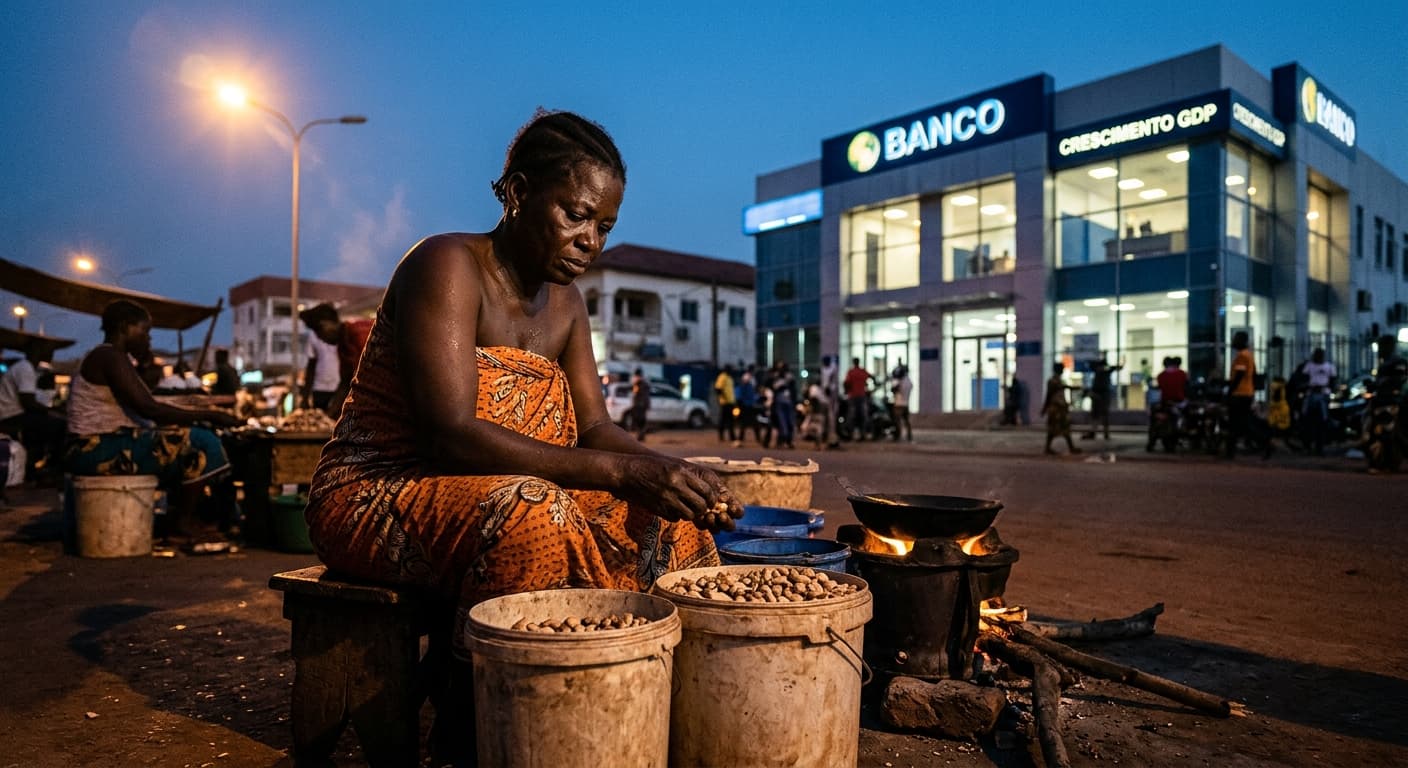
Guinea-Bissau's Productivity Trap — Growth Without Progress
A 5.8% GDP expansion masks a collapsing productivity engine: firms are hiring but producing less. The November coup and Middle East spillovers now threaten to stall even the headline numbers.
On June 24, the World Bank released its Spring 2026 Economic Update for Guinea-Bissau, delivering a finding that should alarm any policymaker: the country's firms are investing more and producing less. The share of firms investing in fixed assets jumped from 45.1% in 2006 to 61.2% in 2025, yet labor productivity growth cratered from +6.2% to −6.8% over the same period. Firms are adding workers without commensurate output gains — a pattern of low-quality job creation that leaves wages stagnant and living standards unchanged even as the top-line GDP figure looks healthy.
The headline growth number is deceptive. Real GDP reached 5.8% in 2025, powered by a strong cashew harvest and farmgate prices that boosted rural incomes, according to the World Bank press release. But that momentum is weakening. The Bank projects growth will ease to 4.8% in 2026, dragged by two forces the transitional government in Bissau cannot control: the November 2025 military takeover and Middle East conflict spillovers that are inflating fuel and food import prices — each roughly 30% of the import bill — while rising freight costs squeeze cashew export margins.
The coup's economic shadow
The November 26 military seizure, which installed Army Chief of Staff General Horta Inta-A as transitional president, has directly hit the reform timeline. The IMF confirmed on June 12 that program implementation experienced delays following the government change, though the transitional authorities have since moved to address policy slippages and all end-March 2026 quantitative performance criteria were met. That unlocked an immediate SDR 1.18 million disbursement — but the Fund was explicit that "significant downside risks to the outlook" remain, with "strong program ownership and engagement paramount."
The transitional government has committed to elections on December 6, 2026, as the BBC reported in January. Both ECOWAS and the African Union have suspended Guinea-Bissau from their decision-making bodies. The political calendar now shapes the economic one: investor confidence, donor disbursements, and the pace of structural reform all hang on whether December's vote proceeds credibly and produces a government capable of governing.
A banking sector that won't lend
Beneath the political instability sits a financial sector in distress. Non-performing loans surged past 22% by mid-2025, sharply constricting credit to SMEs and women-led firms. Tax revenue stands at just 8.5% of GDP — the lowest in the WAEMU region — while public debt remains above the union's ceiling at 75.6% of GDP.
The IMF's Extended Credit Facility review noted that the 2026 budget targets a primary surplus and an overall deficit of 4.0% of GDP, but achieving that requires revenue measures — updated customs valuations, pursuit of arrears, tighter focus on large taxpayers — that demand political capital a transitional government may not have. Meanwhile, the divestment from an undercapitalized bank has been completed and recapitalization is underway, a rare structural bright spot.
The World Bank's Enterprise Survey identifies taxation, access to finance, and institutional unpredictability as the most binding constraints on firms. Electricity — once the dominant obstacle — has receded as a concern following the OMVG hydropower interconnection. This is good news, but it also means the remaining barriers are harder to fix: they require legal reform, regulatory capacity, and political stability, not just infrastructure spending.
What to watch
Three signposts matter most. First, the December 6 election date: whether it holds and whether ECOWAS accepts a nearly 13-month transition will determine if sanctions escalate and donor programs resume at scale. Second, cashew export volumes and freight costs through the Atlantic: Red Sea disruptions have lengthened shipping times and compressed margins; any further Middle East escalation would hit Bissau directly through both import prices and export competitiveness. Third, the IMF's 12th ECF review, likely in late 2026: if fiscal targets slip as election spending pressures mount, the Fund's willingness to keep disbursing will be the clearest signal of confidence — or its absence.
The productivity paradox the World Bank unearthed is not cyclical. It has been two decades in the making. Reversing it requires a tax system that firms don't treat as punitive, a banking sector that lends, and customs procedures predictable enough for businesses to plan beyond the next cashew season. None of that looks likely before December.
Discover more
Global Politics
Xi Jinping Calls China-Russia Ties 'Precious'
Xi Jinping's description of China-Russia ties as 'precious' reflects a strategic imbalance, with Beijing dictating terms in the partnership.

US Politics
US Launches $166B Tariff Refund Portal
The US is launching a $166 billion tariff refund portal to aid importers hit by Trump-era tariffs, with major implications for trade and supply costs.

US Politics
White House Pressures Congress for Crypto Leg
The Trump administration's push for the CLARITY Act aims to reshape crypto regulation, impacting trillions in market value and the Trump family's wealth.

Conflict & Security
Drone Warfare Killing Aid Workers at Unprec
Over 1,000 humanitarian workers killed in three years as cheap armed drones collapse legal protections. Gaza, Sudan, Ukraine, and DRC see deliberate targeting of aid convoys and hospitals with zero prosecutions.